Features / Advertising Feature
Royal Ballet School Alumni Address Representation and Resilience Through Creative Artist Talk
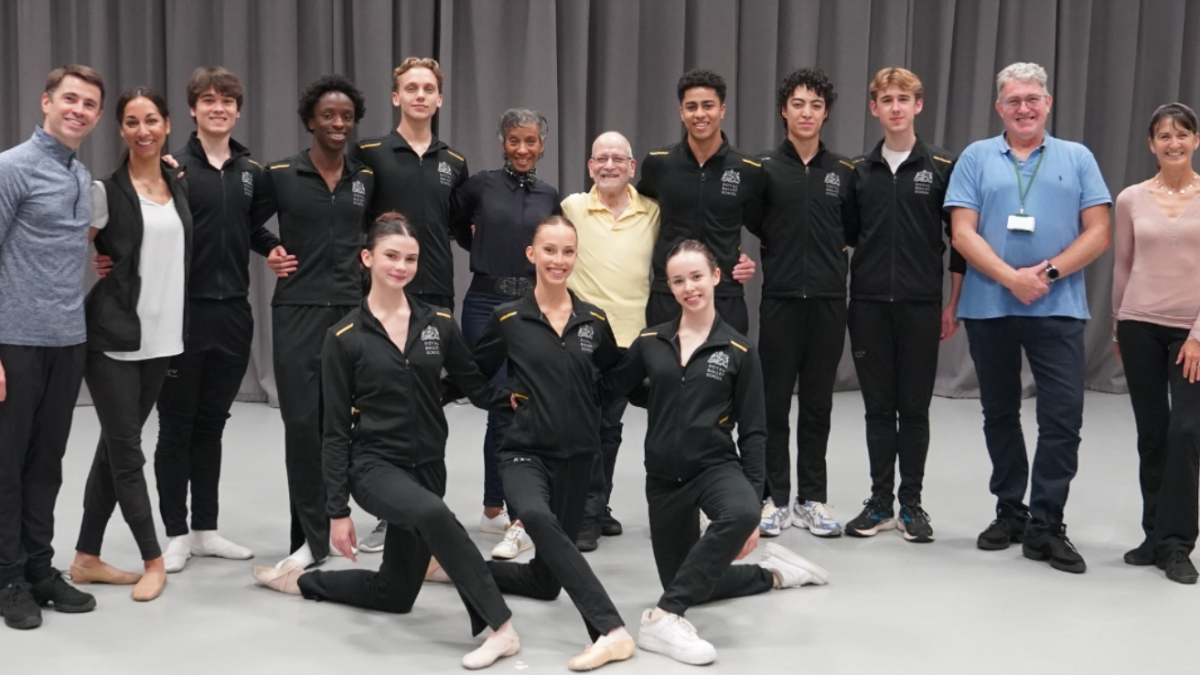
Upper School students participated in a Creative Artist Talk spotlighting Brenda Garrett-Glassman and William ‘Bill’ Glassman, two alumni whose careers illustrate both historical barriers and institutional evolution within classical ballet training.
Garrett-Glassman became the first Black dancer at Upper School, training from 1971 to 1973 before joining Dance Theatre of Harlem. Glassman completed a professional performance career before teaching at the School for 19 years and serving as Artistic Director at Ballet Central.
Upper School Ballet Teacher Paul Lewis facilitated the June conversation, where both speakers emphasised resilience and self-belief while addressing representation challenges within classical ballet education and professional careers.
is needed now More than ever
Early Training and Institutional Barriers
Garrett-Glassman began dancing at age eight when her parents recognized her movement enthusiasm. She earned RAD exam honours and recognition beyond local instruction, leading to Royal Ballet School admission through Peter Wilson, then-Director of the Royal Academy of Dance, who promised her teacher an audition opportunity after presenting her with the ‘Most Promising’ award.
Her Upper School experience included significant representation challenges. Makeup requirements for performances proved particularly difficult, as she recalled having to use pale makeup for Swan Lake that made her feel like “one of the undead” and having to “blank out [her] full lips and draw in a rosebud.”
“I looked horrible. And everybody else around me looked wonderful. So that was a really difficult moment for me,” Garrett-Glassman explained.
School leadership at the time explicitly limited her career expectations based on race. During her interview, the then-principal told her: “Well, we will train you because you’re talented, but you will never get into the Company because you are coloured” using terminology applied to Black people during that period.
Peer Support and Career Transition
Despite institutional barriers, Garrett-Glassman received crucial peer support during her training. When she was assigned as fourth understudy to a peasant role in a School performance, her classmates intervened on her behalf.
The School directed her toward contemporary dance training at The Place and Pineapple Dance Studios, viewing this as her appropriate career path due to racial considerations. However, teachers David and Anna-Marie Holmes introduced her to Dance Theatre of Harlem, the first all-Black classical ballet company worldwide.
Arthur Mitchell, Dance Theatre of Harlem co-founder, invited her to join after reviewing photographs. Her arrival at the company proved transformative: “It was in the middle of Harlem, 150 52nd Street. I walked into the company studio, which was full of, I have to say, gorgeous black people all doing ballet, and I cried. ‘Oh my god, I’m home.’ That was a really pivotal moment for me”.
Professional Challenges and Achievements
Dance Theatre of Harlem provided artistic fulfilment while presenting unique challenges. Touring the American South exposed company members to racial hostility, as Garrett-Glassman recalled: “I remember we were in the Deep South with the company, and there was a Ku Klux Klan demonstration just down the road. We had to be escorted from the hotel to the coach, from the coach to the theatre—it was dangerous. We were not welcome everywhere. But we still played to full houses, standing ovations. It was magical”.
Her career expanded beyond ballet to include Broadway, West End performances, and film work including The Wiz with Michael Jackson. These opportunities demonstrated versatility and artistic range beyond classical ballet’s traditional boundaries.
Glassman’s American Training and Career Development
Glassman’s ballet introduction differed significantly as a white male from Boston. Beginning with tap dance, his teacher convinced him to perform as the Prince in Cinderella despite initial reluctance about wearing tights, leading to growing ballet appreciation and New York City training at the June Taylor School.
Karel Shook, later Dance Theatre of Harlem co-founder, offered him scholarship opportunities before George Balanchine provided exclusive access to the School of American Ballet. Glassman received Ford Foundation scholarship support: “I was 15, so it was 1960 or ’59. Mr. Balanchine had just been given money by the Ford Foundation to search for talent in the United States, talented ballet dancers. In the country, he chose 15 of us for the first Ford scholarship in 1960. There were 13 girls and two boys.”
His professional career included New York City Opera, Broadway shows featuring Vivien Leigh, and American Ballet Theatre progression from Corps de ballet to Soloist. Repertoire encompassed works by Jerome Robbins, Agnes de Mille, Anthony Tudor, Harold Lander, and Kenneth MacMillan across nearly six years before transitioning to university teaching.
Return to The Royal Ballet School and Teaching Career
Arthur Mitchell recruited Glassman to Dance Theatre of Harlem for male mentorship roles, leading to his relationship with Garrett-Glassman and eventual return to England. During a family visit, former teachers Julia Farron and Barbara Fewster mentioned faculty openings, resulting in his appointment.
His 19-year teaching tenure influenced numerous current faculty members, including session facilitator Paul Lewis. Subsequently, he served as Ballet Central’s Artistic Director while guest teaching internationally until pandemic restrictions affected studio operations.
Contemporary Representation and Access
Garrett-Glassman served as Principal Teacher for Chance to Dance, addressing access barriers within classical ballet education. She emphasized ongoing challenges despite increased awareness: “There’s a lot more awareness out there, but there’s still quite an elitist atmosphere around classical ballet, and a lot of Black families do not see ballet as a career path for their children”.
Current student diversity provided encouragement compared to her isolated experience. “I see some lovely Black and brown and all sorts of ethnicities in the room, which is very heartening, instead of just being one. They’re all articulate. They can all talk. It’s all part of their training and their discipline to be ambassadors for the art form”, she observed.
Both speakers encouraged students to serve as role models for future generations, emphasizing ambassadorial responsibilities alongside artistic development. Their concluding message captured this commitment: “Go forth, spread the joy, spread the talent”.
Students continued discussing raised topics in subsequent classes, examining lessons from both speakers’ experiences and their relevance to contemporary training and career development within classical ballet.
Main image Catja Christensen
 Our newsletters emailed directly to you