Features / Development
Community reacts to plans for hundreds of flats on empty site
Council plans to redevelop an empty site on Barrow Road have caused a wave of mixed reactions from community members, with several concerned about the effects of increasing population in what they feel is an already crowded area.
The plans by Galliard Homes for the former Mecca Bingo site in Lawrence Hill were approved in early December 2025 and will see 390 build-to-rent homes across three apartment blocks, the tallest reaching 16 storeys, ten per cent of which will be affordable properties.
Bristol24/7 spoke to residents in the area to gauge their reactions and assess how the developers and council are mitigating potential concerns that arise from the proposed plans.
is needed now More than ever
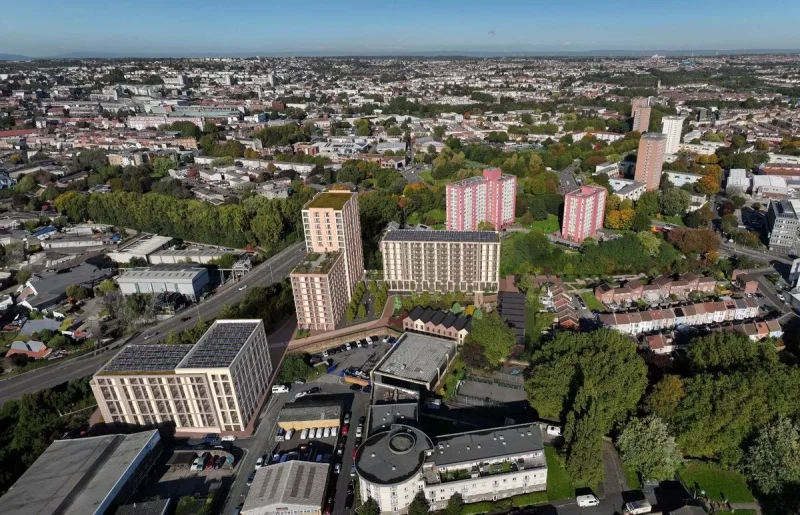
The 16-storey block will stand 3 storeys higher than the neighbouring Kingsmarsh House – photo: ECE Westworks
In an email to Bristol24/7, a resident of Lawrence Hill who wished to remain anonymous, expressed cautious optimism about the project: “Living next door to this site, I have submitted comments and they do seem to listen.
“This was originally proposed as a 26-storey building, but now it is 16. I’m dreading the start of this, but equally know we need housing and it is a wasted space.”
The need for housing and an aspiration to renovate a currently underutilised site were key drivers for councillors when discussing the plans at the committee meeting in December.
But despite unanimous support from councillors, the proposed development plans have been a source of controversy within the community.
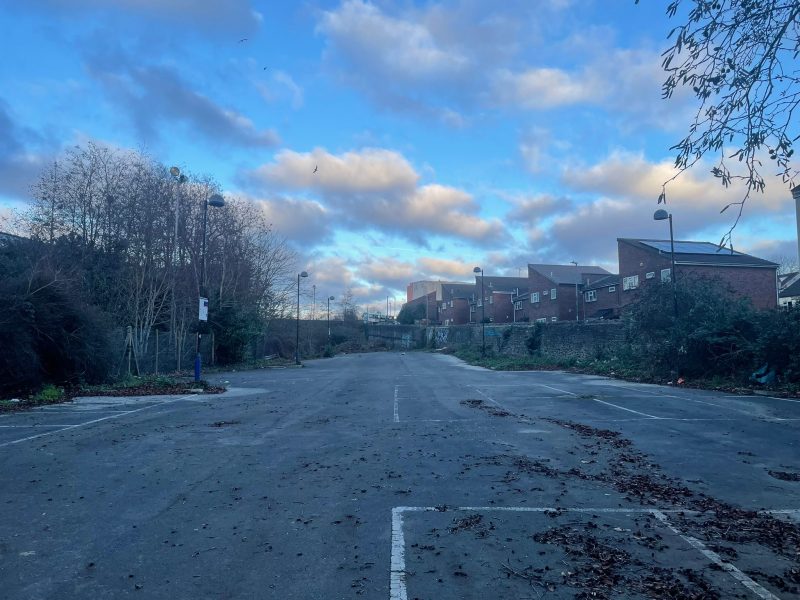
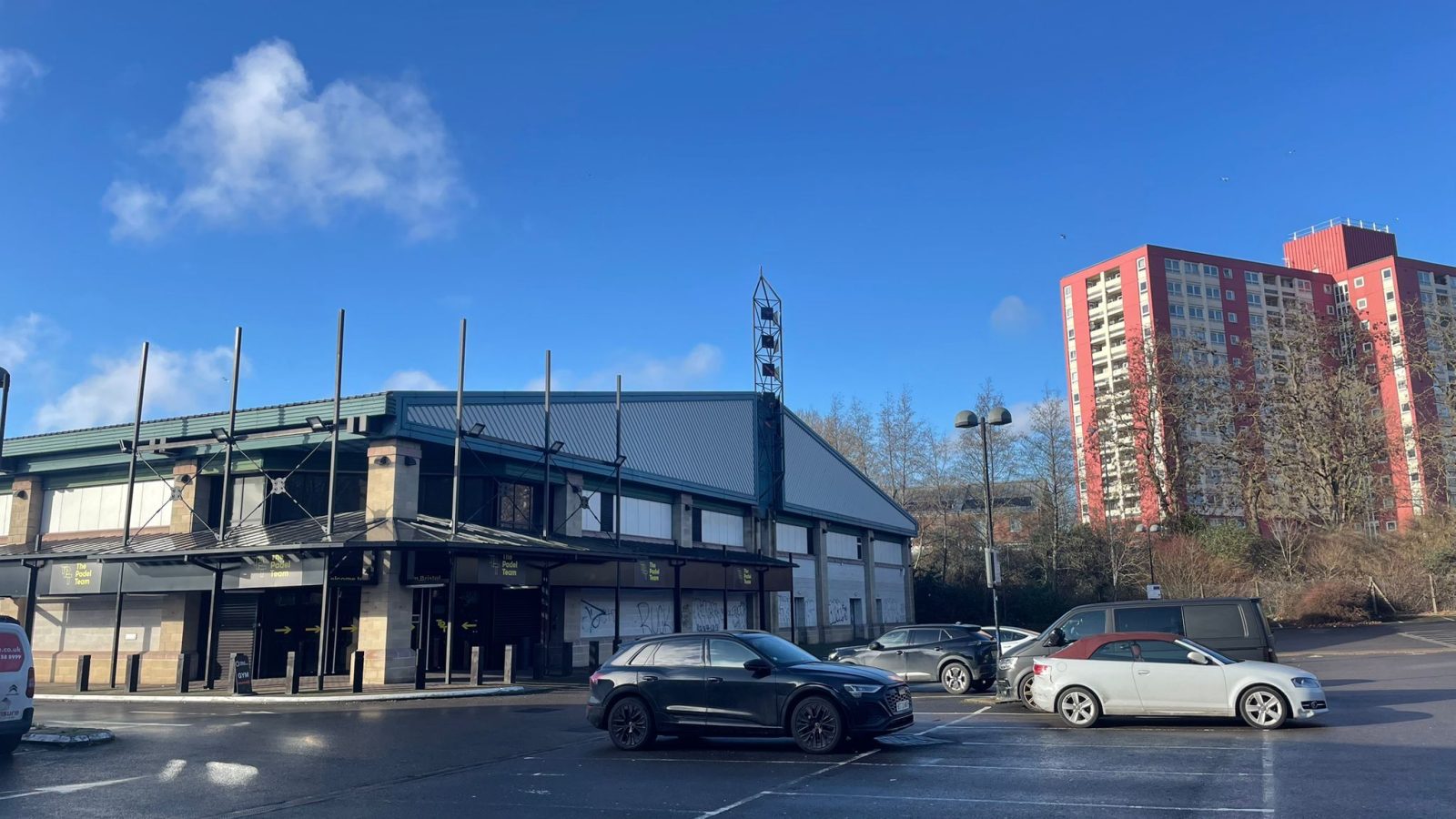
The site currently hosts a padel centre, located within a warehouse unit that was previously home to a gym and, before that, Mecca Bingo – photo: Joss Thomas
Consultations with the community show that the proposed height and density of the development and its subsequent impact on community facilities are two looming concerns.
“Even though I welcome the redevelopment of the land in principle, I am very cautious of the overall scale of the redevelopment,” said Alexander Smith, another resident. “I believe it is over-densification of a community that is already very crowded in housing and living conditions.”
According to demographics on City Population, the Lawrence Hill ward has seen one of the largest growth percentages in population compared to the rest of Bristol, with the population growing by 3.1 per cent between 2021 and 2024. This is the second highest after the Bristol Central ward, which saw a 6.1 per cent increase in this period.
It is this increasing densification that has increased concerns about the impact of a large development, like the one proposed on the former Mecca Bingo site, on local services in the area.
Smith continued: “I am also very concerned about the impact that this scheme will have on already strained public services within the neighbourhood – the schools, doctors’ surgeries and few and far between community spaces which are struggling to cope with increasing demand and less investment from the council.”
Jackie Price, a St George resident, shared similar concerns: “If it goes ahead, where will the new residents be able to access doctors, dentists and so on? There aren’t enough appointments available now, let alone when there are hundreds more people within the area.”
As the NHS are not a statutory consultee for the planning committee, they hadn’t been consulted about the development. Furthermore, the Integrated Care Board (ICB), responsible for allocating NHS budgets and commissioning services, currently has no plans to expand the capacity of the existing surgeries or to provide a new surgery.
It is because of the ICB’s lack of planning that Bristol City Council did not require the developer to contribute funds directly towards the healthcare services.
Regarding this, Jim Cliffe, the planning obligation manager stated: “It doesn’t seem wise to ask for contributions in the absence of a clear plan on the [ICB’s] part as to what they want to do with the money.”
However, while there are currently no plans for expansion in the capacity of GP services or any pledged contributions to the ICB from the developers, they have assigned £2.2m to the Community Infrastructure Levy (CIL), which is money available to the local council to fund public infrastructure.
These funds could potentially be used in order to invest in the local healthcare services, with the council speaking about potentially allocating an allotted annual amount of CIL to the ICB to do just this.
Another area of concern raised by the densification of the area due to this development is the impact on traffic and parking in the area.
In comments to Bristol24/7, one local resident who also wished to remain anonymous said: “How can they build more homes when the infrastructure can’t cope now.. or are all the new residents going to ride bikes?”
The developer certainly hopes so.
Within the proposed plan of the development, there will only be 23 car parking spaces for the entire build; these will be allocated to pre-determined units. The remaining dwellings will be rented out with the condition that the “tenant cannot own and/or bring a vehicle to the site.”
Given the condition’s unenforceability, the developer has allocated £100,000 contribution to fund the design, consultation, and implementation of a controlled parking zone. The measure aims to mitigate potential issues by restricting permit eligibility to existing residents, thereby excluding all future tenants of the development.
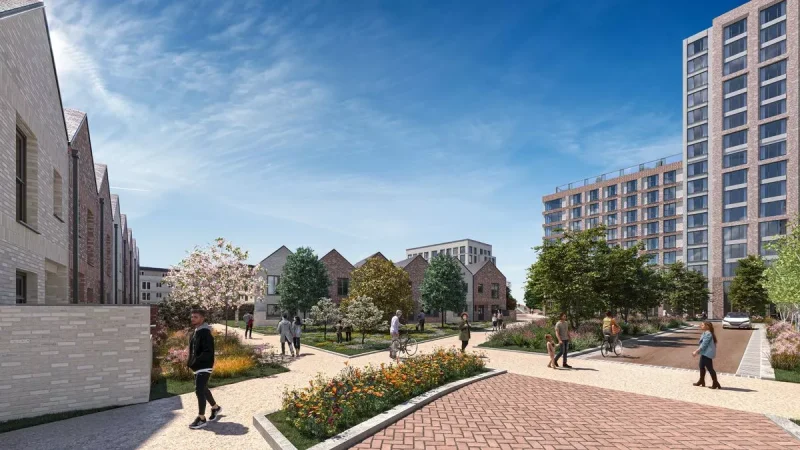
In addition to the allotted £100k to develop a restrictive parking scheme, the developers have pledged £150k towards improving transport links within the vicinity of the build – photo: ECE Westworks
However, because resident parking schemes have to go through considerable consultations within the council and are most likely to face objections within the community, it is not a certainty that the scheme will be implemented.
The transport development management coordinator, Jane Woodhouse, acknowledged that if they cannot achieve the scheme, the council “would have to then address any sort of safety concerns that arose due to the higher levels of parking”. This highlights the potential validity of the community’s concern.
A spokesperson from Galliard Homes said their firm had been working closely with the council for several years for the Barrow Road development. They assured that this was being carried out by engaging “extensively with the local community, with the scheme evolving in response to that feedback”.
They added: “The redevelopment of this brownfield site will deliver new homes, including affordable housing, alongside landscaped public space, improved pedestrian and cycle connections and investment in the area, helping to create a greener, safer and better-connected neighbourhood.”
Addressing concerns raised by the community about various issues including healthcare and parking, the developers added: Matters such as healthcare provision, parking and transport were carefully assessed by the council as part of the planning process, with mitigation secured through planning conditions, a Section 106 agreement and a significant CIL contribution, which the council allocates in line with its priorities.”
Green councillor for Lawrence Hill, Shona Jemphrey, called the development “controversial” and something she has felt “very torn” about.
“It does provide 39 affordable housing units,” added Jemphrey, “And every affordable home built is a key part of targeting the housing crisis in Bristol.”
“This means 39 families will have somewhere safe and suitable to live. As the cost of construction rises, developers are telling us that they cannot afford to build these units without taller buildings to make it financially viable.”
“At the same time, local residents have very reasonably raised concerns about parking and local services such as GP availability.
“The local GPs of Wellspring Surgery and Lawrence Hill Health Centre are already incredibly busy.
“It is extremely frustrating that the current system is so slow, and with limited power from the local authority, which means that the NHS will only look at increasing local health provisions once the new residents are practically already on site.
“As local councillors we have been trying to influence the ICB for increased health provision in the area, particularly bearing in mind all the developments happening around Temple Quarter, but this is slow going and we have frustratingly little power in this area.”
Talking about the proposed residents’ parking schemes, Jemphrey said that these can be “divisive” but are the only way that the council can introduce “greater parking controls” in specific areas of the city.
She continued: “There is currently a queue of neighbourhoods across the city clamouring for a residents’ parking scheme, so the earliest that such a scheme would be installed in this area would likely be 2027 or 2028. But this would only happen if local residents wanted it.
“Over the last few months, I have had multiple discussions with both the developer and local residents who contacted me about this project, and encouraged concerned residents to submit statements to the planning committee to put forward their views.”
“I know many residents are disappointed with the decision that was reached. One silver lining is that there is a community space agreed within the development, which the developer has indicated could possibly be turned into a GP surgery if this is something that the ICB wanted.”
Main photo: Joss Thomas
Read next:
 Our newsletters emailed directly to you