Features / tom marshman
Tom Marshman on unearthing queer stories through performance
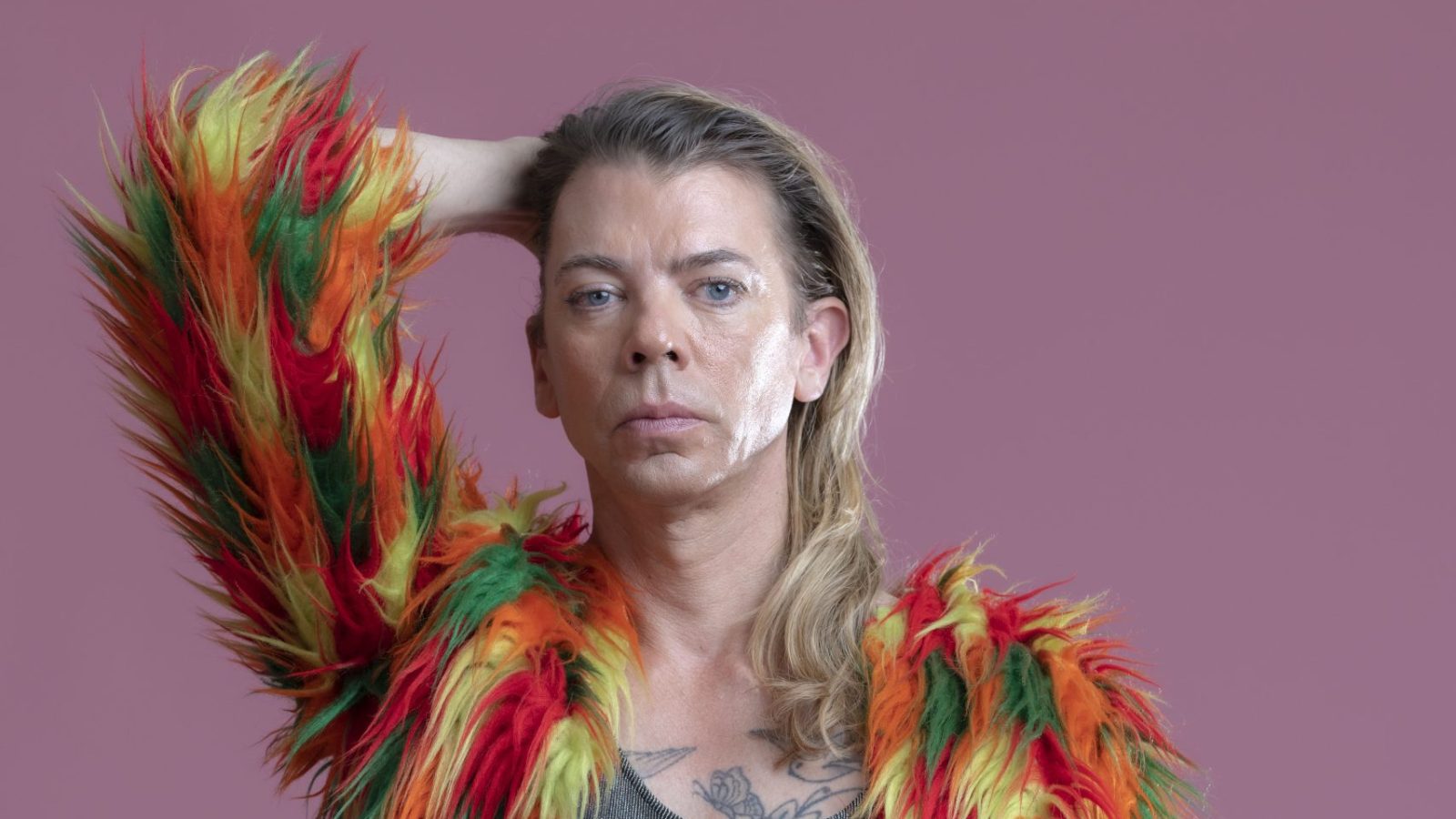
Tom has spent decades uncovering and amplifying unseen queer histories.
Born and raised in Bristol, his performance practice weaves together queer history, community participation and theatrical experimentation – including sharing real stories relating to Section 28, which suppressed the “promotion” of homosexuality in schools and public institutions.
Tom has been recognised in the Performing Arts category at Bristol24/7’s Bristol Legends – a celebration of the very best of Bristol.
is needed now More than ever
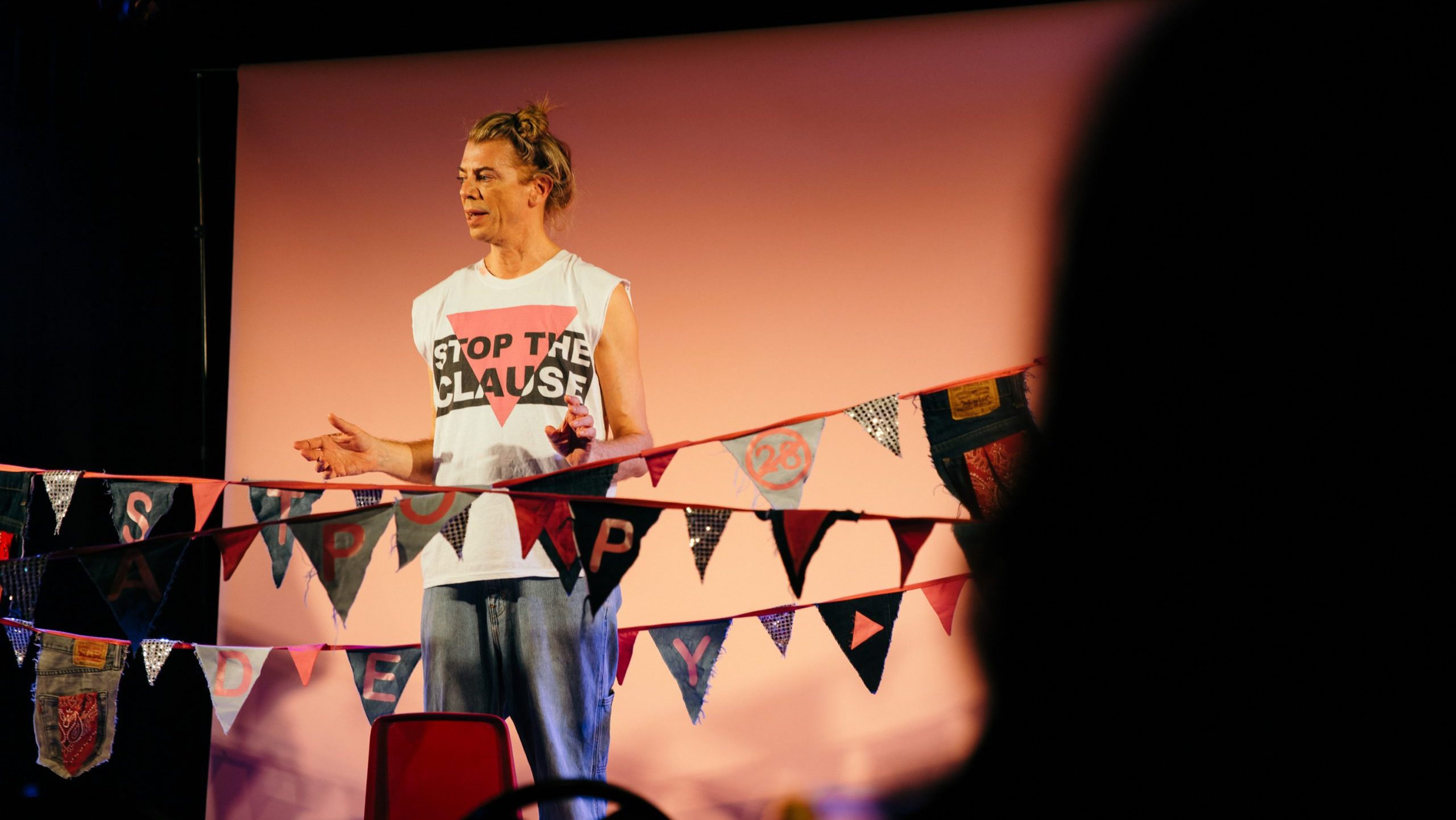
Tom integrates queer history into his performances – photo: Lukasz Izdebski
Bristol’s performing arts scene
I met Tom in the bar of Bristol Old Vic, as torrential January rain poured on King Street. Sipping coffee, he reflected on the city that shaped him.
“What I enjoy about Bristol is that there is a diverse range of spaces for performing, each with differing agendas. Bristolian audiences are very curious. My type of work aligns with that attitude, it’s curious, and progressively liberal.”
The interview took place in the middle of a series of performances exploring queer relationships to digital intimacy, examining how people present themselves online.
Classical tales like Salome by Oscar Wilde are retold through modern interfaces, including through the Grindr app.
Audience reaction is difficult to gauge, Tom said, so positive feedback is all the more meaningful.
“I had an older couple come to tell me they loved my work, and how experimental it was.
“This couple was reflecting on the 60s, when theatre was declining. It feels like it’s opening back up again now.”
For Tom, curiosity and adventure are essential qualities in an audience.
He believes that theatre spaces are designed for immersion and creativity.
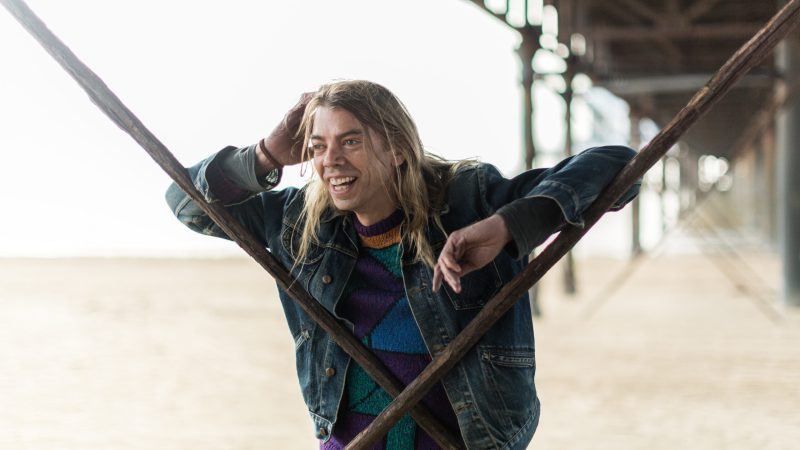
Tom was born and raised in Bristol -photo: Paul Blakemore
How theatre has changed
Tom moves fluidly between Bristol’s performing arts communities.
He is connected to the drag scene, creates work within visual arts and produces more traditional theatre pieces. That flexibility has become central to his practice.
He explained: “When I started to make work, there were more barriers regarding who could access different performance spaces. It feels more democratic now, and more diverse stories are being told.”
This allows people to enter spaces like the Bristol Old Vic and see their own stories reflected back at them.
Yet the landscape is not without challenges. Funding has diminished, and residencies are harder to secure.
Tom said: “The council seems unable to rationalise that investing in creativity can grow the commercial aspects of Bristol. Culture can attract money and growth.”
As the times change, so do performance styles.
Tom explained: “There is a blurring of what art forms are and where they belong.
“There’s more theatricality in club nights and more nightlife in performance.”
Platforming queer histories
Tom’s audiences vary widely depending on the venue.
In theatres, they span generations. In clubs, he joked, he can find himself the oldest person in the room, surrounded by young queer audiences.
Much of his work draws on museums and archives. Historically, queer perspectives have been erased or omitted from official records.
Tom said: “Museums and archives are systems of the patriarchy in terms that the people who have owned them have historically been rich, white men. Therefore, these are the stories that are predominant.”
Finding representation within these archives and museums is an important performance practice for Tom.
He approaches these spaces like a detective, searching for traces of queer lives hidden between the lines.
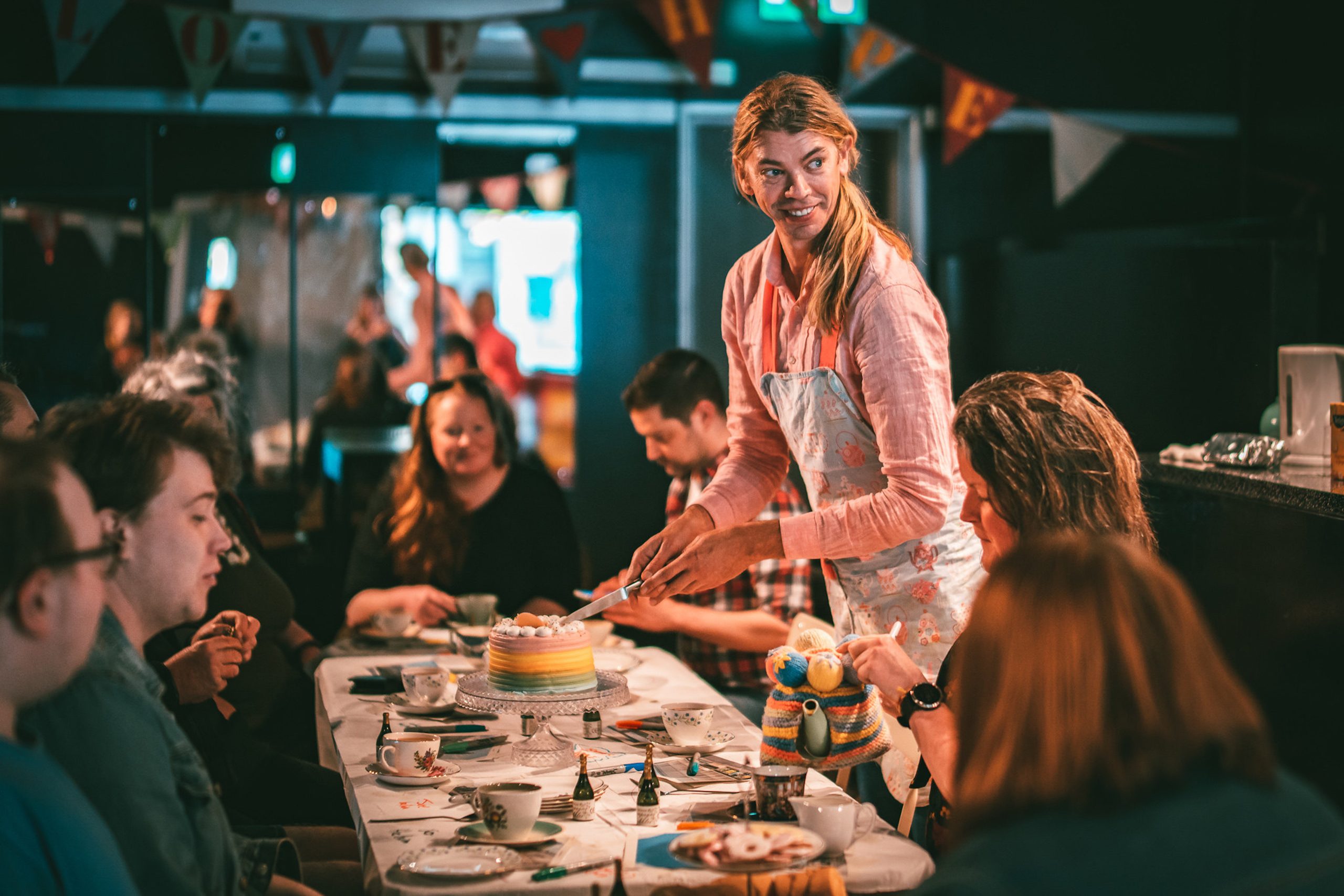
Tom’s work spans beyond theatre, hosting events that build community and reflect on queer representation – photo: Mark Grey
For Section 28 and Me, Tom hosted tea parties where participants shared memories of living under the legislation.
In the gatherings, people often had revelations about their past: why they had responded to different parts of their life in different ways.
Tom spoke of his philosophy of “Lipstick Sharing”: the intergenerational exchanges of knowledge, wisdom and thought that happens in dressing rooms.
It’s not necessarily about imparting wisdom, but about what performers can offer each other in a form of cultural and knowledge exchange.
He said: “I know the practical steps of making a show as a performer. But everything else can be discussed and learned from one another. It’s important to remain open to the world around us,” said Tom.
In the future, Tom wants to provoke conversation about queerness in uniformed professions. He has worked with the RAF, marking 20 years since the lifting of the military ban on LGBTQ+ personnel.
He recalled building an unexpected and joyful partnership with the Fire Service – including leading the parade at Brighton Pride aboard a fire truck.
View this post on Instagram
Bristol’s changing queer scene
For the past few years, Tom has been writing a memoir, set against the backdrop growing as a performer in Bristol during the 1990s.
“I’m Bristolian, I’ve always been here,” he says. “There used to be a lot gay bars when I was coming of age. It was very bubblegum pop, gay boy vibes, we did what we could. It felt hard to find my tribe at the time. I ended up hanging out mostly with older, rich gay men as that’s who I identified with. Nowadays, events are more queer and inclusive to the wider LGBT+ community. These events cater for more alternative crowds.”
Back then, Tom was advised to make his work “less queer”.
“People used to say they liked my work, but venues didn’t have sufficient numbers of queer audiences.
“Now people are vying for queer audiences. People see queerness within themselves, even if they don’t have that identity.
“There is a lot more interest in these stories than there was.”
To keep up to date with Tom’s performances and news, visit www.tommarshman.com. For tickets to the afterparty of Bristol Legends, visit www.bristol247.com/events/bristol-legends-party
Main photo: Paul Blakemore
Read next:
 Our newsletters emailed directly to you