Features / Film
‘Sci-fi lets you fly away and just be you’
A queer sci-fi film may sound niche.
However, Bells Kennedy-Compston, producer for upcoming short film Roisin and Raela, argues that “queerness” is already deeply embedded in major science fiction franchises
From same-sex love storylines in Doctor Who to the Wachowski siblings’ work in Sense8, queer representation has become a natural and vital part of the sci-fi landscape.
is needed now More than ever
Roisin and Raela is a proof-of-concept short film exploring togetherness, queer joy and the climate crisis through a romantic sci-fi lens.
On a post-apocalyptic Earth, the film follows character Roisin, a lone survivor who discovers a crashed spaceship pilot, Raela.
The two must race against time to fix Raela’s transporter, leading to Roisin making a decision that could change her life and humanity forever.
With filming in Burnham-on-Sea to begin in March, the production is using a crew from Bristol and the surrounding area to bring the story to life.
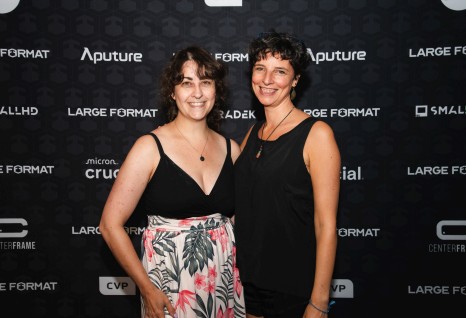
Writer Savannah Betts and director Gemma Reynolds attended the Large Format Film Short Film Funding Competition in 2025
Queerness and sci-fi
Speaking about the genre, writer Savannah Betts said: “There’s so much space in sci-fi to be gay. The possibilities of types of organisms and differences are so vast and unknown. It feels safe: there’s such a spectrum.
“You can be anything and do anything, as opposed to the heteronormative world holding so many limits and boundaries.
“With sci-fi you can dress however, speak however. I think it’s so magical. Sci-fi lets you fly away and escape and just be you.”
Savannah explained that the film’s message of joy and hope is particularly relevant for contemporary culture, championing finding beauty in everyday life.
She said: “No matter what the situation, there are always elements of beauty. Everything feels dark in our current times for the queer community.
“I wanted people to live in a world and see things that are beautiful and offer some escapism.”
Incidental representation
Roisin and Raela aims to normalise queer culture through incidental representation, rather than making queerness the primary plot point.
Savannah said that many mainstream films focus heavily on major events like coming out, using the character’s sexuality as the central narrative tool.
In contrast, this project seeks to simply depict queerness as a natural part of life, avoiding an overdramatisation or a tragic focus.
Director Gemma Reynolds added: “In our daily life, queerness is normal. It’s just how we live our lives. It’s romance: it’s just two people connecting. We just want to see ourselves and our stories in a fun way.”
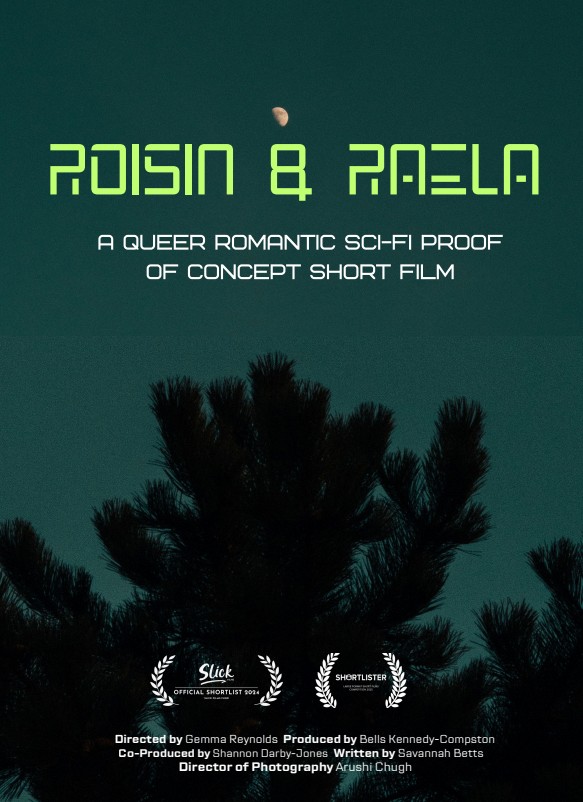
‘Roisin & Raela’ is a forthcoming queer, female-led, sci-fi short film about two lonely souls who find connection on a dying Earth – image: Roisin & Raela
Platforming queer joy
Gemma envisions a film rooted in queer joy, hope and healing – a project designed to leave audiences feeling both positive and proactive.
The intention of the project is representation, weaving together themes of overcoming vulnerabilities and remaining open to love when it feels out of reach.
“At the end of everything, what is it that we’re holding onto?” said Gemma, summing up the core appeal of the apocalyptic genre.
A queer production crew
Roisin and Raela is a queer and female-led production with much of its crew also falling under this umbrella.
Bells said this helps with relatability and understanding as issues explored in queer projects may not be immediately familiar to everyone.
Bells said: “I remember being with a trans crew in other projects. It was great to see people being hired to treat intense productions with the sensitivity they deserve.”
They added that when a crew is united by shared queer identity and genuine passion, it inherently elevates the entire creative process.
Savannah continued that working on a project as a runner made them realise the value of queer crews in projects.
She said: “On set they had an accessibility and intimacy coordinator, who doubled as someone to just go to if you needed.
“When they introduced themselves they said their pronouns and said they were there if they needed anything.
“That made the whole environment feel so welcoming as a queer space. It really does make a difference.”
Discussing setting the project in Bristol, Savannah said it marks a first for the city’s creative landscape.
“The sense of community and openness here is perfect. I want to champion the queer crew we have in Bristol.
“Our story is filmed and set in the South West, so it’s great for regional representation.
“I’ve been in Bristol for eight years. This is where I came out and sci-fi got me into film in the first place, so it combines everything I love.”
Visibility and representation
On the topic of representation, Gemma noted: “We all have conscious biases, if you’re living the stories you’re telling, you’re less likely to bring in those biases.
“We all represent different types of queerness; if we’re not tapping into people with those experiences, we’re missing out.
“We’re never going to represent all experiences in the film, but at least we’re giving a voice to some.”
Bells believes the Bristol film community is brimming with potential for fresh, innovative ventures.
They continued: “To work with so many local talented queer crew is something I’m really excited for, and how everyone has supported us has been really heartwarming.
“I didn’t expect people to be as invested as they have been.”
To donate to the project’s production and release, visit this fundraiser, and for more information, visit this website
All photos: Bells Kennedy-Compston/ Roisin and Raela
Read more:
 Our newsletters emailed directly to you