Music / British jazz
Beyond the Fringe
When Tony Orrell’s Big Top take their final bow on the Bristol Music Centre stage on December 17 it will not only mark the end of the weekly FringeJazz sessions but also the end of Bristol promoter Jon Taylor’s career in the jazz business that started nearly 45 years ago.
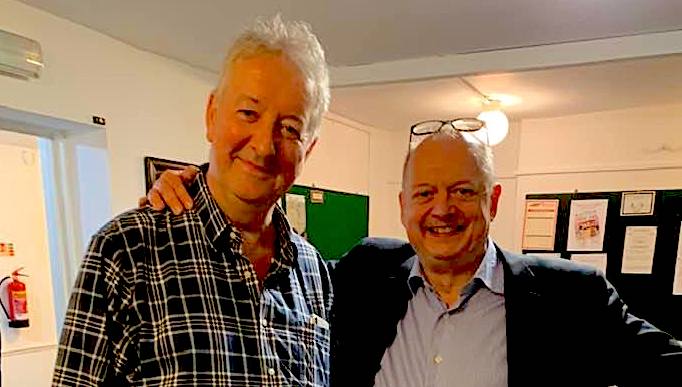
It’s been a big decision for Jon (seen at the top, left, with saxophonist Alan Barnes) but – as he told Bristol 24/7 – a combination of factors helped make up his mind: “I’ve not been too well and my wife had surgery following a fall. When she recovers we want to go on a good holiday – something a weekly gig really gets in the way of. And the Bristol jazz scene is so buoyant these days I feel taking my gigs out still leaves things in a good place.” In fact, he’d actually first tried to stop back in the summer but a phone call from sax star Larry Stabbins persuaded him to run one last set of gigs up to Christmas.
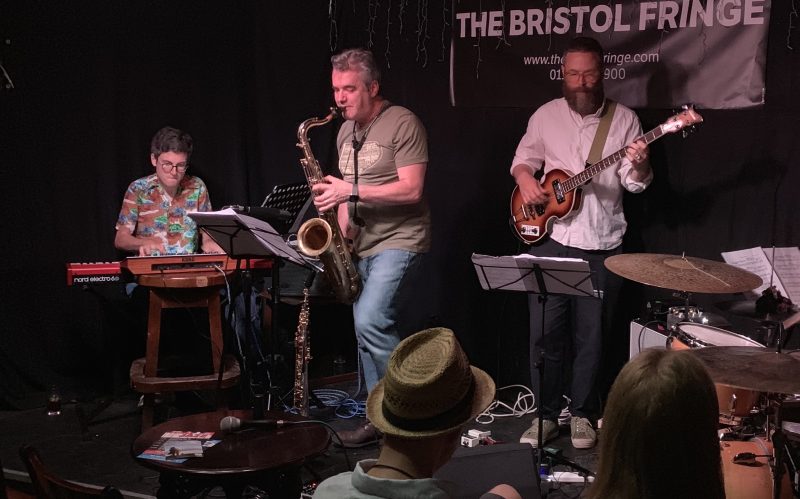
The Mark Lockheart Quartet at FringeJazz (photo: Tony Benjamin)
Jon’s awareness of jazz in Bristol began when he dropped out of the University in the mid-70s: “There were some really good bands in Bristol back then, I got to know the Bristol Musicians Co-op and Will and Ian Menter who had a band called Bullitt, fantastic anarchic Mingus style, and another called Zimmer, but I went off to Manchester, then London and got into bands up there.” Things changed when, in 1981, Jon joined Bristol’s then-new commercial Radio West (now absorbed into Heart) as an advertising salesman. “But nobody wanted to do the jazz programme so they asked me! It ended up being a 3 hour show on Saturday evenings, and when I found out they had a spare budget I persuaded them to do a live jazz gig. I managed to book Dick Morrisey and Jim Mullen’s Our Band – their Morrisey-Mullen band was very big at the time – and arranged to do it in the White Lion bar in the Avon Gorge Hotel. It was really good, sold out, and the hotel asked me to do more.”
is needed now More than ever
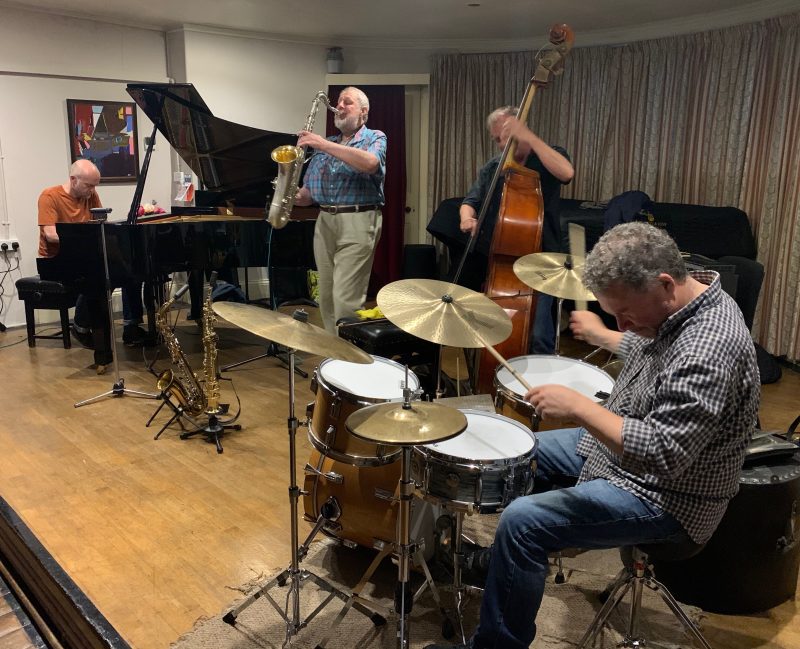
Paul Dunmall Quartet at FringeJazz (photo: Tony Benjamin)
That was the beginning of the weekly Gorge Jazz and Jon’s start as promoter. His first independent gig featured the powerful band Spirit Level led by fiery sax player Paul Dunmall and with none other than the aforementioned Tony Orrell on drums, and he went on with Sphere featuring a young Andy Sheppard. Walking down Chandos Road he recognised Larry Stabbins, already a famous jazz name, who not only agreed to do a gig but also lent him records to help fill out the radio show. Gorge Jazz carried on for five years, bringing a dazzling roster of stars including guitarist John Etheridge, sax players Art Themen and Dudu Pukwana and pianists including Stan Tracey, Keith Tippett and Jon’s almost-namesake John Taylor.
Then in 1987 pressure of work running his own advertising agency forced him to wind up the sessions. He didn’t feel too bad about that, however: “When I started Gorge Jazz the scene was terrible in Bristol, almost no decent paid entry gigs but by the time I finished Ian (Storrer) was up and running at The Albert – thank God! – and the Bebop Club was starting in The Bear.” So he left the promotion to others for twenty-five years until in 2012 circumstances found him helping out in the Treblerock guitar shop and Andy Sheppard came in. “As soon as he saw me he said ‘Jon Taylor! Let’s start doing gigs!’ And he dragged me down to The Fringe.”
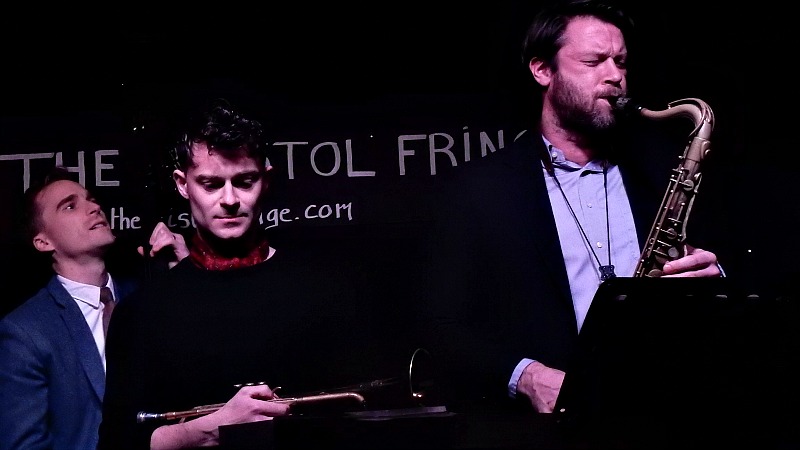
Jazz Defenders at FringeJazz (photo: Tony Benjamin)
The Bristol Fringe – formerly the Greyhound pub in Clifton’s Princess Victoria Street – had just been reopened by Sylvie Dagallier and Andy was keen to use the back room. Jon, however didn’t like it: “The back room was just too small, there was nowhere to sit, it was totally wrong.” But Andy, now joined by – yes! – Tony Orrell, was very persuasive. “He said whenever he was not on tour he’d play there, even if we couldn’t pay him. He was very instrumental in starting FringeJazz.”
The gigs started in 2012 and Andy was true to his word, playing regularly including one set of three consecutive nights that were completely sold out. Not that it took much: “The absolute maximum number you could get in there before people started fainting was about 43 but 25 felt really comfortable. The beauty was that Sylvie let us have the room for free so you could take a risk on unknown or challenging bands. I could put on anything – risky stuff – and she never interfered. If we got 25 people it felt fantastic!” However brewery politics began to make things uncertain and Jon moved FringeJazz to The Mall pub’s basement: “It was a hard room to do gigs in, musicians didn’t like it” When the pub’s management changed the jazz was summarily kicked out – happily just as Sylvie regained The Fringe and they could get back in there.
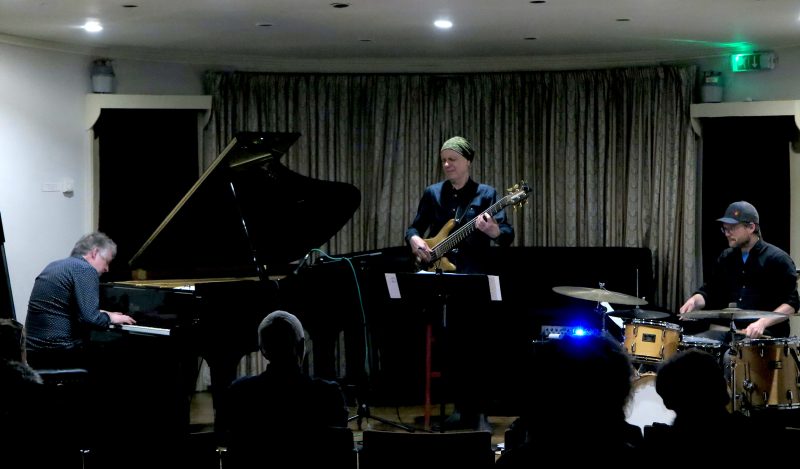
Huw Warren Trio at FringeJazz (photo: Tony Benjamin)
And that arrangement lasted until the pandemic period but after that Jon was less sure about that tiny room: “Would people still want to be crammed together in a room without ventilation?” Looking around for alternatives he remembered the Bristol Music Club as he walked up Queens Road. “We’d put on gigs there because it had two good pianos, people like Stan Tracey with Keith Tippett, John Taylor with Mike Garrick. It didn’t have a bar but we arranged to run that ourselves and we started there in 2021. It’s been brilliant – and we can seat 82 people comfortably there.”
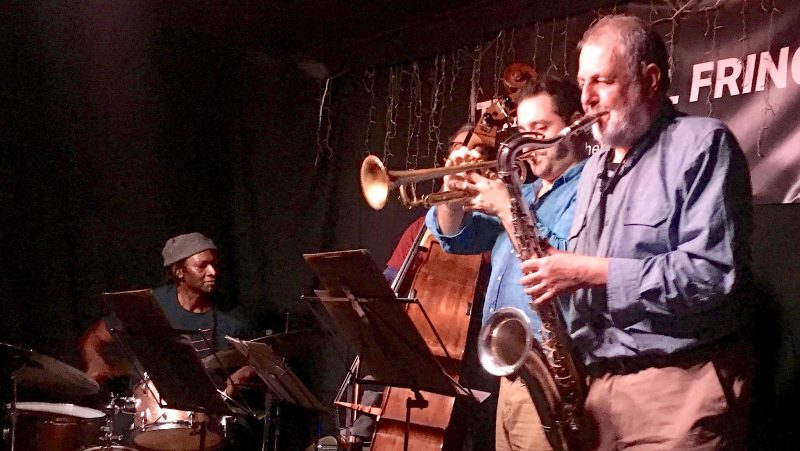
Paul Dunmall Quartet with Hamid Drake drumming (photo: Tony Benjamin)
Across the last 13 years Jon Taylor and FringeJazz have provided Bristol with many memorable gigs: “When Paul Dunmall brought (US drum legend) Hamid Drake the queue went right down the road!” The great thing was that whenever star players came down they would go on to encourage others, the likes of pianists Liam Noble, Huw Warren and Jason Rebello and sax stars Art Themen, Iain Ballamy and, of course, Andy Sheppard drew in many great names.
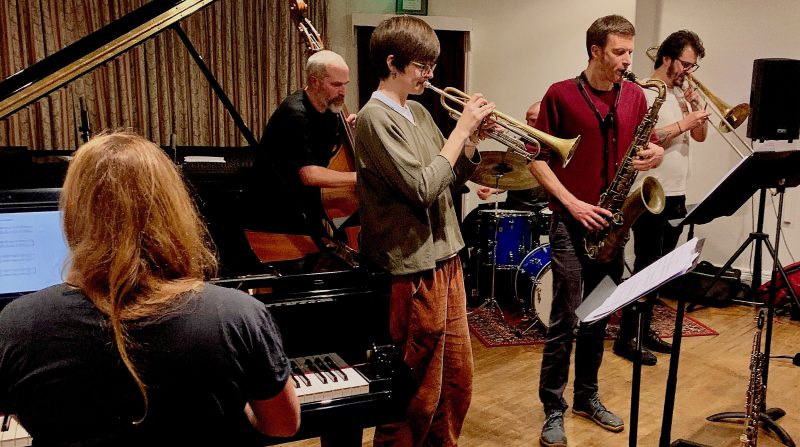
Riaan Vosloo’s Commotion feat. Laura Jurd (photo: Tony Benjamin)
However Jon is emphatic in stressing the strength of Bristol’s local scene and the great players to be found here: “People like Ben Waghorn and Jake McMurchie – both world class sax players in my estimation. Riaan Vosloo – not just a brilliant bass player but a great arranger, his band Commotion is one of the best UK bands, especially with (trumpeter) Laura Jurd. And James Morton – he’s always been a great thing and always supported us … and there’s Kevin Figes, Denny Ilett …”

Tony Orrell’s Big Top feat. Riaan Vosloo and Jake McMurchie (photo: Tony Benjamin)
One thing Jon takes great pride in are the bands that have been nurtured on the FringeJazz stages, notably the Blue Note-inspired hard bop Jazz Defenders and the aforementioned Tony Orrell’s Big Top, an all-star double drummer circus inspired by Tony’s anarchic take on things. Jon’s annual Three Tenors nights featuring three great saxophonists were also a notable highlight. What is evident is that, like all the very best promoters, his respect for the musicians and willingness to ensure their happiness with the gig means they have always wanted to come back despite restricted conditions and limited money. Jon even recalls the great Art Themen questioning his fee because it seemed too much for a tiny provincial jazz club.
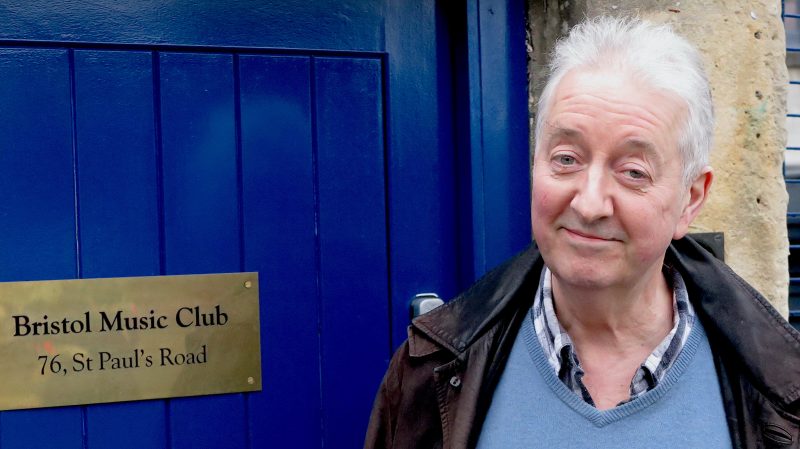
Jon Taylor at the Bristol Music Club gate (photo: Tony Benjamin)
While Jon is right to feel that the Bristol jazz scene is in good health these days, nevertheless the passing of FringeJazz will be felt both by those musicians and those loyal regulars who have been with the club over many years. It is important not to underestimate the great contribution that music promoters like Jon Taylor make towards keeping Bristol’s deservedly proud reputation as a thriving home for live music. The one consolation, for Jon at least, will be that now he can actually get to more gigs himself: “Running FringeJazz I’ve missed so many!”. But first, hopefully, there’s the matter of a holiday …
 Our newsletters emailed directly to you