Music / Reviews
Review: Quercus, St George’s – ‘Trio music of the finest quality’
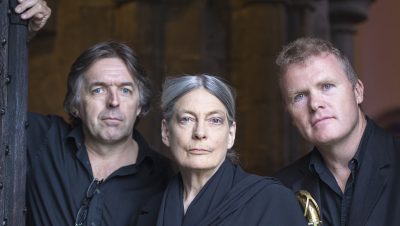
Singer June Tabor has always insisted that, for her, it’s all about the stories you can tell with a song. Given her choice of traditional and modern material, a performance by the trio Quercus is thus akin to a series of short but powerful films, their emotional core given additional clarity by the subtle soundtrack of Huw Warren’s piano and Iain Ballamy’s tenor saxophone.
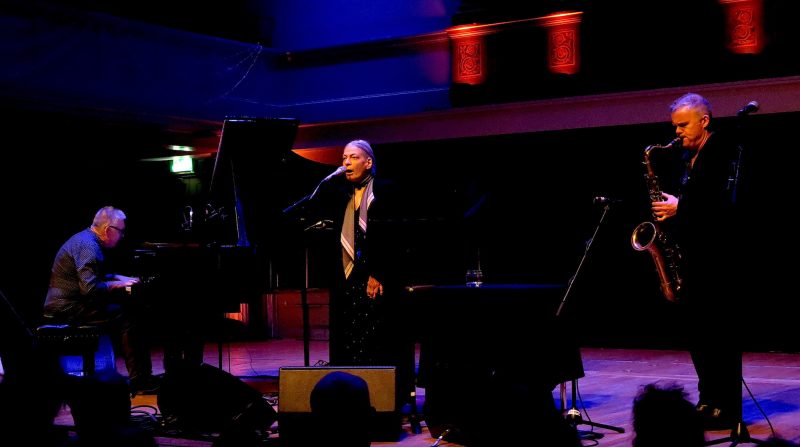
Dressed in the kind of sombre greys their ECM record label favours the three took the stage without introductions and went straight into Sally Free and Easy, a traditional song of a sailor betrayed by false love who intends to drown himself at sunset. As June remarked afterwards “You’re in for a night of love gone wrong!” And indeed there were to be few bright spots ahead of us – though there were a couple, notably her almost exuberant rendition of Les Barker’s South Pacific parody There Is Nothing Like a Worm, a remnant of her happy times in his Mrs Ackroyd Band.
is needed now More than ever
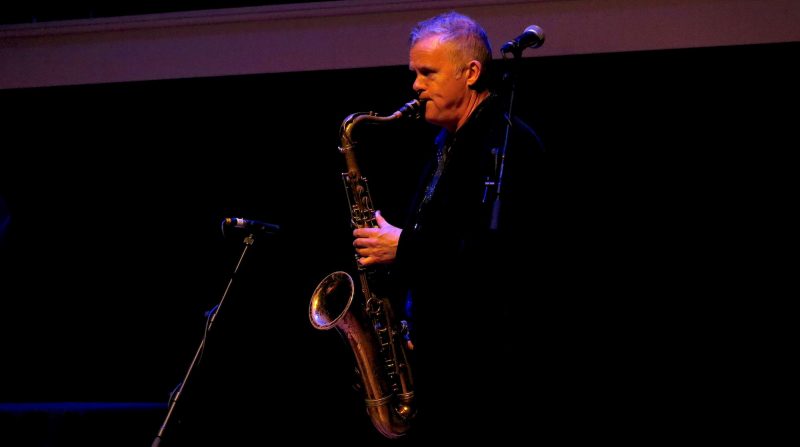
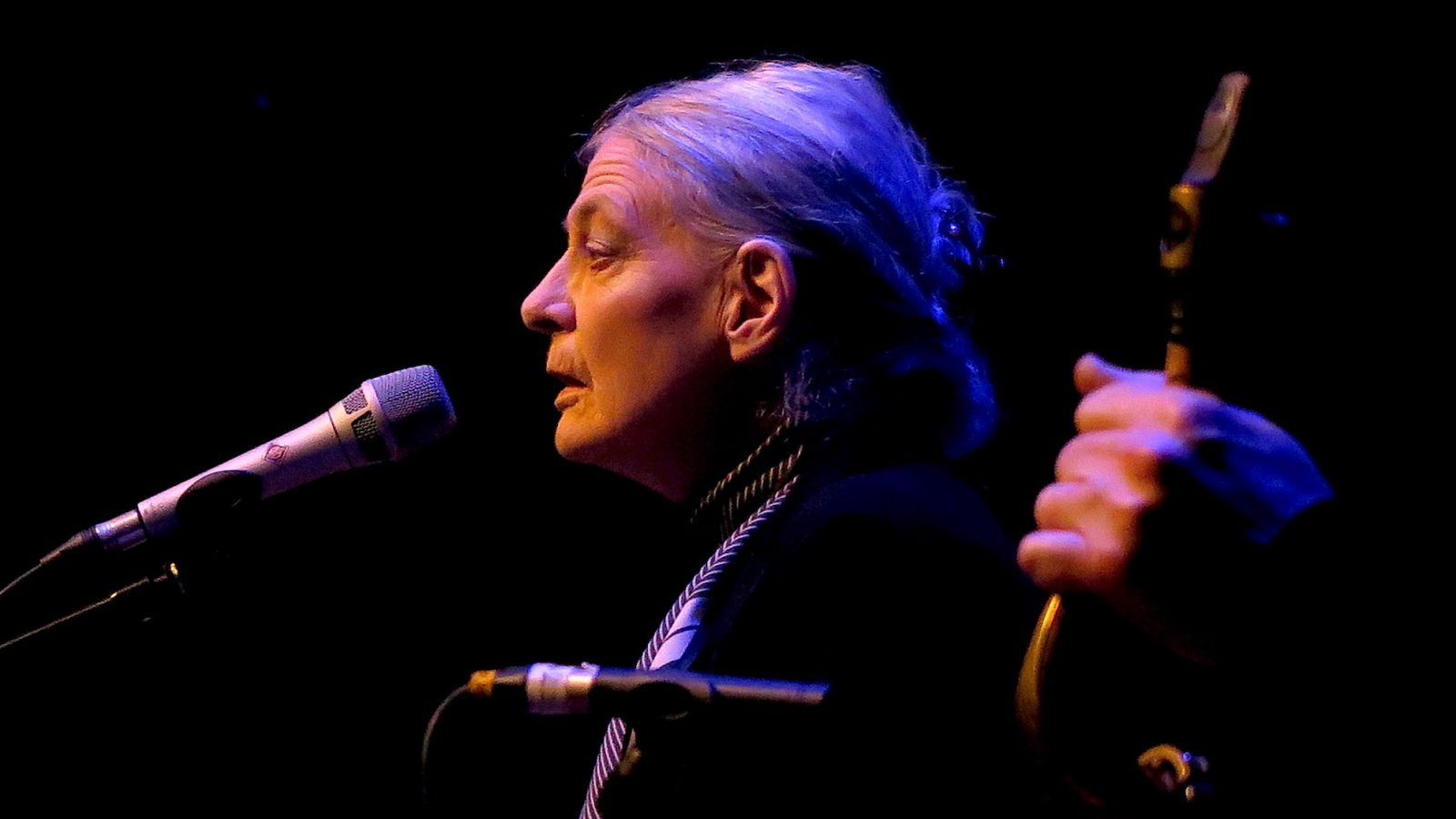
There’s a clear reason why Quercus took well-established traditional singer June Tabor to the top of the European jazz tree in one bound and that is the quality of the instrumentation. As the evening unfolded it was a continuous pleasure to hear how Huw Warren’s piano took the often simple chord progressions and melodic structures of the songs and wove a subtly shifting narrative around the vocal line. Similarly, the judicious patience with which Iain Ballamy bided his time before adding incidental moments of melodic icing to the cake. This was trio music of the finest quality, albeit rooted in June’s uniquely compelling voice which, without undue melodrama, used the slightest of inflections to convey heartbreak and fury alike. Unsurprisingly, the near-capacity audience responded to each song with the kind of lengthy ovation usually reserved for the final number.
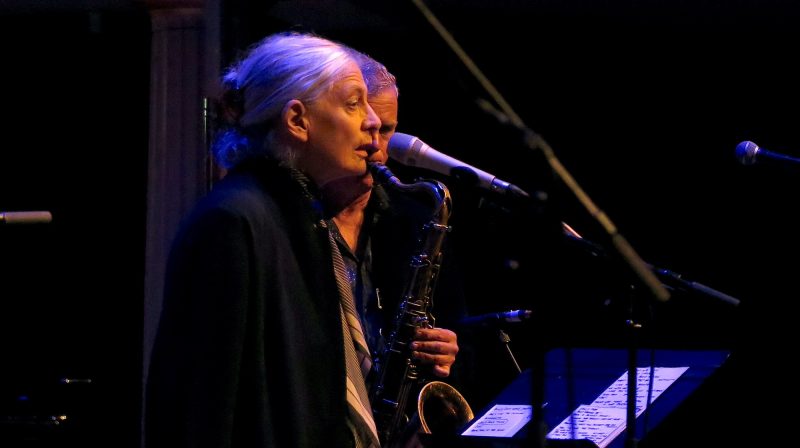
One interesting choice was Bob Dylan’s Don’t Think Twice It’s Alright, the withering masculine scorn of the original transformed into a woman’s defiant liberation with only the change of a single word. It was a fine example of how June not only finds great material but also adds her own transformative dimensions in performance. Similarly, by placing The Manchester Angel in the horrific context of the battle of Culloden, the oft-repeated theme of a lover going off to the wars gained an extra dark foreboding, seized upon by the piano and sax for a dramatic musical climax.
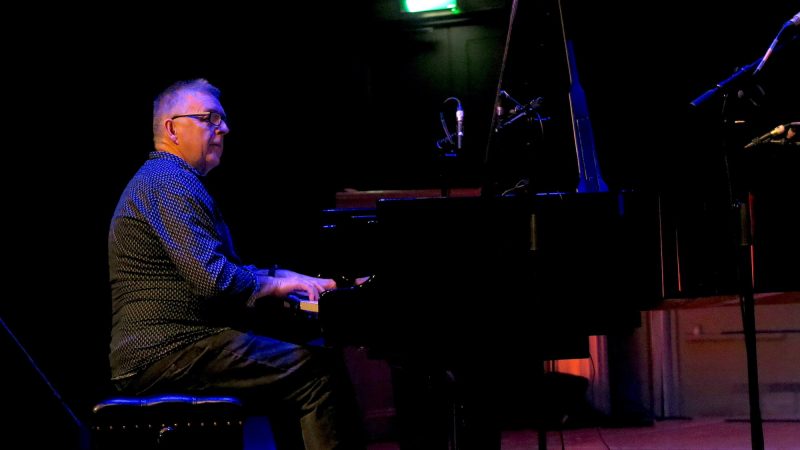
For all the remarkably youthful vigour of her voice, however, June is approaching 78 years old and freely admits to having dodgy knees. She left the stage in both sets giving the musicians the space to flex their jazz muscles, firstly in tribute to the late and great pianist/composer John Taylor with his tune Windfall. It was a clever arrangement with an almost classical piano opening that slowly settled into jazzier harmonics, the two players warming to their task towards a brisker finale. In the second set they took Trane Song, a tune of Iain’s inspired by John Coltrane albeit in an ‘encrypted’ way: there was nothing to suggest the punchy McCoy Tyner in the piano part, though the melodic elements had the kind of elegance the great Trane would have approved.

The ‘last song’ was Beating The Retreat, a Richard Thompson classic for which June’s rich lower register proved a perfect equivalent to Thompson’s own. That was followed by the inevitable standing ovation and encore – a wistful rendition of Auld Lang’s Syne. It was very appropriate for a singer whose birthday is December 31st but also a reflection on the many phases of a remarkable sixty year career. Let us nevertheless hope for further opportunities to appreciate the collective artistry that makes Quercus such a special experience.
(photos: Tony Benjamin)
 Our newsletters emailed directly to you