Film / News
Watch ‘The Ghost Train’ online free
Back in 1992, the British Film Institute launched a campaign under the banner Missing Believed Lost. Its aim was to scour the world’s film archives in the hope of tracking down 100 elusive classic movies. Among them was the 1931 version of The Ghost Train, which is of particular interest to connoisseurs of local filmmaking.
Not only was this the first feature film to be shot round these parts, but it also has plenty of Bristol and Bath connections. The Ghost Train was written by a certain Arnold Ridley, who’s best remembered these days as doddery Private Godfrey in Dad’s Army. Ridley was born in Bath in 1896 and graduated from the education department of the University of Bristol. He made his debut as an actor at the Theatre Royal, Bristol, but his thespian career was interrupted by the outbreak of WWI. In 1915, he enlisted in the Somerset Light Infantry, subsequently sustaining several serious injuries.
After the war, Ridley found himself stuck on Mangotsfield Station for several hours during a delayed journey. The sound of mainline trains rattling along the curve as they by-passed this branch line gave the uncanny impression of a phantom loco approaching and departing from Mangotsfield. Ridley drew on this experience to write The Ghost Train as a stage play in 1923. The tale of a bunch of travellers stranded on a storm-lashed platform who are warned by the stationmaster to beware of the spectral train, this was a huge hit on the London stage, where it ran for more than a year. The most famous film adaptation is the 1941 version, starring Arthur Askey. There was also an earlier silent version in 1927, which was shot mostly in Germany. But the lost adaptation was directed in 1931 by Walter Forde (who, seemingly unable to keep away from the material, also directed the later Arthur Askey one) with a cast that included popular husband and wife comedians Jack Hulbert and Cicely Courtneidge. This one was shot in part on the now closed Limpley Stoke to Camerton branch line, with Cornwall’s fictitious Fal Vale Station being constructed on a GWR sideline outside Bath.
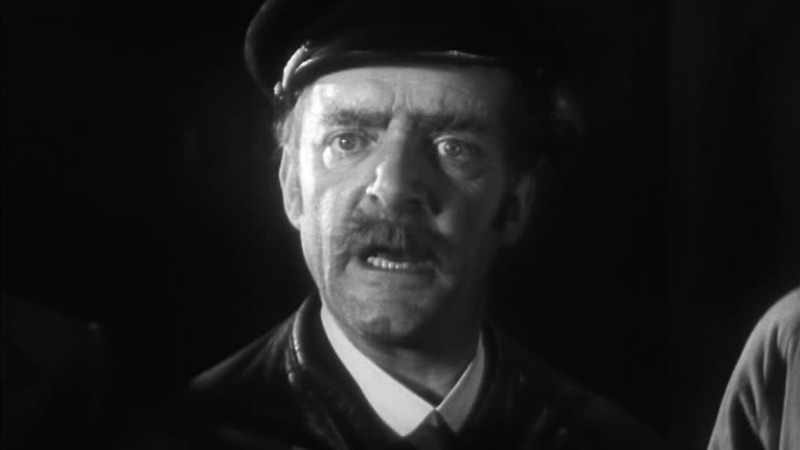
The good news is that the BFI succeeded in tracking down a print of the film. Alas, it’s incomplete, with just 40 of the 72 minutes surviving. And most of this is mute, apart from the last ten minutes. It’s still well worth a look and has just been made available to watch, free of charge, on the BFI Player as part of the new Railways on Film collection. Go here to watch the best available version of this rediscovered classic.
 Our newsletters emailed directly to you