Film / Reviews
The Duke of Burgundy
The Duke of Burgundy (18)
UK 2015 104 mins Dir: Peter Strickland Starring: Sidse Babett Knudsen, Monica Swinn, Chiara D’Anna, Eugenia Caruso, Kata Bartsch
With his third feature film, The Duke of Burgundy, British director Peter Strickland further demonstrates his skill in upending audience expectations. His debut, 2009’s Katalin Varga, took the basic outline of the revenge movie and revealed itself to be something deeper and more memorable. Then in 2012, his celebrated Berberian Sound Studio centred on Toby Jones’ Giallo horror sound recordist, unspooling into a nightmarish commentary on sound design, paranoia and the very fabric of cinema itself.
The Duke of Burgundy sees him working in a somewhat gentler – but no less singular – mode. Taking place in an undisclosed county in an undisclosed period, it’s a self-styled throwback to the Euro erotic dramas that were a mainstay of cinema in the 1960s and 70s (Strickland has himself cited the likes of Luis Bunuel’s Belle du Jour as an influence).
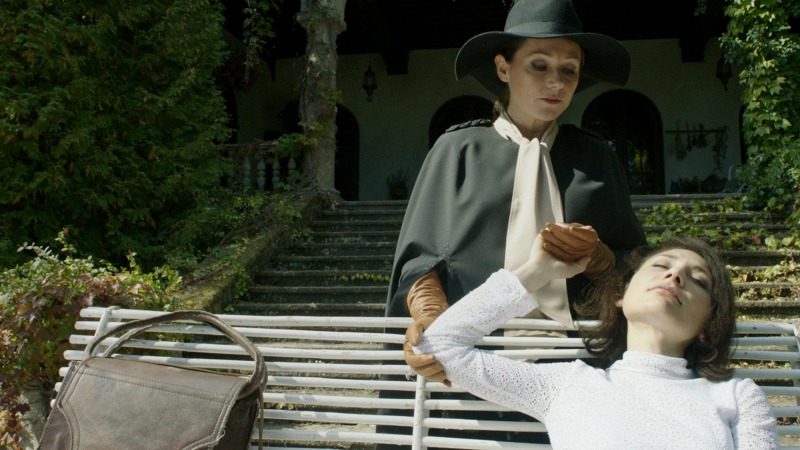
The film begins with a marvellously, deliberately kitsch opening credits sequence, colour-coded and scored to a wonderfully lush Ennio Morricone pastiche soundtrack by music duo Cat’s Eye. We then see wide-eyed and apparently naïve maid Evelyn (Chiara D’Anna) in the employ of cold and vindictive houseowner Cynthia (Borgen’s Sidse Babett Knudsen), a studier and classifier of butterflies and moths (a species of the former gives the movie its title).
Strickland then lifts the curtain, revealing that the master/servant dynamic is actually part of an elaborate role-playing game that forms the basis of a passionate submissive/dominant relationship. Simply on its own terms, this switchback (replayed multiple times from variously different perspectives) has us speculating on the theatrical nature of masochist relationships in ways that the trite Fifty Shades of Grey could only dream of. But it’s just one of the many ways Strickland plays around with the tawdry, titillating implications of the story.
On one level, the film is clearly designed as a loving tribute to a naff, albeit fondly remembered, sub-genre of cinema. At the same time however, it’s more than mere pastiche: Strickland and his two excellent leads are able to invest genuine believability and humour into the film’s Sapphic relationship. One especially marvellous moment sees Evelyn pacing up and down, rehearsing the lines of their pre-meditated relationship. At other times, wry chuckles are evoked through such banal yet recognisable details as Evelyn tiring of Cynthia’s snoring. Did we see that with Ana and Christian?
Throughout, the boundaries of submissive and dominant become increasingly amorphous, fluctuating and fragmenting as the film becomes more surreal a la the final movement of Berberian Sound Studio. But as peculiar and esoteric as it may be (it’s a movie unashamedly made for cineastes), the dreamy, rich opulence of both the visuals and sound design exert a magnetic pull – ironically, they tell us more about the tactile, mysterious nature of relationships than any onslaught of crass dialogue could possibly hope to.
 Our newsletters emailed directly to you