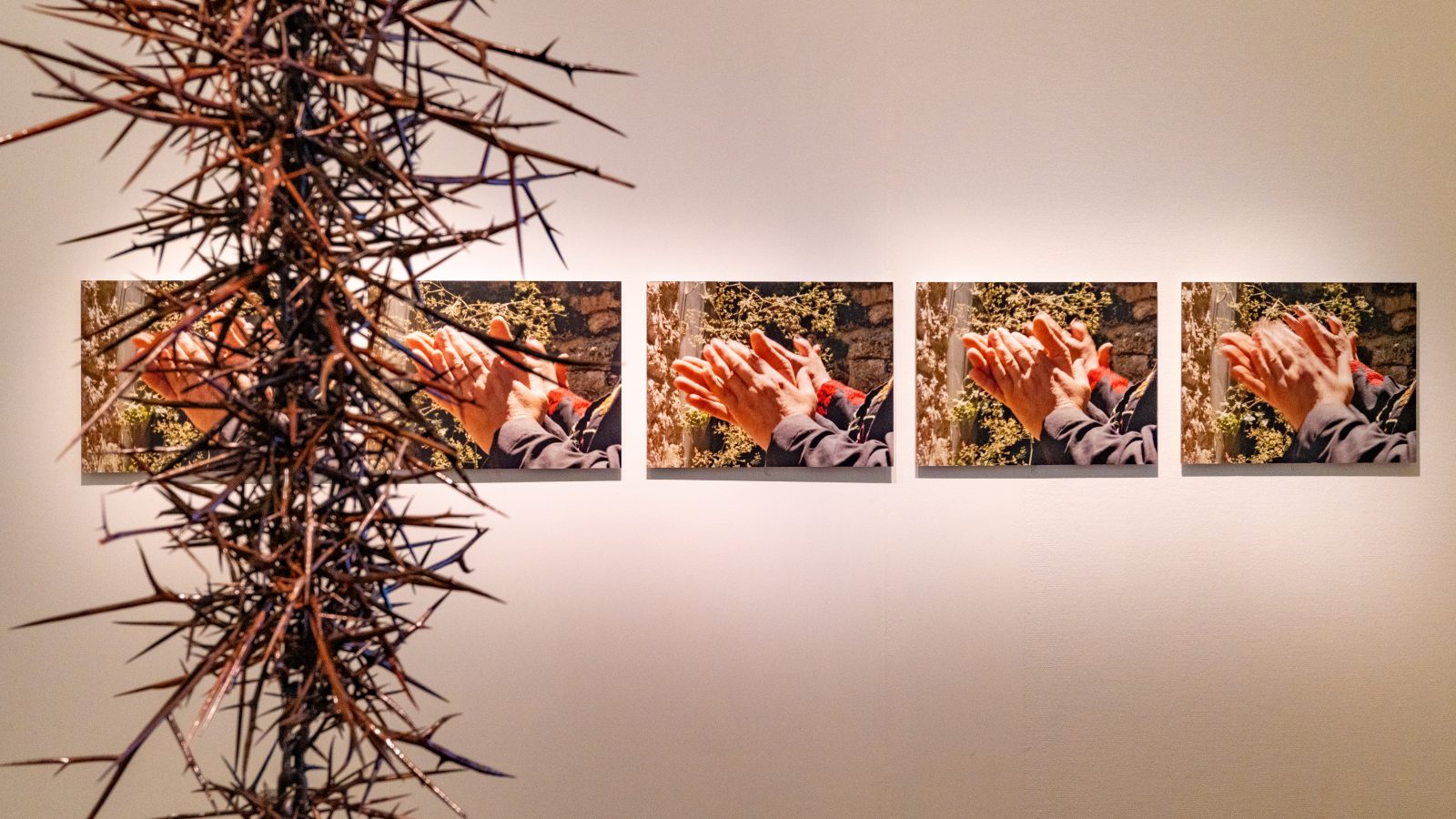
Art / Palestine
Major exhibition from Palestinian artists responds to ‘unfinished moment in history’
On November 29, 1947, Palestinian-Lebanese artist Maroun Tomb was due to open an exhibition in Haifa.
That day coincided with the day that the UN approved the partition of Palestine. During the conflict that followed, the artworks were lost.
A newly curated exhibition of work from 53 artists from Palestine and the diaspora is now open at Bristol Museum and Art Gallery, where it will remain until September 27.
is needed now More than ever
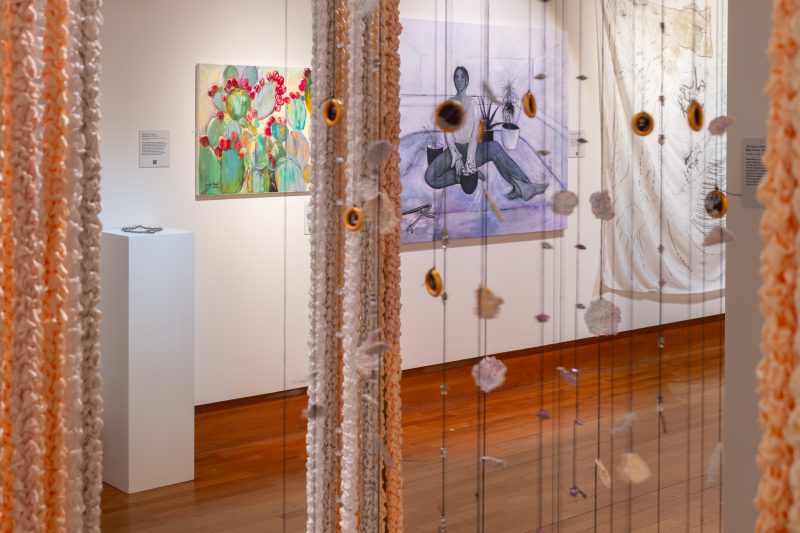
‘The Lost Paintings’ has been shown in Montreal, Boston, Belfast and London and is now on display in Bristol
“Almost nothing remains of Maroun Tomb’s original exhibition”, they indicate, “apart from a handwritten letter he sent to his friend Jacques Motola, including the invitation to the opening of the exhibition and a list of the titles of the paintings that were to be shown.”
In assembling this contemporary echo to Tomb’s work, every artist was given the task of making a response to one of those lost titles.
The Lost Paintings: A Prelude to Return is the result.
The new exhibition comes to Bristol having already been mounted in Montreal, Boston, Belfast and London, and promises to be “one of the most significant group exhibitions of Palestinian artists ever seen in England”.
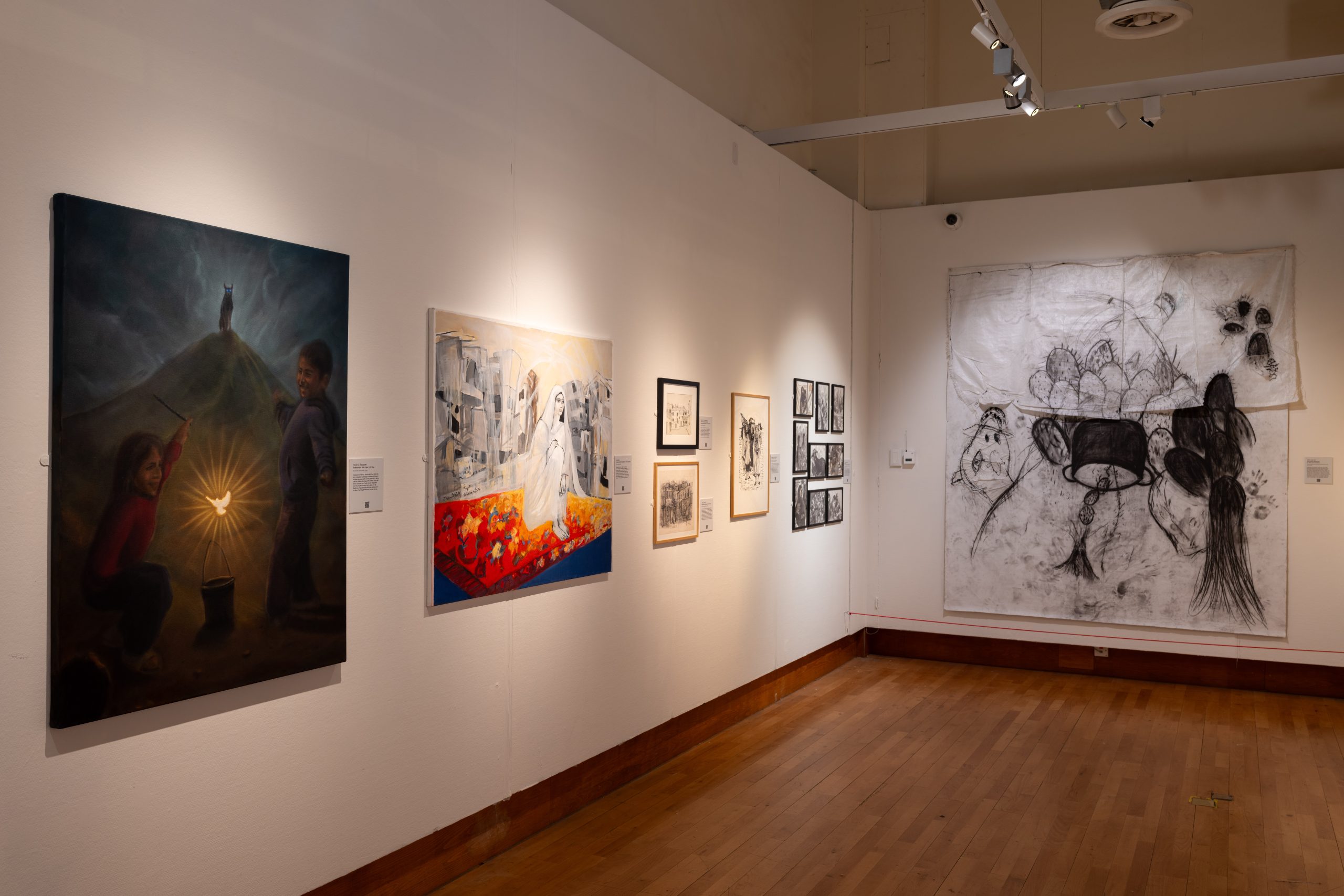
The exhibition traces the memory of artworks lost during the partition of Palestine
For many of the artists and curators, the original art by Maroun Tomb is not the only thing lost, who say they have lost the chance to return to Palestine.
A collection of photographs that Faissal El-Malak uncovered while researching the 1936 murder of his great-grandfather depicts buildings in Haifa that the artist longs to visit.
“The connection from the outside of not being able to go back illicit feelings of distance and longing.” says co-curator Haidi Motola, speaking to Bristol24/7 at the launch of the exhibition on Friday.
“The historical centre of Haifa is now completely destroyed.”
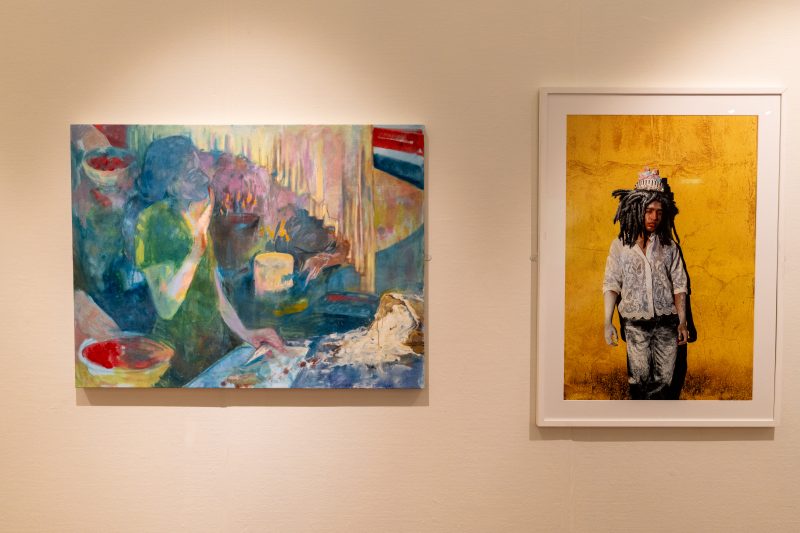
Rula Khoury, Joëlle Tomb and Haidi Motola are the exhibition’s three curators
Joëlle Tomb, the exhibition’s curator and Maroun Tomb’s granddaughter, felt a similar way.
Reflecting on the possibility of returning to Haifa, she said: “I don’t know if I could. I’m from Lebanon, and Lebanon and Israel are enemy states.”
Joëlle grew up unaware of her grandfather’s Palestinian heritage.
“His goal in life was to conceal the fact that he was Palestinian because Palestinian Arabs in Lebanon were not safe,” she says.
“I only learned about my connection to Palestine through this project three or four years ago.”
Discovering this hidden heritage brought mixed emotions.
Joëlle recalls the moment Haidi handed her a letter exchanged between their grandparents that revealed Maroun Tomb’s Palestinian origins.
“She changed my life, this one,” she says of the letter. “For better or for worse, I don’t know – we’re still discovering that. But it opened my eyes.”
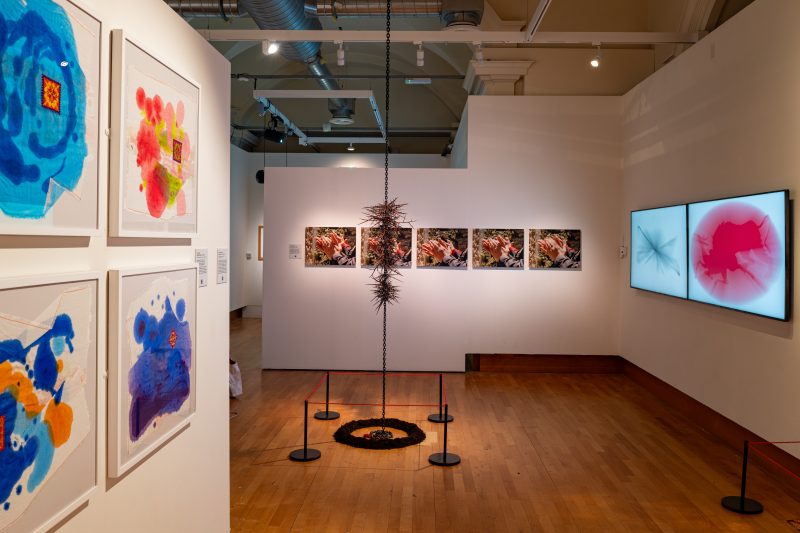
It reflects on themes of loss, destruction and displacement, say the curators
Rula Khoury, the project’s most recent collaborator, spoke about the emotional weight carried by many of the works on display.
She explained that after the war began, many artists initially struggled to create new work.
“Aartists were very emotional and not motivated to work on new artwork,” she says, “but then they decided to be responsive to recent events so we have a lot of artworks that talk about Gaza.”
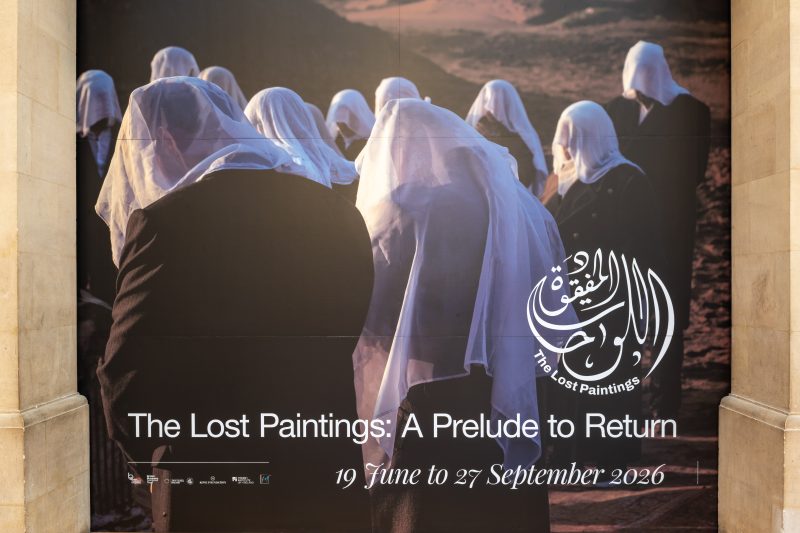
‘The Lost Paintings’ runs until the end of September
A series of online panel discussions will be held in July to coincide with The Lost Paintings.
To begin these, Rula, Haidi and Joëlle Tomb will be in conversation with Sanjit Chudha at a special online event on July 1, sharing insights about how the project came to be, and discussing the central ideas illuminated within the work.
The Lost Paintings: A Prelude to Return اللوحات المفقودة: تمهيد للعودة is at Bristol Museum and Art Gallery until September 27. Tickets are available at bristolmuseums.org.uk
All photos: Rob Browne
Read next:
 Our newsletters emailed directly to you