Film / Reviews
Precinct Seven Five
Precinct Seven Five (15)
USA 2014 104 mins Dir: Tiller Russell
If Michael Dowd were a Scorsese character he’d be played by the young Joe Pesci. All machine gun expletives, slightly menacing bonhomie, total lack of scruples and occasional hints of violence, Dowd was New York’s dirtiest cop back in the 1980s. And that’s some achievement given the strength of the competition for this dubious accolade. Tiller Russell’s Precinct Seven Five is a documentary, and an absolutely engrossing one, but you can’t help wondering how it might have turned out as drama in Scorsese’s hands. Russell’s use of classic rock music (Doo Doo Doo Doo Doo (Heartbreaker) by the Stones, Feel Like Makin’ Love by Bad Company, and so on) underlines the comparison. And just imagine how much fun Scorsese could have had with druglord Adam Diaz – a fearsome capo who doesn’t like “ghetto shit” on his state-of-the-art sound system, preferring the soothing sounds of Julio Iglesias and Bryan Adams, and whose three money-counting machines struggle to keep up with the cash avalanche despite running continuously 24 hours a day.
But then, as the old cliche goes, truth is stranger than fiction. Who’d believe a story in which crooked cops regularly ‘borrow’ fire engines, using axes to break down doors and ladders to gain access to upstairs windows as they commit their own robberies?
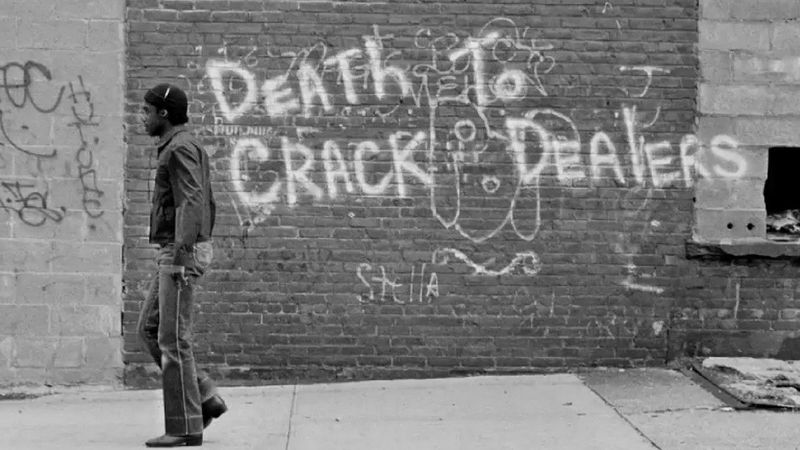
The film is bookended by, and interspersed with, footage of a meek and disarmingly frank Dowd testifying before the 1992 Mollen Commission hearings into police corruption. We’re then whisked back to the 1980s, to find East New York swamped with crack cocaine. An epidemic of homicides (3,500 a year), robberies and rapes make it feel like a war zone.
Dowd who’s described as “a crook who ended up wearing a cop’s uniform”, was quickly corrupted, ripping off bags of cash from dealers. His partner, Ken Eurell, took a little longer to be seduced. But before long, they were providing police protection for Diaz and making regular trips to Atlantic City to launder their mountains of loot. Inevitably, Dowd started getting high on his own supply, drove his brand new Corvette to work and didn’t even bother to pick up his meagre police pay cheque. Little wonder he has to pause to consider his reply when asked at the hearings whether he thought of himself as a cop or a criminal by this stage.
This is a story that’s familiar from countless crime dramas, but Russell’s main achievement is in getting most of the key participants to open up on camera. It helps that they’ve all served their time, of course, though Diaz remains a little coy about the circumstances in which some of his rivals ‘disappeared’. It’s all slickly edited and hugely entertaining, with Dowd proving a terrific ranconteur whose lines could have been scripted by Nicholas Pileggi (“Welcome to the land of fuck!”). The unfortunate victims of the cop-facilitated crimewave don’t get much of a look-in, which may prove problematic for liberal-minded audiences. Dowd’s maudlin crocodile tears over a fellow cop who was killed by a drug gang affiliated to his criminal employers are also somewhat hard to swallow. But there is at least a clear answer as to how this barrel load of bad apples got away with it for so long: the cops’ misguided code of honour, which views ratting on a colleague as the most heinous crime a uniformed law enforcer can possibly commit.
 Our newsletters emailed directly to you