Film / Reviews
Kumiko, the Treasure Hunter
Kumiko, The Treasure Hunter (12A)
USA 2015 105 mins Dir: David Zellner Starring: Rinko Kikuchi, Shirley Venard, David Zellner, Nathan Zellner
‘This is a true story’. That was the opening caption in the Coen brothers’ Fargo. It was a lie. The same caption is the first thing we see in David Zellner’s eccentric indie quest movie, albeit in fuzzy VHS form. It’s also a lie, although it may seem vaguely familiar on account of a tragic news story from 2001 that gave rise to an urban legend and a subsequent debunking TV documentary (inevitably titled This is a True Story).
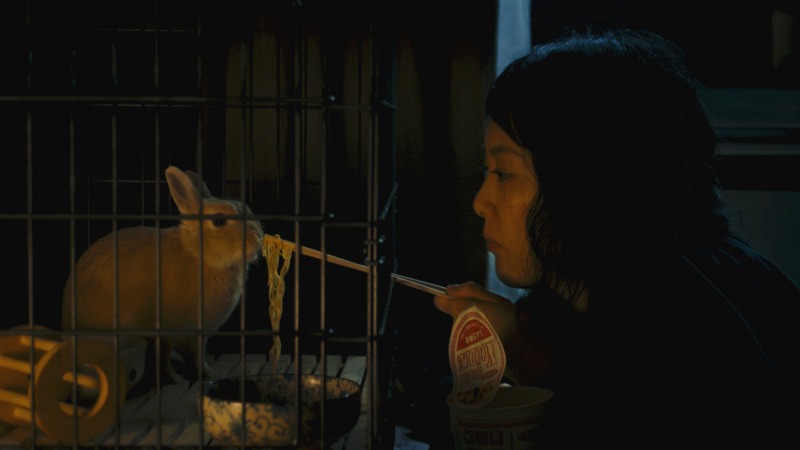
In what may be interpreted as a dream or fantasy sequence, the VHS is found buried in a beach cave by the mousy eponymous ‘office lady’ (Kikuchi). Something of an odd bird, solitary Kumiko resides in a cramped and cluttered Tokyo apartment, where she feeds her pet rabbit and only friend, Bunzo, on noodles dangling from chopsticks. She also fends off phone calls from her mother, who demands to know when she’s going to be married. Kumiko skulks around the office with her head down, refusing to engage with anyone – much to the displeasure of her boss, who complains about her ‘poor disposition’ and demands intrusively to know whether she’s a lesbian. But Kumiko has become obsessed with the Fargo tape, replaying over and over again the scene where Steve Buscemi buries a suitcase full of cash in the snow. When the tape finally wears out, she flushes it down the toilet, as you do, and buys a DVD of the film so she can take meticulous measurements of the loot’s location from her TV screen. Poor Bunzo is cruelly ditched and Kumiko takes a flight to Minneapolis with her boss’s company credit card in her pocket, single-mindedly determined to track down the hoard.
What follows could have been another cute indie picaresque culture-clash adventure, but proves to be much sadder than that thanks to the redoubtable Rinko Kikuchi’s mournful performance as obsessive outcast Kumiko. Early in the film, she tells a library security guard who catches her stealing an atlas that she sees herself as a Spanish conquistador in pursuit of untold riches – rather like Aguirre, Wrath of God recast with an Ozu character in place of Klaus Kinski and relocated to snowy North Dakota, in other words. Fatally unprepared and speaking little English, this deluded misfit experiences a series of encounters along the way, the most obvious nod to Fargo itself being a helpful if nonplussed cop (director Zellner) who tries in vain to persuade her that the story is fictional. Takako Konishi, the woman whose story gave rise to the urban legend, was ruled to have committed suicide. Zellner contrives to avoid such a downbeat note with his ending, which supplies a certain symmetry but is likely to divide audiences. Still, if they gave an Oscar for Best Rabbit, little Bunzo would be a shoo-in.
 Our newsletters emailed directly to you