Film / Reviews
Clouds of Sils Maria
Clouds of Sils Maria (15)
France/Switzerland/Germany/USA/Belgium 2014 124 mins Dir: Olivier Assayas Starring: Juliette Binoche, Kristen Stewart, Chloë Grace Moretz, Lars Eidinger
The observation that there’s a paucity of decent parts for actresses of a certain age has become something of a cliché. Juliette Binoche is luckier than most. French writer/director Olivier Assayas wrote the screenplay for her breakthrough film Rendez-vous back in 1985. He also created great characters for her in Alice et Martin and Summer Hours. Thirty years on from Rendez-vous, Assayas gives the 51-year-old Binoche a peach of a role as an aging actress making an uncomfortable return to the play in which she made her name. The potential to get all meta on our asses is huge, as is the knowing casting of Twilight star Kristen Stewart in a film that has much fun at the expense of effects-laden Hollywood blockbusters. But one of the great strengths of the psychosexual Clouds of Sils Maria – which has been described, pretty accurately, as All About Eve meets Persona – is that it resists the urge to flaunt its self-referentialism.
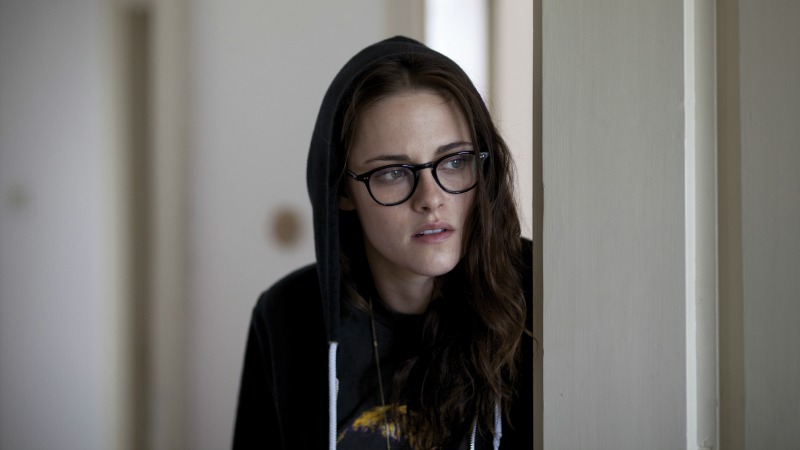
In the middle of an acrimonious divorce, over-indulged European stage and screen star Maria Enders (Binoche) travels to Switzerland with her harassed, super-efficient, multi-tasking American PA and confidante Valentine (an unflatteringly bespectacled Stewart) to accept a gong on behalf of reclusive Wilhelm Melchior, the playwright whose Maloja Snake launched her career 20 years earlier. Along the way, Val receives news that Melchior has died. But the ceremony goes ahead, reuniting Maria with an unwelcome ghost from her past. Intense young tyro director Klaus (Eidinger) is also present, expressing his keenness to revive Maloja Snake for the London stage. Val convinces her boss that this will be a great career move. But of course, Maria can no longer play Sigrid – a young woman who seduces, manipulates and ultimately drives her 40-year-old employer, Helena, to suicide. Instead, she will have to take the part of middle-aged Helena. In the role of Sigrid, Klaus casts volatile, mouthy Hollywood starlet and tabloid TV staple Jo-Ann Ellis (Moretz), who’s fresh out of rehab.
In addition to offering a sly commentary on the film business and tensions between high and popular culture, Assayas’s multi-faceted script is a perceptive exploration of female friendship, rivalry and insecurity. The passing years have given Maria a new perspective on Helena’s character to the extent that she now believes Maloja Snake is unfairly weighted towards Sigrid. As she rehearses the role with Val at Sils Maria high in the Swiss Alps, Assayas cleverly accentuates the parallels between the play and their own damagingly codependent relationship, to the point where the lines become increasingly blurred. It’s not all psychodrama, as he also has fun with the film-within-a-film: a preposterously overblown, FX-laden Marvel 3D makeover of Forbidden Planet whose references and in-jokes will, perhaps intentionally, baffle beard-stroking arthouse audiences while delighting Comic Book Guys. Still, the former will get their own back by observing that Melchior is clearly based on Rainer Werner Fassbinder and his Maloja Snake is a thinly disguised reworking of The Bitter Tears of Petra von Kant.
Binoche is, as one might expect, superb as the demanding and haughty yet vulnerable Maria, but the revelation is Stewart, finally casting off drippy, doe-eyed Bella to hold her own impressively in what becomes, for long stretches, a cross-generational two-hander with an unexpected, unexplained payoff. Moretz doesn’t actually show up until late in the film, but channels her inner Lindsay Lohan with aplomb. As for the Maloja Snake itself, this is a genuine meteorological phenomenon. Assayas unearths some fascinating monochrome footage of it from the 1920s, which complements his striking location work and is certain to delight the Swiss tourism authorities.
 Our newsletters emailed directly to you