Film / Documentaries
Attenborough’s Bristol-made film offering a deep dive into hope
Keith Scholey and Toby Nowlan of Silverback Films are based in Bristol – known, Scholey says, as “the centre of wildlife filmmaking in the world” – often spending long hours in dark rooms here, cutting and editing the footage they collect in exotic locations.
The pair co-directed Ocean, Attenborough’s latest documentary that premiered on the eve of his 99th birthday.
Its reception took everyone involved by surprise.
is needed now More than ever
“Producing and directing this film was the privilege of my professional career,” says Nowlan.
“It was Sir David’s most personal, reflective and emotional piece yet, and his greatest message.”
Scholey, who has worked with Attenborough for 44 years and counting, says the presenter remains humble.
“He’s interested in all the world but finds the most boring thing on earth is David Attenborough.
“For a celebrity, that’s very rare. David thinks the people who should be lauded are big scientists like Newton and Darwin.”
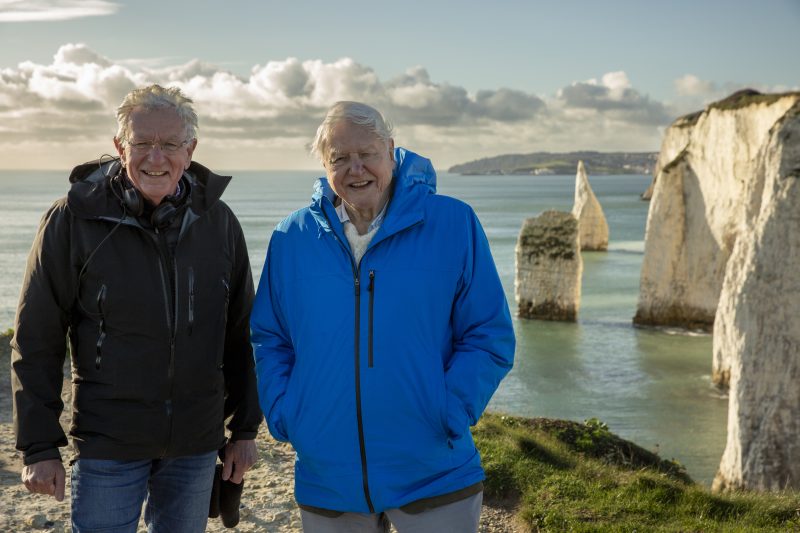
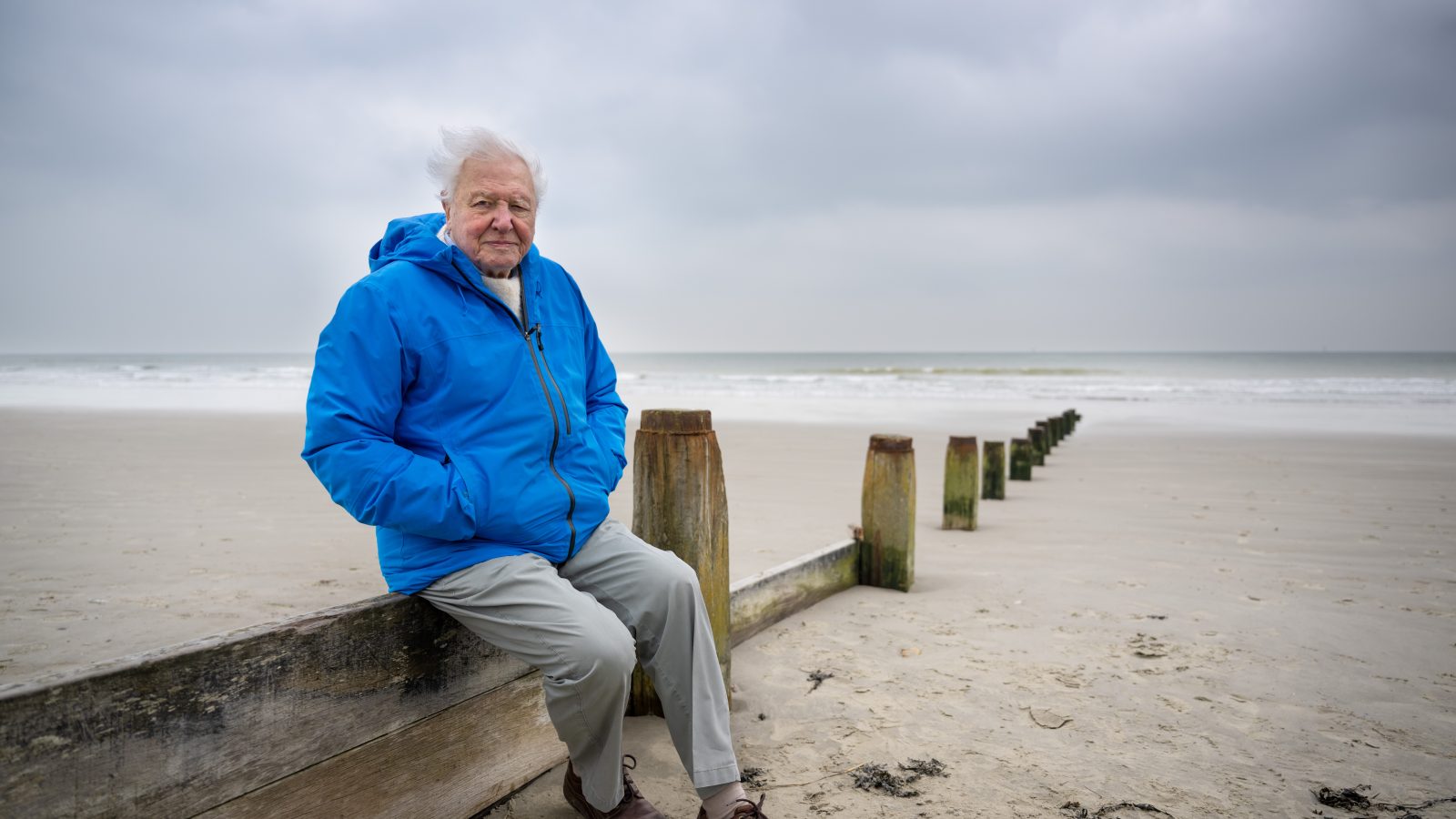
Co-director Keith Scholey and David Attenborough, pictured here on location, have worked together for more than 40 years
Attenborough’s reverence for science is at the heart of his influence, says Scholey. “The only reason we could make Ocean is that people trust him.
“He’s been very careful with how he’s earned that trust. He makes films about modern science that tell us about the state of the world.
“Ocean is pro-ocean protection because it’s purely what the science says we should do to overcome climate change, revive fisheries and feed the world.
“The film had a point to make. David said what he wanted to say in a powerful way. The filmmaking enhanced the directness and power of his words in a way that people found captivating.
“I’ve never been involved with a film that’s had this kind of impact. We’re changing the system’s mind. It was a fantastic privilege working on a film that had a real purpose to it.”
That purpose was to convince world leaders to sign up to protect 30 per cent of the world’s oceans by 2030 at June 2025’s UN Ocean Conference. It’s achieved this, and more.
Ocean has been seen by King Charles, Prince William, presidents, prime ministers and parliaments, inspiring policy change at the national and global levels.
It broke box office records in 27 countries, became National Geographic’s best ever performing documentary and was recognised with a string of high-profile awards.
But making the film wasn’t all plain sailing.
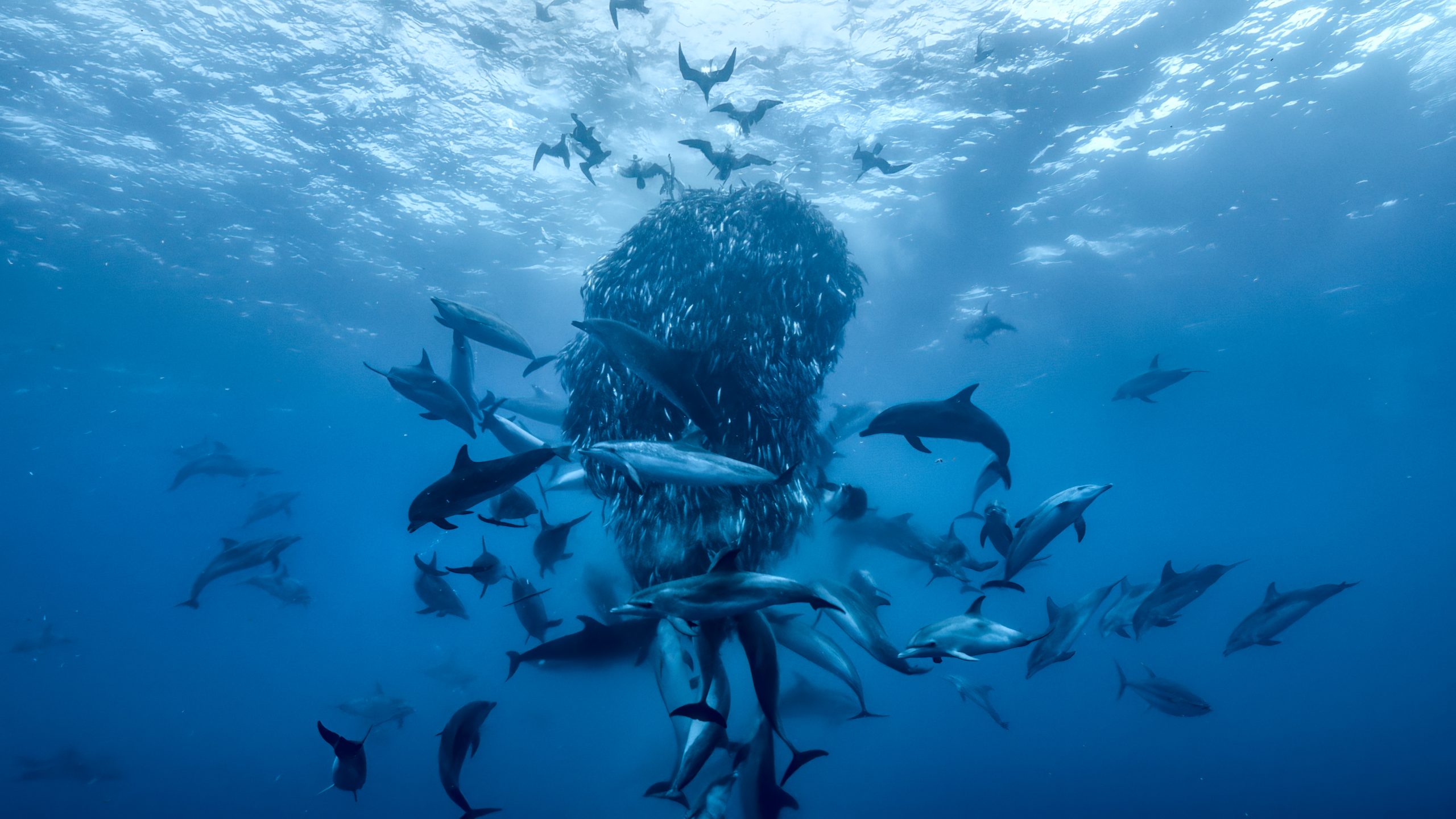
‘Ocean’ brings to light the incredible scenes taking place out of sight below the water
The June deadline gave Silverback only one season to complete filming, whereas they’d typically allow two, and the film’s setting is reliably unpredictable.
“Making films on water is always far more challenging than on land. The sea doesn’t negotiate!” laughs Scholey. “But we did it, with the best team I could imagine, and we had lots of adventures.”
Nowlan, the film’s in-water director, was constantly in the thick of the action.
Filming in the Papahānaumokuākea marine national monument in the Pacific, the world’s largest protected marine area, which has “come back to life in the most spectacular way”, he stood surrounded by millions of birds in the world’s biggest albatross colony.
“The noise was deafening, unreal,” he recalls. “It was incredible to be in the middle of this absolute throng of life.”
Another time, after some “really tough” weeks scanning an unbroken horizon in the open ocean, the crew spotted a distant tornado of activity and rushed headlong towards it: “Those are some of the most memorable dives of my life. Bluefin tuna the size of small cars rocketing over my shoulder.
“Blue sharks bumping me in the back of the head, huge sei whales the size of steam trains within touching distance. It’s so uplifting to know these scenes are still unfolding in the ocean.”
But Nowlan’s most magical moment occurred on a UK beach one freezing day in March.
Attenborough’s closing pieces to camera conveyed that “after 100 years on earth, he realises there’s nowhere more important than the sea and that if we save the sea we save our world.
They were the most powerful and poignant lines I’ve ever heard the great man say and still, when I hear them now, I choke up.”
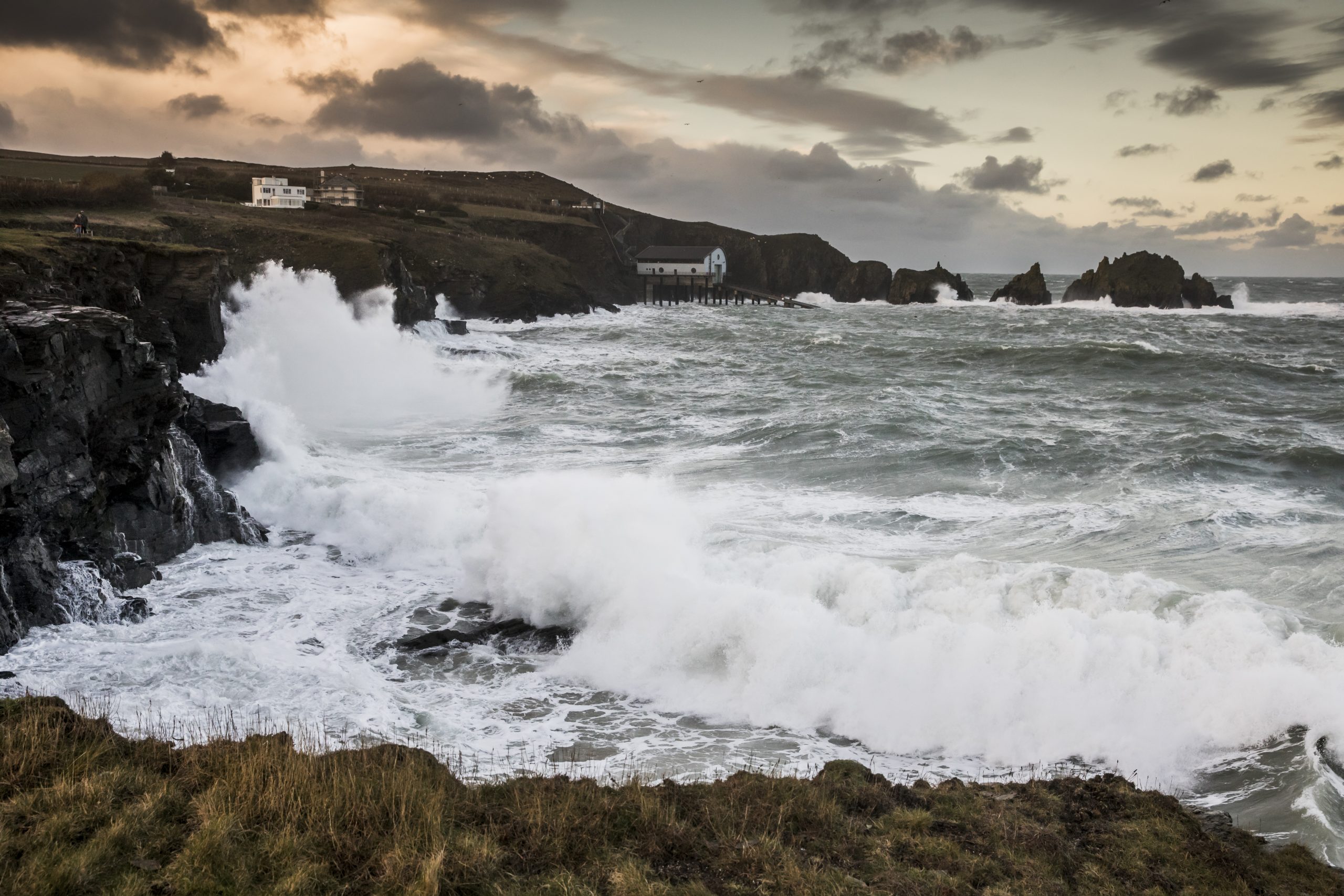
Many of Attenborough’s pieces to camera took place on UK beaches, giving the film a domestic feel
As this environmental redemption narrative emerged over the course of filming, the co-directors agree that real moments of horror were ultimately offset by those of hope.
“When we saw the first footage of the scallop dredge, I was absolutely shocked to the core,” says Scholey, referring to the “mindlessly stupid” practice of bottom trawling for seabed species that occurs even in protected marine areas, which Nowlan describes as “violent”.
It’s the first time the practice has been spotlit cinematically and the clips, watched by over 700 million people to date, caused widespread outrage.
The footage moved the UK government to launch a consultation to end bottom trawling in Britain’s protected areas (though it has since rejected an outright ban).
It provoked policy change in the EU and Iceland, encouraged the signing of the High Seas Treaty at the UN Ocean Conference, and halted Donald Trump from revoking protections in the Pacific.
“The film was the moment the debate changed. It’s inevitable that bottom trawling will be phased out,” Scholey says, echoing what scientists have told him.
The turnaround for oceans will be rapid.
Protected areas return to life within five years and show “astronomical” improvements within a decade due to the vast quantities of eggs that undisrupted organisms produce. This new life then floods out into unprotected zones.
“It’s so different to the process on land,” explains Nowlan.
“Life recovers far quicker, more dramatically and on a greater scale. If we properly protect one third of the ocean, we could live in a world more full of marine life than any of us has ever lived with or dreamt possible.
“It would be a huge win for climate, marine life, coastal fishing economies, and the 3.5 billion people that rely on our ocean as a primary source of protein.
“The film is pro-abundance, pro oceans full of life, pro fish for everyone.”
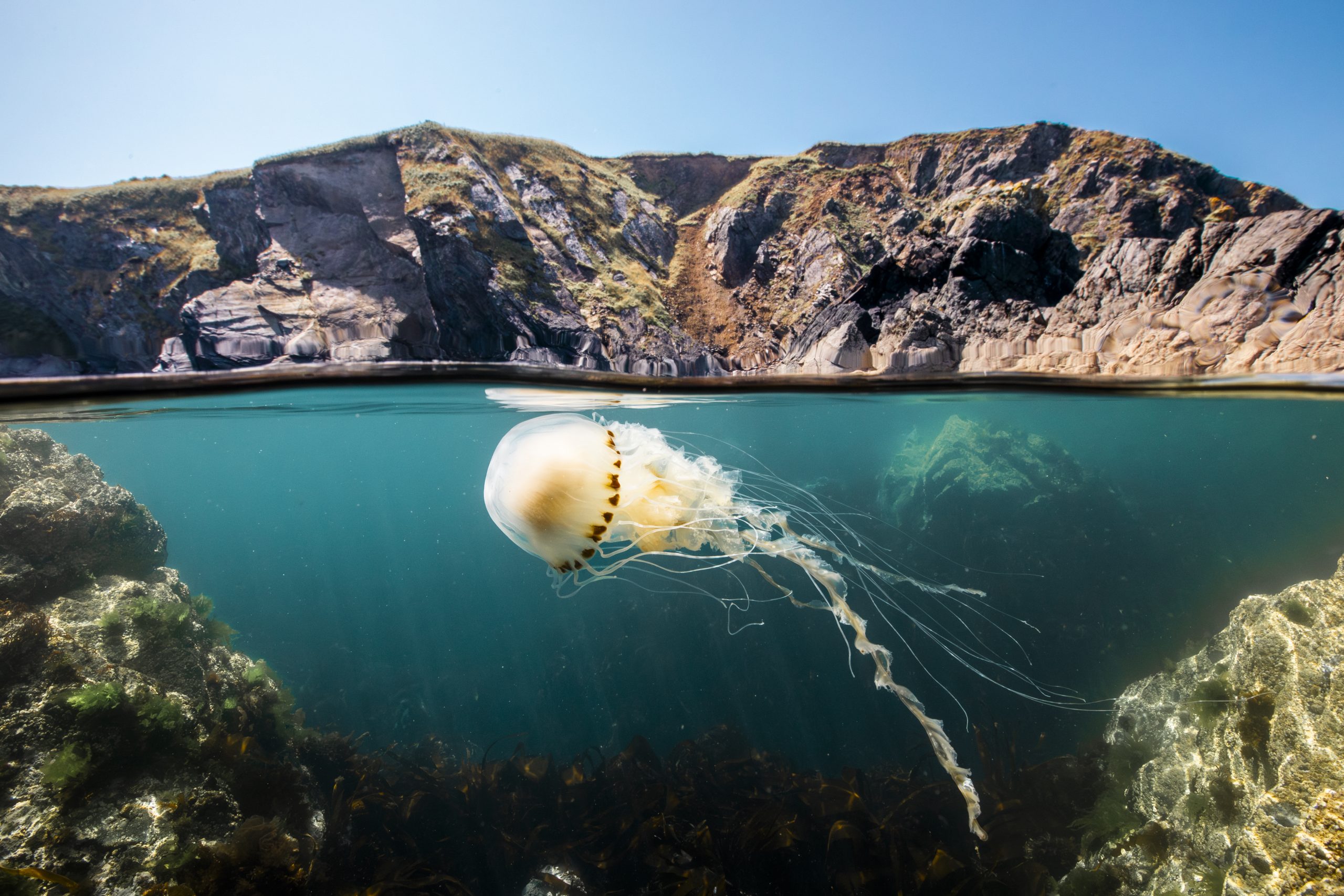
The landmark documentary film showcases the ocean’s vital role as Earth’s life support system
And we don’t have to travel as far as the Pacific to see natural wonders, says Nowlan.
“The reason I got into this is because of my love for nature and that doesn’t stop when I get back to Bristol,” he says.
“I’m an obsessive birder and we’ve got lovely green places that get some wonderful ancient woodland birds like Leigh Woods, Greenbank Cemetery, Arnos Vale and Purdown.
“I really love the bleak openness of Severn Beach; all sorts of pelagic seabirds come right up onto the beach.
“I love cold water swimming in Clevedon while watching the waders. Sandpoint is also a favourite spot.
“I had a really special moment there last summer, watching a family of porpoises feeding just metres off the rocks.
“The Bristol Channel might feel like a muddy tributary, but it really has the stuff!”
Ocean in Concert, a screening of Ocean accompanied by the Welsh National Orchestra performing the original score, takes place on February 24 at the Bristol Beacon. For tickets, visit: bristolbeacon.org/whats-on/ocean-in-concert

This article appears in Bristol24/7’s January/February 2026 magazine
All photos: Silverback Films
Read next:
 Our newsletters emailed directly to you