Film / Reviews
Amy
Amy (15)
UK 2015 128 mins Dir: Asif Kapadia Cast: Amy Winehouse, Nick Shymansky, Mitch Winehouse
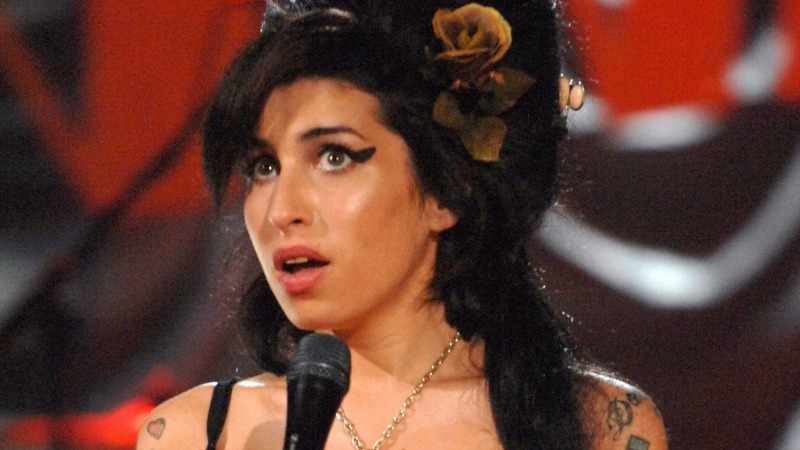
Late, velvet voiced singer Amy Winehouse was a figure regularly reduced to the worst kind of crass clichés, most of them involving drink and drugs. Even so, her death in 2011 from alcohol poisoning shocked the entire world. It falls to Senna director Asif Kapadia to triumphantly reclaim the sense of the vulnerable young woman behind the shrieking tabloid headlines – and like the earlier Formula One biopic the movie transcends its nominal subject matter, taking on the form of a sweeping tragedy.
Also like Senna, Kapadia resists the urge to have modern day talking head interviews imposing on our own emotions. Instead, the movie is entirely composed of archive footage, some of it old, some of it new, much of it breathtakingly intimate, and painstakingly weaved together by editor Chris King. That everything we see is from both the distant and not-too-distant past further extends the movie’s nostalgic, haunting feel. Our own knowledge of the tragic events that were to befall Winehouse and her family cloaks the early sections of the film in melancholy foreboding, even though it’s here that the movie uncovers the joyous, funny inception of the singer’s career.
Indeed, the first third is perhaps the most eye-opening: a depiction of a lively, vivacious north London girl whose remarkable voice was to prove both a blessing and a curse. One of the movie’s many smart moves is to superimpose the lyrics of the songs over the film as Winehouse sings them, solidifying not only her voice but also her immense skill in crafting mature lyrics beyond her years. The film is very careful to make her case not only as a songstress but a writer, too. And, as she regularly reinforces, she sees herself as a jazz singer first and foremost.
Some of the movie’s most striking sections are those seemingly offhand ones where Winehouse states her desire to ‘not become famous.’ These are small moments but ones that become increasingly emphatic as we discover how ill-equipped for fame she really was. There are several delightfully candid vignettes as Kapadia charts Winehouse’s rise to stardom following the release of her 2003 debut album Frank: eye-rolling contempt at being compared to fellow musician Dido; adopting a surprisingly consistent and funny Spanish accent during a holiday video. It lays the groundwork for a compassionate and engrossing drama that soon takes a dark turn.
Unsurprisingly given events, the mid-section of the film becomes increasingly upsetting. As Winehouse’s star grows in the ascent, her position solidified by the enormous success of 2006’s Back to Black, her emotional and physical state goes into a decline, the film exploring the parasitic influence of Winehouse’s eventual husband Blake Fielder-Civil (who openly admits to introducing her to heroin) and also the somewhat blundering interventions of her father Mitch, who we later see bringing a reality TV crew to an island where his desperately ill daughter is attempting to rehabilitate herself.
Yet although the film has sparked huge controversy with Amy’s family (hardly a surprise given events are still so recent and raw), Mitch hardly comes off as an unloving presence. More someone who was understandably struggling to cope with a savage media scrum. The film isn’t interested in being blithely accusatory, but instead intelligently explores how the tabloid press created a shitstorm that sucked in not only Amy but also her family. It’s a damning indictment of the British press, which – besides Fielder-Civil – comes across as the real enemy. The soft-target vitriol with which stand-up comedians targeted Amy is also impactful and shocking.
Yet even as we anticipate the downward spiral Amy’s story will take, the movie’s impassioned re-assessment of her life keeps us watching: it’s a powerful reminder of how skilled the tabloids are in manipulating the public’s perception of a person, and how difficult it is to overcome these crude impulses. Even amidst the darkness, there are glimpses of light: the seemingly casual ease with which Whitehouse belts out Back to Black during the initial recording session is a potent reminder of the skill she had at her fingertips. When said album is later up for four Grammys, she openly and hilariously sneers in contempt at the presence of Justin Timberlake’s What Goes Around Comes Around in the same list.
As ever, Kapadia’s attention to detail in both the small gestures and also the wider context makes Amy a moving and profoundly humane experience.
 Our newsletters emailed directly to you