News / books
Herb garden-inspired book weaves tales of diversity, migration and community
The founder of a flourishing community herb garden in Fishponds has produced a book which she hopes will inspire others to follow suit.
As well as a how-to guide, Herbs Yourself: A Year at the Community Garden is a celebration of the people that came together to create the pocket of green the author hopes will one day become ‘supermarket and pharmacy’ for the neighbourhood.
The book is also a rumination on migration, diversity, belonging and the importance of community.
is needed now More than ever
“It’s quite powerful and has a political element,” says author Bernardita Munoz Chereau who, having previously successfully established the Dove Street community garden near Stokes Croft, conceived the idea of the garden near her new home as “using herbs as the glue to build a community”.
View this post on Instagram
“I understood that building a community herb garden for myself and other immigrants could be beneficial for collective health. I could help myself and others by connecting over our shared experiences and becoming better acquainted with the new land we call home,” Bernie says by way of introduction in the book, which encompasses the practicalities of four seasons’ work at the garden while also exploring her childhood in Chile where she developed a reverence for nature.
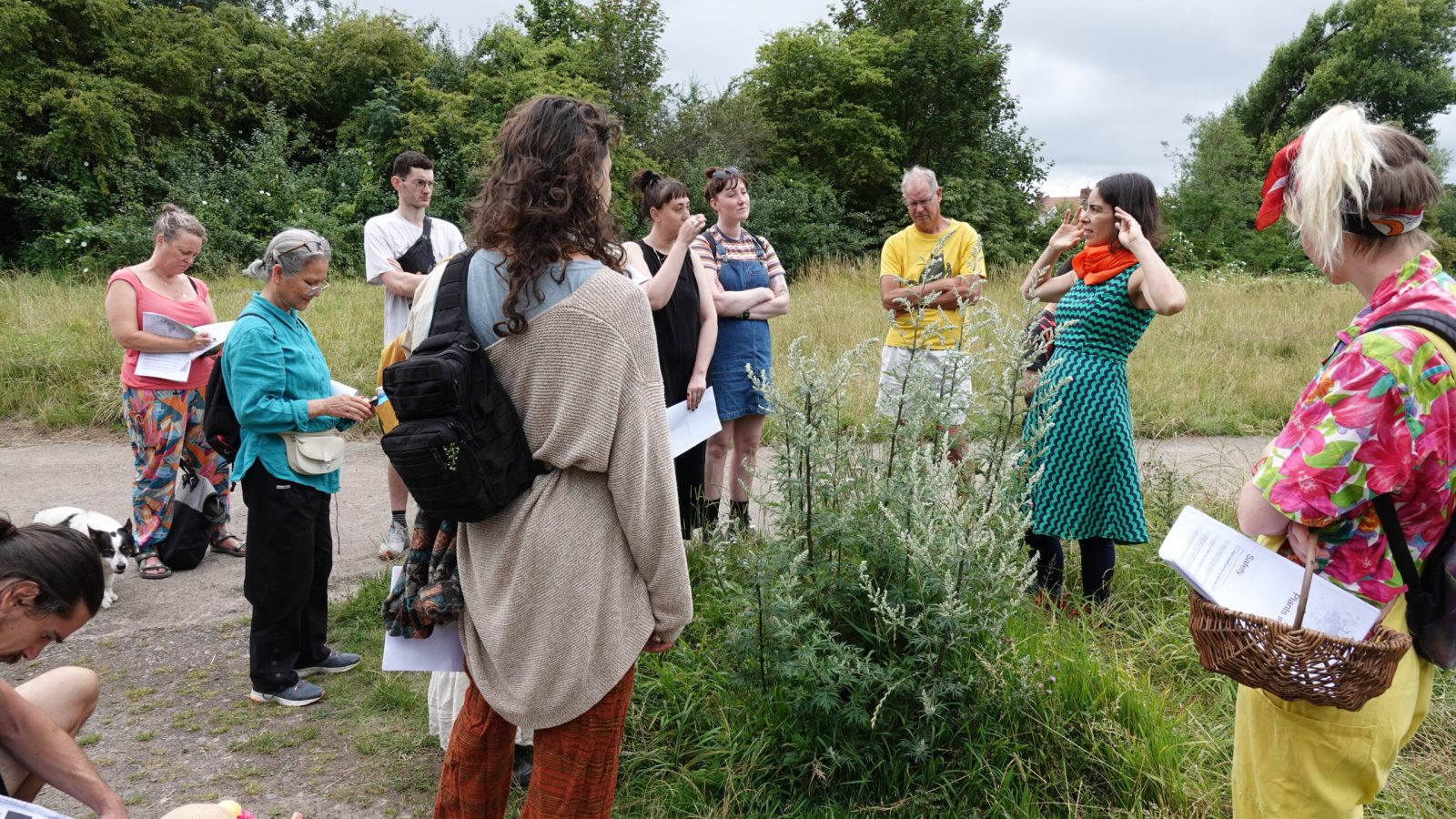
Herbs Yourself has grown since inception at the beginning of 2024 from a small streetside herb patch to a thriving growing space with ponds and regular dedicated events like foraging walks that attract around 30-40 people.
Bringing people together is a fundamental principle of the project. “It is quite a diverse group in terms of age, ethnicity, nationality,” says Bernie. “We make it very open – you can just come, you don’t need to book or pay, we try to remove every possible barrier to make it accessible, and that has really paid off.
“We have a lot of people from Chile. When you migrate – even in my case which is not a forced migration but a voluntary one – you lose all your social capital, all your connections. You start from scratch. That puts you at a disadvantage.
“So community is even more important. Then by establishing a link with a space that could be something real, planting things that remind you of your homeland – you can really cope much better with this home sickness. Basically, I issued an invitation to transform Herbs Yourself into a space to belong.”
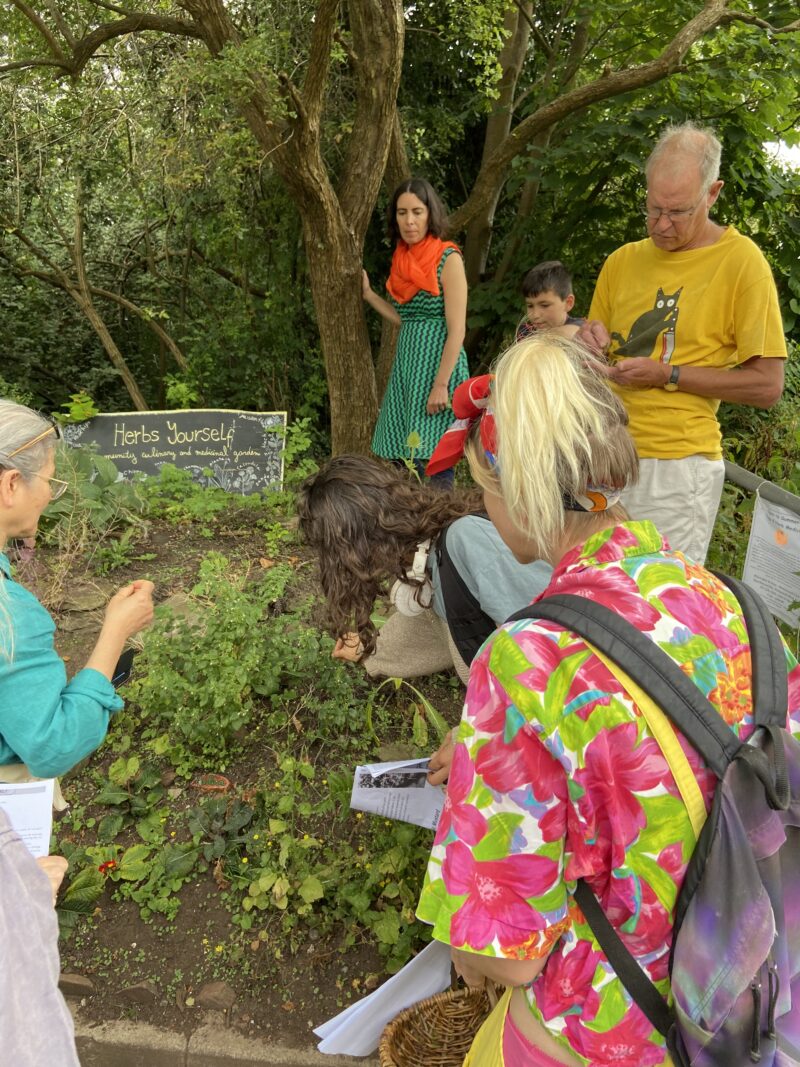
Foraging workshops based in and around the garden typically attract 30-40 people – photo: Herbs Yourself
In immersing themselves in nature every weekend, rain or shine, the group started to find lessons among the leaves.
“Plants are not really into borders! I associate my own immigration with blackberries because in the 19th century the European immigrants that were colonising Chile brought blackberries which threatened the local environments for 200 years, but were really important in my childhood as I foraged them with my mum to make summer jam,” recounts Bernie.
“Then when I moved here, they’re here again. I use them as a metaphor, thinking about what came first or how plants allow you to make those connections.
“Plants and people are diasporic and we create something new in a different place. The book contests the idea, what is a weed, what is an immigrant.
“I’m really interested in reaching groups of immigrants. It takes a bit of boldness to start a project, but there are so many opportunities. Guerilla gardening you can do almost everywhere.”
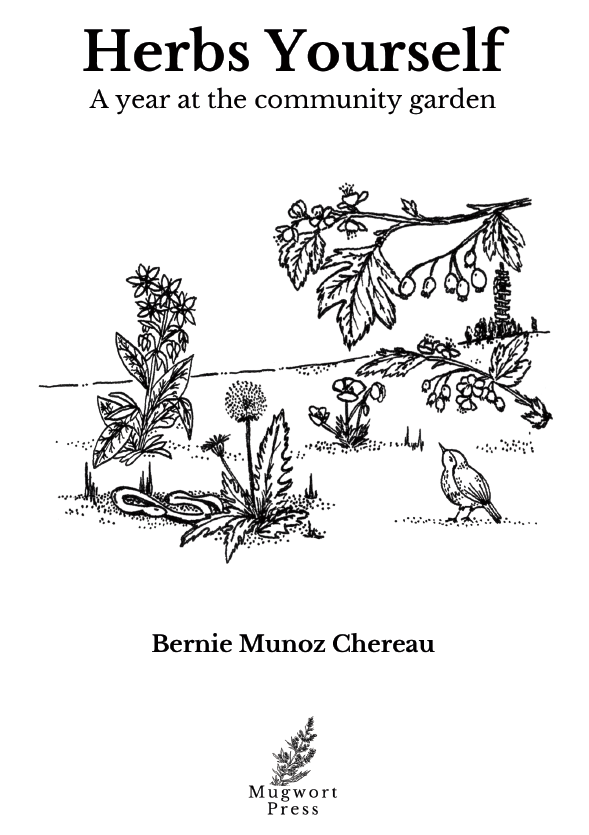
Production of the book was permaculture inspired, drawing from local resources for its creation: it was designed and illustrated by garden volunteer Silvia Jimenez Cruz
Bernie’s reflections are based on a year’s worth of diary entries recording every step of the garden’s development:
“The names of people or what they said, all those things I started writing down. It’s so important for the project’s legacy,” she explains. The value placed on community was compounded when she was named a Wild Champion by Avon Wildlife Trust in December 2024.
“There’s something good about that but it’s also restrictive,” she says. “In these projects you really want to disperse the power – it’s not the community helping me, we are doing it together. It’s this kind of collective action I really wanted to describe.
“In the book everyone connected to the project has a fictional name which allowed me to weave those people into the fabric of the story. If you are very close to the community you will identify yourself. From coming to the garden, giving a donation, or bringing coffee to share – any little thing that helped us is included.”
Bernie – a published author and academic – collaborated with permaculture poet Maya Blackwell who edited the book, helping to draw out the poetic side of Bernie’s writing. Together (with illustrator Silvia Jimenez Cruz) they have created Mugwort Press which they hope will go on to publish more work focused on local growing, nature, art and community projects.
It’s a full circle moment for Bernie as she sees her book on the shelf at East Bristol Books – EBB – on Old Market alongside the local authors and nature writers that inspired her.
“There are local authors that have been adding to these narratives of how we interact with nature or how we do our part in rewilding,” says Bernie. “I’d really like people to look out for the book. The stories we tell about these places are as important as the places themselves.”
View this post on Instagram
Herbs Yourself: A year at the community garden is available to buy from EBB on Old Market.
Author Bernie Munoz Chereau will be in conversation with editor Maya Blackwell at the book launch at EBB on March 22. They will also be launching the book informally at the Herbs Yourself patch from 10am-12pm on the same day.
All profits from the book will go towards developing Herbs Yourself.
Main image: Herbs Yourself
Read next:
- Digital ad screen refused amid planning controversy
- First wave of ‘Translated By, Bristol’ programme announced
- ‘Pharmacy and supermarket’ – The garden that helps community help itself
- Maya Blackwell: ‘I can’t burn the state down, but I can organise in my community’
- A day in the life of East Bristol Books
 Our newsletters emailed directly to you