News / fishing
Bristol Channel wildlife needs better protection
The world’s leading ocean protection charity is calling on the UK government to ban bottom trawling in marine protected areas (MPAs).
The list of five MPAs in Oceana‘s latest report, Trawled and Mauled, includes the Bristol Channel which has been designated a special area of conservation for the endangered harbour porpoise.
The area of the Channel safeguarded for the porpoises, which are on the UK’s critical red list of threatened species, stretches from Wales to Cornwall via North Devon and is recognised for its importance due to the high density of the cetacean it houses year-round and particularly in winter.
But despite its official protection status which is supposed to ‘maintain prey availability and minimise disturbance’, bottom trawling which is demonstrably damaging to both the species and its habitat is still allowed in the area.
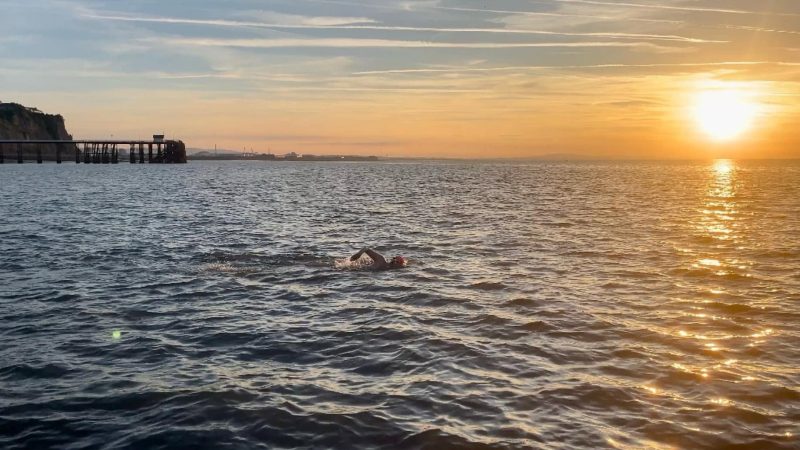
The otter method of bottom trawling reportedly kills around 118 harbour porpoises in the Celtic and Irish Seas each year, exceeding the sustainable threshold to prevent population decline of 82 – photo: Swim Wild Wales
The Bristol Channel MPA suffered 2,494 hours of bottom trawling in 2025 and the practice is allowed year-round.
The fishing method involves using rigid nets to dredge the seabed for certain commercial marine life, such as cod and whiting, and was brought to public attention by footage captured during the making of David Attenborough’s Ocean which shows the indiscriminate destruction it wreaks on the seabed and its inhabitants.
It was the first time the practice had been seen in action, and the clips went viral as the public reacted with horror.
The film, shown in June 2025 at the UN’s Ocean Conference, has incentivised global policymakers including the UK government to sign up to protect 30 per cent of the world’s oceans by 2030.
But Oceana say the government will not be able to keep this promise if it continues to allow bottom trawling in MPAs including the Bristol Channel.
According to the report, as well as posing a ‘high risk’ of mortality to harbour porpoises, the practice also destroys surrounding ecosystems the cetaceans rely on and significantly impacts their preferred food sources.
“For an animal that lives so close to its energetic limits, even small reductions in prey availability can have serious consequences for survival,” the report states.
But, as Ocean emphasised, marine environments can recover rapidly when bottom trawling is banned.
The Oceana report cites Lyme Bay, where fish stocks increased by 370 per cent after the practice was banned across 60 square kilometres in 2008, with the abundance spilling over into surrounding areas.
“We have enough evidence to act,” it concludes, calling on the government to end the practice now which will both protect wildlife and make local fisheries more productive.

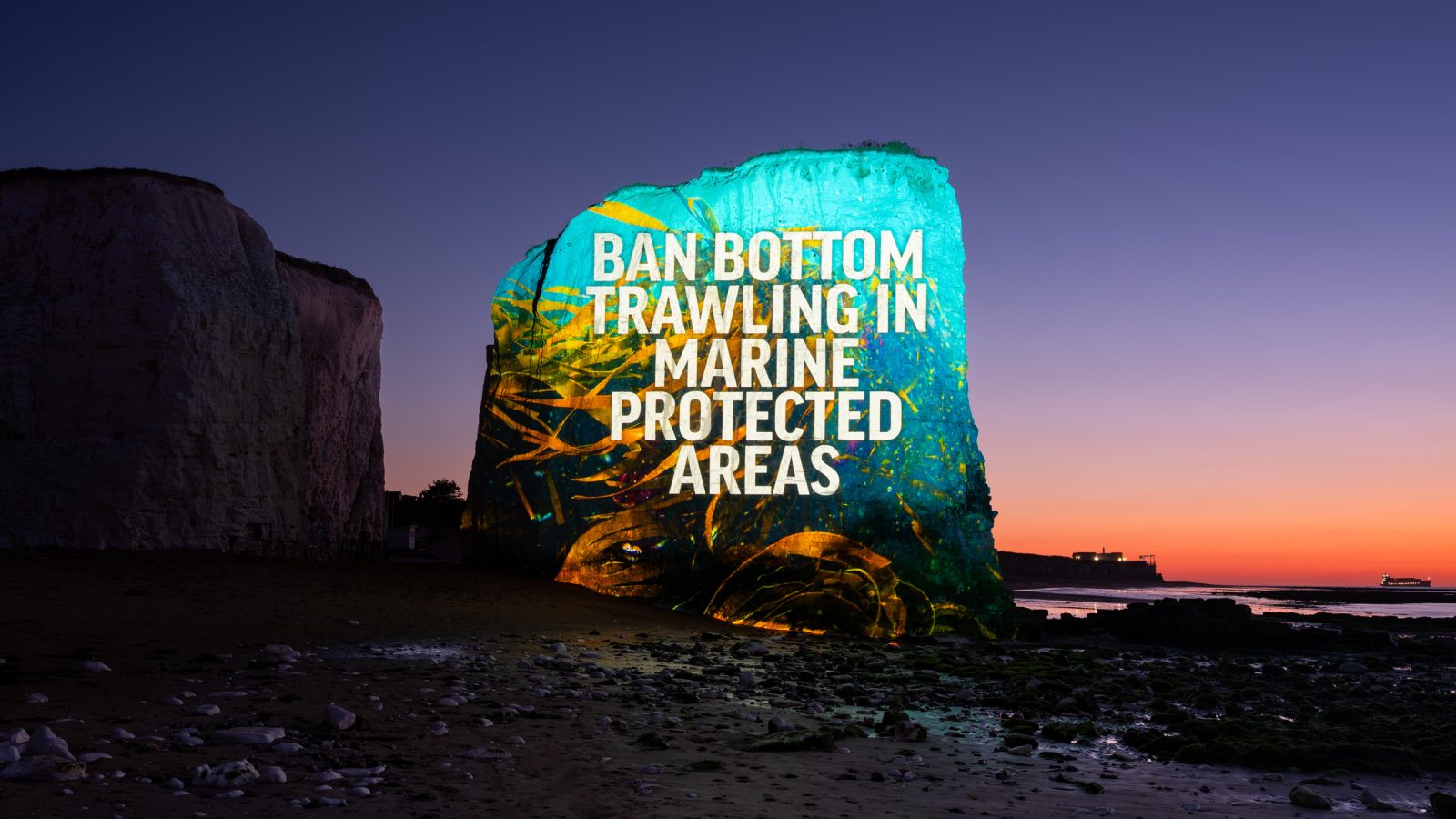
Oceana UK are launching their report with a large-scale projection stunt at Botany Bay, Kent, which overlooks a protected marine site. Footage of bottom trawling will be cast onto the white cliffs with demands for real ocean protection – photo: Ollie Harrop
“I used to have my own trawler, and I’d be out there all day and night. I could see with my own eyes the damage being done,” said Clive Mills, a fisherman in Sussex. “It’s not just what you land, it’s what you kill. It’s the destruction that bottom trawling does, on a massive scale.
“If we did it on the land, you would literally stop it overnight. People would be up in arms and there would be uproar. But because we can’t see it, we let it happen. We need to change what we’re doing. We need to look it in the eye and start fishing for the future.”
The government has committed to a public consultation on management measures for fishing including bottom trawling but has rejected an outright ban and has not set a timeline for action.
Read the full report at uk.oceana.org/reports/the-case-for-banning-bottom-trawling-in-uk-mpas
Main image: Ollie Harrop
Read next:
 Our newsletters emailed directly to you