Features / protest
‘Can’t you hear the future weeping?’ – Gaie Delap on prison, protest and climate justice
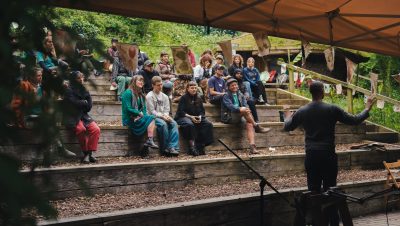
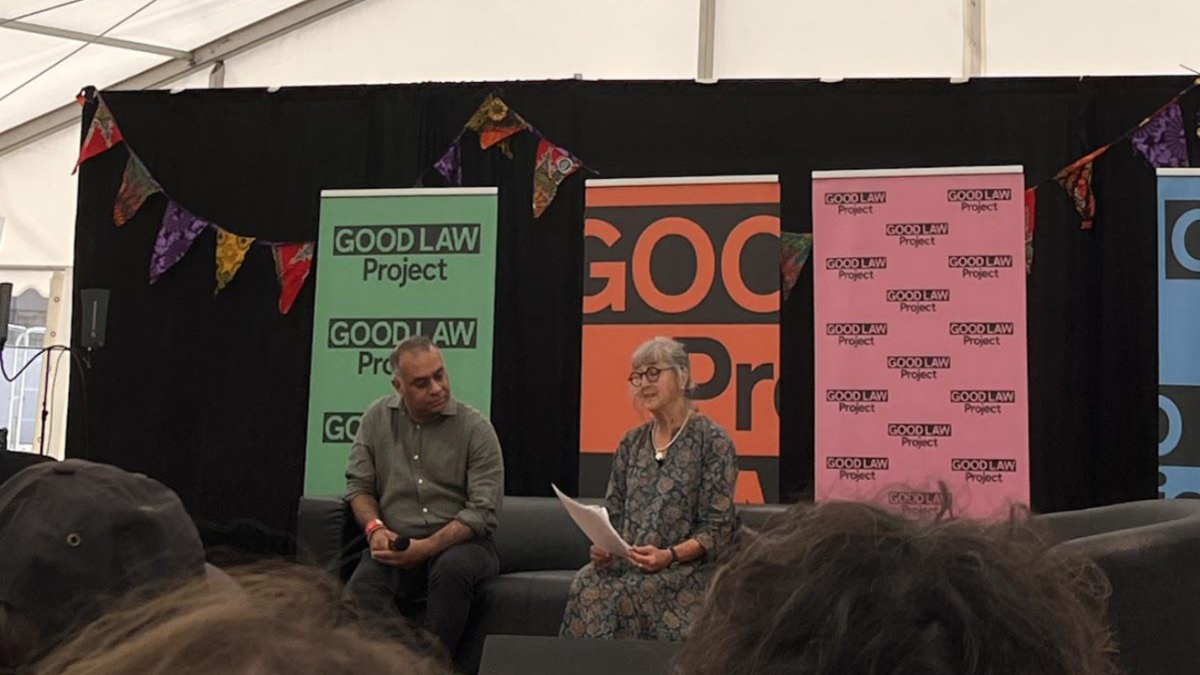
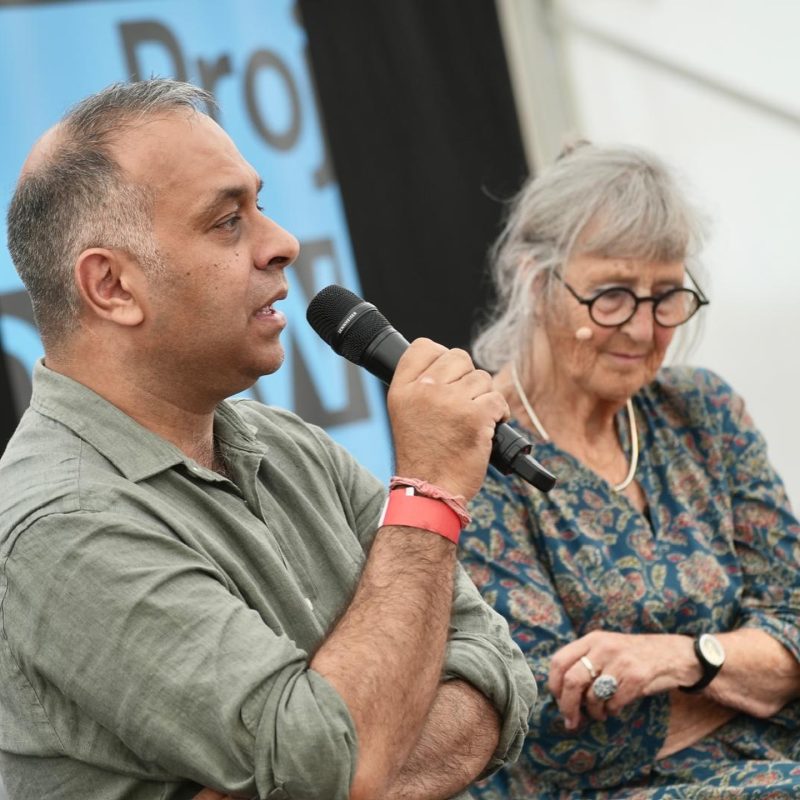
On the last day of the Bristol Harbour Festival, the Good Law Project hosted a riveting talk
with Gaie Delap – a lifelong climate activist and Quaker – and Raj Chadha, one of the UK’s
top criminal lawyers, on the subject of protest rights.
The discussion was set on the Expression Stage in the heart of Millennium Square, with the distant sounds of children’s laughter and parents chatting, and a plethora of food stalls nearby.
Delap first recounted her 20-month imprisonment for peacefully protesting on the M25 against climate injustice and the British government’s inaction.
“On 9 November 2022, I climbed onto a gantry over the M25. I had no climbing experience –
I couldn’t tell a cross from a carabiner. But why did I do it?” Gaie asked, delivering an emotional account of her case.
is needed now More than ever
She read from a collection of stapled papers in a determined yet grateful tone: “Being part of Just Stop Oil, we had one request: that the Tory Government stop issuing all new oil and gas licences, despite clear and stark warnings of catastrophic and irreversible climate change from Sir David King, government adviser on climate change, and António Guterres, secretary-general of the United Nations.
“Instead, the government had issued 124 new licences for drilling in the North Sea,
continuing to expand the fossil fuel industry on a massive scale.”
The faint sounds of laughter from children outside drifted into the tent as Delap continued: “Why did I do it? Because my heart was breaking – for the future of my grandchildren, all future generations, the suffering inflicted on the Global South, and the continued destruction of our beautiful planet.
“In my experience, activism is the antidote to the despair that comes from ecological anxiety
and grief.”
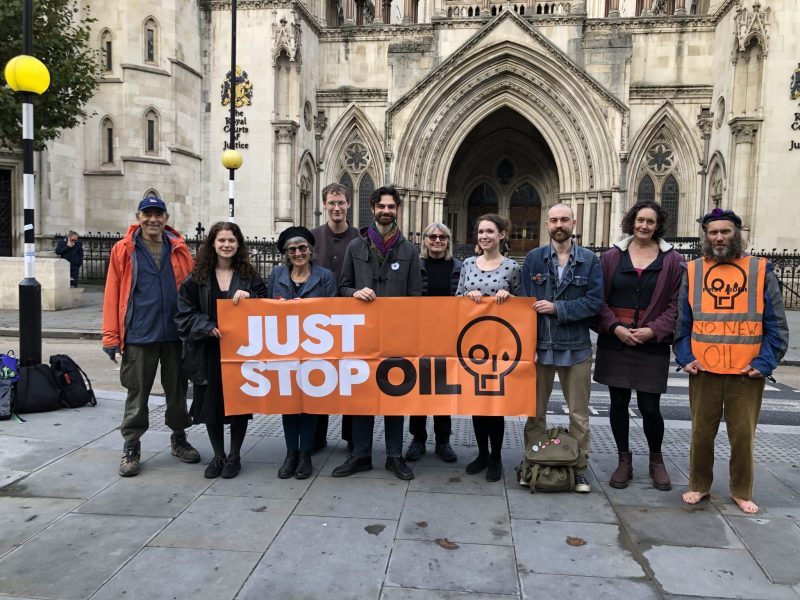
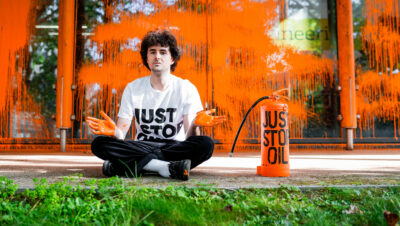
Delap, seen here in 2023, with the Just Stop Oil group outside the High Courts of Justice, said activism can help to combat anxiety – photo: Just Stop Oil
According to a YouGov poll in 2023, one in three young people in Britain reported feeling
scared (33 per cent), sad (34 per cent) or pessimistic (34 per cent) about climate change, with 28 per cent feeling “overwhelmed”.
On the same day as her action, Delap was charged with causing a public nuisance under Section 78 of the Police, Crime, Sentencing and Courts Act 2022.
In June of this year, Gaie co-authored a letter to the director of public prosecutions and the secretary of state for justice that asked both to urgently reconsider how Section 78 of the Police, Crime, Sentencing and Courts Act is interpreted and enforced.
Gaie’s bail conditions included being electronically tagged and observing a 7pm–7am curfew. Because Delap suffers from deep vein thrombosis, the tag was to be placed on her wrist rather than her ankle.
However, the Electronic Monitoring Service failed to find a wrist tag small enough, and she was instead placed under a doorstep condition without a tag.
“At my trial in March 2024, I was not permitted to offer an explanation or present mitigating circumstances to justify my protest,” she recalled.
Reflecting on her Quaker background, she added: “In 1670, Quakers stoutly defended the right of juries to give a verdict according to their convictions. I am still a stout Quaker.”
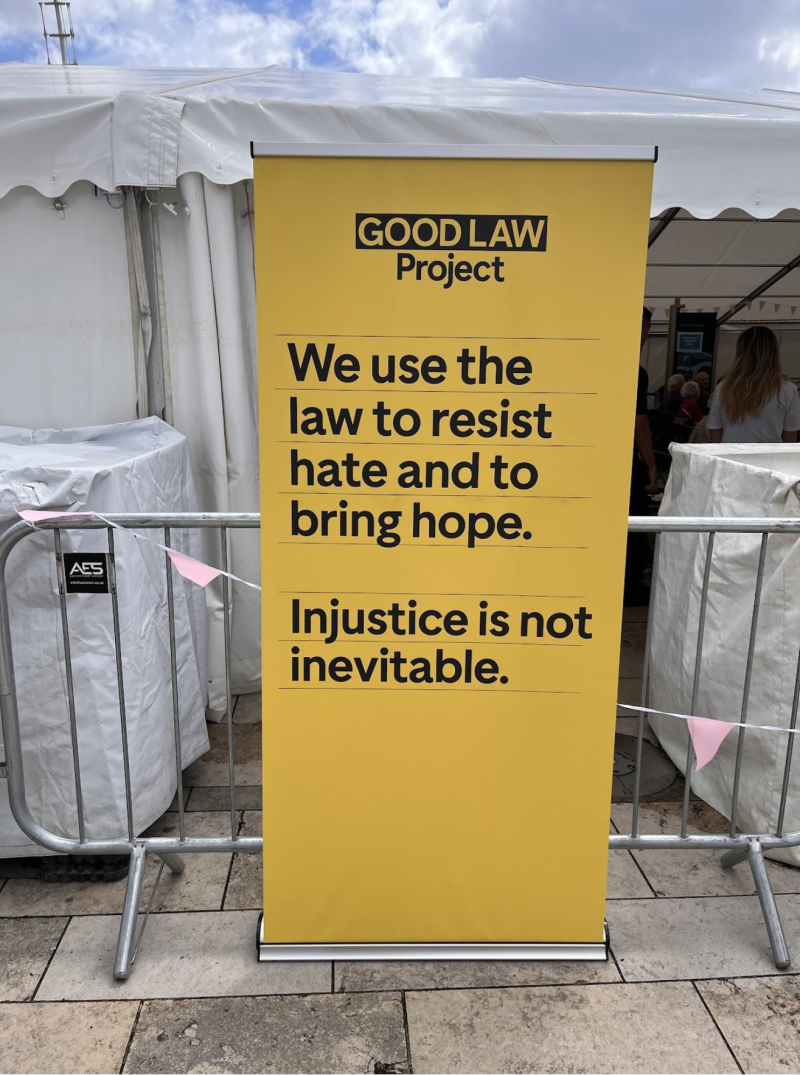
The Good Law project took over the Expression Stage at the festival, with speakers including Dale Vince, Carol Vorderman and Ella Moran – photo: Medha Ghosh
On 1 August 2024, Delap was sentenced to 20 months in prison. “I was taken from court to Peterborough prison, and I admit to shedding a tear or two,” she said.
“My sentence had three parts: three and a half months in prison, four months on home detention curfew, and then a further year subject to licence conditions.
“Upon my release in November, Serco – who provide the tagging service – once again failed
to find a suitable wrist tag. I was punished by being deemed ‘unlawfully at large’.”
Recounting her time in prison, Gaie described it as both a “madhouse” and “an education”: “You have to let go of sanity and reason and accept that you are powerless. There is literally no escape. The noise was constant – the clanking of metal gates, and inmates shouting at playground levels.”
She was held in both HMP Peterborough and HMP Eastwood Park.
“At both prisons, there was a shocking level of suicide attempts and self-harm,” she recounted. “Most of the women I met should not have been in prison. Many had mental health problems, learning disabilities, addictions, or severe social and health stresses. Some were illiterate. Most were mothers. They needed help, not punishment.”
In 2023, the HM Inspectorate of Prisons found that HMP Eastwood Park was the prison with the highest levels of self-harm in England and Wales. In 2024, there were more than 79,000 incidents of self-harm in prisons across the country, up 10 per cent from the previous year.
“It’s part of a cruel and self-perpetuating system, which is also very expensive. Our prison
system and our attitudes are Dickensian,” Gaie said.
Gaie offered heartfelt thanks to her friends, family, and well-wishers: “Many inmates had no letters or emails. So we passed time by playing cards. I read, kept a diary, wrote bad poetry, and sketched plants and leaves I found outside.
“I also helped my dear cellmate from Burkina Faso with her English. My schoolgirl French
came in handy when we got stuck.”
The prison healthcare system, she said, was “woeful and at times very frightening”: “Staff shortages often meant exercise, gym, or education classes were cancelled, along with no access to the pharmacy. This meant no one could get painkillers, methadone or anti-psychotic drugs.
“Every inmate I met in both prisons was incredulous that I was there for peaceful climate
action. It was only through Hodge Jones & Allen, the Good Law Project, and others that I was released on January 21. Without them, I could have remained imprisoned until March 2026.”
Gaie ended her passionate and eloquent talk with a quote from Sir Ben Okri: “Can’t you hear the future weeping? Our love must save the world.”
View this post on Instagram
Chadha, who represented Gaie, added with humour: “Lawyers are failed activists – people who aren’t brave enough to do what Gaie does.”
Thanking the Good Law Project, he said: “There was a real risk that without them, Gaie Delap could still be in prison now.”
Chadha explained the legal background: “Section 78 of the Police, Crime, Sentencing and Courts Act 2022 was introduced by the previous Tory government. They briefed the Guardian and the Times that it was aimed at protests like Extinction Rebellion and Black Lives Matter.
“In effect, they created a law to imprison their political opponents in the 21st century UK.
“This legislation came after heavy lobbying by oil industry-funded think tanks. Until two years ago, if you obstructed a motorway, you’d receive the most minor penalty. Section 78 enabled courts to give a sentence of 20 months to people like Gaie.
“It is a cruel and unfair law, and it’s disappointing that the British judiciary hasn’t recognised that.”
He recalled Gaie’s sentencing, where the judge dismissed her assurances that she would
not re-offend: “The judge said: ‘I hear what she’s saying that she won’t commit an offence in the future, but she also said she believes you should take action to stop [climate change].’
“In effect, the judge wanted her to disown Just Stop Oil. It was a shameful episode in British legal history.”
Criticising the crackdown on peaceful protest, he added: “We did extensive research and found that no other country in Europe imprisons peaceful protesters. We are living in dark times for protest law in this country.”
Chadha concluded: “Gaie’s passion for justice is something to behold. We cannot forget that protest is rooted in the idea that there are injustices that must be confronted – and there can be no greater
injustice than the existential crisis of climate change.”
This piece was produced by Medha Ghosh as part of Bristol24/7’s Youth Climate Reporter scheme which seeks to amplify underrepresented voices and broaden the range of perspectives and stories we tell on environment issues.
The scheme is funded by Bristol City Council and our public and Better Business members.
Main photo: Medha Ghosh
Read next:
- Lone picker leads charge against street litter in Easton
- Hundreds show up to ‘defend our right to protest’ rally
- More than 300 unite for a protest to ‘stop starving Gaza’
- In photos: Bristol Harbour Festival 2025
 Our newsletters emailed directly to you