Film
The Darjeeling Limited
- Director
- Wes Anderson
- Certificate
- 15
- Running Time
- 104 mins
Back in 2007, the knives were out for Wes Anderson, partly because of all the second-rate Anderson clones who’d been flooding the arthouse circuit with lame flights of Sundance whimsy. You can understand where his critics were coming from, but it’s rather like blaming Nick Drake for every whining little dweeb who subsequently picked up an acoustic guitar. Oddly, however, the main charge levelled against The Darjeeling Limited concerns the film Anderson didn’t make, because this time he uses India as a colourful backdrop for another drama about a dysfunctional American family, attracting accusations of cultural tourism.
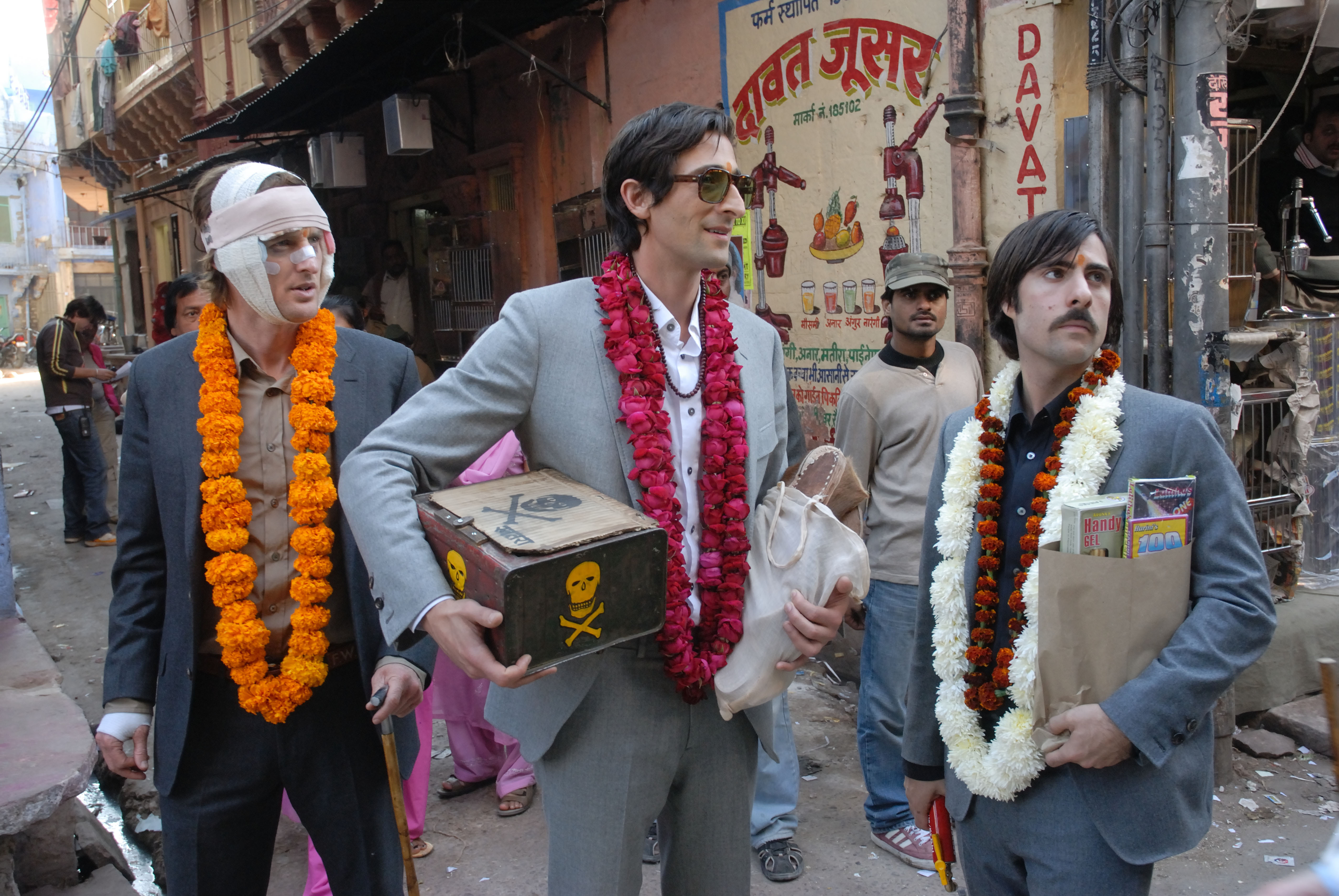
Be warned that the film is preceded by a 13 minute short, Hotel Chevalier, which was initially distributed online. Although self-contained, this has a payoff later in the feature. The sweaty of palm may wish to note that it also features Natalie Portman’s first ever nude scene as moping Jack’s (Jason Schwartzman) ex-lover, who turns up to meet him in the eponymous Paris hotel. In the main feature, Jack and his estranged brothers Francis (Owen Wilson) and Peter (Adrien Brody) are aboard the colourful Darjeeling Limited on what control-freak Francis hopes will be both a bonding experience and spiritual journey a year after the siblings buried their father and their mother (Anjelica Huston) ran off to become a nun. Bandaged after an accident, Francis has a cowering minion onboard whose function is to produce laminated daily itineraries. The other two have Woman Trouble. Peter was about to divorce his wife when she announced she was pregnant, while Jack monitors his ex-girlfriend’s answering machine for incriminating messages, though his obsession doesn’t preclude a dalliance with stewardess Rita (Amara Karan).
This is closer in spirit to The Royal Tenenbaums than any of Anderson’s other films, as the brothers bicker their way across the Indian landscape, get dumped in the middle of nowhere, are swept up in a village tragedy, and symbolically shed their monogrammed family baggage in slo-mo. Blending melancholy and absurdity in traditional Anderson style, the film meanders along its shaggy dog course with the usual attention to detail ranging from the brothers’ choice of footwear to the soundtrack selections (lesser-known Kinks tracks and a score lifting themes from Satyajit Ray flicks). It’s a visually rich, warm-hearted, sentiment-free trip that’s well worth taking, and is back on screen in the Everyman’s late night classics season.
 Our newsletters emailed directly to you