News / books
Bristol pupils co-author book on impact of microfibres
A group of pupils from Bristol and beyond have helped create a new children’s book exploring airborne microfibres, following a pioneering research project with UWE Bristol.
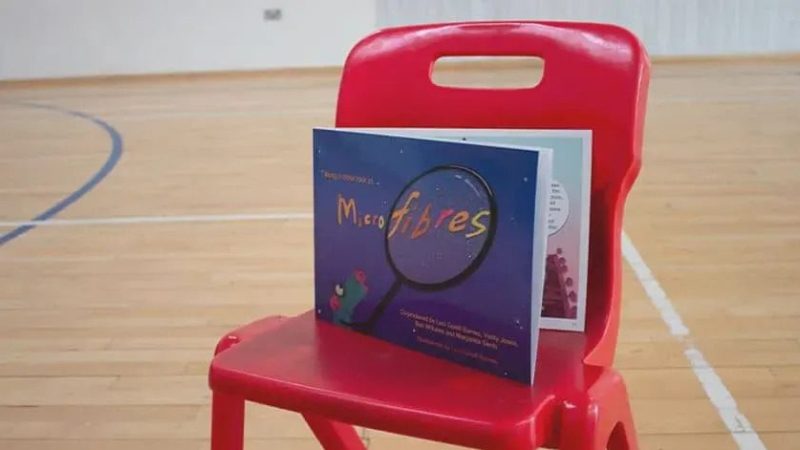
The book, Taking a Close Look at Microfibres, was officially launched on Earth Day at May Park Primary School – one of four schools involved in the Schools Under the Microscope project.
The citizen science initiative saw around 400 pupils aged nine to 11 investigate microfibres in the air within their schools, marking the first time such data has been collected in a classroom setting.
is needed now More than ever
Pupils placed Petri dishes around their schools, later analysing the results with microscopes, with further support from university researchers.
Nat Brown, Year Six teacher at May Park Primary School said: “In most science lessons, as a teacher, you already know the outcome.
“You’re guiding the children towards a result you expect, hoping they’ll discover what you already know. This experiment was completely different. It was significant and exciting because we were contributing to a genuine unknown scientific investigation rather than a classroom exercise.
“For once, this wasn’t about leading pupils to a pre‑known answer; we were exploring something new together.”
The findings showed that airborne microfibre levels in schools were similar to those found in homes, with a mix of natural and synthetic fibres, including some matching school uniforms.
The harmful impact of microfibres is yet to reach the desired levels of awareness as the tiny plastic particles enter waterways and cause health problems ranging from skin conditions to potential cancer risk.
Led by Dr Verity Jones, the project aimed to deepen understanding of air quality while giving pupils hands-on experience of real scientific research.
She said: “While microfibres are well documented in water, far less is known about fibres in the air we breathe.
“Building on Homes Under the Microscope methods, we were able to collect data on airborne microfibres in schools for the first time, allowing us to see if this method works in a classroom setting and to develop an educational resource with the new book.”
Dr Jones also lauded the project for touching on important topics such as green futures and employment.
“It demonstrated that air pollution, though invisible, becomes meaningful through hands-on activities,” she added.
The children’s observations helped shape the new book, designed to help young people and families better understand what is in the air around them.
The project is expected to lead to wider initiatives, including a campaign to promote more sustainable school uniforms across Bristol.
Socially engaged artist and researcher Luci Gorell Barnes created the illustrations in the book by scanning recycled plastics, fabrics, card and paper – materials which shed microfibres.
Dr Margarida Sardo, senior research fellow in science communication at UWE Bristol, added: “The project helped raise awareness of citizen science and what scientists are and what they do. As one child put it, it’s ‘not just potions and making things explode’.”
A hard copy of Taking a Close Look at Microfibres will be available in every library in Bristol and in local schools.
The e-copy can be accessed at www.issuu.com/uwebristol/docs/taking_a_close_look_at_microfibres
All photos: UWE Bristol
Read next:
 Our newsletters emailed directly to you