Your say / Palestine
‘Visible solidarity with Palestinians is not intimidation’
We are responding as the trustees of the Bristol Palestine Film Festival because a recent opinion piece published in Bristol24/7, ‘Pro-Palestinian supporters make Bristol intimidating for people who disagree with them’, goes beyond critique and advances claims that are misleading, damaging and unsupported.
Bristol Palestine Film Festival (BPFF) is a cultural organisation. We show films and host discussions that invite scrutiny, reflection and debate.
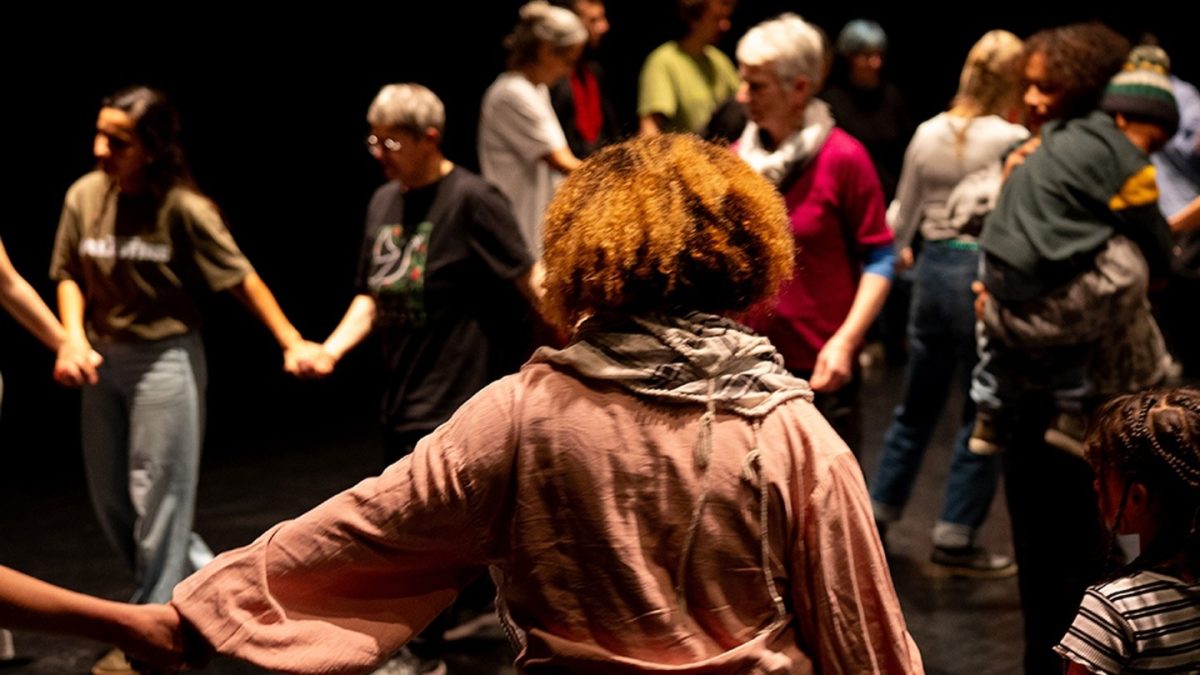
This year, we hosted 16 screenings alongside a poster exhibition, a dance workshop, two linocut workshops, a bilingual poetry recital, and a shared table event where people came together to eat, talk and connect. Our festival also included a small merchandise table selling books, T-shirts and hand-crafted goods from Palestine.
is needed now More than ever
Our audiences are broad, mixed and engaged in good faith. Many, by the way, are Jewish.
To imply that the presentation of Palestinian stories – or spaces of shared culture and conversation – is intimidating, is to mischaracterise cultural expression as menace, and empathy and solidarity as aggression.
We are clear that intimidation, harassment or racism of any kind is unacceptable. Safety matters.
But political disagreement is not intimidation. Protest is not intimidation. Visible solidarity with Palestinians is not intimidation.
A flag, a film or a public meeting does not become threatening simply because it challenges prevailing power or makes some people uncomfortable.
Collapsing discomfort into fear is a rhetorical move that shuts down legitimate political speech.
The article by Sharon Ross claims BPFF promotes a “one-sided narrative” and calls for “other points of view”. This misunderstands both film and festivals.
Films are authored works grounded in lived experience. Palestinian filmmakers repeatedly return to occupation, siege, displacement and war because these realities shape everyday life.
Our events routinely include discussion and questioning. Critical engagement is expected, not excluded. The suggestion that BPFF silences debate is simply false.
In her article, Ms Ross dismisses allegations of apartheid and genocide as “baseless”. This is factually inaccurate.
Amnesty International, Human Rights Watch and B’Tselem have all concluded that Israeli authorities are committing the crime against humanity of apartheid.
Numerous genocide scholars and legal experts have described Israel’s actions in Gaza as genocidal
These conclusions can be contested but they cannot be waved away. Treating them as extremist rhetoric misleads readers and erases substantial bodies of evidence.
In questioning why people care so deeply about Gaza, Ms Ross employs a familiar tactic used to delegitimise political concern.
People engage because of personal connections, Britain’s historical responsibility, the scale of civilian harm and moral urgency. None of this is suspicious. None of it is threatening.
Bristol should be a city where people feel safe and intimidation is challenged – and where those speaking out against oppression and mass violence are not recast as a danger simply for doing so.
We reject the claim that being pro-Palestinian is, by its nature, intimidating. That assertion is not only wrong; it corrodes public debate and narrows the space for democratic expression.
This is an opinion piece by Alison Sterling and Karena Batstone on behalf of the Bristol Palestine Film Festival trustees
Main photo: Urmila Kerslake
Read next:
 Our newsletters emailed directly to you