Your say / saunas
‘Bristol can become the UK’s sauna capital’
It’s a freezing Saturday morning on the riverbank. Five people haul themselves out of the Avon, bright red and gasping, then sprint – laughing – into a sauna. Ten minutes later they burst back out through a cloud of steam and jump straight back in.
This is winter in Bristol now. And it’s catching on fast.
Saunas are appearing across the city like daffodils in spring. In car parks and on riverbanks, at festivals and in converted industrial spaces.
is needed now More than ever
We launched the Bristol Sauna Trail last year with six venues on the map. By the time the event went live, there were 12. It sold out before a single piece of marketing went out.
Today, there are around 18 saunas operating in the wider Bristol area.
Why is this happening? Is this phenomenon unique to Bristol? Why would people want to sweat semi-clothed in a tiny room with strangers?
These are questions I have been exploring over the last two years and I’m very excited to share my findings in this write-up for Bristol24/7!
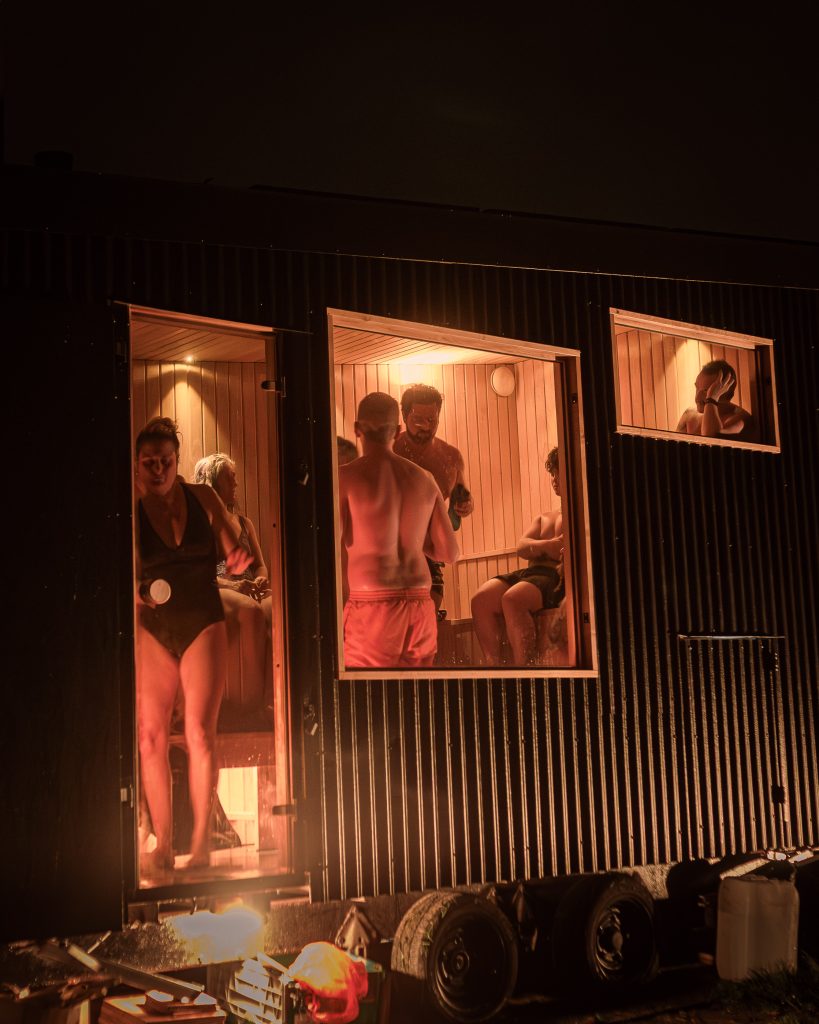
Johnny Palmer is the founder of Aether Sauna at Warleigh Weir – photo: A Life Well Productions
Humans have been heating it up together for a very long time. Native Americans had sweat lodges. The Japanese had onsen. Turkish had hammams. Romans built thermal baths across an empire.
The settings varied; the instinct was the same – gather somewhere hot, stripped back, away from the ordinary world and be together.
For the Finns, the sauna remains the most important cultural ritual in national life. For the Turkish, the hammam evolved from a place to wash into the central social meeting point of a community.
Every culture found its own reason to gather in the heat – but they all found one.
I believe that we in the UK actually have, in a different form, and the reason for the emerging sauna culture now is because of economic and social shifts.
The British pub has long been a place for people to commune, share ideas and get warm. The classic pub historically had a fire and the space was on the uncomfortable side of warm.
It was also a ritualistic space where certain ceremonies, practices and ways of interacting are both accepted and even enforced.
In the past, the Brits didn’t need a sauna culture because they had those needs fulfilled by the pub.
But sadly, the British pub is becoming extinct – partly due to the relentless pressure from successive tax-heavy and regulation-driven governments who appear to be intent on vandalising our cultural heritage.
Also contributing to the demise of the pub is the ongoing reduction in alcohol consumption, a staple of pub culture.
It is near-impossible for most pubs to stay afloat these days. Pubs are closing in droves.
Yet the human need to connect, have shared ceremony, escape daily life and get really warm remains.
This is where sauna culture steps in. Saunas of all varieties are popping up all over the UK. They range from simple barrel saunas in car parks, to guerrilla-style temporary saunas, to trailer units in off-grid natural surroundings, to large performance-based ‘aufguss’ saunas, to pop-ups at festivals.
Much like pubs, all these saunas are a personal expression of the owner – expressing how they think a sauna should be, using materials they love, in whatever locations they can access.
Each sauna, also like a pub, has a different culture, a certain type of customer and often a different atmosphere at different times of day.
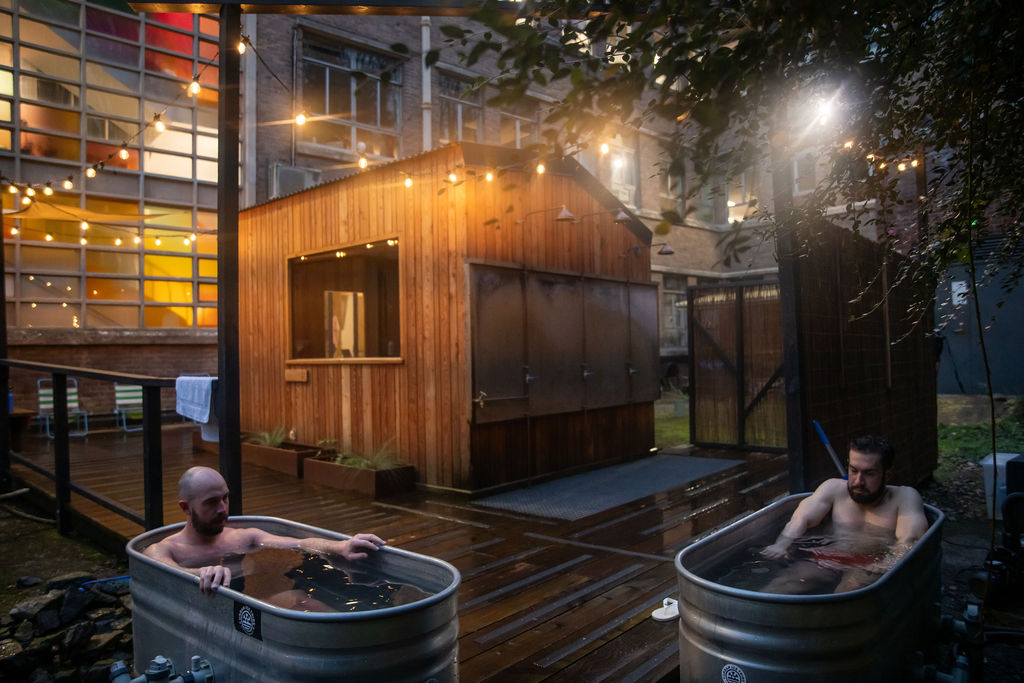
Community Sauna is located behind St Anne’s House – photo: Bristol Community Sauna
There’s a broader story here too.
Social media has, paradoxically, made many people feel more isolated. We curate our lives for digital audiences – carefully filtered, always flattering – while real-world connection quietly dwindles.
The harm isn’t just loneliness (which has shown to significantly reduce life expectancy); it’s the corrosive effect of comparing your unedited reality to everyone else’s highlight reel.
A sauna strips all of that away, sometimes literally.
You leave your phone at the door (the heat kills it within minutes anyway), so no scrolling, no performance, no pretence.
Makeup runs or washes off. Most clothing and status symbols stay outside, partly because jewellery can burn your skin at these heats.
What you’re left with is a group of people, in their most unguarded state, sharing space – sometimes talking, sometimes in silence.
As one regular at our sauna put it: “This is the one place where I can’t use my phone. Partly because it doesn’t feel right, but also because it just won’t work in here. It’s so bloody hot.”
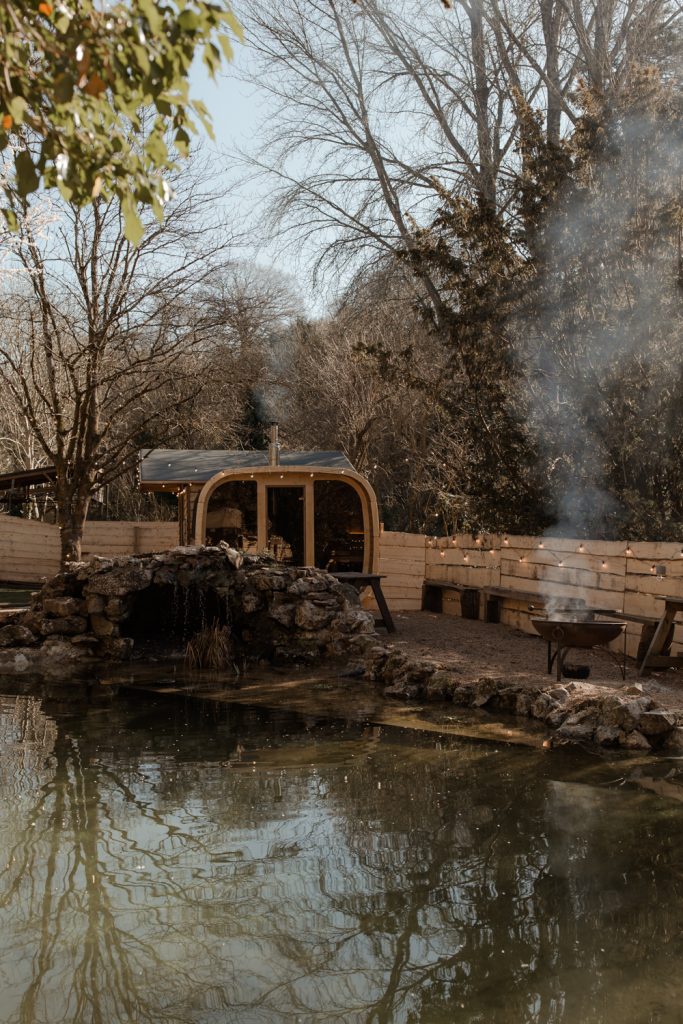
Fire & Ice is hidden within Westbury Wildlife Park in Westbury-on-Trym – photo: Fire & Ice Wellness
I hope by now you are feeling the same love of sauna culture as I do. But what has this got to do with Bristol and are we becoming the UK sauna capital?
London was first. The capital has Russian banyas, Turkish hammams and community saunas – an antidote to the particular loneliness of a very big city.
But London’s sauna scene has plateaued. Something different is happening in Bristol.
London is transient. People arrive, work, move on. Bristol is more rooted. Many of the young people of the city are hang-rounds from university who consciously chose the city as their home, which means we put the work in to create the world we want.
The sauna culture here isn’t driven by urban anonymity; it’s driven by a genuine desire to build community.
This is a city of activists and makers, comfortable with trying things that don’t always sit neatly within the rulebook – and that spirit shows up in its saunas.
There are practical factors too. Bristol has a large, relatively compact population – enough density to sustain multiple independent saunas, each with its own character.
Despite the narrative that the city is short on space and property expensive, there are actually plenty of underused sites: closed venues, old car parks, riverside spots that lend themselves perfectly to this kind of repurposing.
Along the Devon and Cornwall coasts, a parallel sauna scene is thriving – closely tied to wild swimming culture, building community along some of Britain’s most beautiful stretches of water.
It’s wonderful. But it faces an unavoidable constraint: not enough people nearby to sustain it year-round. Bristol doesn’t have that problem.
Bristol has the land, the culture and the population which positions us well as a thriving sauna location. But does this make us unique enough to be the sauna capital of the UK?
On its own, I don’t think so – but there are two other factors at play.
First is the creative entrepreneurship of the city. Bristol has an anti-corporate sentiment but a strong grassroots entrepreneurial culture. A young population, a high density of graduates and a desire to see interesting things happen all contribute to a city that moves fast, experiments and grows ideas quickly.
The second factor is our tech, art and music culture. I don’t know anywhere else where engineering, music and experience design blend so seamlessly.
This is important because the next evolution of sauna culture in the UK is aufguss – sauna experiences guided by a ‘Gusmeister’ which combines music, scent, performance and storytelling. This overlaps directly with DJing, theatre and immersive production.
As many artists struggle due to venue closures and funding cuts, they will need new places to perform and express themselves. Aufgus offers exactly that.
Recently, I hosted a two-day aufgus training course that was oversubscribed and created the first cohort of locally trained aufgus practitioners.
All this points towards Bristol becoming the UK’s sauna capital.
However, I don’t think we can claim that title quite yet. We need a defining moment or a label – and I believe that’s coming.
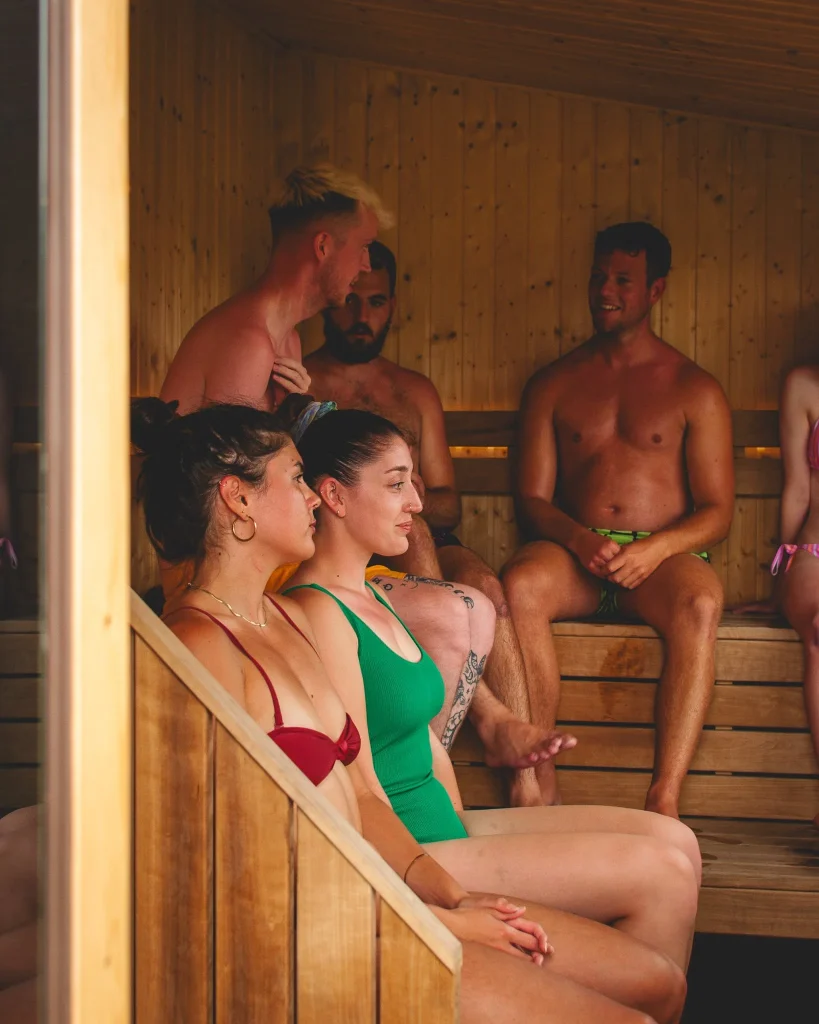
One-hour public sauna sessions at Unfold Sauna on Five Acre Farm in Backwell feature time in both a sauna and ice bath – photo: Unfold Sauna Club
For those who take an interest in wellness businesses or property development you may be aware of my plans for Picaroon – the community I intend to build at Leigh Court.
By way of background, I purchased part of the estate in 2021 as a precursor to acquiring the entire Leigh Court estate to create a community thriving in nature.
The core feature of this project will be to create the UK’s largest sauna. This sauna will be very different to every other sauna in the region as it will be practitioner and aufgus focused with hot yoga, bass therapy, aromatherapy and sauna raves.
Cities need identities. I see Bristol being ‘the UK’s sauna city’ and with the biggest sauna in the country as fantastic labels to go alongside all the other ones we have around art, music, architecture, protest and pulling down statues.
As a sauna lover, gusmeister and trainer, Picaroon is incredibly exciting for me.
I built Aether Sauna on my island at Warleigh Weir as a way of building the DNA for Picaroon and it is thriving; great people, accessible, healthy, in nature and a lot of fun.
I want to bring this home to Bristol, at scale and contribute to our city’s identity.
We just need the current owners of the estate, Business West, to accept our offer for the estate. I believe they have the vision to see how great this will be for the city and support my vision.
The sauna landscape in Bristol is thriving with excellent creators, makers and entrepreneurs opening unique and expressive spaces. The public are loving it.
If this continues, Bristol won’t just have saunas – it will redefine what community looks like in modern Britain.
I encourage everyone to get out and try some of the local saunas, find the one that is right for you and see how sauna practice changes your life.
This is an opinion piece by Johnny Palmer, the founder of Aether Sauna and activist group Swim Bristol Harbour, co-founder of the Bristol Sauna Trail, and owner of the Warleigh Weir Island
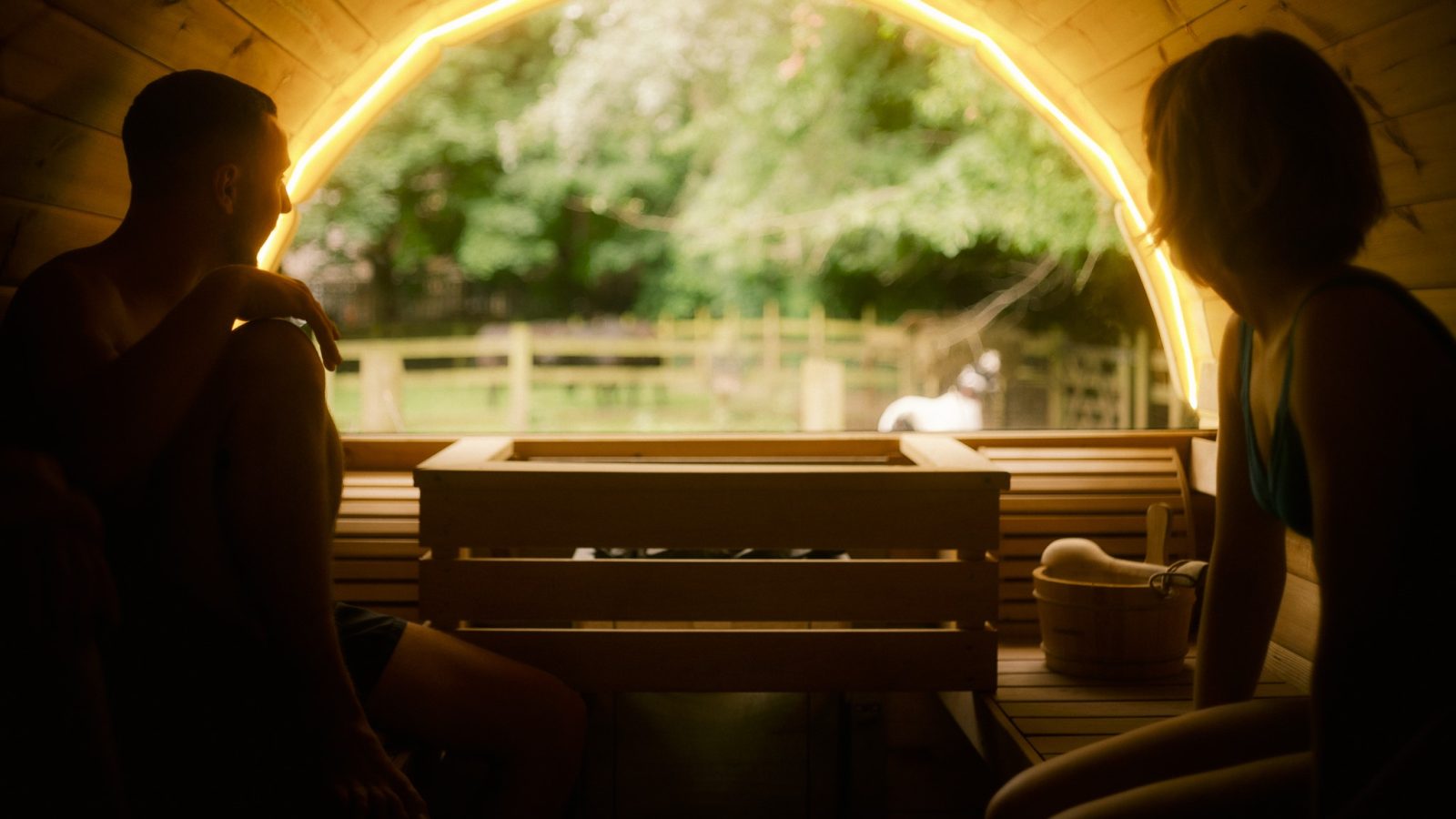
Main photo: Orchard Sauna
Read next:
 Our newsletters emailed directly to you