News / Transport
New red surface on cycle lanes could reduce conflict between cyclists and pedestrians
A red high-friction surface is set to be installed on a cycle lane in Bristol as a test before potentially being rolled out across the city.
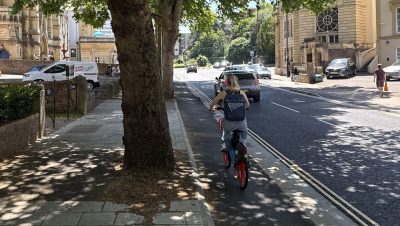
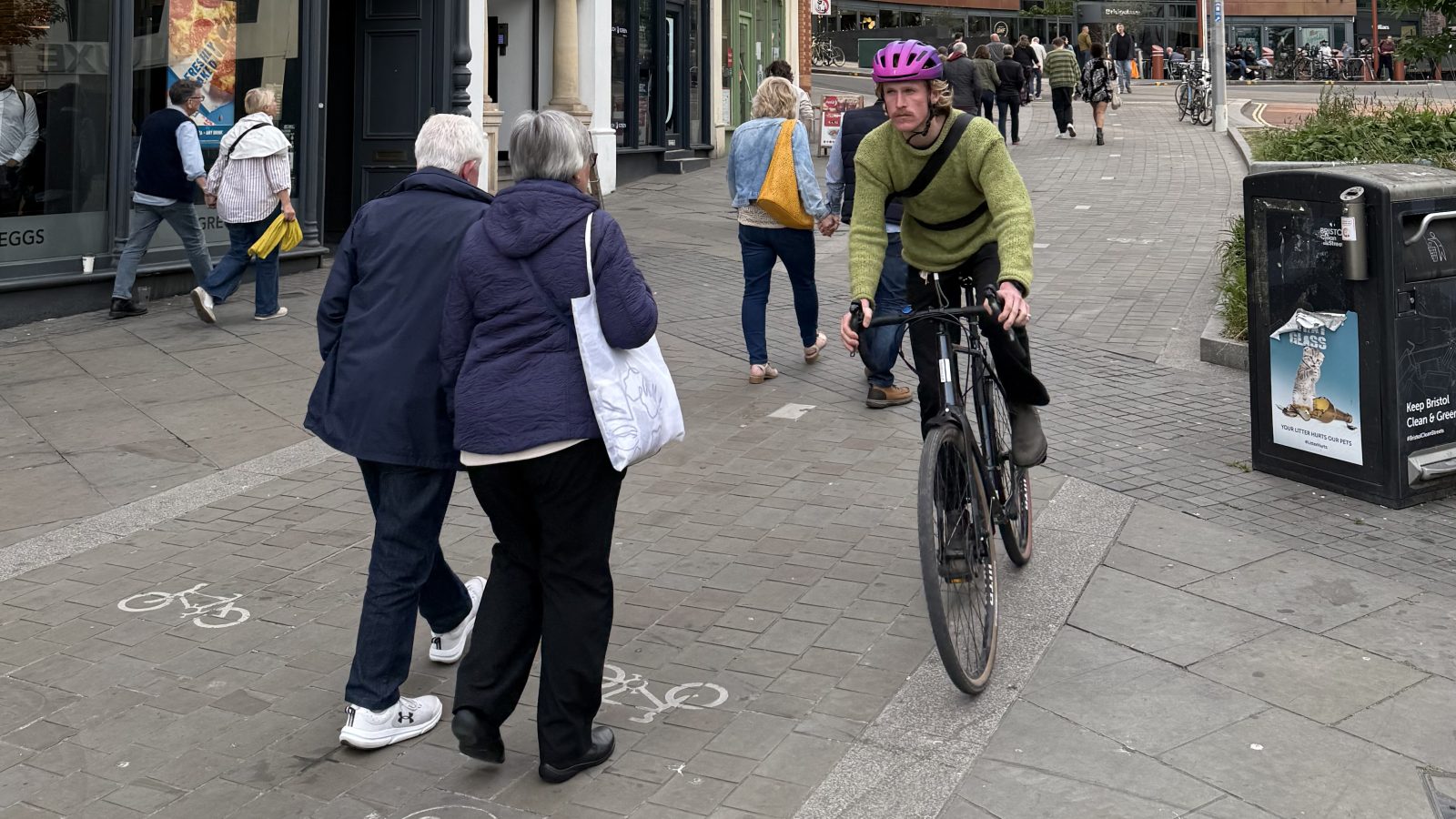
The aim of the trial is to reduce conflict between cyclists, pedestrians and other road users – an all-too familiar occurrence on cycle lanes that are almost indistinguishable from pavements.
The trial is expected to cost up to £250,000 which will be funded by income generated by the Clean Air Zone.
is needed now More than ever
Several sites are being considered for the trial including two of the city’s newest segregated cycle lanes on Bristol Bridge or on ‘the Old Market Gap’ between Castle Park and Old Market Street.
Other options include testing the new surface on upcoming projects such as on Bedminster Bridges, Union Street or the junction between Anchor Road and College Green.
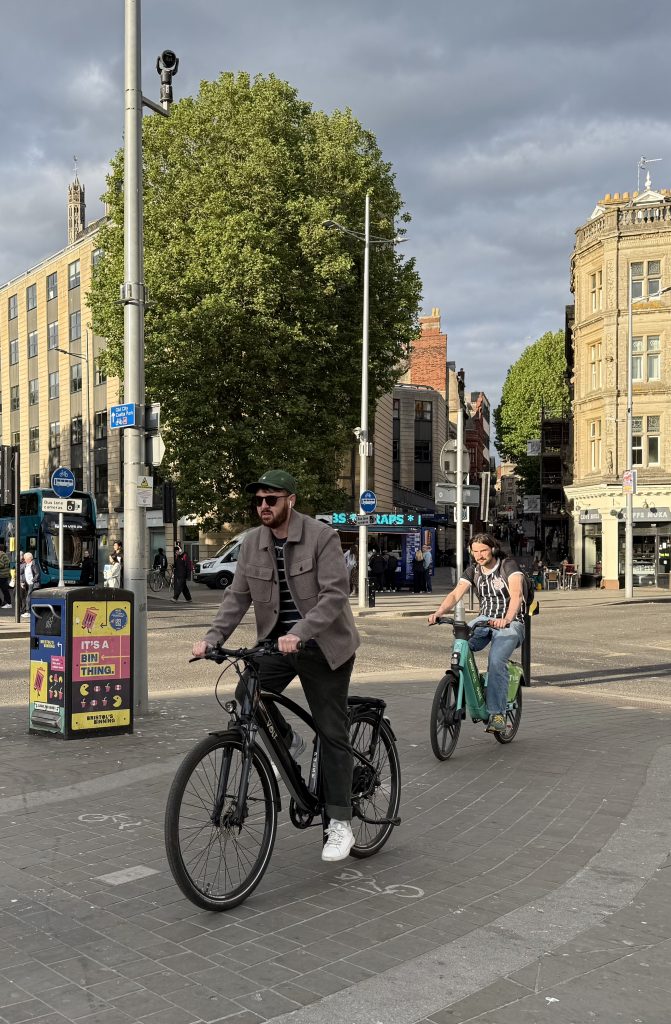
The cycle lanes through the Centre are currently almost indistinguishable from the pavement – photo: Martin Booth
Ed Plowden, chair of the transport & connectivity committee, said: “I am keen to test this new approach to our cycleways, as it should tell us if using a red surface helps to reduce the number of pedestrians and other road users moving into cycle paths by mistake, before deciding whether to roll this approach out across the city.
“It would be a significant investment if we decide to update our policy, so careful thought needs to be given to make sure it is effective before we commit to this in the long-term.”
Main photo: Martin Booth
Read next:
 Our newsletters emailed directly to you