Features / history
The secrets of a hidden Bristol church dating back to Saxon times
There was once another church so close to St Mary le Port that during services at one, it was possible to hear and even see the goings-on in the other.
With late Saxon or early Norman origins, archaeological excavations in 2017 revealed that much of the existing St Mary le Port church was rebuilt in the 15th and 16th centuries on the foundations of an earlier medieval structure.
Named after its proximity to Bristol’s market, it is one of our city’s oldest churches but its bombed-out remains have been hidden from view and sadly neglected for decades behind a trio of post-war buildings.
is needed now More than ever

Writing in the Bristol Times in 1843, Joseph Leech described St Mary le Port – which he wrote as Maryleport – as being “packed up and thrust away somewhere to the rear of High Street, but so ingeniously surrounded with human dwellings that unless one went specially in search of it, he was not likely to find it”.
Maurice Bye in Castle Park Before the Blitz describes Mary-le-Port Street into the 1930s as “a fragment of medieval Bristol… in its own enclosed world where time stood still”.
The church was “barely visible” according to Bye and had to be accessed from Mary-le-Port Street or a narrow lane with steps from Bridge Street.
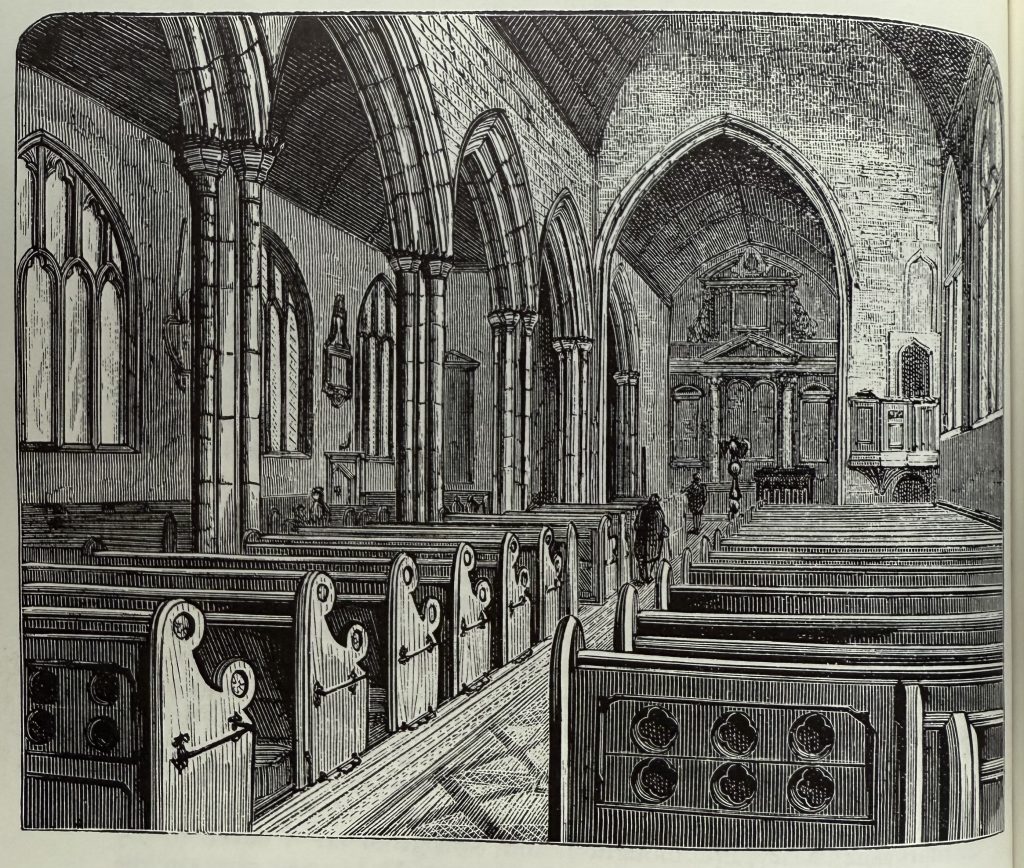
Inside St Mary le Port Church before it was almost completely destroyed in a German bombing raid in 1940 – image: Rural Rides of the Bristol Churchgoer
When Leech attended a service at St Mary le Port in 1843, he called it “essentially an old city church, time-worn and venerable outside, and forming with its little grass-grown churchyard, upon whose ancient gravestones the lattices of the contiguous dwellings have for centuries looked out a small, sombre, sleepy square, where the busy echoes of the surrounding streets may be heard, though protected itself in its retirement from much intrusion or thoroughfare.
“It is just the church – being as it is in the heart of the city – where one can fancy for hundreds and hundreds of years successive generations baptized, and married, and buried in its vaults and about its buttresses…
“One of the greatest inconveniences of Maryport is its close contiguity to Bridge Street Independent Chapel, with regard to which it stands in a parallel situation little more than, if so much as, twelve yards apart.
“From where I sat in the church I could see the people rising up and sitting down, and going through all their evolutions close by, and while the first and second lessons were being read, we had the advantage of their melody next door, with a distinctness which convinced me that they in their turn must have the full use of our organ.
“I confess this ‘confusion of tongues,’ was far from having a double effect of any very desirable kind upon our devotion; especially as the major part of most dissenting worship consists in singing, which has a rather distracting effect when put in competition with sober reading.”

A painting of St Mary le Port by John Piper was turned into a stamp in 1968 – courtesy: Tate
Along with much of the area we now know as Castle Park, St Mary le Port was almost completely destroyed in a devastating Luftwaffe raid on November 24 1940.
Due to its current condition, St Mary le Port is on Historic England’s Heritage at Risk register.
But its bombed-out spire and the area around it could within a few years form part of a new development which promises “to provide a high-quality landscaped public space in and around the tower, to significantly improve its setting”.
Developers say that the ruins “are in need of significant work to respectfully retain what remains, so that they can be enjoyed by people now and in the future”.
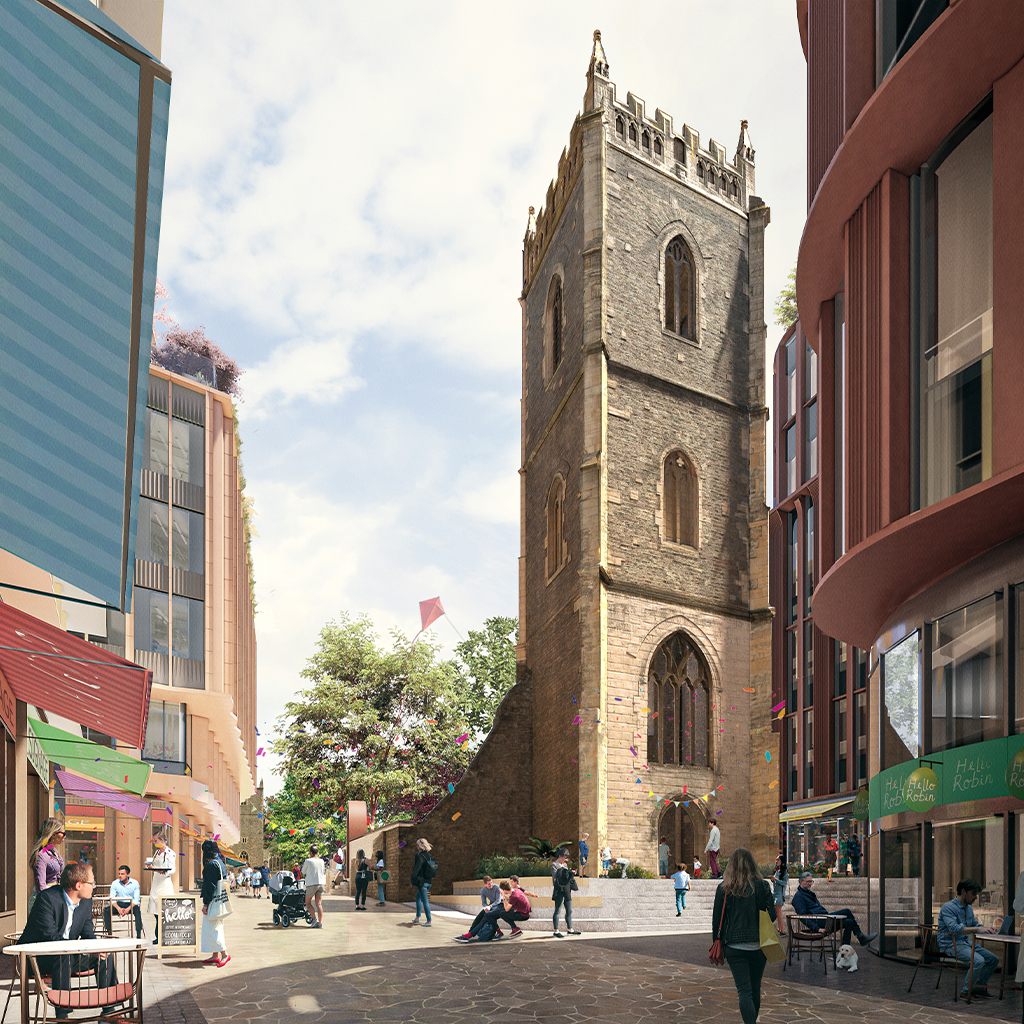
Developers envisage “a high-quality landscaped public space in and around the tower, to significantly improve its setting” – image: MEPC
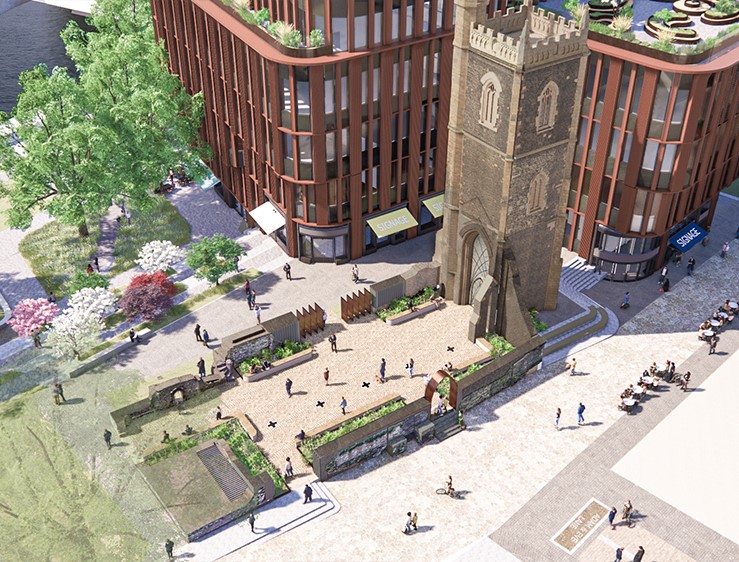
The ruins of St Mary le Port church seen within the proposed new development around it – image: MEPC
As part of the future development, Mary le Port Street will be brought back to life to connect St Nick’s Market, Castle Park and St Peter’s Church.
Developers say that the new road on the route of the old road “will be a vibrant pedestrian-only street with new independent retailers, cafes and restaurants, creating a new destination with St Mary le Port tower and ruins at its heart”.
Despite fencing currently being erected around the site, we remain a long way away from these artist’s impressions with doubt remaining whether anything will even be built at all.
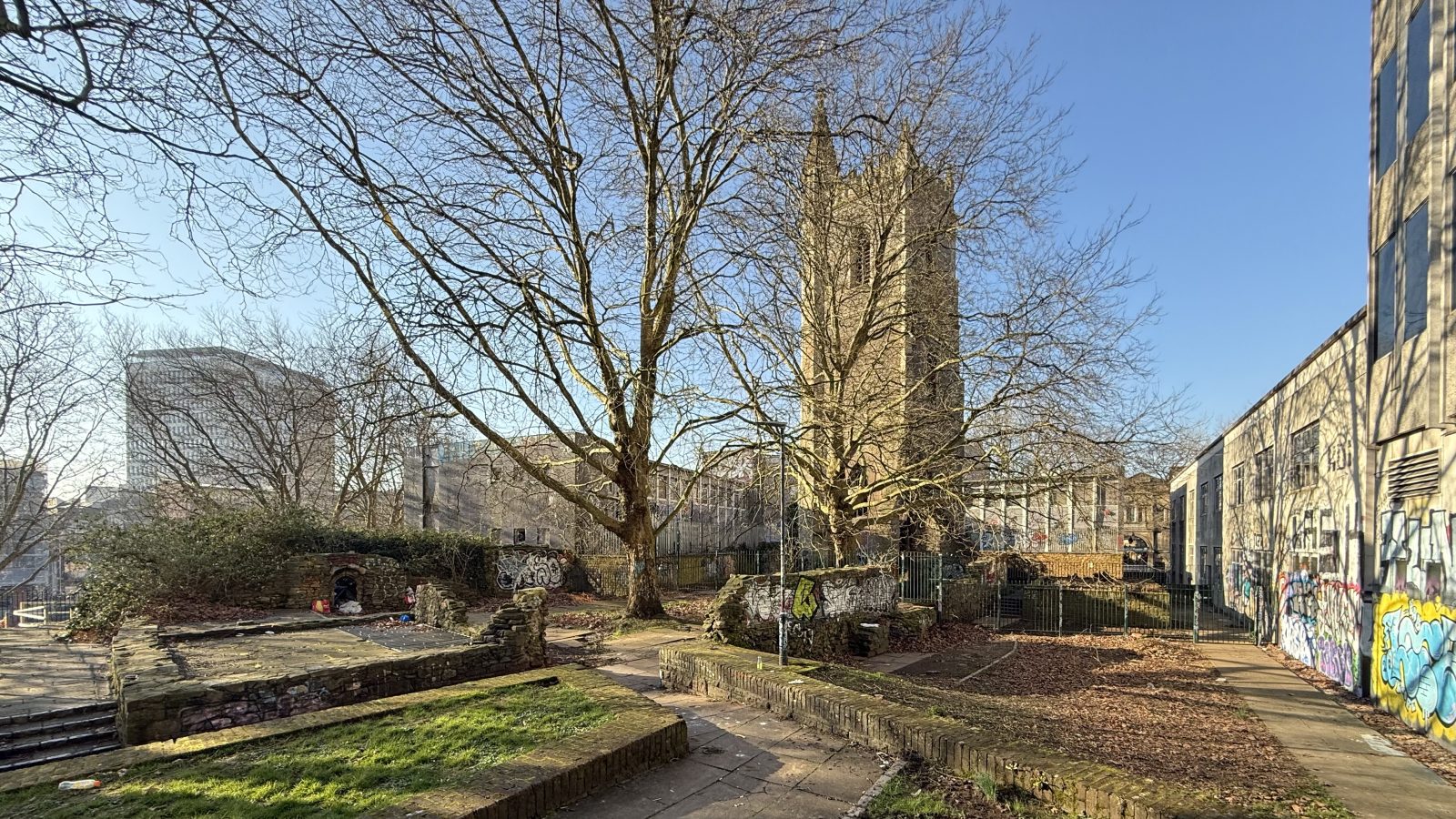
I did take photos, however, of what the ruins of St Mary le Port look like in March 2025 before they are hidden from view for an indeterminate amount of time.
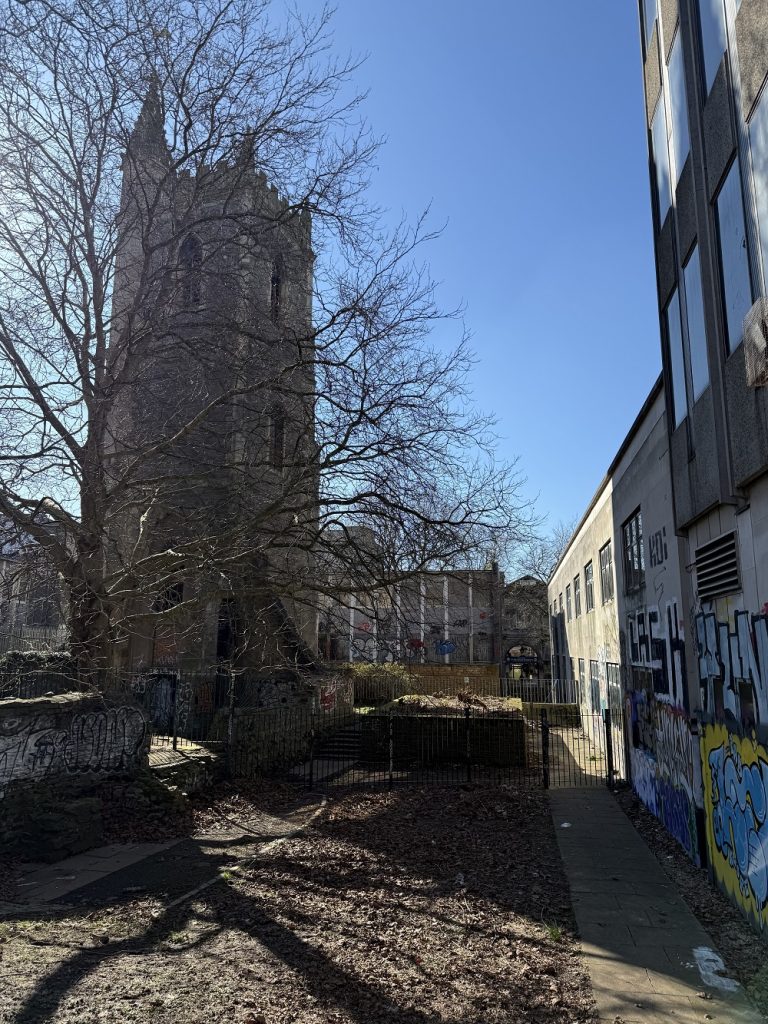
Looking along Mary le Port Street towards the entrance to St Nick’s Market on High Street – photo: Martin Booth
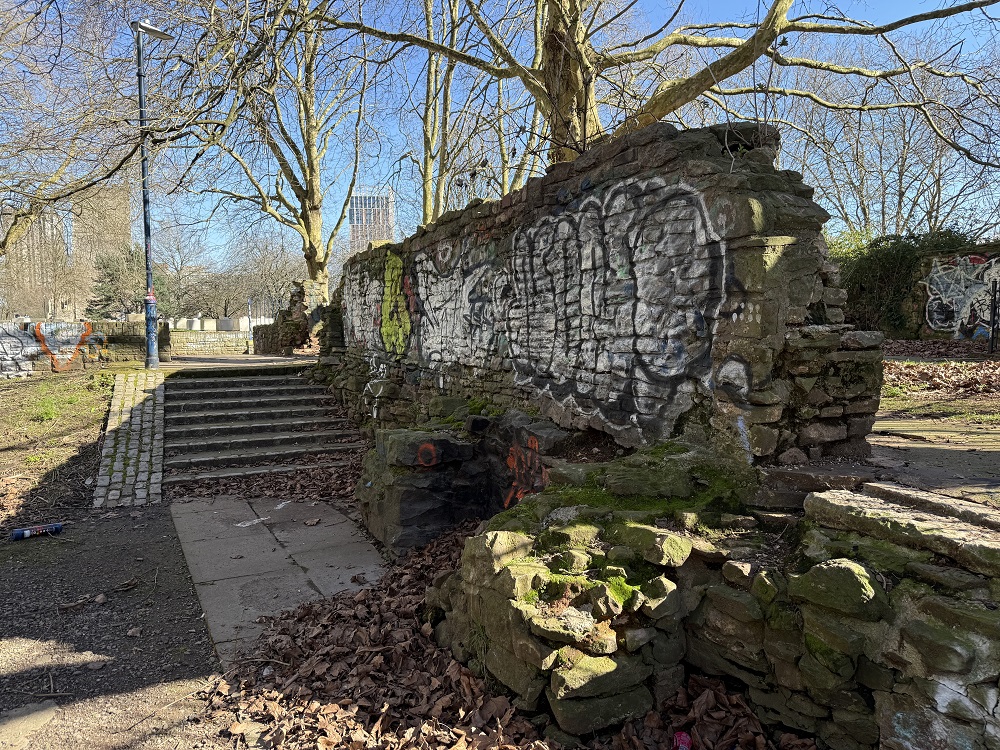
Various elements of the church and surrounding structures still remain neglected in a corner of Castle Park – photo: Martin Booth
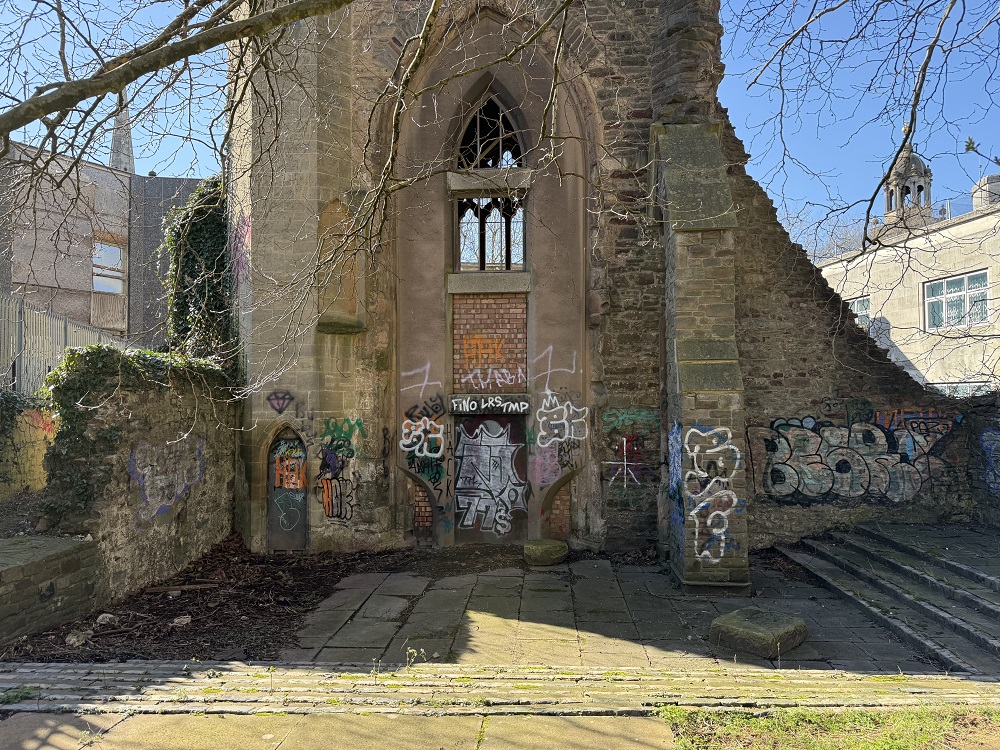
The three-stage Pennant tower dates to the late 15th century – photo: Martin Booth
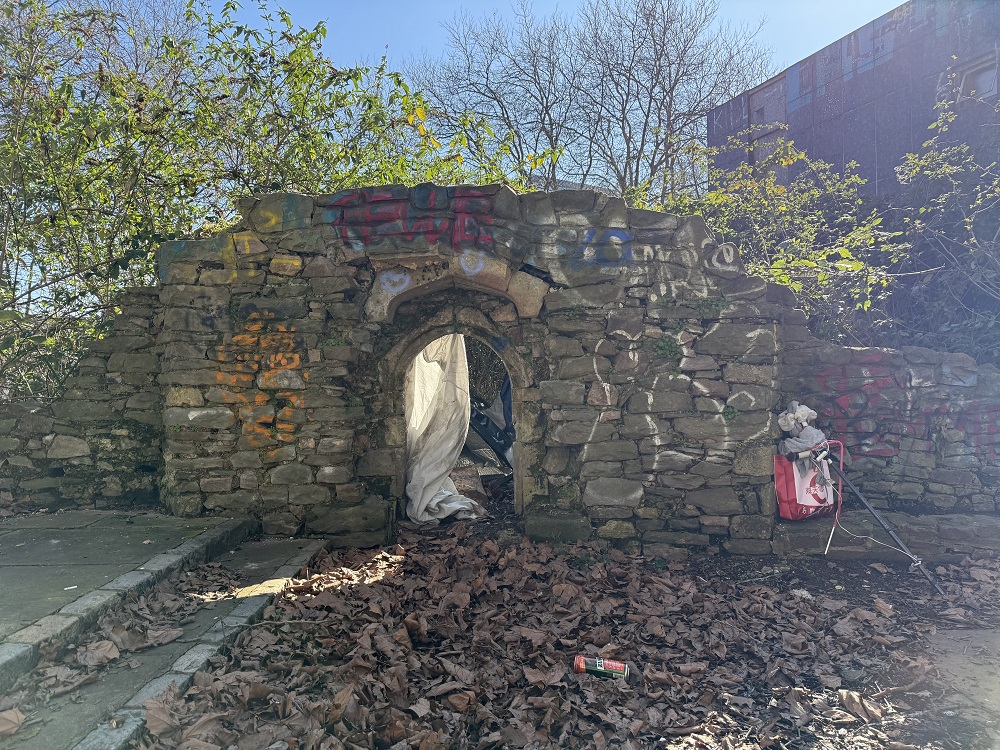
It’s a fascinating but almost forgotten corner of Bristol – photo: Martin Booth
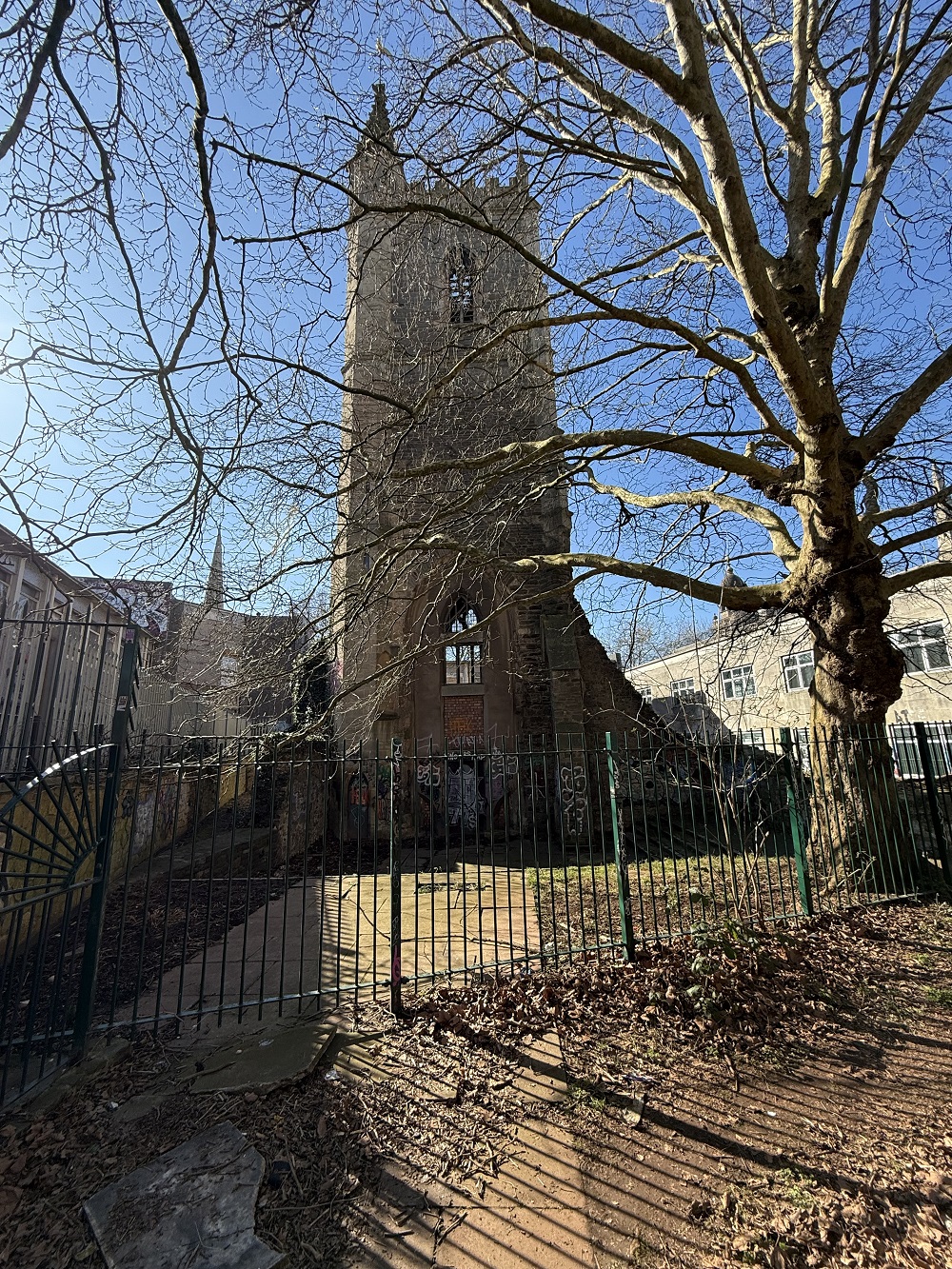
The tower survived the Bristol Blitz – photo: Martin Booth
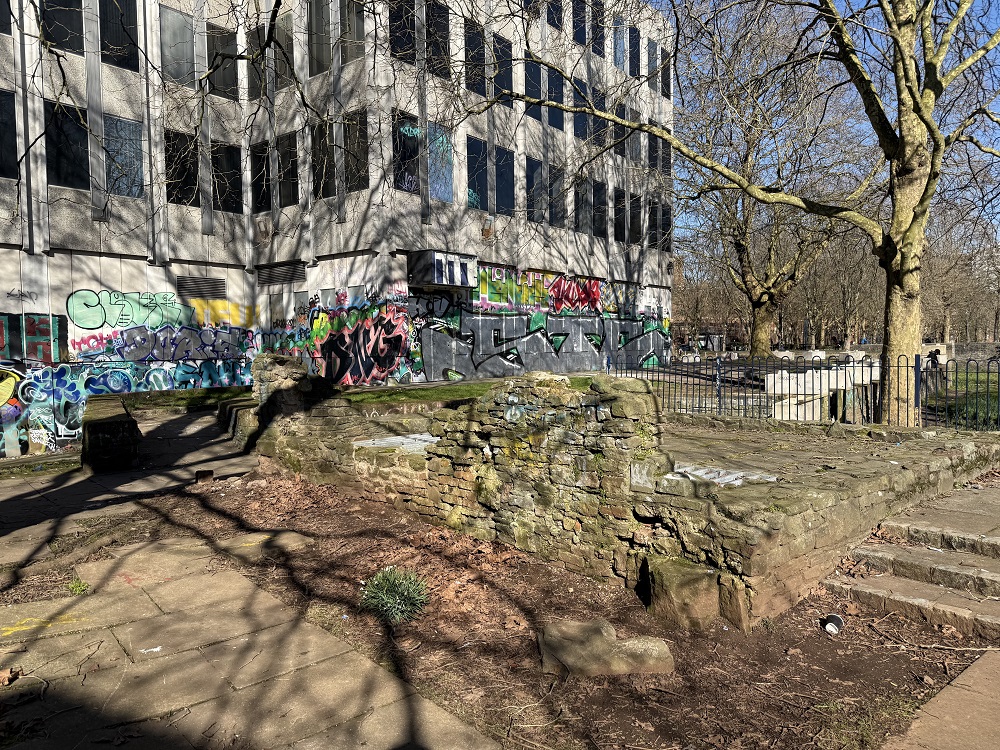
The three buildings currently surrounding the ruins of the church will be demolished and replaced – photo: Martin Booth
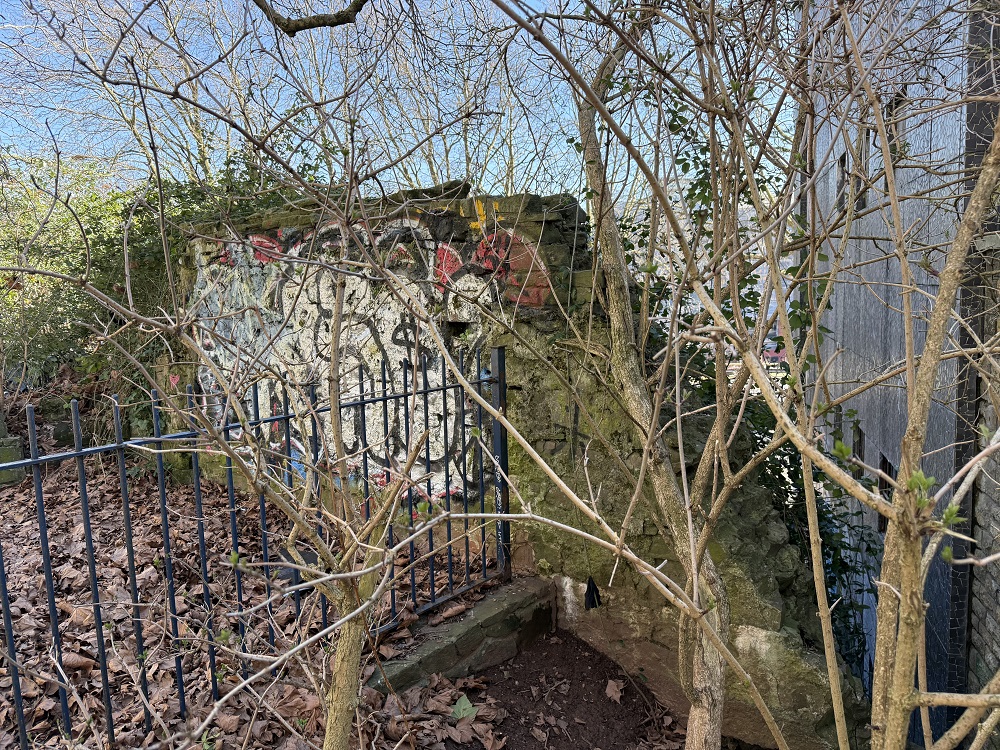
Centuries-old structures are currently neglected – photo: Martin Booth
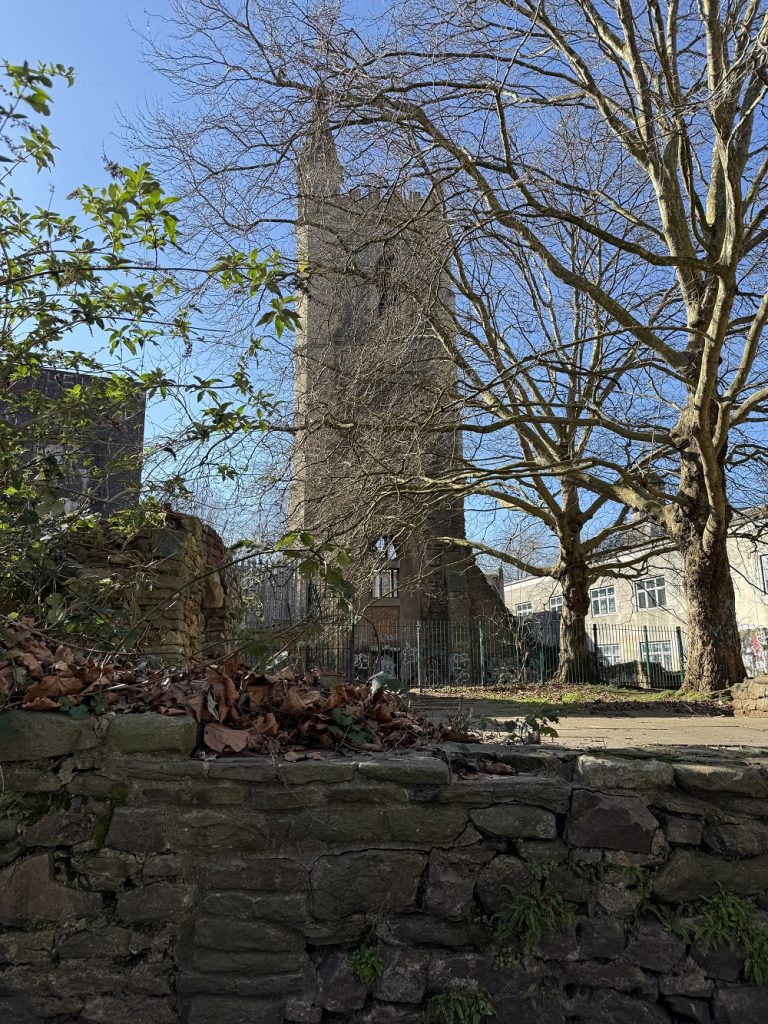
The tower will be retained within the centre of a possible new development – photo: Martin Booth
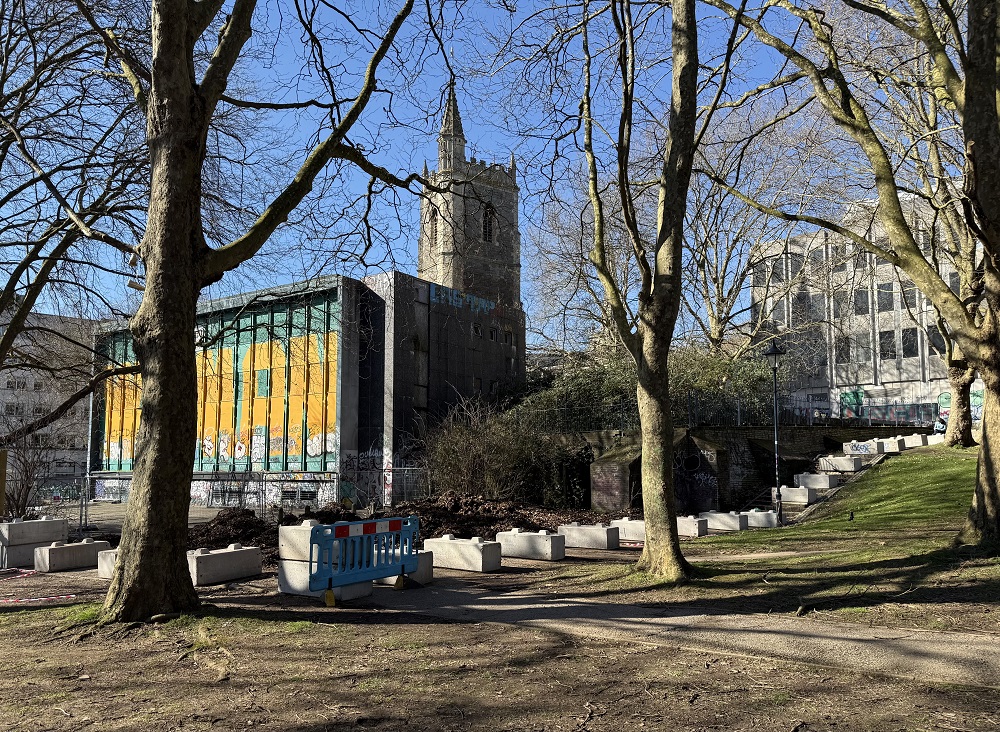
The current view of St Mary le Port’s tower, with fencing about to be constructed around it – photo: Martin Booth
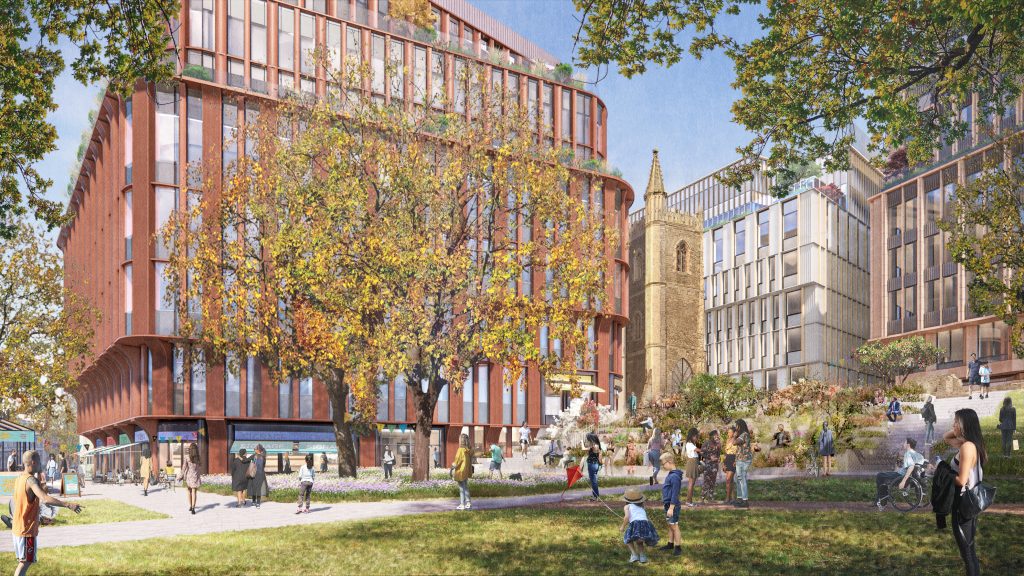
Developers say their plan “draws upon the history of the site, and creates a variety of new spaces and places for people to meet and spend time” – image: MEPC
To learn more about the history of St Mary le Port, Castle Park and the Old City, join Martin Booth on a walking tour: www.yuup.co/experiences/explore-bristol-s-quirkiest-corners
Main photo: Martin Booth
Read next:
 Our newsletters emailed directly to you