News / Advertising Feature
Hair Transplants in Bristol: Costs, Clinics, and What to Expect in 2025
Hair transplants have moved from being a niche, last-resort treatment to a mainstream solution for men and women experiencing hair loss. Thanks to advances in surgical techniques, recovery times, and natural-looking results, more people in the UK are choosing to invest in restoring their hair.
While hair transplants in London remain the country’s largest market, Bristol has quietly grown into a trusted regional hub for patients who want top-quality results without the capital’s premium price tag. In 2025, Bristol offers a mix of reputable clinics, experienced surgeons, and convenient aftercare for those living in the South West.
Whether you’re in the early stages of thinning or looking for a major transformation, here’s everything you need to know about hair transplants in Bristol—from the techniques available to average costs, recovery times, and how to choose the right clinic.
is needed now More than ever
Hair Transplant Options Available in Bristol
In Bristol, you’ll find clinics offering the three main surgical hair restoration techniques used worldwide:
FUE (Follicular Unit Extraction)
FUE involves extracting individual hair follicles from the donor area (usually the back or sides of your head) using a micro-punch tool, and then transplanting them to the thinning or balding area.
Benefits: Minimal scarring (tiny dots instead of a linear scar), quick recovery, and suitability for short hairstyles.
DHI (Direct Hair Implantation)
A more advanced variation of FUE, DHI uses specialised implanter pens to place follicles directly into the scalp without creating recipient sites first.
Benefits: Greater precision, especially for hairlines and crown work, and potentially faster healing times.
FUT (Follicular Unit Transplantation)
Also known as the “strip method,” FUT involves removing a small strip of scalp from the donor area, dividing it into follicular units, and transplanting them.
Benefits: Can yield a large number of grafts in one session, often at a lower cost than FUE or DHI.
Most Common in Bristol: FUE is the most widely offered and requested method in the city, although FUT is still available for patients with advanced hair loss, and DHI is offered in select clinics for those seeking ultra-precise results.
Average Hair Transplant Costs in Bristol (2025)
Pricing for hair transplants in Bristol depends on the technique, the number of grafts, and the surgeon’s experience. Based on 2025 clinic data:
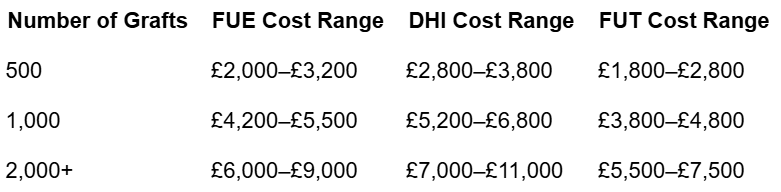
Factors that affect price in Bristol include:
- Surgeon expertise – GMC-registered, highly experienced surgeons typically charge more.
- Clinic facilities – CQC-registered clinics with advanced surgical suites may be at the higher end of the range.
- Graft count – The more grafts you need, the higher the cost.
- Technique chosen – DHI generally costs more than FUE, which costs more than FUT.
How Bristol Clinics Compare to Other UK Cities
One of Bristol’s main advantages is value for money. While London hair transplants can cost 10–20% more, many Bristol hair transplant clinics match or exceed London standards for surgical quality and aftercare.
Typical differences:
- London: Higher prices, more high-profile clinics, but longer waiting lists.
- Bristol: Competitive prices, shorter wait times, and easier follow-up for South West residents.
- Manchester/Birmingham: Similar price ranges to Bristol, but may require travel for those in the South West.
Recovery & Aftercare in Bristol
The recovery process after a hair transplant in Bristol is similar to anywhere else in the UK:
- First Week: Mild redness and swelling; scabs form and fall off within 7–10 days.
- Weeks 2–4: Transplanted hairs shed (normal part of the process).
- Months 3–4: New growth starts, soft and fine at first.
- Months 6–9: Noticeable thickening and density improvements.
- Months 12–18: Final results become visible.
Why Bristol follow-ups are easier: If you live in or near the city, you can easily attend post-op check-ups without the added stress and expense of travelling long distances—important for ensuring graft survival and optimal results.
Choosing the Right Clinic in Bristol
When selecting a clinic, keep these essentials in mind:
- Check GMC Registration – Your surgeon should be registered with the General Medical Council.
- Look for BAHRS Membership – Membership in the British Association of Hair Restoration Surgery is a sign of professional credibility.
- Ask to See Real Patient Results – Ensure before-and-after photos are genuine and from the actual surgeon performing your surgery.
- Understand Who Will Perform the Surgery – Avoid clinics where technicians do the majority of the procedure without surgeon oversight.
- Check Aftercare Protocols – The best clinics offer scheduled follow-ups, written aftercare instructions, and on-call support.
Patient Stories & Local Insights
Many Bristol patients choose to have surgery locally for the convenience and ongoing support. One patient who underwent FUE in 2024 shared that being able to “pop into the clinic for check-ups without having to travel to London” made the process far less stressful. Another patient noted that Bristol’s competitive pricing allowed them to invest more in ongoing treatments like PRP and Minoxidil to maintain results.
Final Thoughts
Bristol is an excellent choice for those considering a hair transplant in 2025. The city offers experienced surgeons, high-quality clinics, competitive prices, and the convenience of local aftercare. Whether you opt for FUE, DHI, or FUT, the key to a successful outcome lies in choosing a reputable, experienced surgeon who will tailor the procedure to your needs and long-term hair goals.
Hair restoration is both a medical and personal decision. Take the time to research, consult with multiple clinics, and weigh up the benefits of staying local versus travelling—Bristol just might give you the balance of quality, convenience, and value you’ve been looking for.
Photo by Ian Talmacs on Unsplash
 Our newsletters emailed directly to you