Homes and Gardens / Advertising Feature
Industrial gases and furniture manufacturing: why is secure storage essential?
In the furniture industry, there are a number of instances where gas can be used. For example, it can be welding metal structures, drying and curing finishes, flame retardant treatments, or energy efficiency in processes. In any case, it is important to address all the risks and challenges within the process, including the health hazards, environmental impact, as well as energy consumption.
Plus, you must have adequate mitigation strategies that regularly inspect gas equipment, such as gas bottle storage, or implement ventilation systems to manage gas storage effectively.
This guide covers how to store gas in the furniture manufacturing. Read on for more.
is needed now More than ever
Storage area requirements
When it comes to storage area requirements, the first thing you should pay attention to is the ventilation and temperature control of your gas cylinders. Remember, they have been in well-ventilated, cool, and dry areas, preferably with a temperature under 50°C (125°F). Yet, for type E cylinders, make sure the temperature does not exceed 34°C (93°F).
From a location perspective, keep areas away from doorways, aisles, elevators, and stairs and maintain a minimum clearance of 20 feet from highly combustible materials to prevent gas explosion. Furthermore, ensure a 3-meter clearance from flammable materials, vegetation, and refuse.
Monitoring and safety measures are paramount here. The best practice is to install fire extinguishers or sprinkler systems near storage areas. This will allow you to rapidly respond to emergencies, protect personnel and other assets within the company, and comply with local regulations. All of these together lead to enhanced operational efficiency.
Also, consider implementing a continuous gas detection system for toxic and highly toxic gases like acetone, toluene, ethylbenzene, xylene, and formaldehyde. In addition, limit access to the storage area to authorized personnel only.
Handling and Positioning
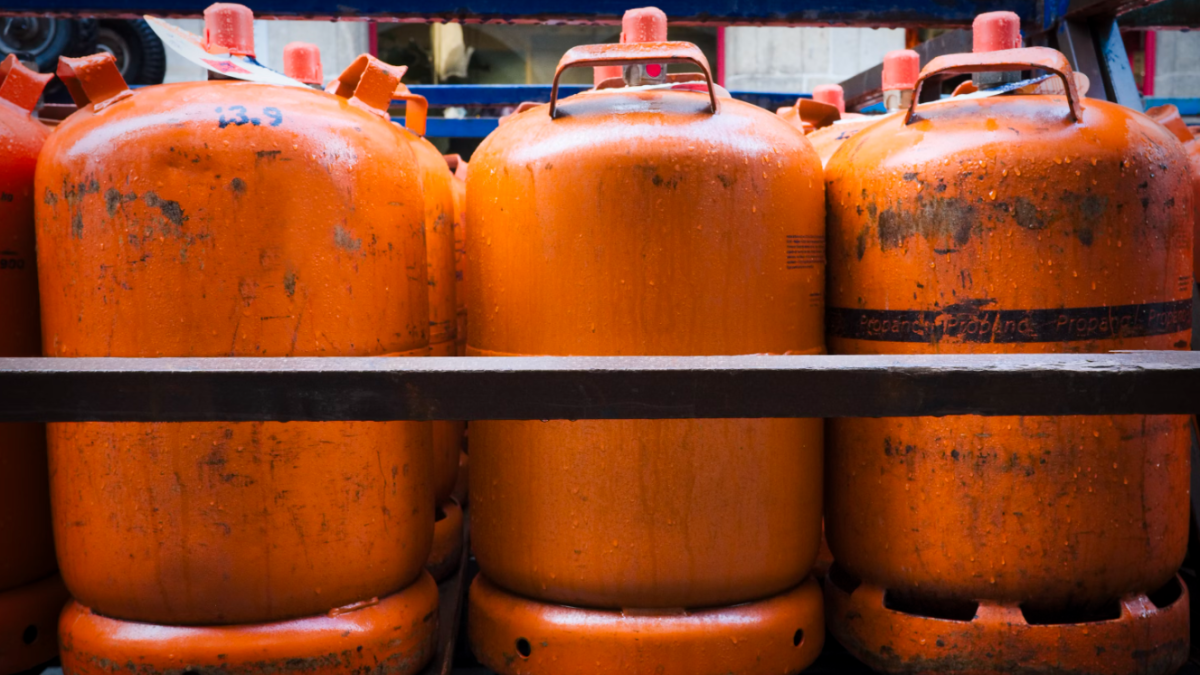
One key thing you need to ensure is that cylinders are always stored upright. Such a configuration will not only provide stability but also prevent liquid gases from leaking or escaping through the safety valve. Speaking specifically, be super attentive when dealing with gases like nitrogen oxide, carbon dioxide, propane, as well as liquefied petroleum gas, also known as LPG.
Another key thing to do is have accurate (and legible) labelling – you want to ensure everyone understands it. For instance, use labels that have both hazard classifications and safety precautions. On the contrary, the colours may be confusing, so don’t rely on them. As a vivid example, colours differ from one supplier and manufacturer to another. In other words, the same colour can mean even the opposite things.
To keep cylinders in a good shape (and also to ensure everyone else’s safety), it is generally recommended to use protective caps on valves. The main advantage of this includes the prevention of damages during transportation, along with the protection of the entire mechanism,
Of course, keep full cylinders away from the separate ones. You can also consider segregating gases by compatibility. For example, oxygen cylinders must be stored at least 20 feet away from flammable gases, as per industry standard.
Regulatory compliance
The last and probably the most important thing is to comply with safety standards. For gas storage, in particular, these can be on the local, national, and international levels.
Therefore, follow these guidelines: OSHA, NFPA, and CGA (Compressed Gas Association). Adhere to industry standards like NFPA 55 for the construction of gas cabinets. For instance, the proper labelling of cylinders should follow NFPA, DOT, and OSHA hazard communication requirements.
In addition, it is important to provide the necessary training to employees, such as the workplace hazardous materials information system (WHMIS). This will ensure everyone is on the same page in understanding how to work in such an environment. Safety data sheets (SDS) are also available for all gases.
Main image by Unsplash
 Our newsletters emailed directly to you