Music / Reviews
Review: Aurora Orchestra, St George’s – ‘A mesmeric demystification of a master’
Mozart’s Jupiter By Heart, presented by Aurora Orchestra and Through The Noise at St George’s, was extraordinary on many levels: a staple of the symphonic canon dissected and analysed with mirth and laughter, but never at the expense of performance.
Classical music has long attracted criticism for being elitist and the preserve of a certain social strata, where venues and heirlooms are curated by a group of grey guardians and gatekeepers.
Aurora Orchestra, co-founded by conductors Nicholas Collon and Robin Ticciati in 2004, has become one of the champions of bringing classical music to the masses, not always in grand concert halls, but in everyday spaces such as shops, care homes and factory floors.
Conductor Nicholas Collon, perhaps an evangelist for classical music without a halo, unveils the anatomy of a composition layer by layer as if it were under the scalpel of a surgeon, where musical appreciation is presented with humour and warmth.
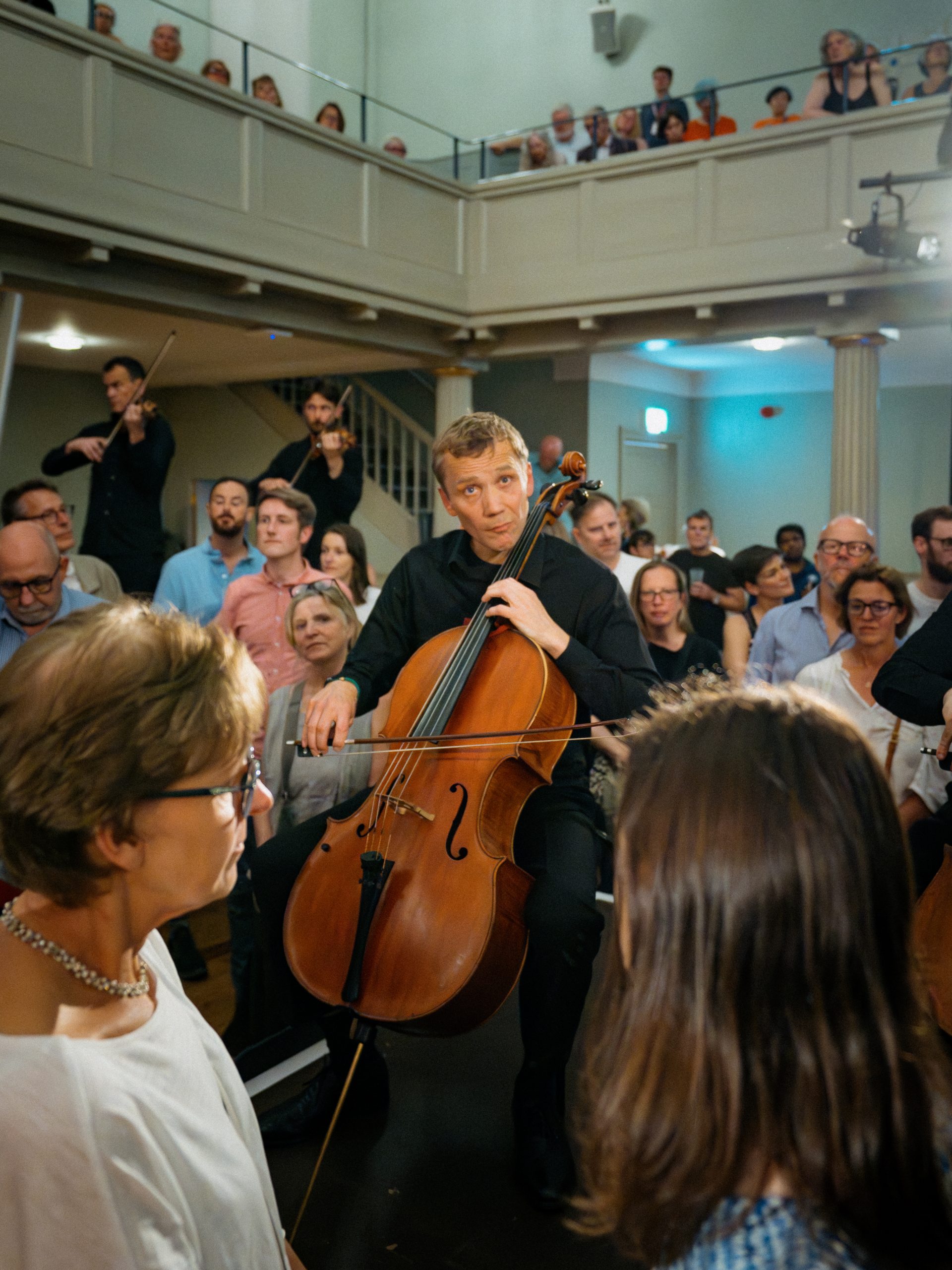
Instead of sitting in an orchestral pit, the musicians stood or sat among the audience
But it is no laughing matter. The ensemble performs its entire repertoire from memory, without a single piece of score in front of them.
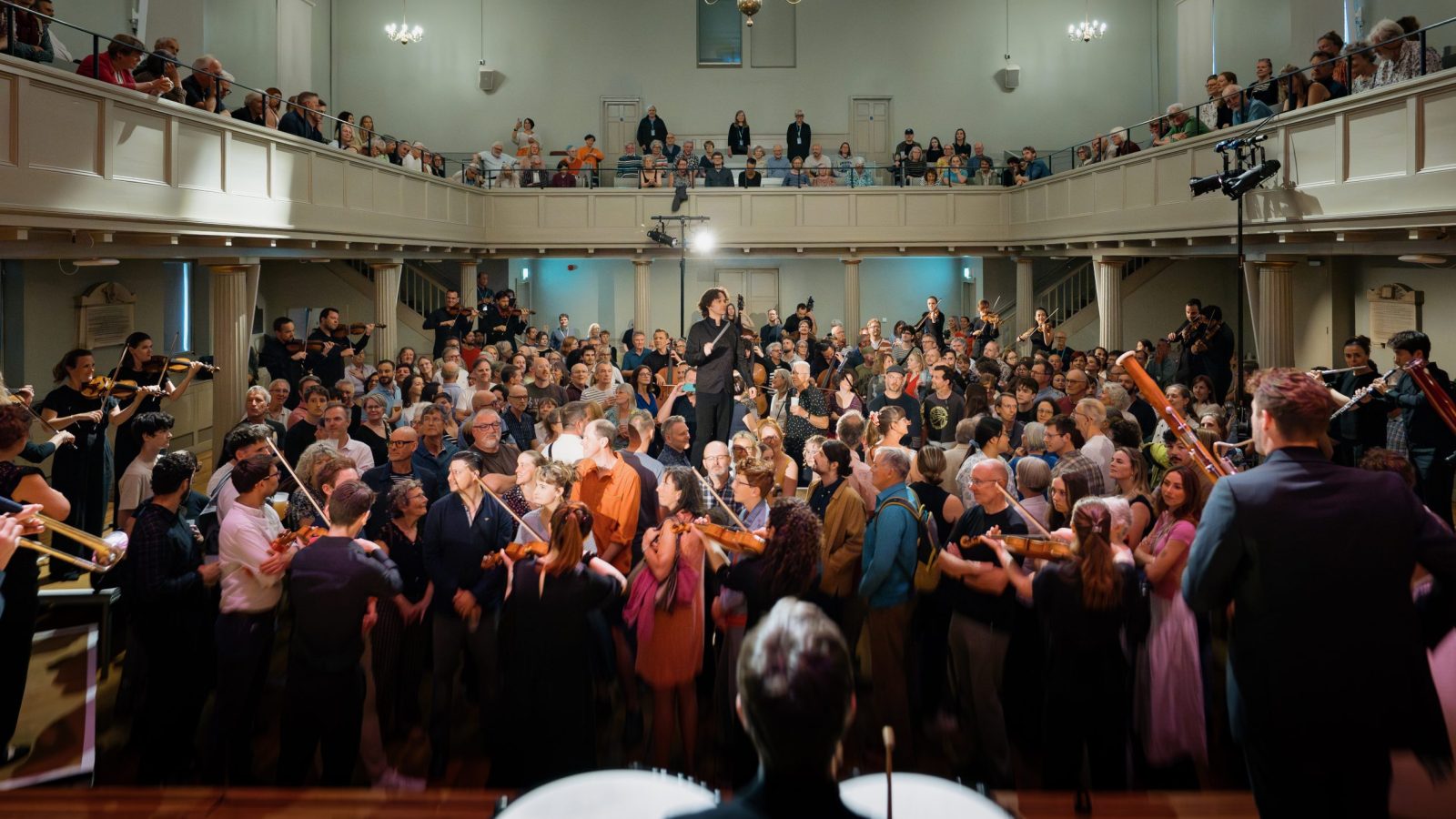
Instead of sitting in an orchestral pit, the musicians stood or sat among the audience, where the latter became an integral part of the performance.
The superior acoustics of St George’s provided the perfect backdrop for a taut performance.
Collon, standing in the middle of the hall on a soapbox, gave a downbeat as the orchestra sprang to life in the opening movement of Mozart’s evergreen Symphony No. 41 in C major, K.551 – Jupiter.
As Mozart was approaching the end of his prolific and yet cruelly short life, the Jupiter Symphony stands apart as a kind of final testament, where he provides a summation of his life’s work with grandeur and thematic complexity.
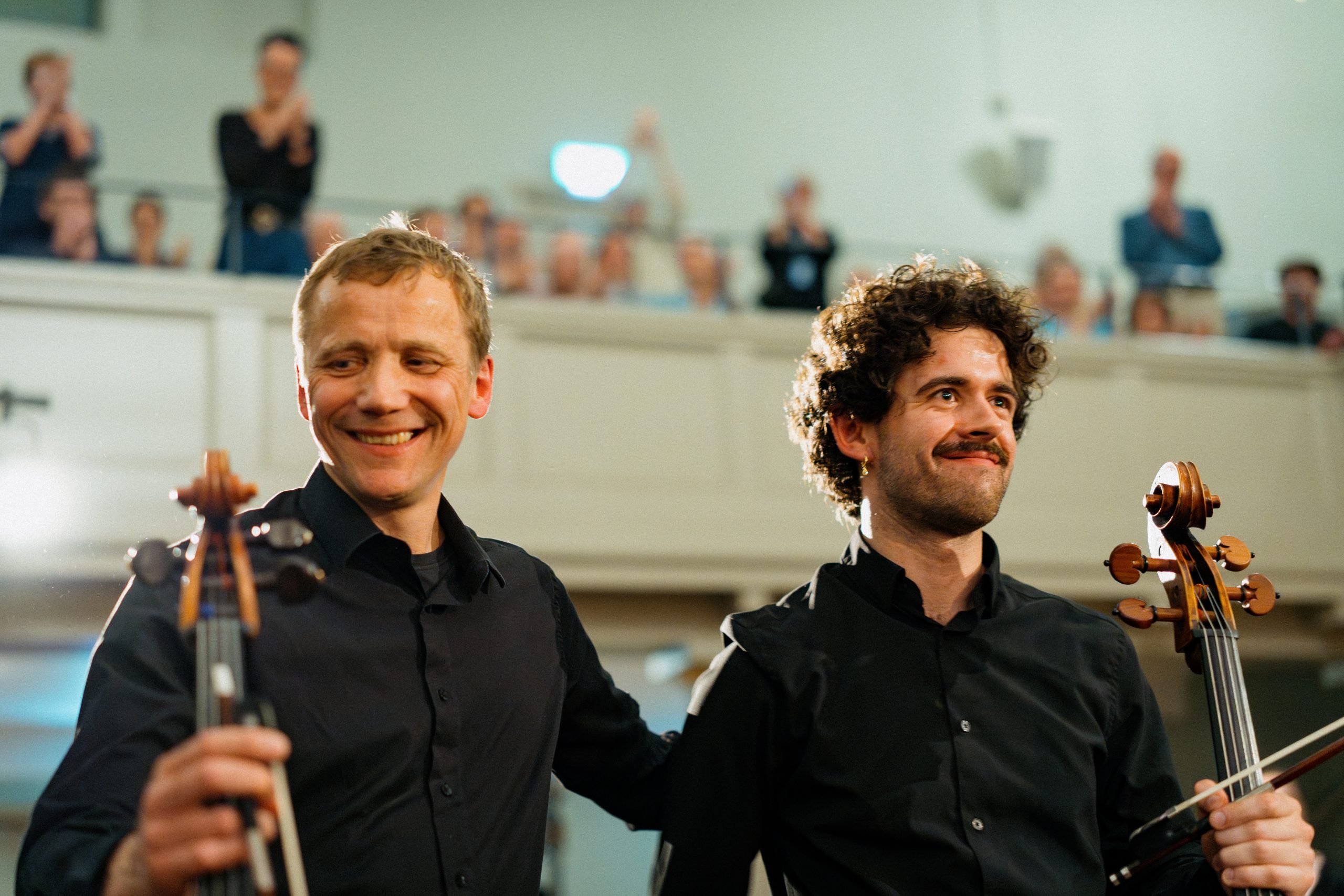
The ensemble performs its entire repertoire from memory
The opening movement is replete with flashes of his operatic writing. It is not difficult to catch glimpses of Don Giovanni and The Marriage of Figaro. The orchestra, dotted around the concert hall, played the lyrical lines with control and sensitivity.
After each movement, Collon offered a brief guide to what listeners could expect next.
Audience participation was as democratic as it can be without becoming performative. He hummed melodic lines with the audience and invited volunteers to embody characters hidden in the music. In the third movement, Collon likened the Menuetto: Allegretto – Trio to a miniature drama in an 18th century Viennese cafe featuring a gardener, a nervous butler and a proverbial hero at work.
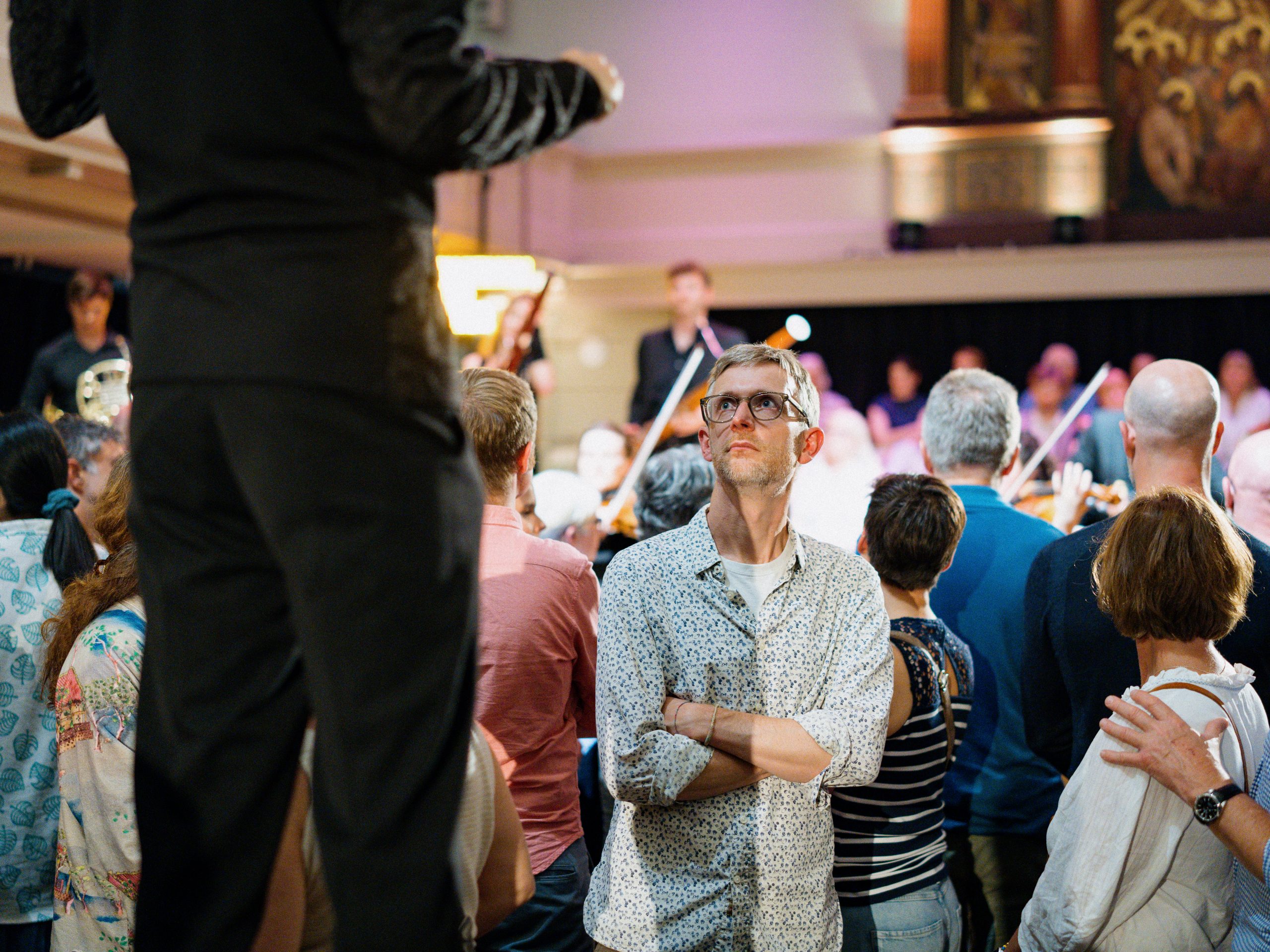
Audience members could move around the hall and stand beside different sections of the orchestra
The volunteers themselves seemed to relish the experience, high-fiving after their re-enactment before the movement was played by the orchestra.
The second movement, perhaps among the most song-like in Mozart’s symphonic output, was directed with a velvety finish. Following the lukewarm reception from Emperor Joseph II – Mozart’s patron – towards Don Giovanni, Mozart seems almost to assert himself as the undisputed champion of melody. The orchestra executed the lines with dazzling virtuosity coupled with sensitivity.
The fourth movement, with its four interwoven themes, unfolds as a kind of sonic pastiche, including a hymn-like melodic line reminiscent of Pange Lingua by St Thomas Aquinas. The tempo, precision and expressive grandeur of the movement were executed effortlessly by the stellar ensemble, who somehow made it look effortless and playful as they exchanged glances with the audience.
The evening felt like an introduction to the orchestra, in the spirit of Leonard Bernstein or Benjamin Britten. Audience members could move around the hall and stand beside different sections – brass, double basses or violas – witnessing master musicians at work and seeing how they navigated difficult tempi and intricate melodic lines.
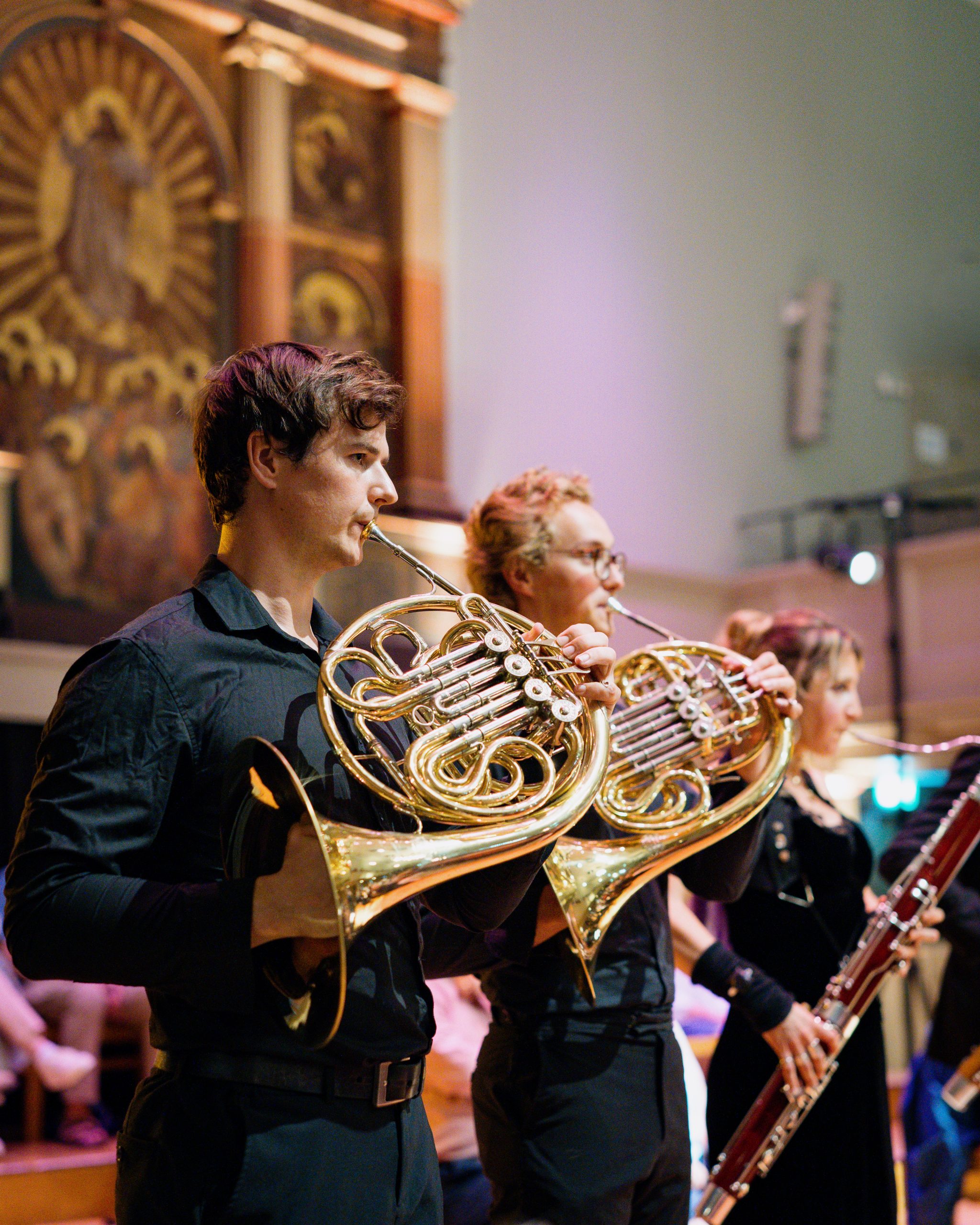
Mozart’s Jupiter By Heart, presented by Aurora Orchestra and Through The Noise at St George’s, was extraordinary on many levels
The ossified etiquettes of classical music, such as not clapping between movements were thorughly dissolved. Instead, audiences were encouraged to engage. There was no one to tell people off for flashing mobile phones or taking photographs. And there were no sneering gatekeepers to give the side eye for applauding at the “wrong” moment.
The zeal of Aurora Orchestra and Collon feels entirely genuine. At times it was like watching an episode of Mozart in the Jungle, starring Gael García Bernal.
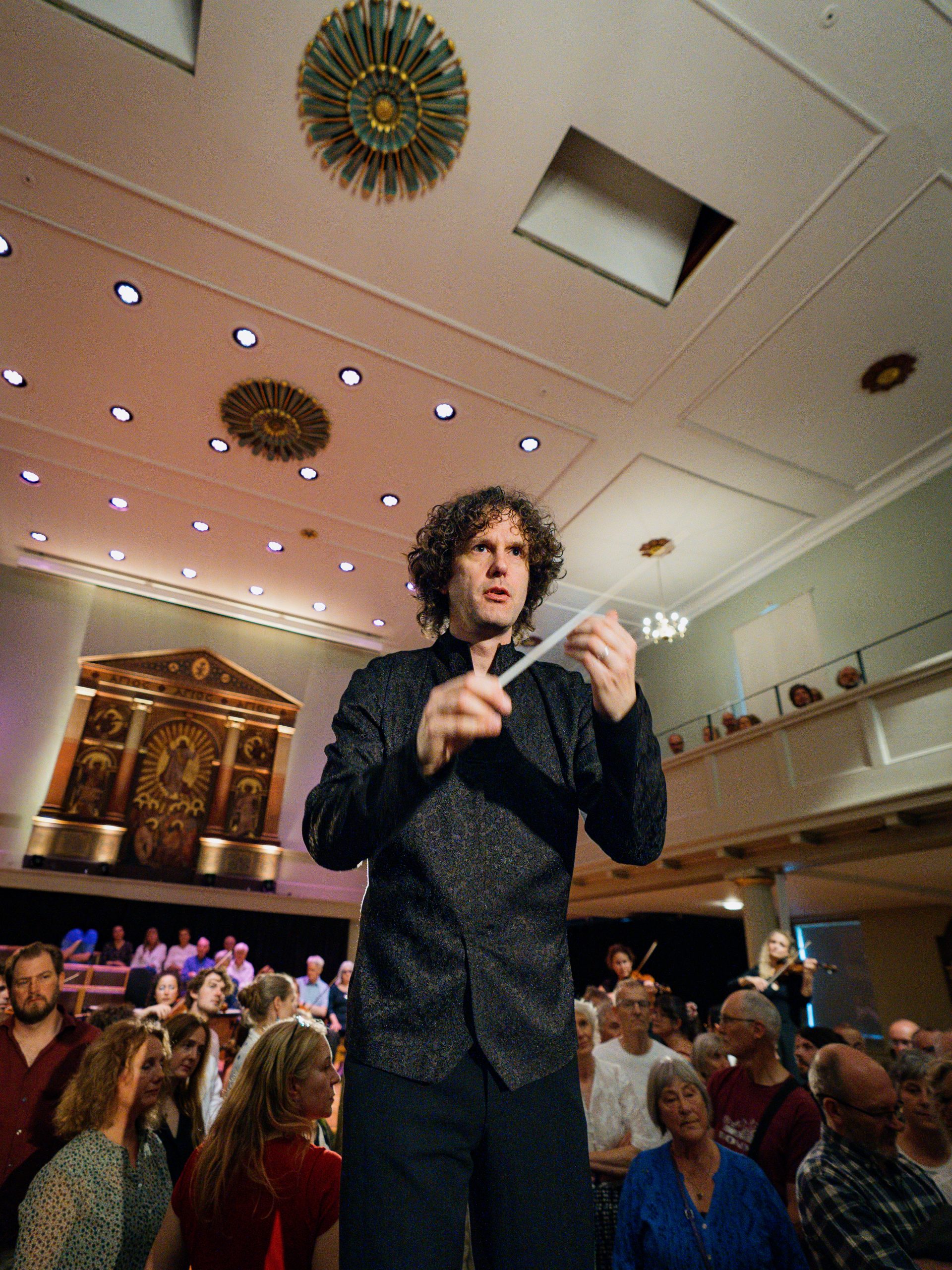
Conductor Nicholas Collon is perhaps an evangelist for classical music without a halo
The showstopping finale brought proceedings to a close, but not before a performance of K.265, better known as the melody of Twinkle Twinkle Little Star. With the hall lights turned off, the orchestra played illuminated only by wrist torches, bringing rapturous applause from a thoroughly entertained audience.
All photos: Olly Hunter
Read next:
 Our newsletters emailed directly to you