News / cinema
‘Smart Cinema’ researchers study Bristol audiences’ brains
A short film produced by a Bristol-based VFX studio is the first work to be tested by audiences at a high-tech “research cinema” near Temple Meads.
Tucked away among construction site rubble along a closed road in Temple Quarter, the last thing you’d expect to find here is an R&D facility hidden inside the former Bristol Gas Light Company coal shed.
But in this unlikely location, a sci-fi short called RENO is being shown privately to 200 members of the public – guinea pigs for University of Bristol and University of Bath researchers.
is needed now More than ever
‘Smart Cinema’ equipment captures audiences’ biometric reactions, including heart rate, movement and brain activity.
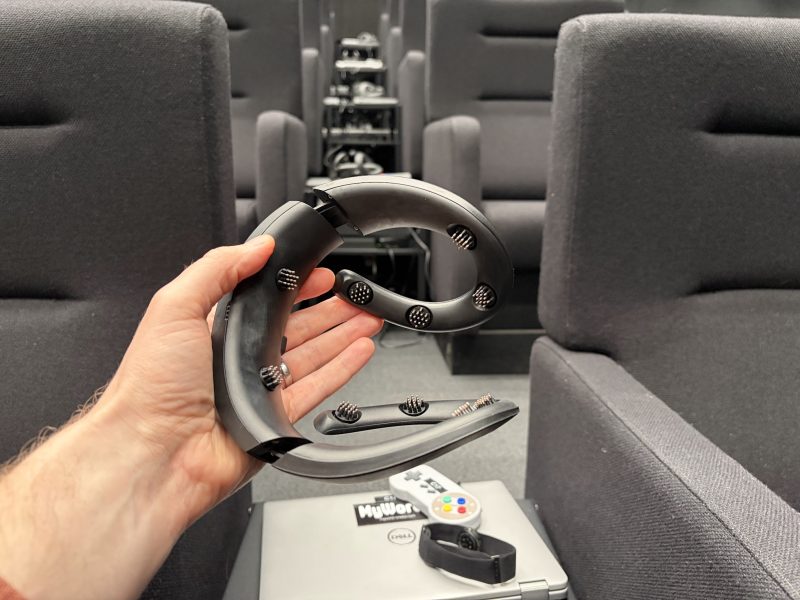
Smart Cinema equipment – photo: Sam McEvans
Researchers believe that these findings could help creatives and film studios make more informed directorial choices and “de-risk” commissioning decisions.
Whereas traditional audience feedback techniques use memory-based questionnaires, reactions in the Smart Cinema are tracked “moment-by-moment”.
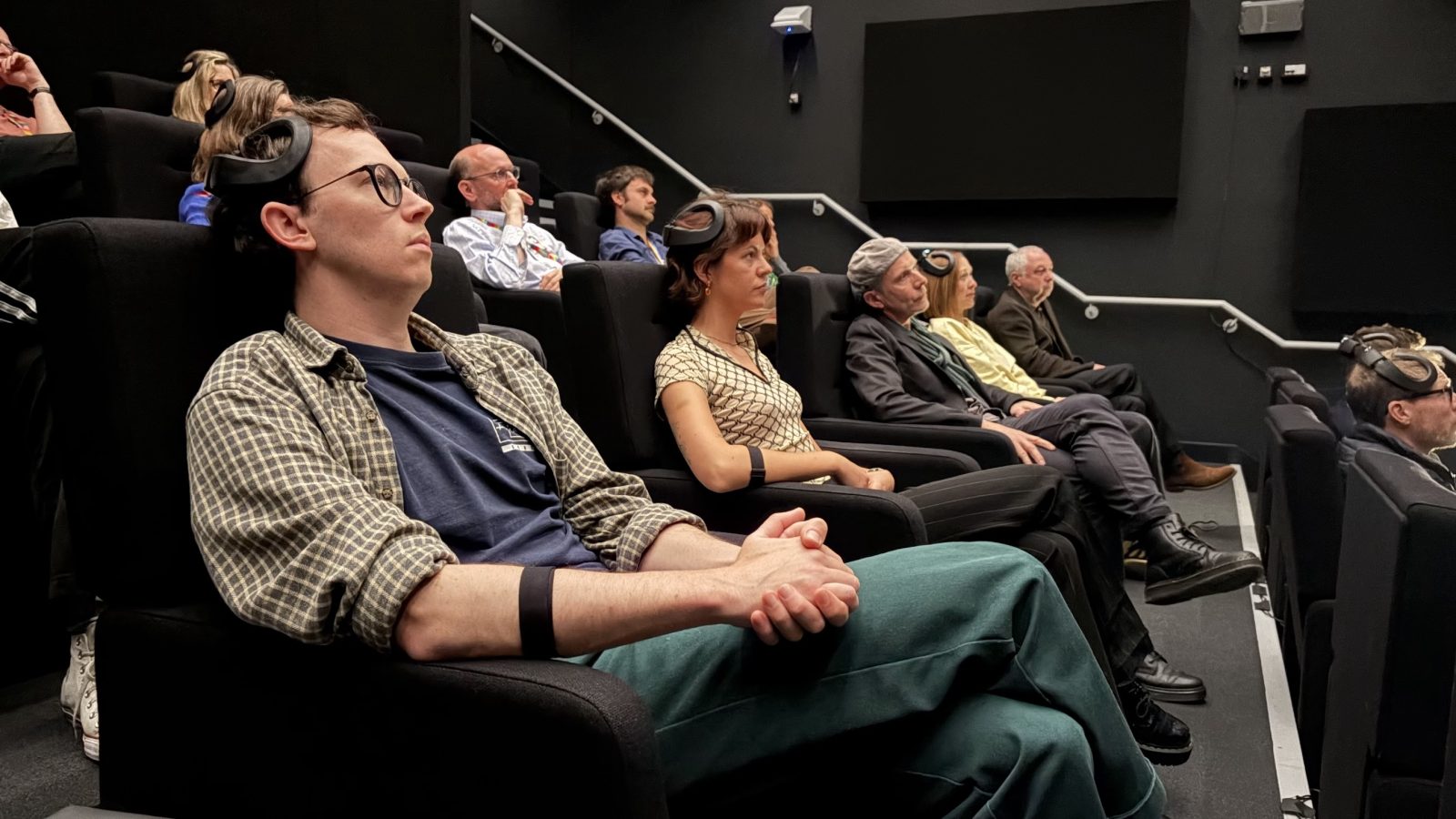
In a behind-the-scenes tour and private screening, Bristol24/7 had the chance to try on the audience-monitoring wearables, including a headset.
This lightweight “crown” rests on the back of the head and has blunt spikes that touch the scalp, taking neural readings as the film rolls.
Cameras also flanked the base of the cinema screen, recording audience responses that could be observed from the 4K projector room above.
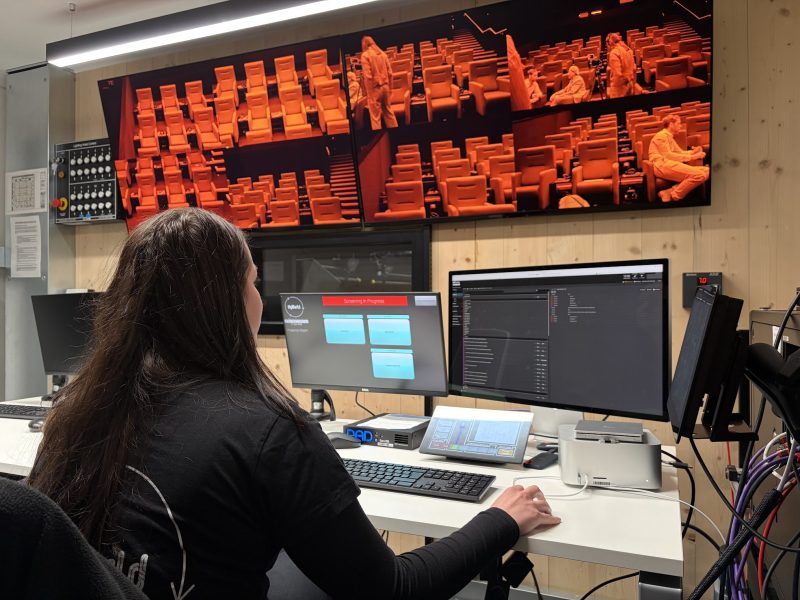
Smart Cinema observation desk in the projector room – photo: Sam McEvans
Lux Aeterna CEO and creative director, Rob Hifle, is currently preparing the Black Mirror-esque drama RENO for film festival season and for wider release.
He said: “Having the opportunity to audience-test RENO in the Smart Cinema is truly invaluable.
“Everything relies on audience data now, whether it’s a product or a film. I think it will become industry standard.”
Lux Aeterna’s visual effects work to date includes Squid Game: The Challenge and The Crown for Netflix.
Hifle plans to play multiple cuts of RENO during a test week and will compare how audiences respond physiologically to the two versions.
“It will be really interesting to see how the audience engages with the characters, and to see whether I’ve got the story beats in the right place,” Hifle told Bristol24/7.
“We can see if it sinks or swims.
“This experience will undoubtedly shape the final cut in ways I can’t yet imagine.”
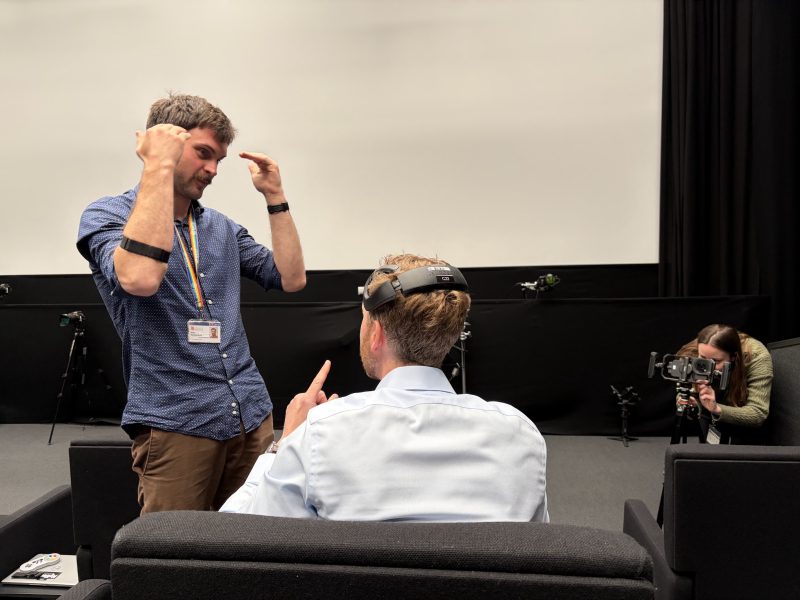
A University of Bristol researcher demonstrates the Smart Cinema equipment – photo: Sam McEvans
Located on Avon Street, the Smart Cinema is operated by MyWorld, a government-funded R&D programme for the West of England, and the University of Bristol’s Digital Futures Institute.
The partners’ on-site creative facilities at The Sheds also include edit suites and an experimental virtual production stage where RENO was filmed with cameras tracked by motion-capture systems.
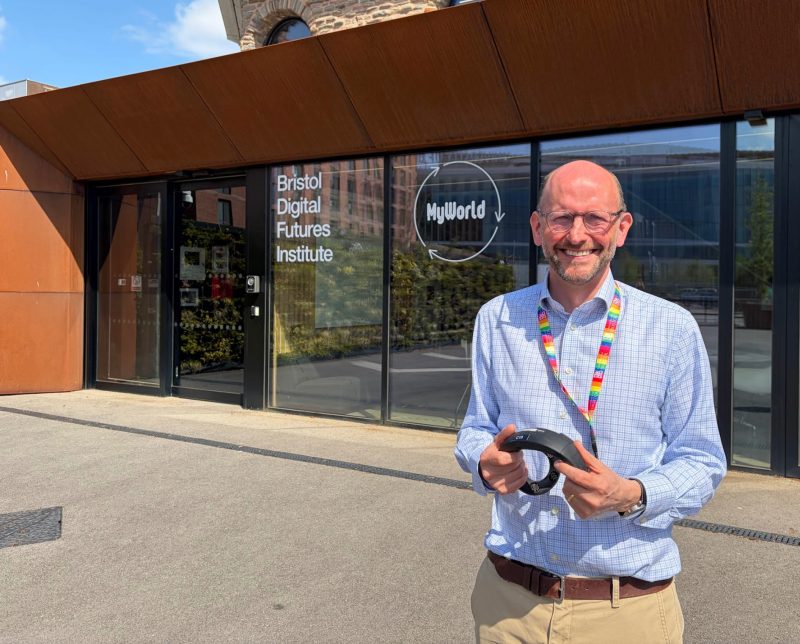
Iain Gilchrist, professor of neuropsychology at the University of Bristol – photo: Sam McEvans
Iain Gilchrist, professor of neuropsychology at the University of Bristol, said that he hopes the partnership’s combination of technology and research will embolden filmmakers in the region to be more experimental.
He said: “At the moment, the industry doesn’t have the toolkit to predict how an audience will respond and so we just keep making sequels.
“I’d like to give creators an opportunity to try something different and we can test whether it works in the Smart Cinema.”
Gilchrist passionately described the Smart Cinema study as the third in a “Holy Trinity” of experiments he has led.
It follows a partnership with the Bristol Old Vic where audience heart rates were tracked during ten performances, and a “research concert” at St George’s which studied the eye movements, body language and facial reactions of attendees.
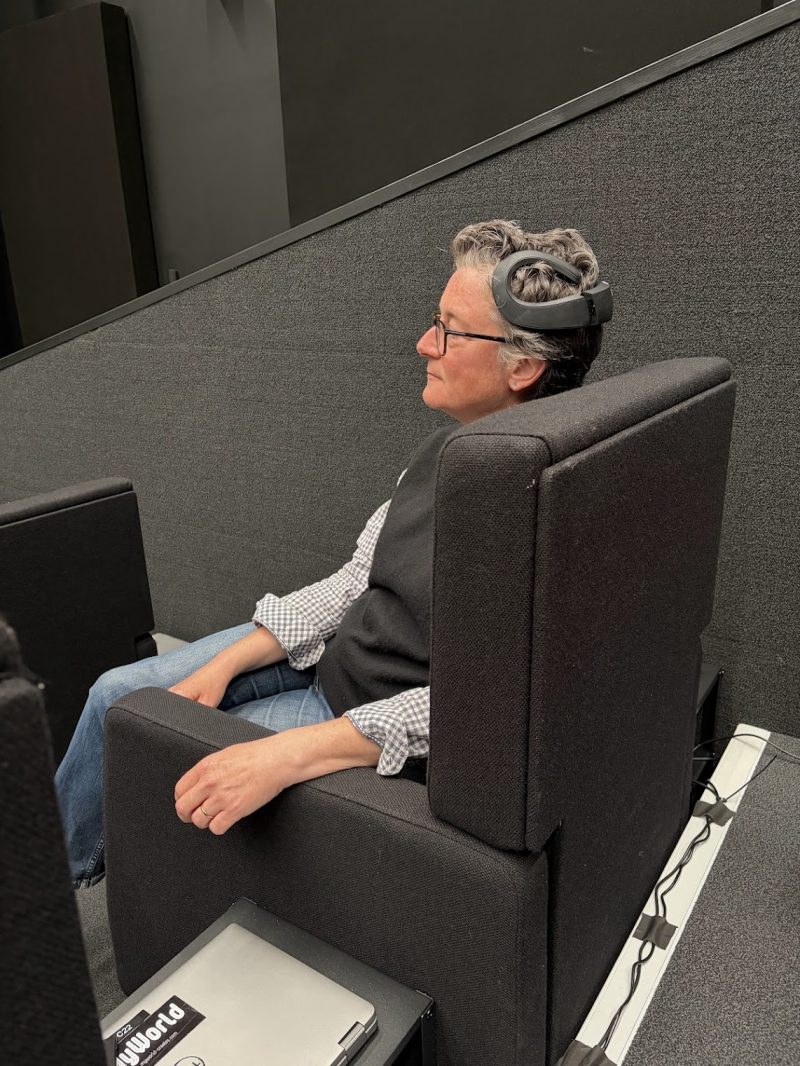
An audience member wearing a headset – photo: Sam McEvans
This autumn, the researchers plan to officially launch a commercial spin-off and sell the Smart Cinema services to media, entertainment and advertising customers.
Gilchrist added: “Bristol is an amazing place for people who create content of any kind. We could make a big difference to the creative economy here.”
Main photo: Sam McEvans
Read next:
 Our newsletters emailed directly to you