News / Bristol airport
Fight or flight club?
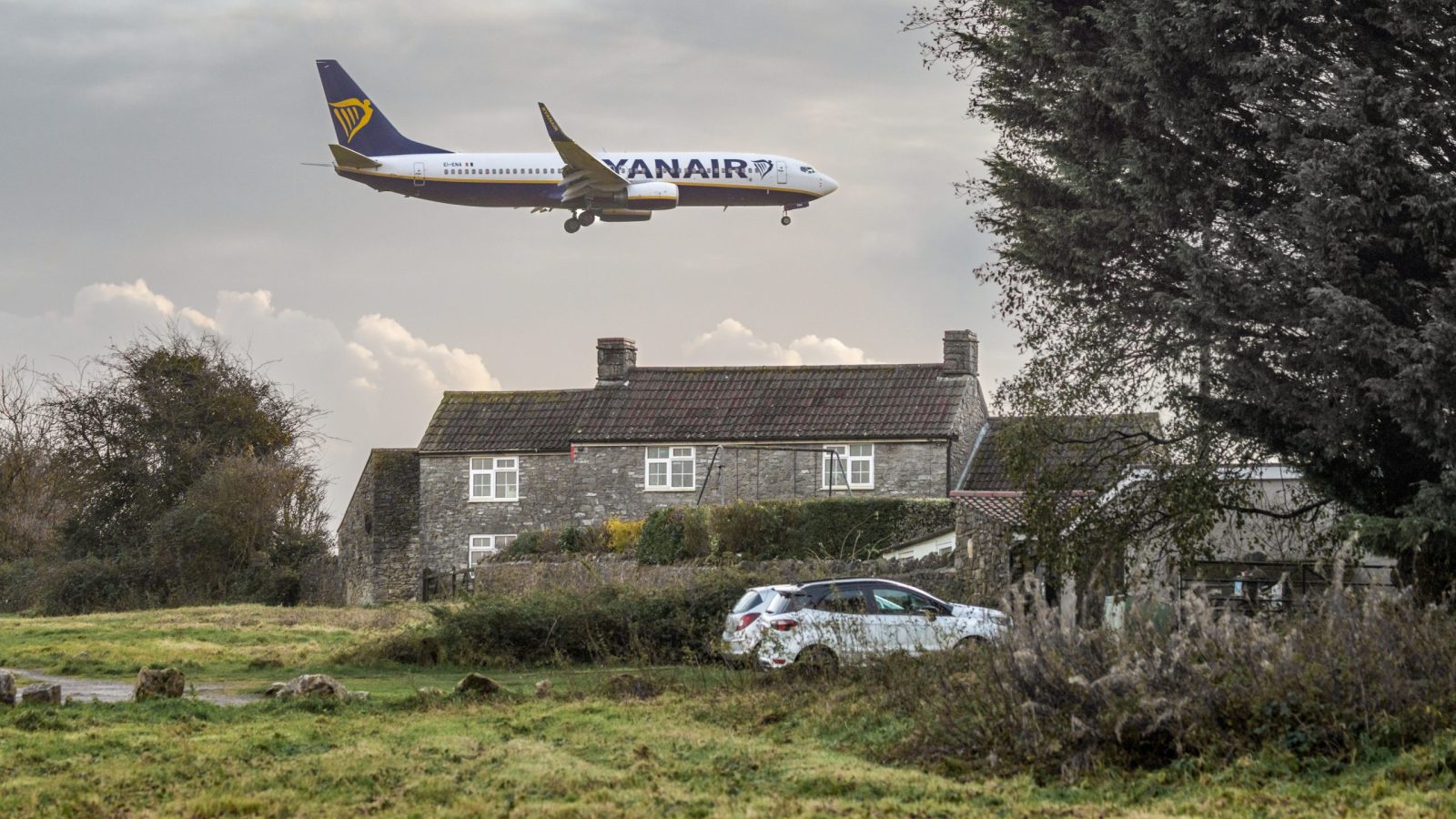
It’s a sunny day in May, clear skies reflected by a carpet of bluebells underfoot and the sweet scent of hawthorn blossom in the air. A kestrel hovers nearby while grazing cattle and their calves look on. Swallows flit around strolling families.
Yet every five minutes or so conversations are forcibly halted by the rumble of planes, the approaching jets startlingly low overhead as they prepare to land on the runway just over the fence.
Today is a special day on Felton Common. Residents and campaigners have come together to show what Bristol Airport’s proposed addition of long-haul flights to and from America and the Middle East will do to the 100-acre green expanse.
Bringing those jets in safely requires a new strip of landing lights that will cross the A38 and bisect the Common for over 250 metres – the length of Park Street – with lights the height of motorway lampposts at their tallest, all enclosed by a protective fence.
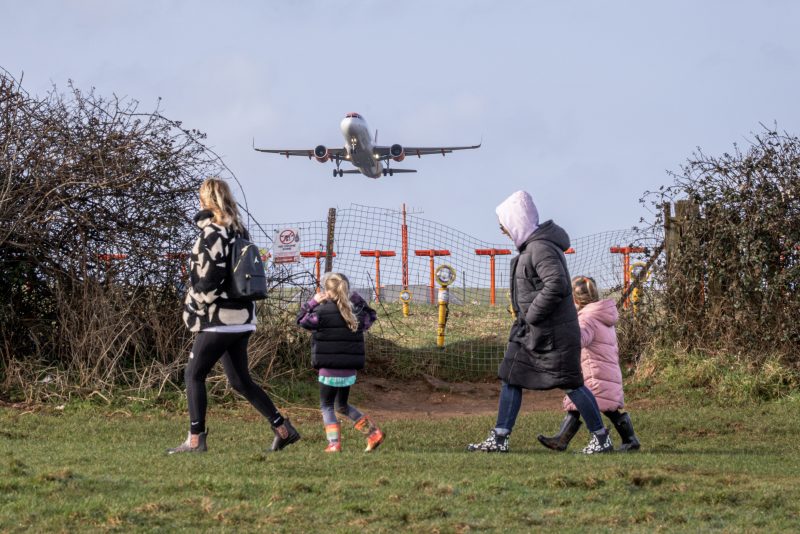
One side of Felton Common boundaries the airport’s runways, with planes regularly flying low over the length of the green space during take off and landing – photo: Jo Shepherd
Campaigners estimate the lights will be visible from 75 per cent of the Common, more at night. While the airport has publicly downplayed the impact it has acknowledged that “the lights and fencing would introduce man-made features…which have the potential to affect the enjoyment of the Common and its surrounds”.
Their own Environmental Impact Assessment states: “Individuals living next to Felton Common Local Nature Reserve and users of the Common with views of the landing lights are predicted to be subject to significant effects as a result of noticeable changes to the open aspect of the views”.
The new incoming aircraft would be bigger, louder, more frequent and more polluting. They would also fly significantly lower: 23 per cent lower above properties on the Common’s edge and 45 per cent directly above the bridleway by the A38.
“It turns a rural space into an industrial space,” says dismayed campaigner Debbie Johnson.
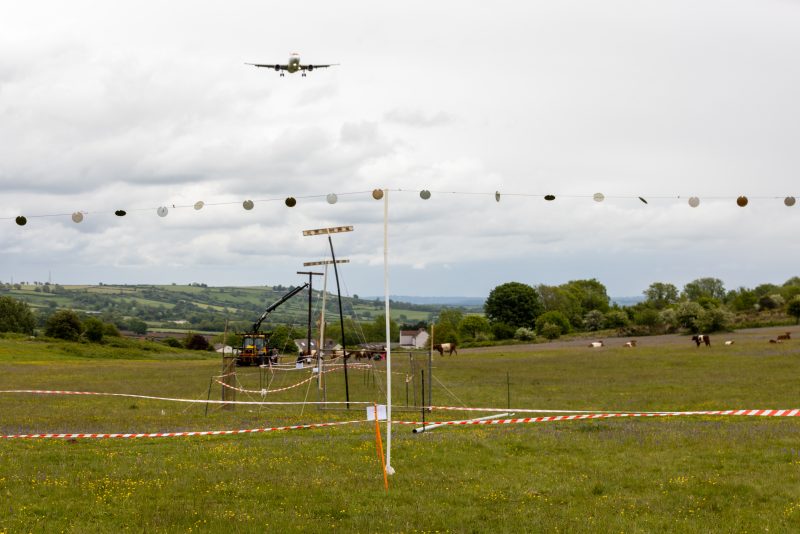
The mock-up of the proposed lighting strip demonstrates the visibility of the infrastructure as it stretches from the runway side of the Common down towards the Somerset villages on the other side – photo: Jo Shepherd
Johnson is chair of the Save Felton Common group that came together when the airport’s plans were announced and quickly grew to more than 300 supporters, some of whom have been busy trawling through the application’s vast supporting evidence.
The latest expansion proposal, which would increase the airport’s capacity to 15 million per year (15mppa), is accompanied by 508 planning documents, including 6,000 pages of environmental statements and appendices. Printed out, the paperwork fills 18 A4 binders located in Nailsea library.
Others have spent hours today mocking up the proposed lighting strip in situ, but the campaigners are unable to convey the environmental disruption of digging nearly a metre down into the common to embed the lights, or the construction of a new access route for maintenance checks, or the impact on wildlife of perpetual lighting, construction-related dust clouds and increased nighttime aircrafts.
Residents have branded the light strip installation a “land grab”, while Bristol Airport Action Network (BAAN) deemed the proposal as “absolutely outrageous and unacceptable”. Local parish councillors called the airport “arrogant”, and Save Felton Common accused it of “putting corporate profit ahead of people and the environment”.
“Bristol Airport has severely underestimated the raw anger that this proposal has produced. It is big enough already and Felton Common belongs to the people,” Johnson told a meeting of North Somerset Council after the application was submitted in March.
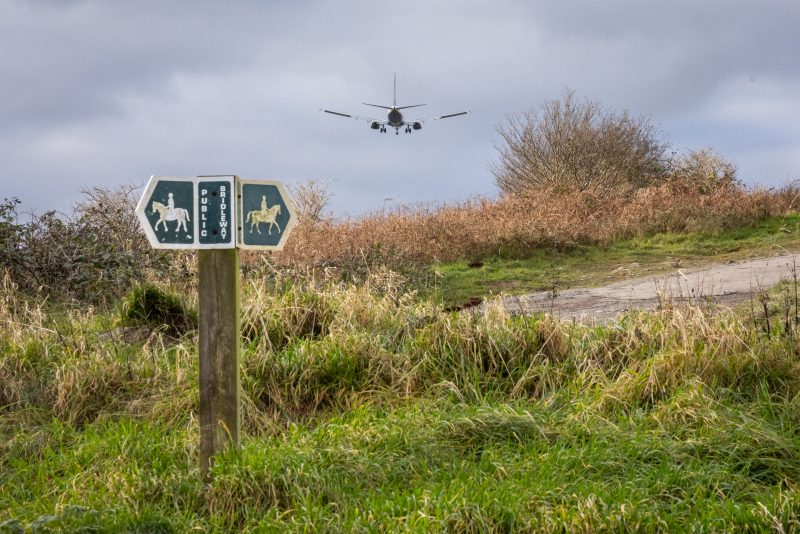
The Common, well used for recreation and by wildlife, hosts grazing animals, bridleways, wild areas of scrub and flowers, neolithic monuments and scarce ancient calcareous grassland – photo: Jo Shepherd
Felton Common is rich in nature, wildlife and social history. It is registered as a site of nature conservation and, inhabited since neolithic times, includes an archaeological site with neolithic and bronze age barrows.
The airport’s own ecological survey has noted horseshoe bats, significantly impacted by artificial lighting at night, and the presence of other ‘protected and priority species’, while reports show Red Listed birds – species flagged for protection due to significant decline – including skylarks, yellowhammers and song thrushes.
The Common is an area of ancient calcareous grassland, one of Europe’s most species-rich habitats. Unusual within North Somerset and increasingly scarce nationwide, it represents what Johnson describes as “a diminishing resource”.
She notes that the land is covered by a Stewardship Agreement with Natural England, the government’s adviser on the natural environment. Johnson argues that this ecological significance undermines the airport’s proposal to compensate for any loss by providing land elsewhere.
Recalling a meeting convened to discuss the expansion plans: “The adviser we were speaking to said, ‘obviously we would be against it because this land is irreplaceable.’”
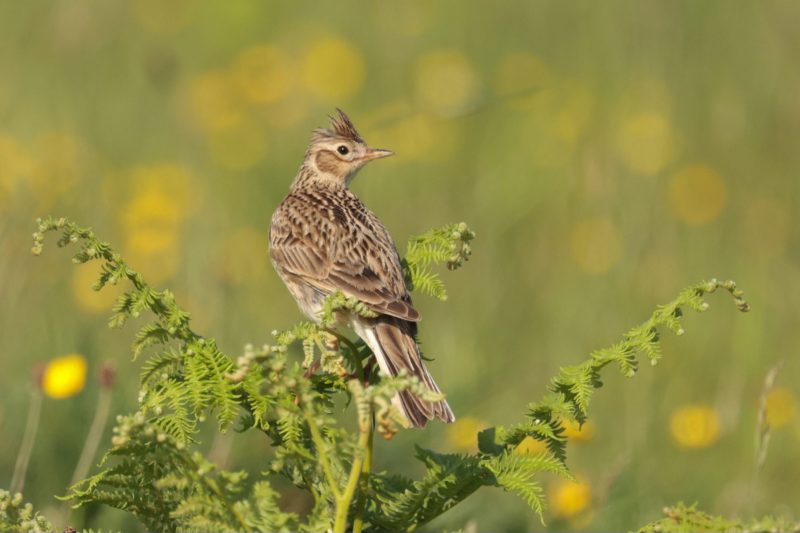
Skylarks are just one of the many protected species that inhabit the Common – photo: Stan Jackson
And the space has symbolic value too. Common land has its roots in the medieval era when it was first defined as providing a place for animal grazing, pig forage and firewood collection for non-land owning households.
Then, nearly half of Britain was designated Common, and though this has gradually shrunk to a mere three per cent the land is still protected by law.
Bristol Airport’s proposed expansion could be seen as a contemporary extension of the series of Enclosures Acts between 1604 and 1914 that saw swathes of public land taken for private use by wealthy landowners.
Local farmer Andrew Tanner began grazing his herd of Sheeted Somerset cattle on Felton Common in December 2025 in defiance of the airport’s proposal, and it is his cows and calves seen quietly resting just feet away from the lighting strip mock-up.
Tanner’s family property is on a register of Commoners drawn up in the 1960s. “He wants to exert his Commoners rights of having his animals out there,” says Johnson. “He felt it was important and has got a lot of local support for doing it.”
Residents are proud of the land’s historical significance and concerned the airport’s self-defined “land take” will set a dangerous precedent. They believe Common land should be protected for future generations, its status as “vital to recreation, biodiversity, landscape character and archaeology” safeguarded against encroachment.
“Once it’s gone, it’s gone,” they say simply.
The airport’s expansion to 15mppa will increase flights over Felton Common to 330 daily at peak times as well as an extra 1,000 annual night flights, prompting 10,000 more passenger traffic movements per day.
Suggesting this will cause no significant impact, the airport cites ambitions to increase public transport use. But deeper digging reveals their prediction that “the number of passengers using public transport [will] double from 2024 levels [of] just under 1 in 4 people” actually amounts to “around 3.9m passengers or 26 per cent to use public transport each year” with 15 million annual passengers. In other words, no effective increase.
And its target of carbon neutrality by 2030 includes only direct operational emissions like heating, electricity and vehicles, not those produced by passenger transport or flights, let alone the environmental impact of paving over green space for additional car parks.
Critics argue this distinction is important. “[The 15mppa expansion] would result in the disappearance of 33 hectares [80 acres] of Green Belt as tarmac is laid for yet more car parks, an excellent source of revenue for airports,” Bristol Tree Forum said.
“These new parking areas are full of habitats vital for nature – broad-leaved woodland and scattered trees, species-rich native hedgerows and grasslands, tall vegetation, scrub habitats, standing open water and ponds.”
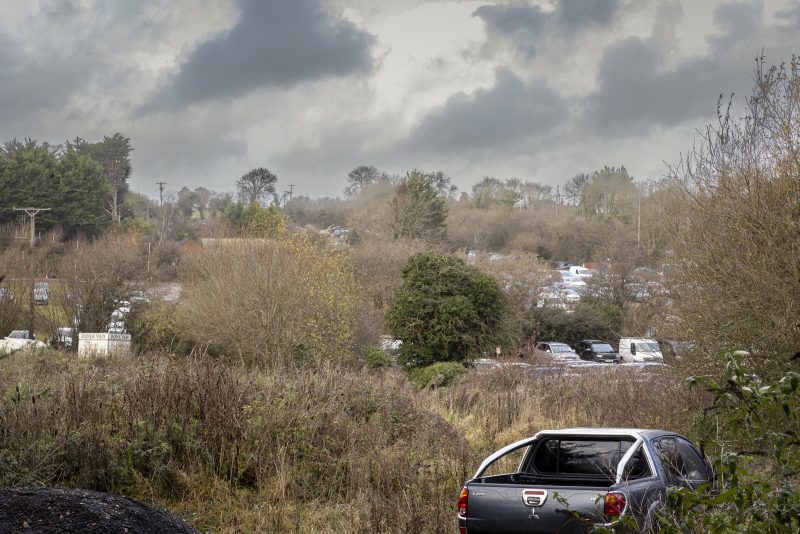
Residents of surrounding villages say that due to lack of public transport provision the growing car parks, illegal parking and taxi use has an enormous impact on the feel of their communities – photo: Jo Shepherd
Campaigners also fear that the latest proposals are only one stage in a longer process of expansion.
Bristol Airport has stated ambitions to reach 20mppa by 2050 and outlined a potential future need for further green belt land for renewable energy generation and hydrogen infrastructures “to enable zero emissions flight” by the mid-2030s, despite government research partners Cranfield University calling ‘jet zero’ by 2050 “extremely challenging” and airline leaders announcing in June that the deadline is “unlikely… Hope is fading fast”.
All this for an industry that serves less than 20 per cent of the global population, generates staggering amounts of climate-damaging greenhouse gas emissions – more than those produced by the entire electricity supply sector in the UK alone – and for which ongoing global conflict is throwing up real questions of long-term viability.
Even with the reasons against expansion stacking up, Johnson is keen to stress the community’s concerns are not rooted in anti-aviation sentiment. “We accept that we live next to an airport, even though it’s grown hugely since we’ve lived here from almost no more than a flying club to the huge monstrosity that it is today!” she laughs.
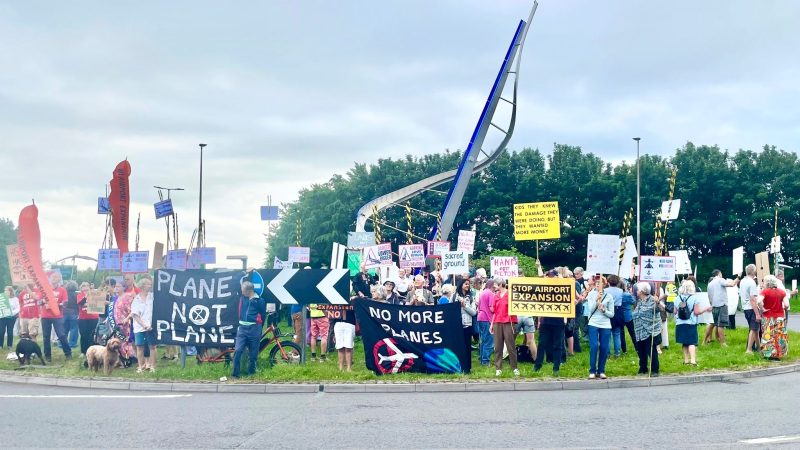
More than 150 people joined a protest against the expansion in June – photo: Save Felton Common
Instead she emphasises the campaign message that, as England’s third largest regional airport and the UK’s eighth busiest and located as it is within small rural communities, ‘Bristol Airport is big enough’:
“We accept it as it is now with all the inconveniences for the local community – lack of infrastructure, congestion, illegal parking, noise, pollution, the fact we get woken up regularly at 6am and the night flights are increasing…
“The campaign about saving the Common is much more than a NIMBYistic view on life. Why should we allow the airport to steal land from neighbouring landowners in order to make their business bigger? It becomes, where does it stop.
“We should all be mindful of protecting these beautiful spaces. We have to stand up, as a wider community of people living on this island who say we cannot allow our wild spaces to be abused in this way. Because once they’re gone to development like this, they’re never going to come back. We’ll never return the land to what it is now.”
The formal consultation on the airport’s latest proposals is now closed but North Somerset Council are still accepting comments: find all information at n-somerset.gov.uk/my-services/planning-building-control/planning-applications/bristol-airport-proposals
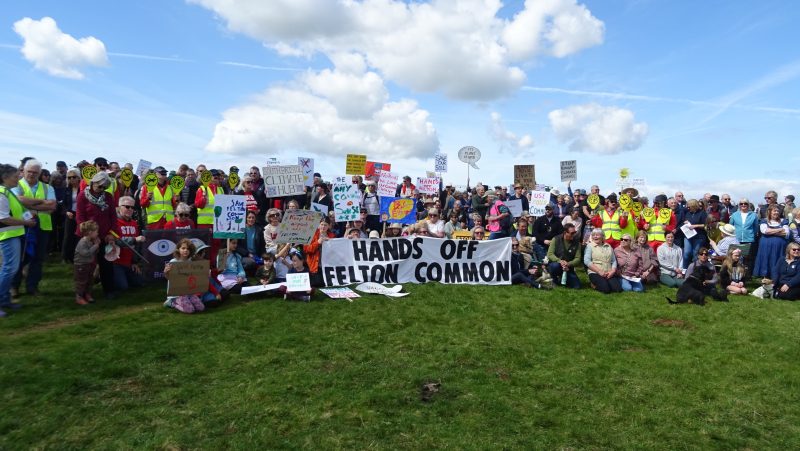
Comments rejecting the expansion reached over 600 before the consultation closed on June 28; campaigners say that even if the airport’s plans are accepted by North Somerset Council, they will continue to fight to save Felton Common – photo: Bristol Airport Action Network
Bristol Airport says: The proposal to install approach lighting on the common would not affect any bridleways or public rights of way. Replacement land would be provided so there would be no overall loss of open space.
“We have proposed measures including off-site planting, resources to help maintain open spaces within the local area and a dedicated community fund for our nearest communities. We understand how important the space is to local people.
“Where possible, the scheme has been designed to avoid or reduce adverse effects on valued ecological features. Our proposals will be required to deliver a minimum of ten per cent biodiversity net gain through landscaping and habitat creation.
“Where [avoiding or reducing impacts] is not possible we are identifying measures to mitigate impacts and manage environmental effects. Our proposals include acoustic fencing, tree planting and reinforcement of existing hedgerows along the airport boundary. A strategy will be developed to minimise light spill and glare.
“Our application contains a detailed analysis of our impact on Greenhouse Gas emissions which concludes that planned growth at Bristol Airport can be delivered within the UK’s latest climate change obligations.
“We are on course to achieve our target to become a net zero airport for operations by 2030. Investment has included electric vehicles, solar arrays and construction of a £10m energy centre designed to eradicate gas boilers from the terminal.
“We recognise that there will be concerns about the carbon emissions resulting from airport growth and the implications for climate change. We are bringing forward proposals for what we consider to be responsible growth, within current UK carbon budgets required to meet net zero emissions by 2050.”
Main image: Jo Shepherd, from the photography project ‘Thresholds’ which considers air travel from a local perspective, examining Bristol Airport’s rural location and its effects on the immediate surrounding landscape while situating the subject within a wider debate about carbon emissions and the climate crisis. Find out more at joshepherdphotography.myportfolio.com
Read next:
- ‘Felton Common needs saving from yet another Bristol Airport land-grab’
- Councillors lend support to save Common from airport ‘land grab’
- Airport’s expansion plans ‘show no consideration’ to residents
- Bristol Airport’s expansion will ‘meet customer demand and support economic regional growth’
- Campaigners say airport expansion could ‘slice common in two’
- Parking charges to increase at Bristol Airport
 Our newsletters emailed directly to you