News / Engineering
Bristol engineering startup that revolutionised cricket training worldwide
A Bristol-founded manufacturing company specialising in flagship bowling machines has marked 40 years.
It is perhaps an understatement to say that BOLA has revolutionised cricket training drills worldwide. It is also a manufacturing milestone in Bristol, a city where production has been steadily outsourced for a myriad of reasons.
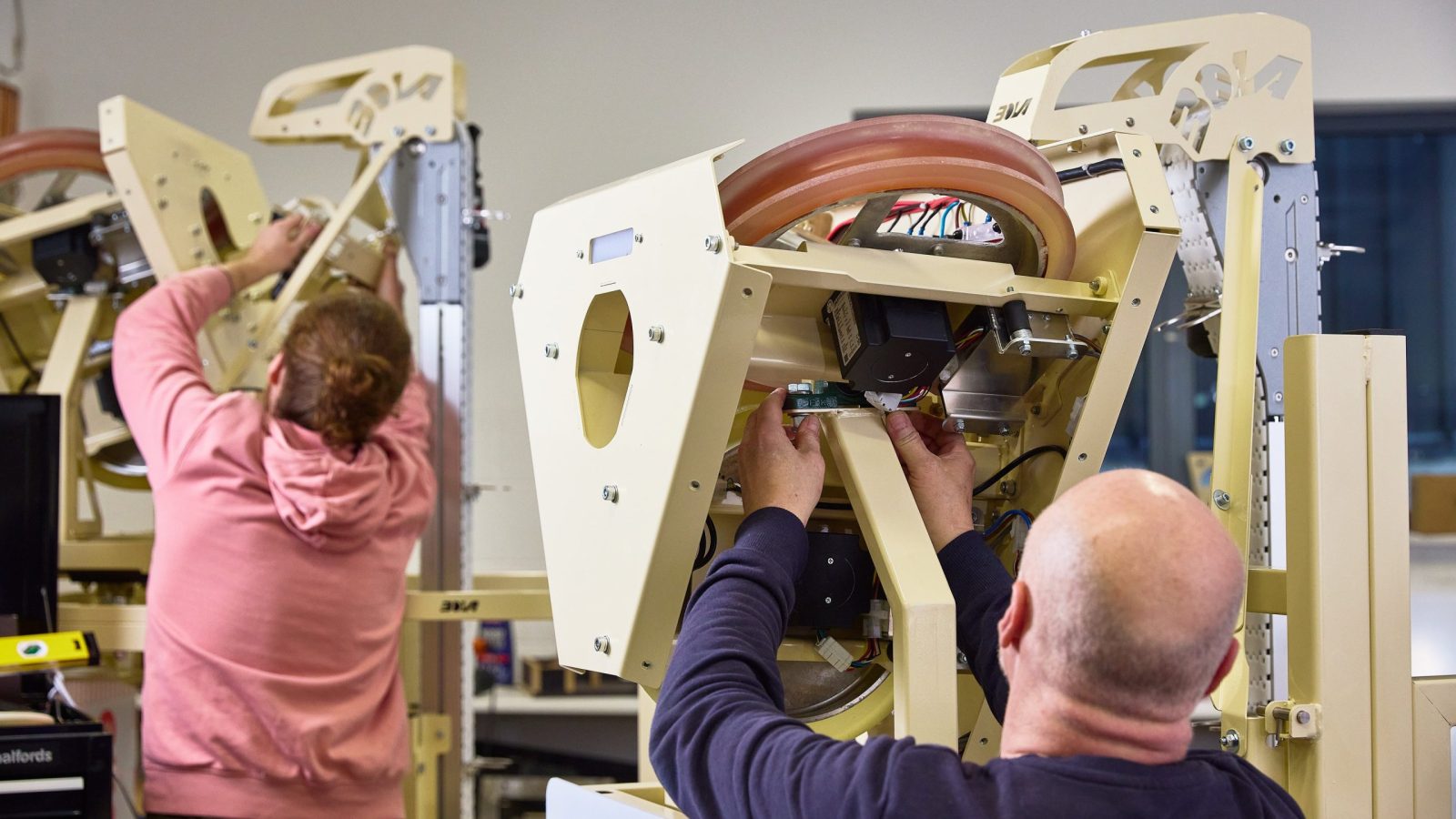
BOLA machines are built in-house by a group of skilled technicians.
On the factory floor, components made in and around Bristol are assembled. Circuit boards are soldered on site and then tested. The company employs around 16 staff, who manufacture and repair units.
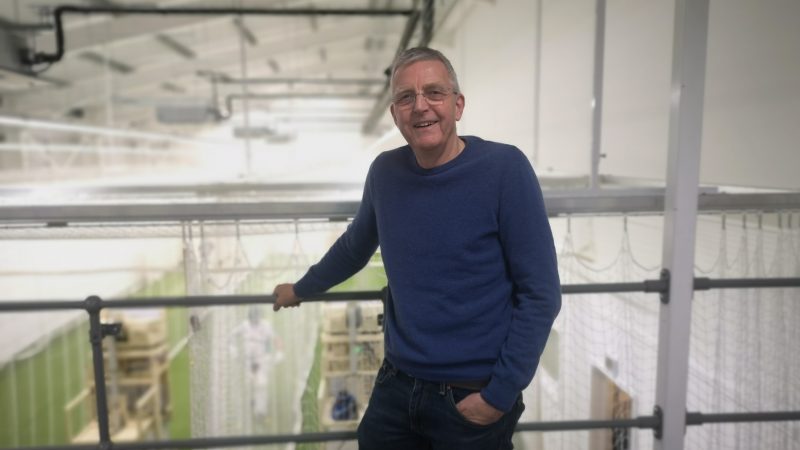
BOLA was co-founded by former sailboat builder Nye Williams – photo: Milan Perera
Next to the manufacturing unit, there is a purpose-built three-lane cricket net facility at its batting centre, where everyone from village cricketers to county players and international stars such as Jos Buttler and Charlie Dean can hit a few balls.
Manual throwdowns are physically strenuous and rely on finding a willing soul. The BOLA bowling machine seemed to have alleviated that. It was the first of its kind. But its beginnings had an interesting backstory, as much as the invention itself.
Enter co-founders Nye Williams and Michael Stuart, sail boat builders whose creations were steered by elite sailors.
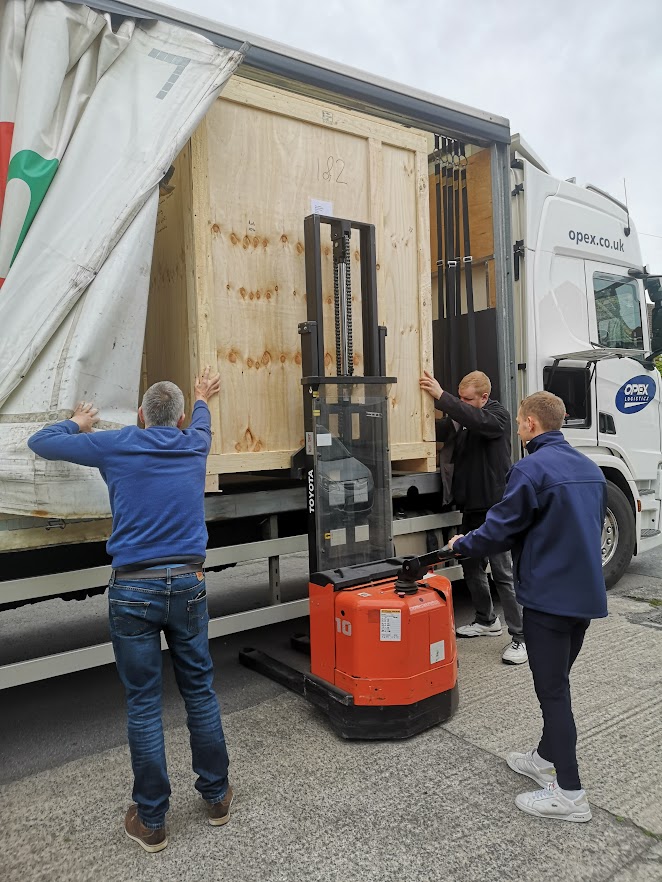
Flagship TrueMan bowling machines, made in Bristol, on their long journey Down Under – photo: Milan Perera
Stuart, a lifelong cricket fanatic, was trying to improve his batting with coaching from former Gloucestershire wicketkeeper Andy Brassington at the county ground’s nets.
The existing baseball-style throwers felt wholly inadequate. Armed with the necessary engineering expertise and driven by highly specific requirements, Stuart and Williams believed they could do a “better job” than the baseball thrower. So began BOLA.
They built a prototype in 1984, and the company launched in 1986 from St Paul’s before moving to its long-term residence in Cotham, off Cheltenham Road, where it remained for nearly 30 years.
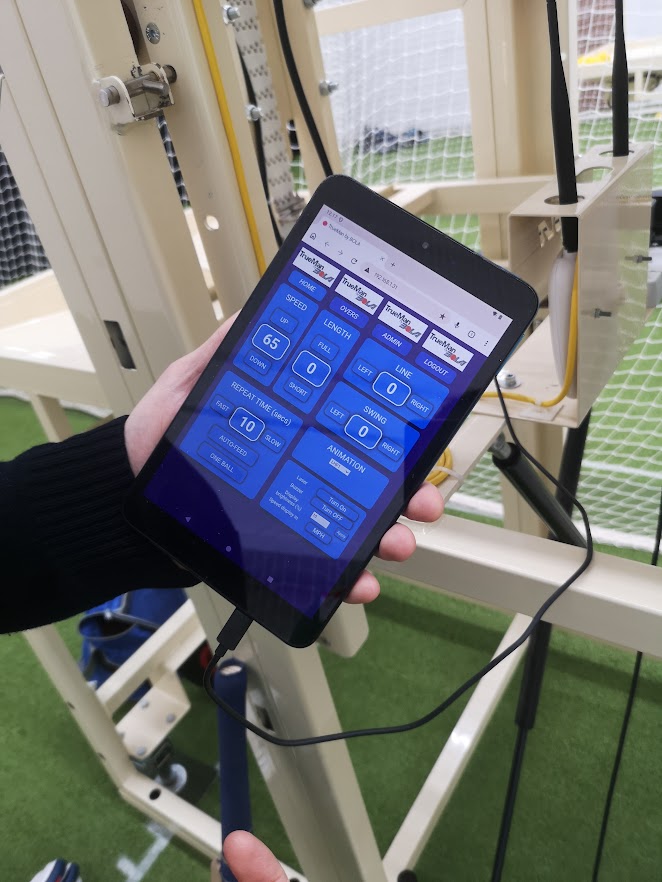
TrueMan bowling machine is operated by a smart app that enables the user to adjust variables and simulate playing conditions – photo: Milan Perera
In 2020, BOLA relocated to a new manufacturing plant and adjacent purpose-built batting centre in Patchway, a short distance from Brabazon development.
However, they were not without antecedents. The first bowling machine was built by the Cambridge mathematician and cricket nut John Venn (yes, that John Venn of Venn diagram fame) in the early 1900s. His seven-metre contraption tested the mettle of the touring Australian side, which included Victor Trumper, in 1909.
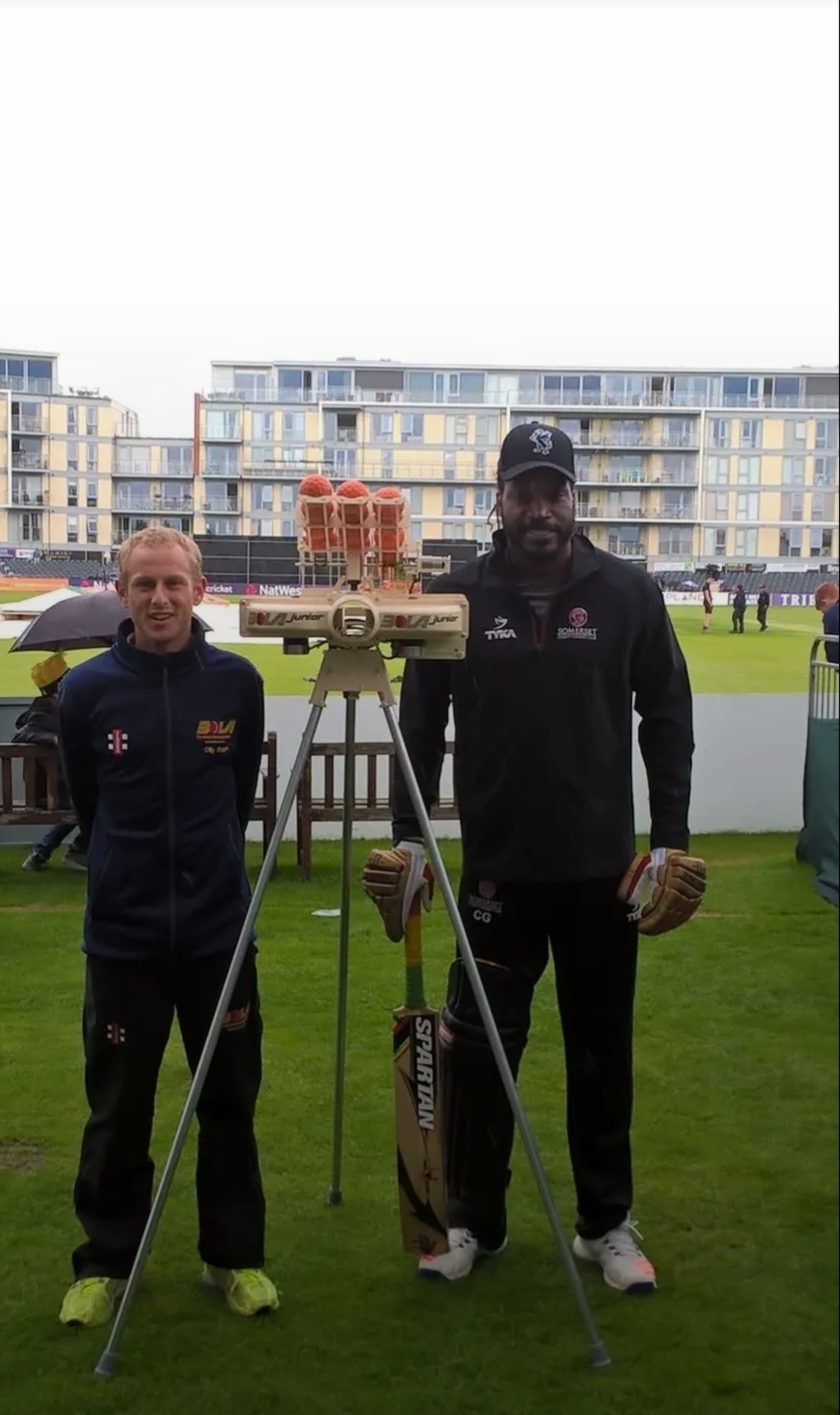
Cricketing superstar Chris “Universe Boss” Gayle with BOLA bowling machine and Olly from BOLA team – photo: BOLA
While we were talking about the early days of the startup on the top floor of the batting centre, Williams’ eyes lit up and we quickly hurried downstairs.
He pointed to the “highlight” of his week: a large lorry being loaded with BOLA’s flagship TrueMan bowling machines, bound for Australia and Hong Kong. He helped with the loading. There was such gladness in his voice as he watched the final product, crafted and assembled in Bristol, begin its long journey Down Under.
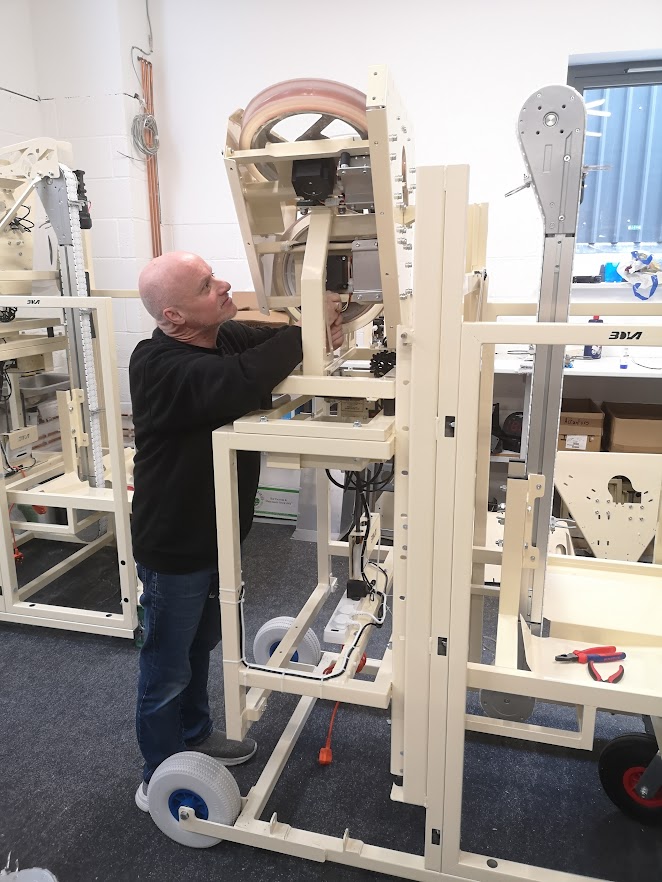
All BOLA bowling machines are manufactured in Bristol – photo: Milan Perera
Nye attended Ashton Park School and grew up in the city. For him, Cricket has always been a lifelong passion. He still speaks in almost reverential tones about Gloucestershire greats such as Mike Procter, David Graveney, Zaheer Abbas and Courtney Walsh.
His father, Edward Williams, may be familiar to many as a music composer, known for writing scores for several documentaries by David Attenborough, produced at the BBC’s Natural History Unit on Whiteladies Road.
Every year, BOLA manufactures around 500 standard units and around 12 TrueMan bowling towers. The secret seems to lie in a simple mantra: precision engineering, realistic simulation and industry feedback.
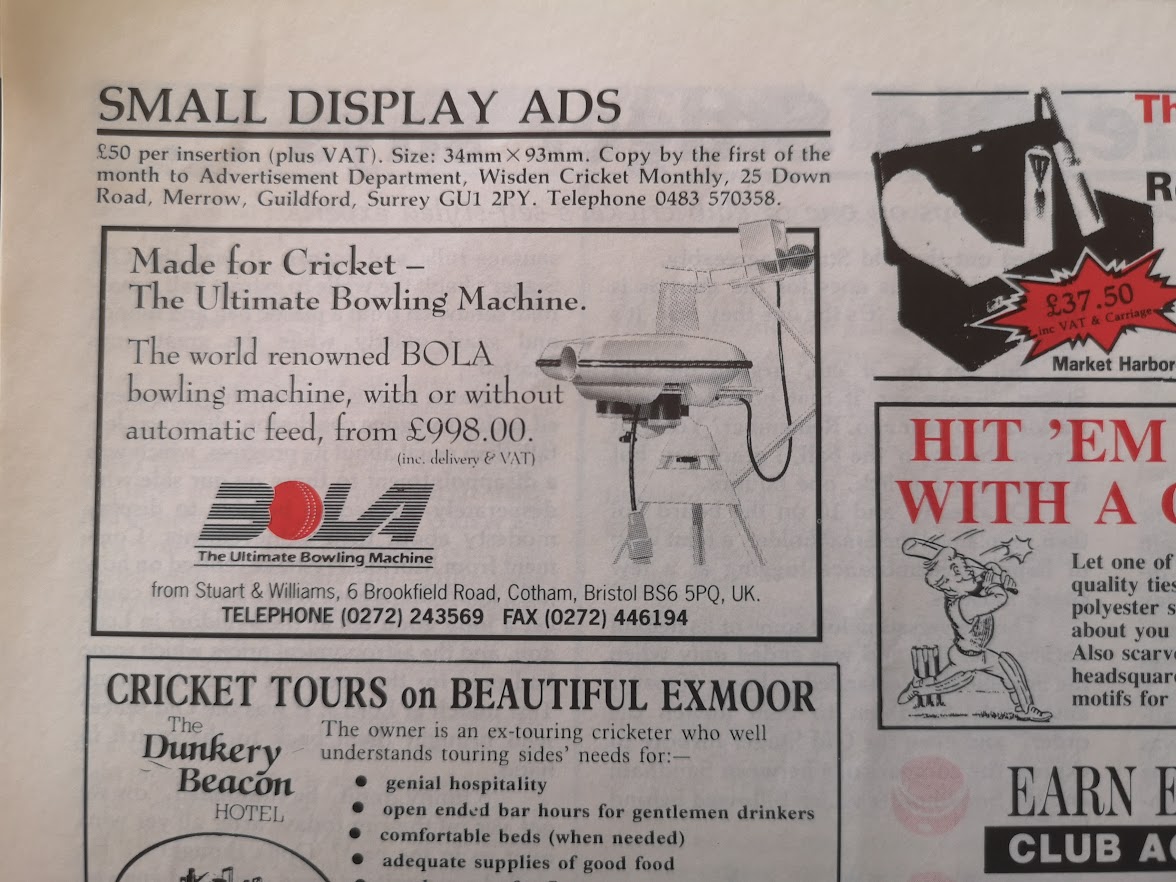
A BOLA advert that appeared on Wisden magazine back in 1992 – photo: Milan Perera
The flagship bowling tower TrueMan 3 is undoubtedly the company’s showstopper.
It can deliver balls at speeds ranging from 30mph to 95mph, matching the pace of bowlers such as Shoaib Akhtar, Shaun Tait or Brett Lee. The electronically controlled system allows for variations in pace, bounce and movement, going beyond simple throwdowns to better emulate a real bowler, even with a visual aid.
The coaches are able to work on player’s weaknesses in technique and simulate incremental challenges for the batters.
Nye’s son, Keir, took us around the manufacturing plant and warehouse at Ravenscourt Road in Patchway. Boxes are stacked and ready for shipment.
The facility also offers repairs for machines from across the world. Nye noted with pride that they have even achieved 100 per cent coverage in Peru, a non-cricketing nation that purchased two units.
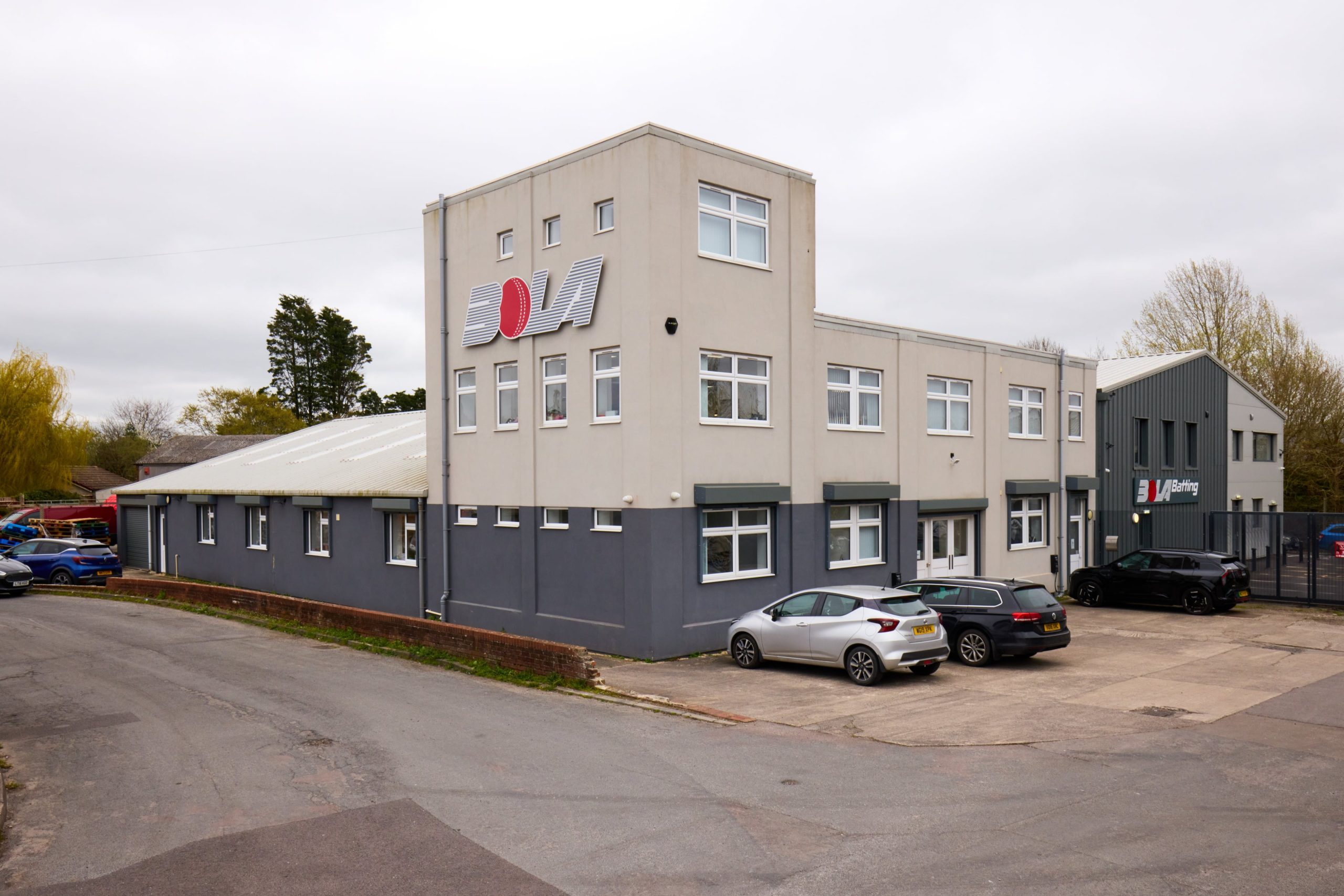
BOLA manufacturing plant and nets have been in Patchway since 2020 – photo: Shootspace
But it has not all been plain sailing. BOLA sold the first bowling machine to Surrey County Cricket Club, but the sales did not take off as expected and the funds were dwindling. The business was near bankruptcy.
Nye was quick to praise former Gloucestershire wicketkeeper Andy Brassington for helping the business stay afloat in its early days.
Nye said: “My work partner, Mike Stuart, was there, and Andy said to him, “Don’t worry lads, I’ll come and help sell some machines for you. Just give me a demo”.
“So off he went, and in a relatively short space of time he pretty much bailed us out of a difficult situation.
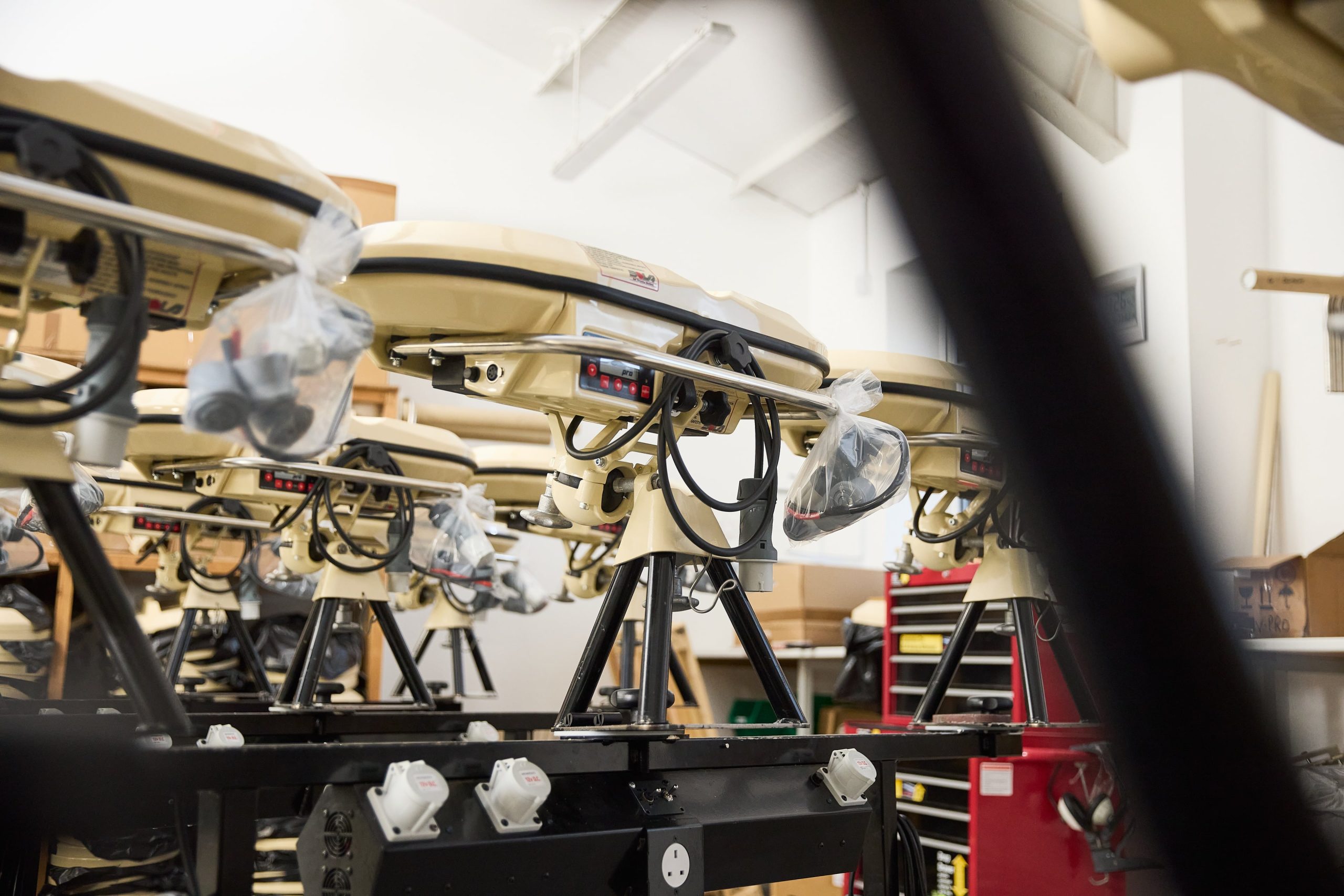
The bowling machines produced by BOLA are used all around the world from schools, academies, county teams to international teams – photo: Shootspace
“At that point, we only needed to sell a small number each month to stay afloat, probably around eight. Andy sold eight in his very first month.
“From there, it really took off. A lot of it was schools, but in March and April 1986 he sold 21 machines in each month on his own.”
The numbers speak for themselves, but Nye is supremely grounded and dismisses any heroics. He said: “If I wanted to make money this is definitely not what I’d be doing.”
But then he added: “But if you can bring some joy to the people, put a smile on their faces, I’m very happy with that. In terms of numbers it’s not exactly meteoric. Yes, it’s been steady.”
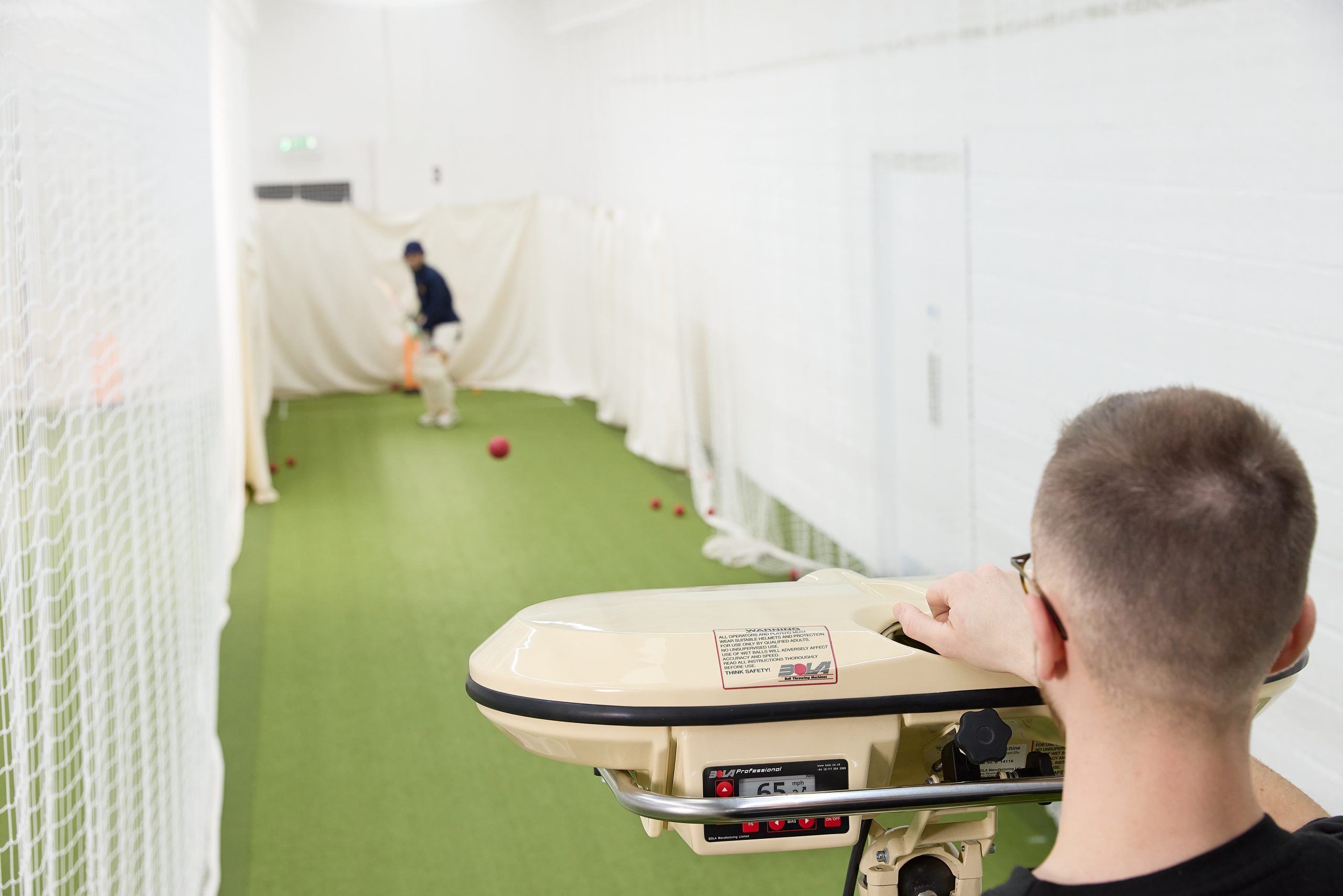
The standard BOLA bowling machines are widely used in cricket coaching – photo: Shootspace
Modest he may be. The company has sold some 15,000 BOLA bowling machines in the last 40 years to schools, universities, high performance centres, country cricket clubs and recreation clubs of all descriptions.
BOLA is used at 18 English and Welsh country teams, some 1,500 schools, MCG in Melbourne and SCG Sydney in Australia and at the home of cricket – Indoor Cricket Centre at Lords.
The standard bowling machines on a tripod can be fed up to 28 balls and whose trajectory and variation – spin, swing and other variables – can be adjusted according to needs.
The net facility, with its three lanes, provides a modest revenue stream but, more importantly, serves as a social hub. It is a place where cricket lovers can come down and face a few deliveries for little more than the price of a round of drinks.
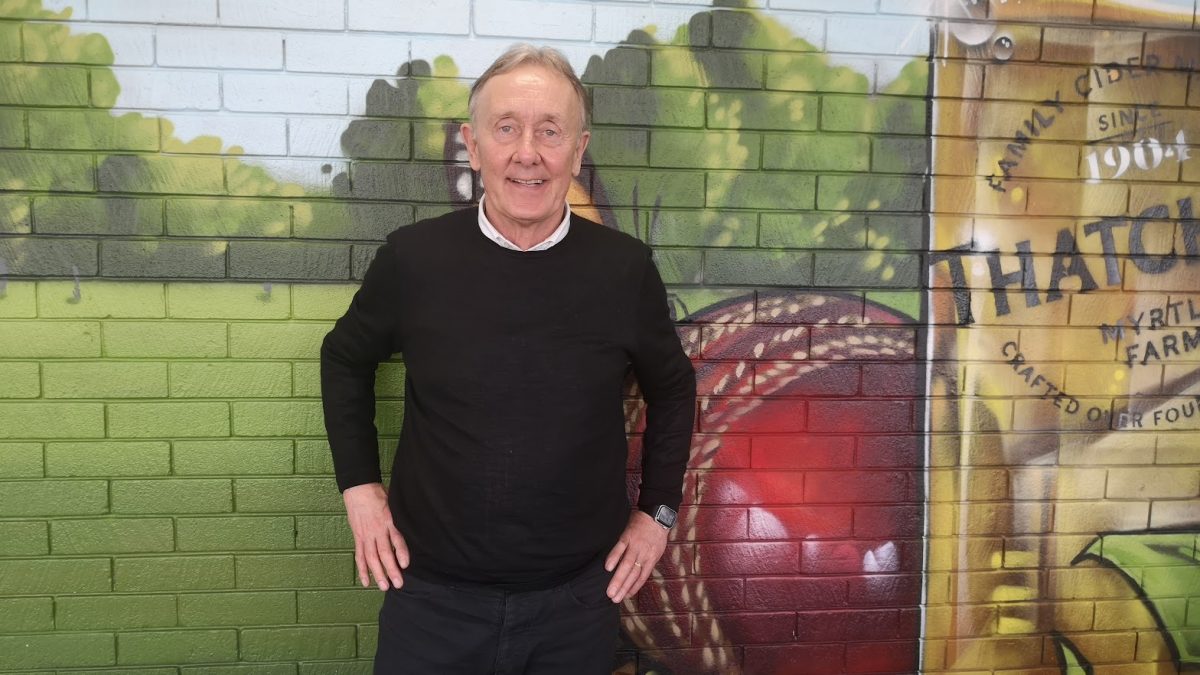
Former Gloucestershire wicketkeeper Andy Brassington was instrumental in introducing the flagship BOLA bowling machines to schools and county clubs during its early days – photo: Milan Perera
Our conversation got constantly interrupted by the noise from the nets down below, which sounded like a ballistic testing unit with clean blast after another. Cricket season is almost around the corner and the urgency of a couple of men in their 50s, emblazoned with their club logo, was perhaps understandable.
As far as endorsements are concerned, he pointed to the “Little Master” Sachin Tendulkar practising on BOLA machines. Then he shrugged it off. He recalled an article on BOLA in a national newspaper featuring a “very famous England cricketer at the time”, which did not translate into runaway sales.
There are still old VHS tapes of England cricketers, including the late Robin Smith, Michael Atherton, Nasser Hussain and Jan Brittin, demonstrating batting techniques using BOLA machines, a testament to its enduring legacy.
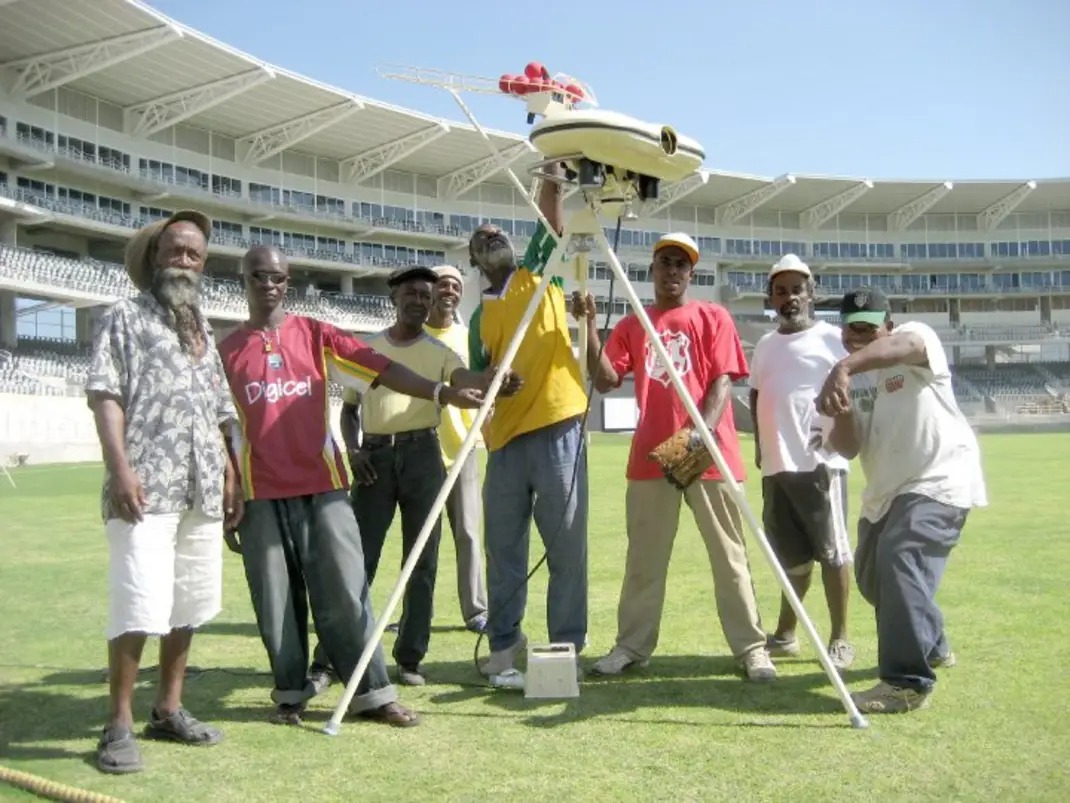
BOLA machine in use at Sabina Park in Kingston, Jamaica – photo: BOLA
Endorsements from respected cricket coaches who use BOLA perhaps carry far more weight than any broadsheet feature or social media campaign.
Among those who have used the machines are Matthew Maynard, Gary Palmer and Gloucestershire men’s head coach Mark Alleyne, who said: “It is the perfect tool for developing strategic practice, where we focus on batting strategy rather than batting technique.”
BOLA’s legacy might sound like a Test innings built on all the right attributes: solid foundations, temperament, a firm defence when required, and the ability to dig in before cutting loose, much like a vintage Zaheer Abbas knock.
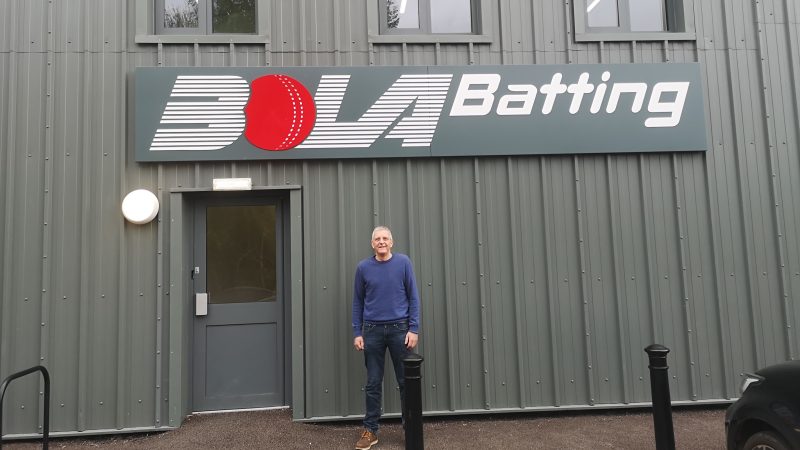
BOLA has sold some 15,000 BOLA bowling machines in the last 40 years – photo: Milan Perera
Main photo: Shootspace
Read next:
 Our newsletters emailed directly to you