Features / corner shops
The enduring appeal of the humble corner shop
Even the most meticulous shopper knows the moment. It’s late at night, you’re out of bread, or no milk in the fridge, or worse, no tea bags. The world order is disrupted. But then, relief. The neon light of the corner shop down the road is still glowing, doors open till 11pm.
In Bristol, as in any other city, corner shops are more than places to grab a pint of milk. They are part of the city’s social glue, offering accessible services, sustaining local jobs and providing a familiar face behind the counter. Yet they also face growing commercial pressures. And, at times, stir local unease, as amplified in the national press.
Even The Telegraph, usually quick to lament the decline of neighbourhoods, hailed corner shops as “the real heroes of lockdown”. Britain has long been a nation of shopkeepers. When Adam Smith made that famous pronouncement, he could hardly have envisaged the scale and impact of the humble corner shop.
According to the Association of Convenience Stores (ACS), there are more than 50,000 corner shops in the UK. While there is no daily updated figure for Bristol, the geo-marketing service Locator.biz estimates that there are around 262 convenience stores dotted around the city.
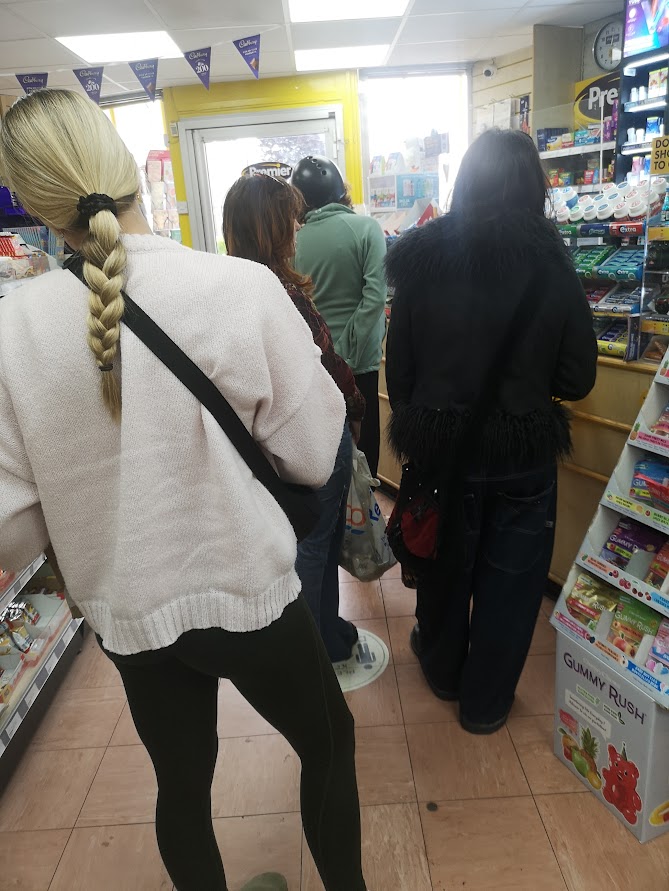
Many corner shops operate as parcel collection points, which saves a journey to a depot
ACS also highlights the sector’s significant economic contribution to the nation, valuing it at a staggering £50bn, a reminder that the impact of these little shops should not be underestimated.
We meet Kieran, a 77-year-old widower, who takes his golden retriever for a walk every morning along St Matthew’s Road in Cotham around 8.30am to collect his paper from the local shop. It is a small but vital part of his daily routine, offering him the chance to exchange a few words with the shopkeeper, without which his day would feel incomplete.
This sense of connection is more than anecdotal, as attested by Jeevarasa Kanagalingam, known to his customers as “Kundan”. He currently owns Tuck News and Monikas, located on Cotham Road South, which sit almost next to each other.
“We have a lot of regulars,” he said. “We see them almost every day. They come in, have a chat and ask how things are going. Sometimes we even see the same customer twice a day. They feel an affinity with the shop and with us, just talking about what’s happening in the world.”
Kanagalingam, originally from Jaffna in Sri Lanka, took over Monikas in 2016 from another South Asian shopkeeper who was approaching retirement. For years, he maintained a respectful rivalry with the neighbouring corner shop, Tuck News, owned by Jabir Shah. But when Shah too retired, he sold the business to Kanagalingam.
Now with two sites next to one another, Kanagalingam considered diversifying the space by applying to open a post office, much like the one on Stokes Croft. Although the application was unsuccessful, even with the backing of several local councillors, he remains hopeful of a favourable outcome in the future.
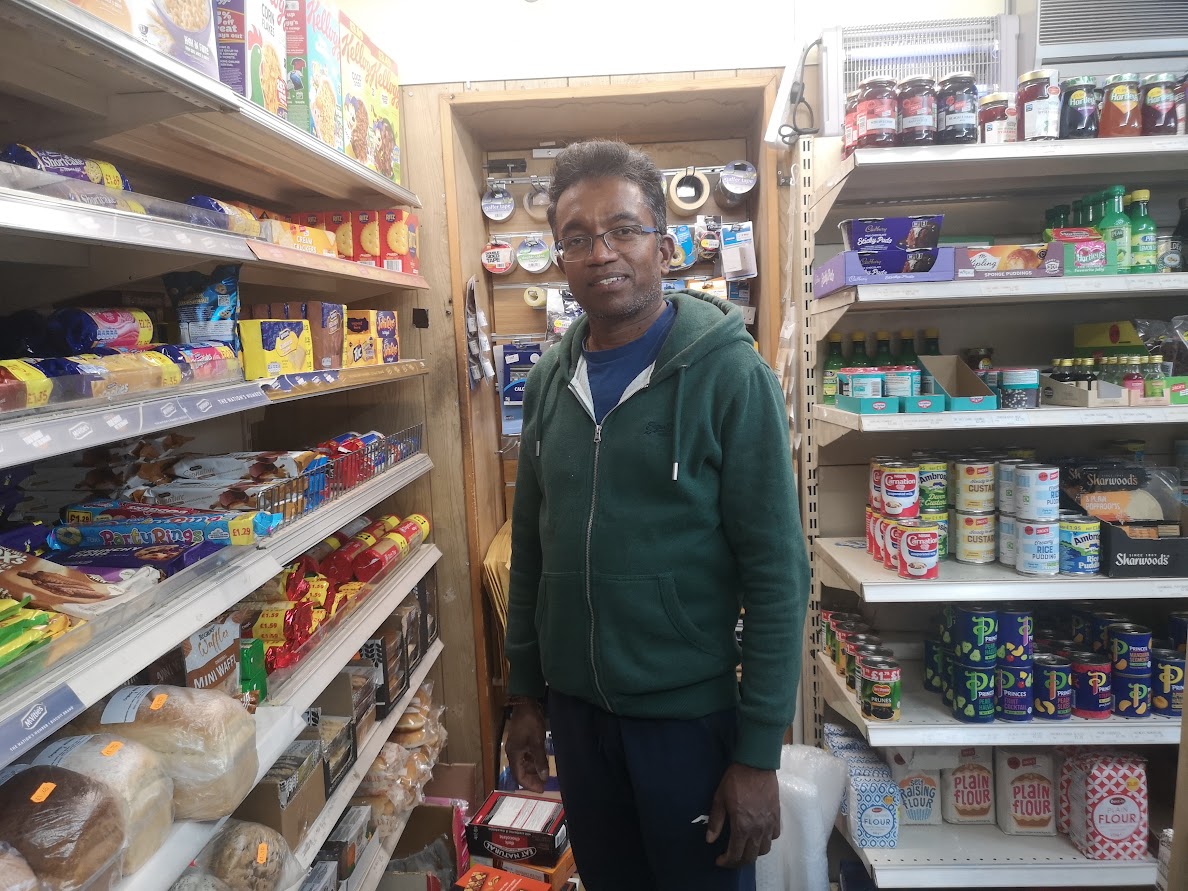
Jeevarasa Kanagalingam, known to his customers as “Kundan”, who currently owns Tuck News and Monikas
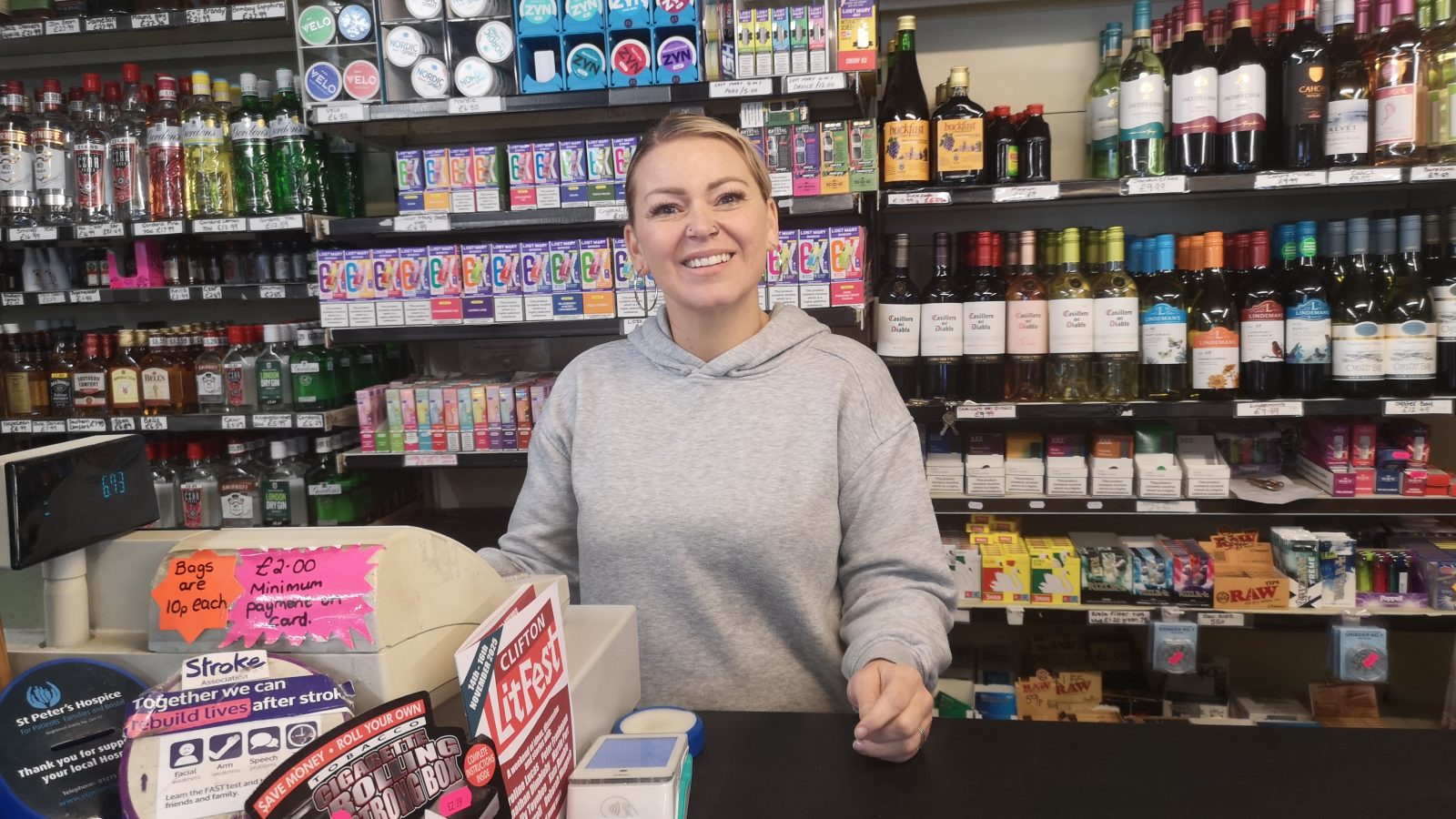
Corner shops bring much more than groceries to local neighbourhoods. For many, especially those without cars or with limited mobility, they provide vital access to essentials, often beyond supermarket opening hours. Many corner shops operate from 7am to 11pm.
Increasingly, some also serve as post offices or parcel collection points, offering crucial support for those who struggle with mobility or transport.
The post office inside the corner shop on Stokes Croft, for example, bustles with activity on Mondays, as more people turn to it for banking needs amid the closure of high street branches. Even in the age of apps, many customers are tech-hesitant and prefer speaking to a human rather than dealing with an algorithm, a sentiment echoed by Kanagalingam himself.
Economically, corner shops create flexible jobs, often family-run or locally staffed and sometimes act as stepping-stones into retail ownership, or simply as a side hustle.
Take Akila, for instance, who works at a convenience store on Lower Redland Road. He has no plans for a career in retail or dreams of running his own corner shop. Instead, he is studying for a master’s degree in engineering at a local university and sees the work as a life lesson in understanding the “value of money” rather than relying on “handouts” from friends and family.
An engineer by training, he has worked for engineering firms honing his prospects of a “good job” in the sector. Most of his shifts involve stacking shelves and scanning QR codes for Evri collections, as the shop serves as a pickup point for a significant radius. Camera-shy and softly spoken, Akila told Bristol24/7: “It’s quite good that I’m able to earn some money while I’m studying. I try not to overdo it. But the money is helpful,” he added with a smile.
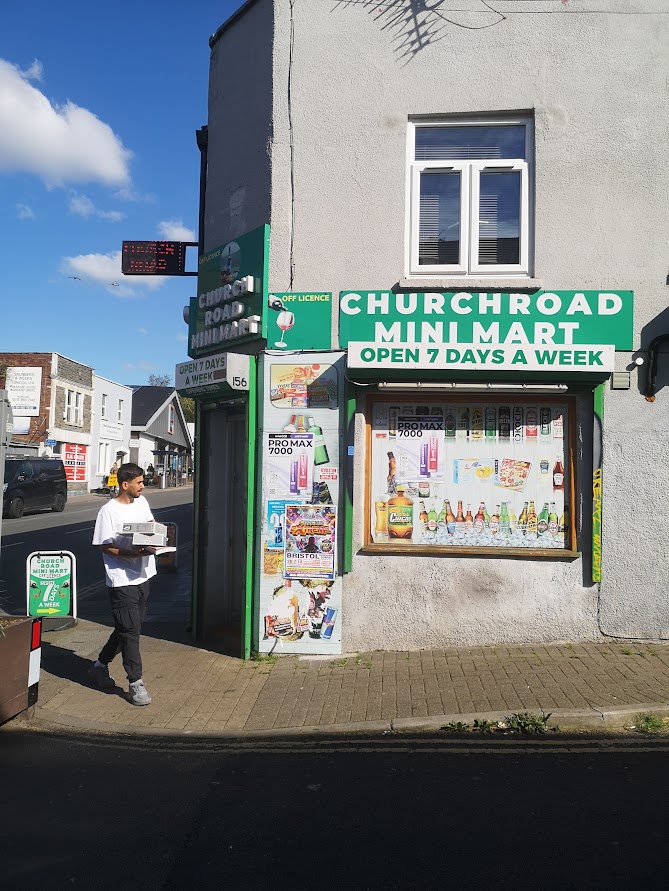
In Bristol, as in any other city, corner shops are more than places to grab a pint of milk
The decline of convenience stores like Londis has been predicted for decades due to the rise of online shopping alongside the big supermarkets opening smaller stores like Tesco Express. But, so far, the sector has defied these predictions, with sales surging during the Covid-19 pandemic.
Fred Pavier-Russell, a former student at the University of Bristol who later co-founded the engineering startup Supersmith recalled how his university experience was made memorable by a corner shop, the Ten O’Clock Shop, on Richmond Terrace in Clifton. He said: “During lockdown, when I was still in student digs, it was my local. Your nearest corner shop in effect became more like a pub and the owner more like a landlord.”
The Ten O’Clock Shop is a proverbial “Aladdin’s Cave,” which sells everything from Monster Munch to Halloween costumes and hiking boots.
Run by Gary Werrett, who has achieved cult status among regular patrons for his gregarious manner, the shop has been family-owned and operated for over 30 years, with support from his wife, Sharon, and daughter, Rachel Hanson. Speaking to Bristol24/7 about what makes it all worthwhile, Rachel said: “It’s obviously the people. They’re more like family. Some have been coming here for years, and we’ve become part of their lives.”
When asked about challenges, Rachel paused before admitting that shoplifting does occur from time to time. She was quick, however, to downplay its significance, choosing instead to focus on the positives. Theft can significantly cut into profit margins, small though they may be. Kanagalingam, who said incidents happen “probably every week,” also downplayed the issue, simply remarking: “It’s not bad, actually.”
Yet shoplifting is far from a victimless crime. Rates have risen amid the cost-of-living crisis, with some incidents linked to emboldened racist attacks, particularly as many shops are run by South Asian owners. There have also been cases of so-called “middle-class shoplifting,” targeting high-end wines and delicacies. UK retailers faced £2.2bn in direct losses from theft in recent years. There is no easy solution, as many shop owners simply grin and bear it.
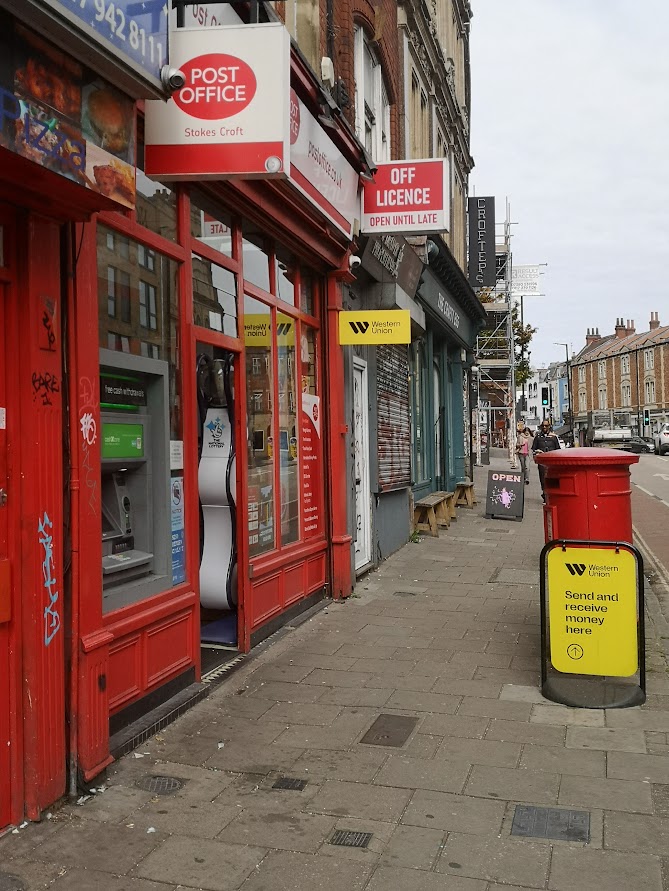
A convenience store in Stokes Croft offers multiple services under one roof, including a post office and cash point
Zanyl, originally from Turkey, runs a convenience store on St Michael’s Hill and admits that sometimes people, especially young customers, “can be a bit rude”. Despite these occasional issues, his positive relationships with customers keep him motivated to get up early each morning.
Just a stone’s throw from the University of Bristol’s Clifton campus, Zanyl spoke about how young people sometimes look for a “slice of home”, whether from Bangladesh or India, Turkey or Taiwan. “We try to reassure them,” he said. “And they’re glad they’ve found something that reminds them of home.”
But not all interactions between communities and corner shops are peaceful. Sometimes local communities or institutions clash with convenience stores over what is deemed “good” for the neighbourhood.
One such standoff even caught the attention of the national press when, in December 2019, Cotham School found itself at odds with several corner shops on Cotham Road South and a nearby takeaway.
After-school staff began patrolling the area in high-viz vests, using walkie-talkies to steer students away from the shops, citing concerns over junk food and student safety. The Daily Mail likened the staff to “bouncers,” while shop owners claimed the patrols were costing them a significant amount each day.
The controversy drew coverage from both the BBC and national newspapers. Following the media attention, Cotham School ended the patrols and stopped blocking students from visiting local businesses.
Despite occasional troubles, the longstanding appeal of the corner shop is not an exaggeration: a visit to a convenience store can feel like a small pilgrimage to get your favourite snacks and drinks, and long may it continue.

This article originally appeared in Bristol24/7’s November/December 2025 magazine
All photos: Milan Perera
Read next:
 Our newsletters emailed directly to you