Features / Predator Athletics
From Southmead to the world stage
At the back of Southmead’s Greenway Centre, the sound of shoes hitting the sprung mats echoes off the walls.
Music plays from a small speaker as a group of young girls moves through their routine.
The squash transitions deftly between pyramids, jumps and tumbling as coaches call out instructions.
is needed now More than ever
Trophies line the edge of the room, reminders of past seasons, while kit bags lay open in the corner.
The excitement among the young girls is clear. For many of them, cheerleading is more than a sport.
Predator Athletics has become a space for learning discipline, forming friendships and finding confidence, something increasingly valuable in a part of Bristol where youth opportunities have been reduced.
The club started 14 years ago, growing out of a small Bristol gymnastics group.
It is now co-owned by Chris Moore and Becky Hopton and trains more than twenty teams, from preschoolers to adults.
Some members travel from across Bristol and south Wales, but many are from Southmead, one of the city’s most deprived wards.
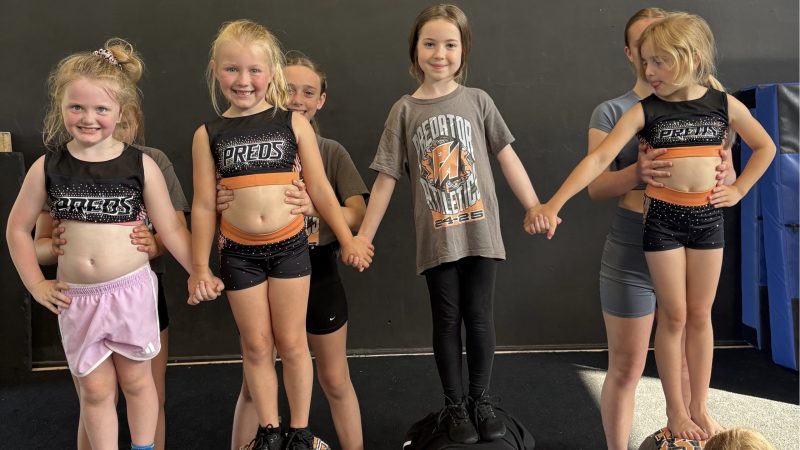
The club runs sessions for a wide range of age groups – photo: Maelo Manning
Predator Athletics has built a reputation that reaches beyond Bristol. Its athletes have competed at national and international levels, earning places at the European Championships and The Summit in Florida.
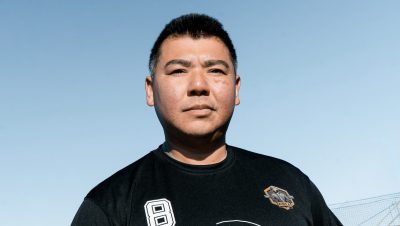
Chris Moore explains that the club’s success comes from persistence and community work rather than money or scale.
“Cheerleading doesn’t always get taken seriously,” he says. “People think of it as pom poms and smiles, but it’s hard work. It’s conditioning, teamwork and trust.”
That work begins early. Classes start at preschool age and progress through multiple levels.
The club also partners with around 15 schools across Bristol, introducing cheerleading to hundreds of children each year.
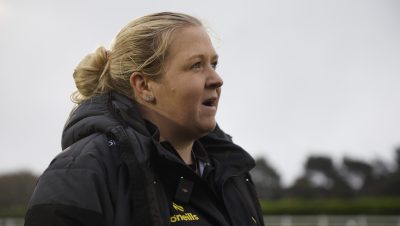
Coach Amy Leaper started as one of them. A former elite gymnast, she discovered cheerleading after moving to Bristol as a teenager.
“I fell in love with it from the first session,” she explains, the passion audible in her voice.
“I’ve been coaching since I was 15. Now it’s my full-time job. I go into schools every day and probably teach around 500 kids a week.”
Amy says the sport gave her direction when she was younger and believes it can do the same for the children she coaches.
“Some of them come in shy or uncertain. By the end of the year, they’re performing in front of hundreds of people. It changes how they see themselves.”
Paige Noble and Amira Michelle Luneeraugustine, aged 15 and 13, have been members for several years.
They train three or four evenings a week alongside schoolwork and have already competed in America and Spain.
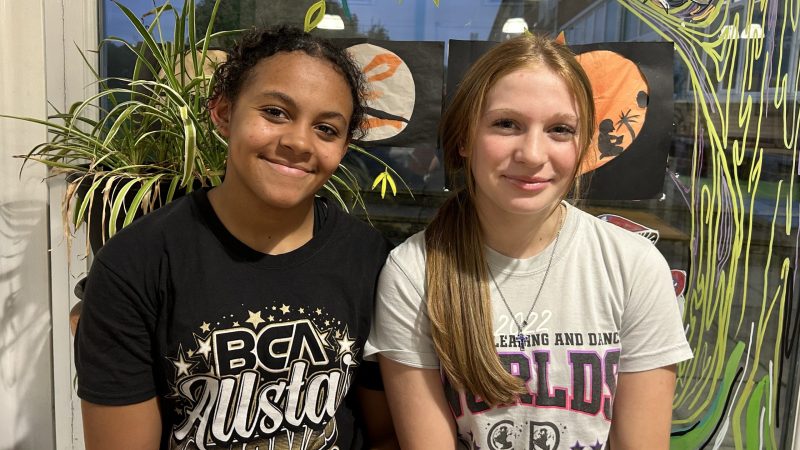
Paige and Amira have found friends and community through cheering – photo: Maelo Manning
Paige has a wide smile on her face as she says: “Most of my friends are from cheer, I come straight from school, do my homework here, then train.”
Amira agrees: “Everyone’s close. Even when new people join, they’re nervous, but they fit in quickly, and everyone is so nice to each other.”
Their comments reflect what coaches say is the core of Predator’s approach: inclusion. The club runs recreational and competitive teams, but everyone trains in the same space.
“You can walk in as a beginner and find your level,” Chris says. “You don’t have to be elite to belong.”
That attitude carries weight in Southmead. Over the last decade, the area has seen cuts to youth provision, with centres and activities closing or operating on reduced budgets.
The Greenway Centre, where Predator trains, is one of the few community spaces still offering affordable activities.
Chris explains that the impact of having something consistent for young people shouldn’t be underestimated: “It keeps them occupied, gives them structure and teaches them respect,” he says.
“Those lessons show up later, in school, in jobs, in how they treat people.”
Amy adds that sport can also provide stability in other ways. “Some of our athletes have learning difficulties or struggle with confidence.
“Cheerleading gives them something to focus on. Remembering routines, working in teams, helps with everything from coordination to communication.”
The coaches see the effects beyond the mat.
Older members volunteer to help younger groups, and families often attend competitions together.
Fundraising for international trips has become a community effort, with bake sales and raffles helping to cover travel costs.
For Amy, it’s not just about the excitement of competing abroad “It’s about learning to work towards a goal and understanding what it takes to get there,” she says.
The club’s focus on discipline and teamwork has paid off.
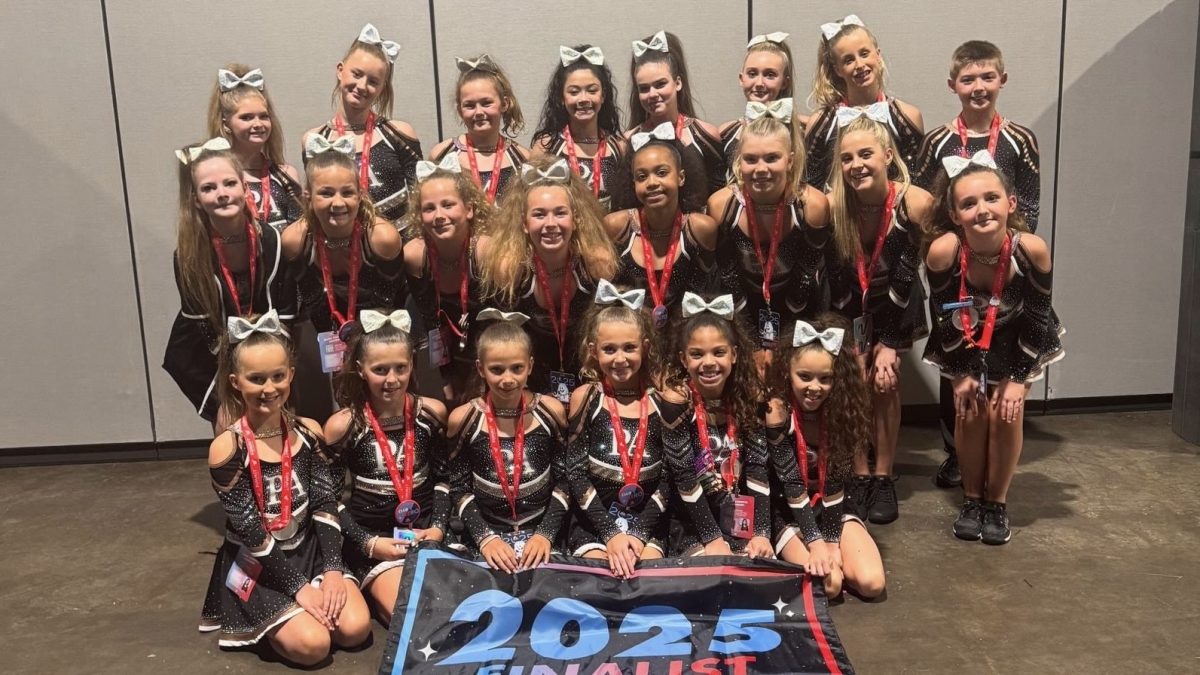
This past season marked a year of international success for Predator Athletics, with two of its competitive teams returning from Florida after competing on the world stage.

The cheerleaders have international competitions coming in 2026 – photo: Predator Athletics
The Huskies team, competing in the under 12 level one division at the Youth Summit in April, delivered a flawless ‘hit zero’ routine, meaning that they suffered no penalties or deductions and advanced to the finals, finishing 22nd out of 50 of the best youth teams globally.
The Venom team, competing in the senior level two division at the Nfinity Finals in May, were crowned Senior 2 Champions, securing the club’s first major international title.
However, beyond the thrill of success, Amy emphasises that cheerleading also involves resilience and how to deal with failure.
She says: “Not every competition goes your way. That’s life. Learning how to handle it early makes a difference later on.”
Next year, several Predator teams will travel to Florida and Portugal to compete internationally.
For the club, it marks another milestone, but their pride remains local. The focus remains on the same goals that built the club in the first place: creating space for confidence and community.
Chris reflects on the club’s Southmead base: “Most of our success stories started here in Southmead, and it’s important that the next generation can do the same.”

Maelo Manning is reporting on Southmead as part of Bristol24/7’s Community Reporters programme, aiming to amplify marginalised voices and communities often overlooked by mainstream media.
This initiative is funded by our public, Better Business members and a grant from The Nisbets Trust.

This article appears in Bristol24/7’s January/February 2026 magazine
Main photo: Predator Athletics
Read next:
 Our newsletters emailed directly to you