News / Strike
Resident doctors join picket line outside BRI
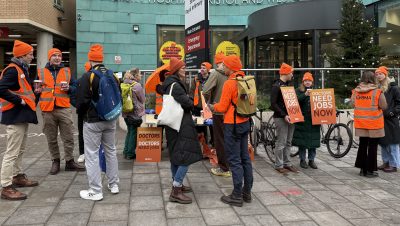
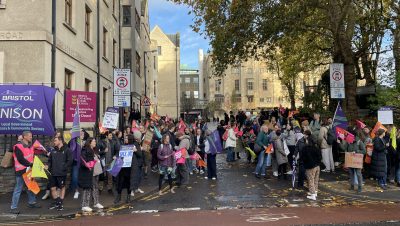
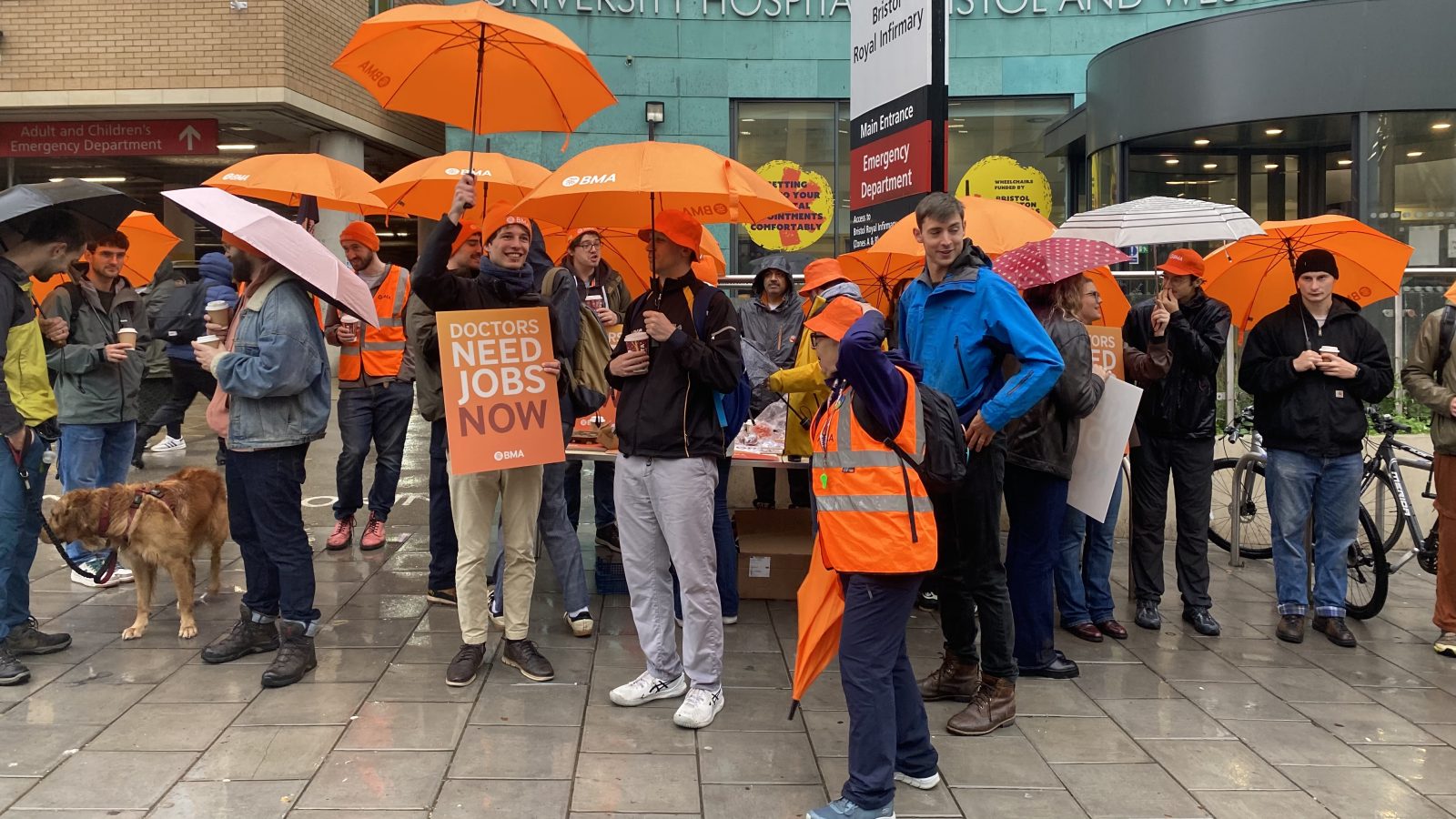
Luminous against the backdrop of the BRI, members of the British Medical Association (BMA) stood huddled in the rain under signature orange umbrellas to protest the treatment of resident doctors.
In spite of a heavy downpour, they had once again returned to the picket line outside the hospital on Upper Maudlin Street to signal the beginning of a five-day walkout in a dispute over pay erosion and a crisis in specialty training places.
One resident doctor told Bristol24/7 that there aren’t enough jobs, while another argued that although doctors have received a pay rise, it has not helped as inflation continues to rise.
is needed now More than ever
The action is the 13th walkout by doctors since March 2023 and health leaders have warned that the NHS may have to cut frontline staff and offer fewer appointments and operations if the strikes continue.
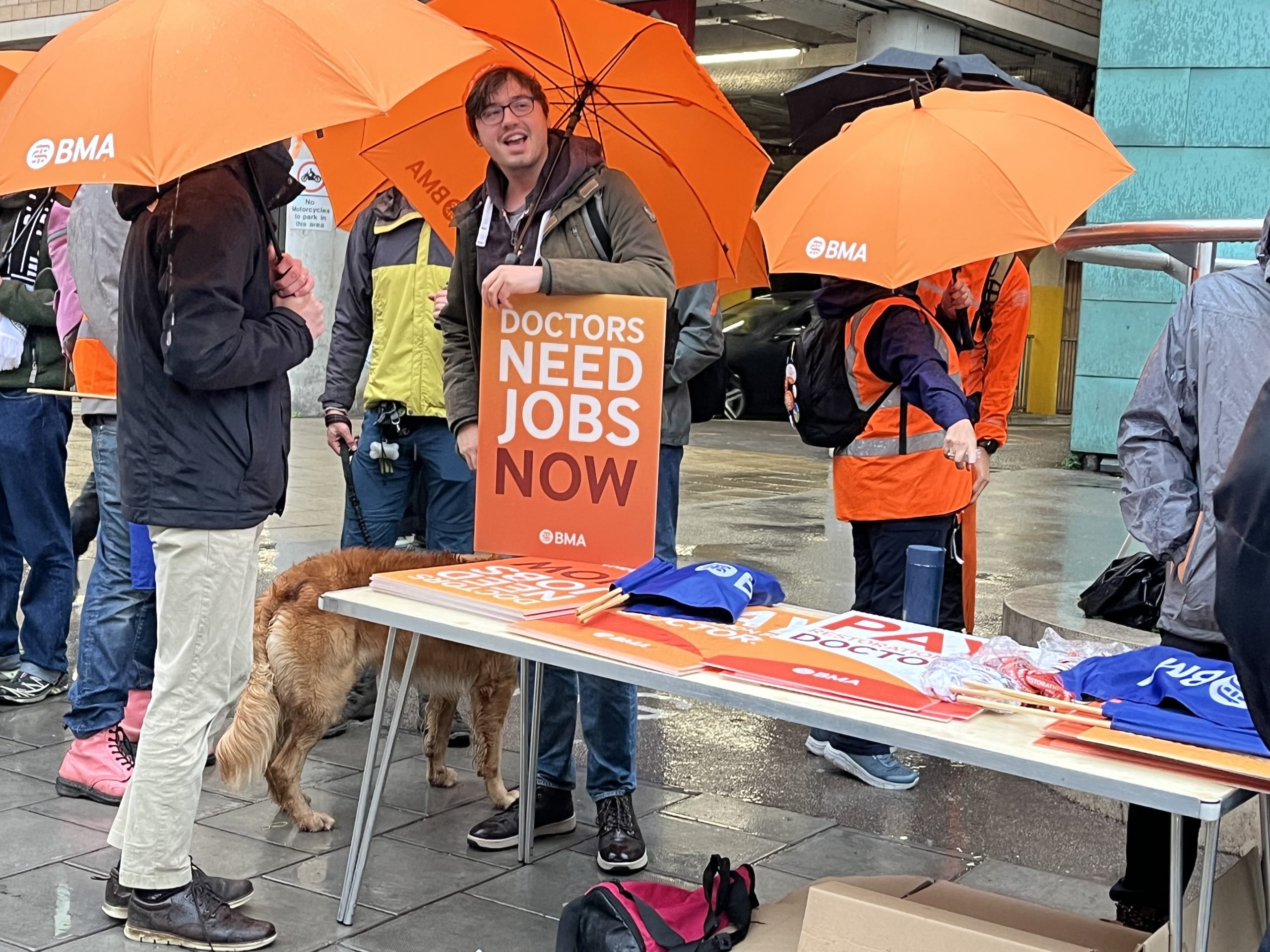
Resident doctors picketing outside the BRI on Friday morning as the strike began – photo: Tom Dear
The core of the dispute is the BMA’s demand for “full pay restoration”.
Striking doctors argue that after years of below-inflation pay rises, resident doctors’ pay has decreased by over 20 per cent in real terms since 2008.
The health secretary, Wes Streeting, has refused to budge on pay for resident doctors, arguing that they have received an almost 30 per cent rise over three years.
But the BMA argues doctors need a 26 per cent pay increase to restore their earnings, once inflation is taken into account.
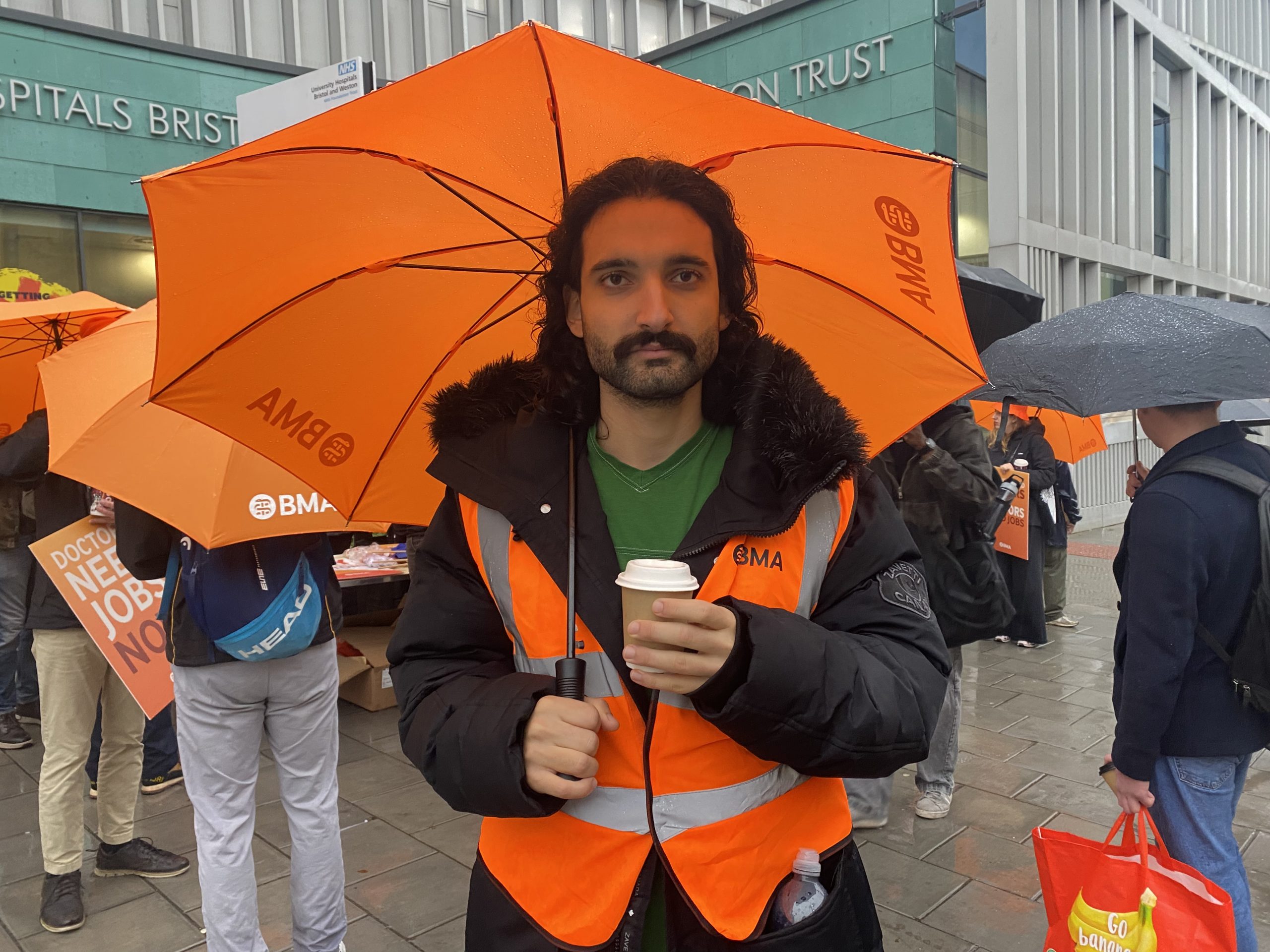
Dr Fareed Al Qusous, a doctor and BMA representative, told Bristol24/7 the strike action is a last resort for resident doctors – photo: Betty Woolerton
Fareed Al Qusous, a resident doctor who works in the Severn region, said: “Unfortunately, I’d rather not strike at all, but we have reached an impasse with this government after three months of negotiations regarding jobs and pay.”
Also striking was doctor Sam Taylor-Smith, who said that the wave of strikes starting in June 2025 initially showed “initial encouraging signs” from the government, but with “no sign of meaningful solution,” resident doctors and NHS staff are feeling neglected.
Calling on Streeting by name, Taylor-Smith called for the health secretary to “recognise the erosion of our pay” and to “be constructive and come up with creative solutions”.
He added: “What we want to see is a solution that safeguards the future of the NHS and adequate levels of staffing.”
View this post on Instagram
Concerns have also been raised by the BMA about the prospect of resident doctors being able to secure a job in the future.
The union stated that thousands are left without speciality training placements when they complete their second year of residency.
Speaking about the impact of the “training crisis”, Al Qusous said: “I had a patient last week who came in just to manage basic pain because he tried calling his GP practice at 8am.
“They couldn’t get any appointment at all, so they had to go to the emergency department and wait 12 hours to be seen – just to get some basic painkillers.
“You can see a theme here. There are not enough GPs. There are not enough emergency doctors.”
Doctor Sam Tylor-Smith added: “Doctors applying to become GPs and surgeons of the future are being turned away from training jobs because there aren’t enough of them.”
Addressing the disturbance to patient care, Al Qusous added: “I apologise for any disruption, but I’ve been apologising for cancelled appointments, cancelled clinics and long waiting times before strike action has taken place.
“And at the end of the day, the power to stop these strikes lies squarely with this government.”
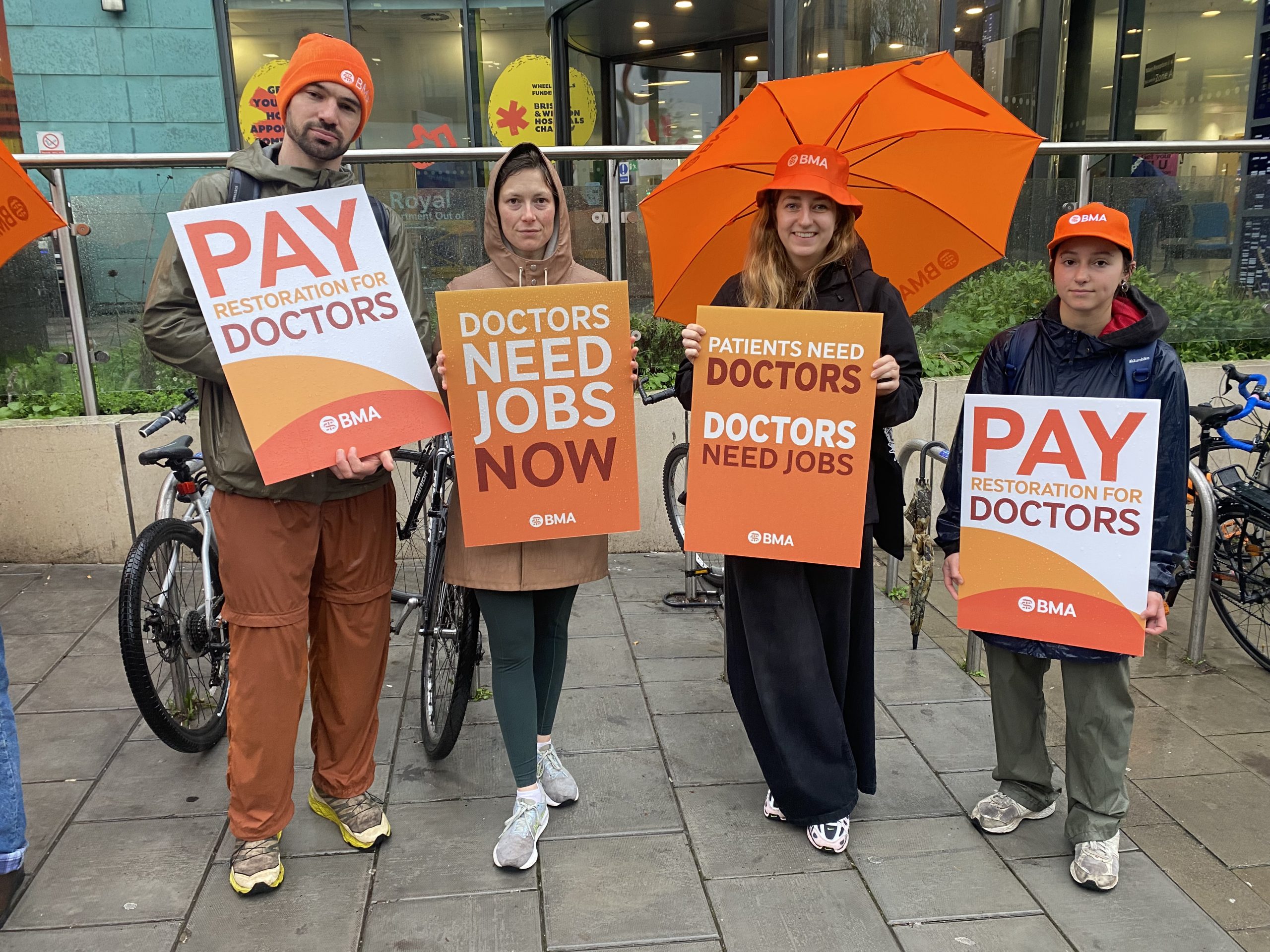
A mixture of beeping horns and angry shouts could be heard over the pouring rain as doctors gathered for the first of a five-day walkout – photo: Betty Woolerton
The NHS Confederation’s chief executive, Matthew Taylor, said: “There is no doubt that patients will bear the brunt of this disruption, with tens of thousands of tests, appointments and operations likely to be delayed or cancelled.
“NHS leaders understand how frustrating this will be for them being left waiting in pain or discomfort, not knowing when their treatment will be rescheduled.
“With flu already beginning to bite there is a real risk that these strikes will leave the NHS limping into a very difficult winter at a time when it is trying to recover performance and implement vital long-term reforms.”
The five-day strike will end on Wednesday morning.
Main photo & video: Betty Woolerton
Read next:
 Our newsletters emailed directly to you