News / Bristol Arena
Bristol MPs split on preferred site for arena
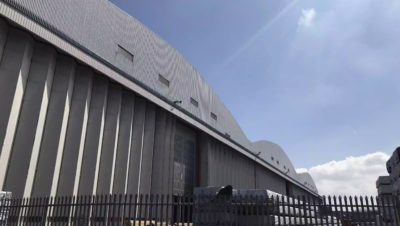
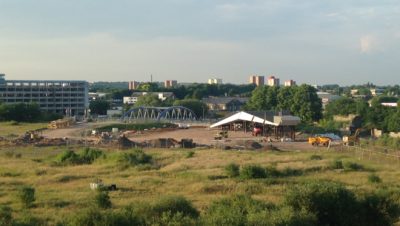
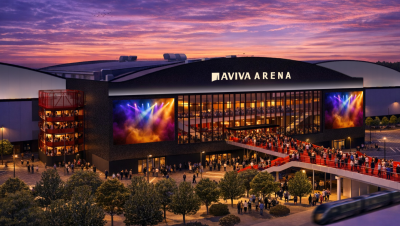
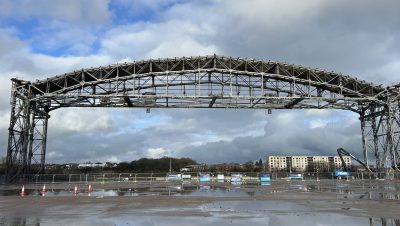
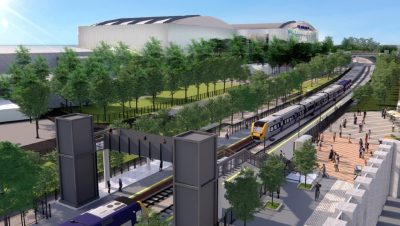
While Bristol mayor Marvin Rees keeps his powder dry about his preferred location for Bristol Arena, his Labour colleagues in Westminster are split down the middle over whether the venue should be next to Temple Meads or within the Brabazon hangar at the former Filton Airfield.
Here are all of their statements in full following the publication of KPMG’s value for money report, along with opposition politicians at City Hall and business leaders:
Darren Jones, Bristol North West MP (whose constituency contains the proposed Filton site)
“The value for money reports make a clear economic case for the Arena in North Bristol, and not Temple Meads. But I can only support an Arena in my constituency if it comes with significant transport investment. Our roads are already gridlocked at peak travel time. So we need as much bus, rail and cycle routes as possible plus upgrades to our roads, including no access to the Arena from minor roads in Henbury, Brentry or Southmead. That’s why I’m calling for a North Bristol Transport Fund of at least £50m and I expect to see this delivered as part of any final recommendation which puts the Arena in North Bristol.”
Karin Smyth, Bristol South MP (whose constituency contains Temple Island)
“However you cut it up, the KPMG reports are very bad news for south Bristol. The top line is no arena and no investment – in fact, the only guarantee that residents have is years of uncertainty around the Temple Meads site. Bristol South needs investment, jobs, improved infrastructure – and a signal from those running the city that they are not forgotten. Instead, we are looking at a process which has not only failed to deliver in every regard, but actually cost millions of tax payers’ money to achieve precisely nothing. My constituents deserve better than this. In many ways, these reports pose more questions than they answer. They lead the reader through a maze, hedging bets throughout, and relying on the purposefully narrow terms of reference they accepted to avoid assessing crucial issues. Too often, Bristol South seems to be at the back of queue for crucial investment, and this announcement is similar to the recent Metrobus mess. Where there are challenges – financial or otherwise – I’ll work with anyone to overcome them. But I will not support proposals which will leave Bristol South worse off.”
Thangam Debbonaire, Bristol North West MP
“This is a very important decision for Bristol. It is vital that we get this right for the sake of everyone across Bristol, for jobs, for the environment and for the return on our investment. Costs are a very important consideration. But as the Member of Parliament who represents the City Centre and much of the area surrounding the proposed Temple Meads site, I want whatever decision is made to maximise jobs, opportunity and investment for a part of the city where this is sorely needed. This study is unable to compare the full social, cultural and employment impact of the different Arena options, or the lost earnings for Bristol’s hotels and restaurants if visitors stay outside the city. This is because the proposals are at very different stages. The KPMG report is based on YTL’s own figures, even though it states these numbers are not advanced enough to make a secure judgement. And the Filton option is not free. It would require significant public investment in transport links. Even with this investment, it would be likely to be more reliant on car travel. Perhaps most importantly, the report states ‘significant risk remains regarding the commercial deliverability’ of the Filton option, as investors could pull the plug if they decide it is not as profitable as hoped. For this reason, building additional transport links to Filton could be a multi-million-pound gamble with taxpayers’ money. It is for this reason that I still believe the Temple Island site is the best for the Bristol Arena.”
Kerry McCarthy, Bristol East MP
“To put it very simply, I can’t justify to my constituents spending so much public money on arena island site, especially not when economic benefit/ jobs from alternative use of that site would be so much higher.”
Eleanor Combley, Bristol Green group leader
“What was first touted as a simple ‘value for money’ review is beginning to look like a very expensive piece of political justification for a decision it seems the Mayor has already taken in private, regardless of his manifesto promise and of the views of the public, his councillors, or even fellow Labour politicians. The problem with these reports is that we are being asked to compare reality with fiction. On the one hand we have an actual arena on which millions of pounds of actual money has been spent and actual building work had already begun which would bring huge economic benefits to the disadvantaged areas of Central and South Bristol in terms of new jobs and opportunities. On the other we have a highly optimistic pencil sketch, in which the private sector steps forward and provides exactly what the Mayor wants on the Arena Island site, at little or no cost to the public purse, while a foreign corporation builds and owns an arena to the north of Bristol. That report does at least acknowledge that this would suck life from the city centre, and would require millions from the public purse for transport infrastructure, but other than that there is very little that can be said with certainty – at this point it is little more than vague conjecture. All of this is dependent on so many other factors – proper transport provision, planning tests and permissions, funding partners, an operator and builder – that we don’t even know if it is possible at this stage. Any discussions that have taken place have done so behind closed doors, so is there anything to stop YTL taking many millions of pounds of public money for infrastructure and then discovering that the arena project isn’t viable after all? It is pie in the sky. No wonder the Mayor decided to release these in the middle of the night before a big Brexit vote. It would be great to see a focus on simple bricks-and-mortar delivery and public, transparent decision making from our Mayor rather than these pipedreams assembled in smoke-filled rooms, which have delivered nothing for the people of Bristol but plenty of revenue for consultants and corporations.”
Richard Bonner, president of Bristol Chamber of Commerce
“We welcome the chance to now see a lot of the facts and figures behind the future of the Arena. Our members from across the Bristol city region – and indeed beyond – strongly support and want to see the delivery of an arena for this city region. It’s a piece of infrastructure we have long wanted up and running. These reports show that there are some difficult and complex issues around a forthcoming decision which need to be considered but that an arena location in the north of the city is clearly the better option in terms of value for money and risk profile. Whilst Filton may not be the location preferred by all locally an arena is a piece of infrastructure that will of course serve a much larger area than just the city, and it further needs to be properly recognised that the northern part of our city is also undergoing very considerable change and major regeneration with lots of new homes, places of employment and cultural, education and leisure facilities, which will only complement and enhance the offer of Bristol City Centre and the wider region. If a decision is made than an arena should be brought forward in Filton it also opens up the chance to bring forward a significant new conferencing facility, new homes and a new hotel on the Temple Meads site. These are all important things that will directly create new local jobs and places for local people to live and for others to visit. We would however only support such a decision if the necessary transport infrastructure improvements and in particular excellent sustainable and public transport provision were put in place as part of this development, with the necessary backing of the local councils and the West of England Combined Authority.”
Imran Ali, chairman of the Bristol Hoteliers Association
“The figures speak for themselves. It’s not just the venue which hosts the shows and concerts that benefits but the wider economy. Off-site spectator spend impacts activity in hotels, bars and restaurants serving visitors, as well as the supply chains of those establishments across the region. According to the STR data for the year-to-date occupancy levels, Bristol hotels are behind on occupancy compared to last year’s business levels. And let’s not forget that in the city centre alone, there has been nine restaurants that have closed their doors already since the beginning of the year, including big names like Jamie’s Italian. We can only see this situation getting worse. Furthermore, with Cardiff City FC gaining promotion to the football premiership and flights now coming in direct from Qatar to Cardiff airport means the Welsh capital’s status on the world stage is going to increase further. The impact of having a venue in the city centre is huge. A study conducted on behalf of the Millennium Stadium has shown that a high proportion of economic activity (35 per cent) and employment (55 per cent) is within the hotels and restaurant sector, but the impact is spread across the entire Welsh economy as, for example, hotels purchase manufactured goods, food, cleaning and professional services in order to provide accommodation to the stadium visitors. The recent report talks about a ‘leakage of economic benefit’ from Bristol, but it will be more like a torrent if the arena is built in the Brabazon hangar. The Temple Meads site is the only viable option. If it isn’t located there then the greater Bristol economy will suffer further still and will languish behind other, more forward thinking cities.”
 Our newsletters emailed directly to you