News / ss Great Britain
Bristol Dockyards boss says SS Great Britain was ‘losing relevance’
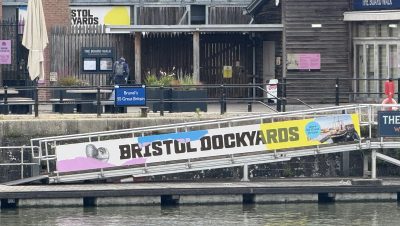
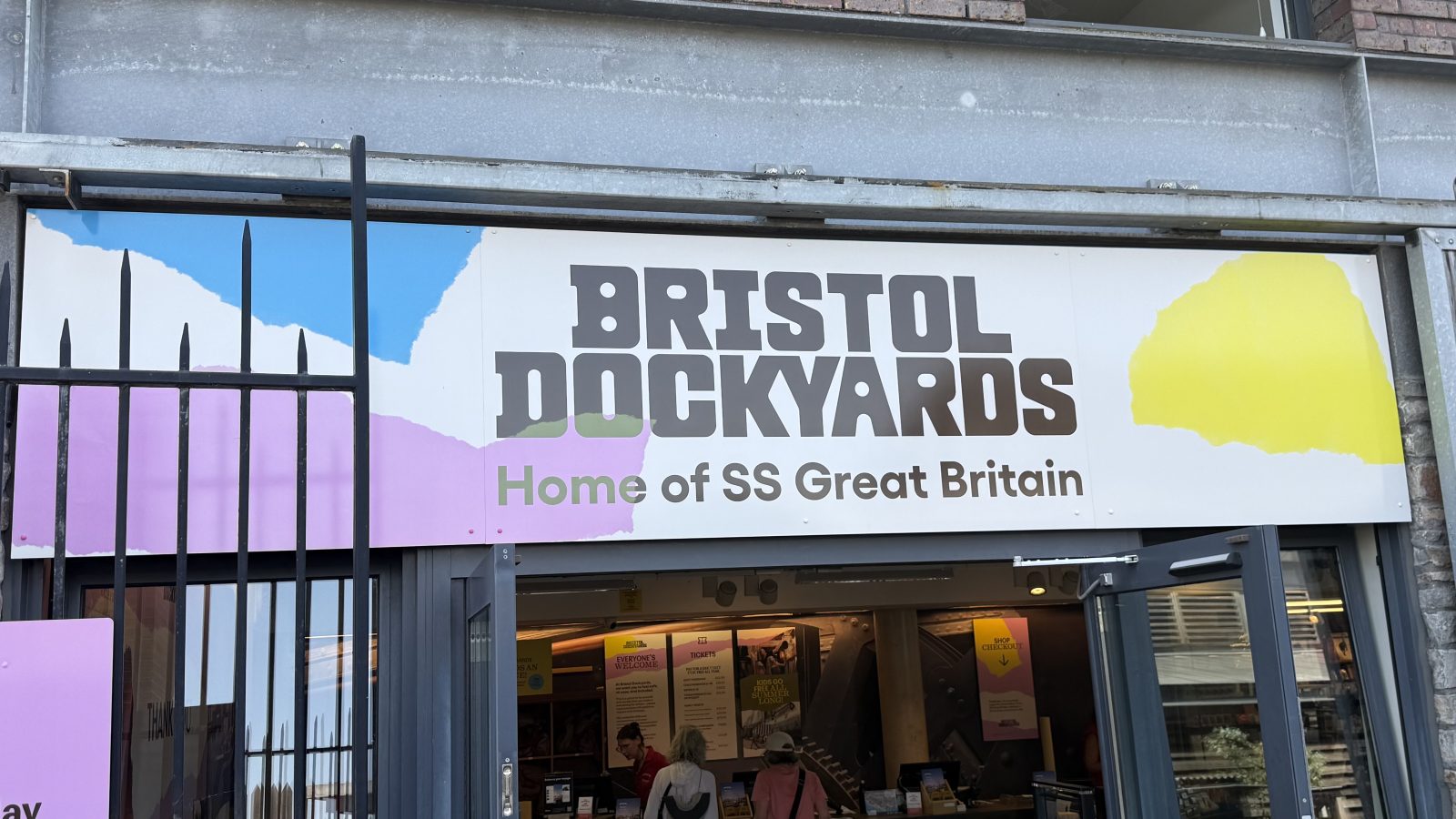
The chief executive of the SS Great Britain Trust has admitted that a “steady decline in visitor numbers and a growing sense that we were losing relevance within Bristol and the wider region” were partly behind the decision to rebrand the site surrounding Isambard Kingdom Brunel’s ship to Bristol Dockyards.
“We have taken a very visible step in shifting an organisation – culturally, strategically and publicly – into a new direction, and while the move to Bristol Dockyards has been the most obvious expression of that, it is really just the surface of something deeper,” said Andrew Edwards.
Edwards said “there is no point pretending that the financial dimension is not part of that story” but he added that “it would be wrong, and far too simplistic, to view this only through a financial lens”.
is needed now More than ever
Writing on LinkedIn, Edwards said: “The deeper issue is relevance – whether what we offer resonates strongly enough with people today to draw them in, to make them feel that this is somewhere that belongs to them, and that it matters enough to be part of their lives.
“If we get that right, the financial model follows. If we do not, no amount of incremental adjustment will shift the trajectory in a meaningful way.
“That is not an easy thing to sit with, particularly when you are responsible for something that people care about so deeply.
“Nostalgia is powerful, and rightly so, but it can also create a kind of comfort that masks more difficult truths.
“In many ways, we had become something people loved in principle, but did not always choose to visit in practice, and at some point, you have to decide whether you lean into that comfort or whether you challenge it.
“For us, that meant change – not for the sake of it, and certainly not to create noise, but to create relevance again and to ensure that the organisation has the platform it needs for future growth.
“That thinking shaped not just the decision to move to Bristol Dockyards, but also the development of a visual identity that deliberately steps away from the conventions of the maritime museum sector.
“We did not want to look like everyone else, because we are not everyone else.
“This is not simply a ship; it is a place of ideas, of innovation, of global journeys and human stories that stretch far beyond a single narrative.
“The identity had to reflect that breadth and that ambition, to signal clearly that this is a cultural destination rooted in Bristol, not just a historic artefact protected in isolation.
“It is not about being ‘cool’ but about being right for this moment – creating something that feels open, confident and capable of evolving over time, rather than constrained by expectations of what a maritime museum should be.
“As others have observed, it carries a disruptive spirit that reflects both the energy of Bristol and the scale of reinvention required.”
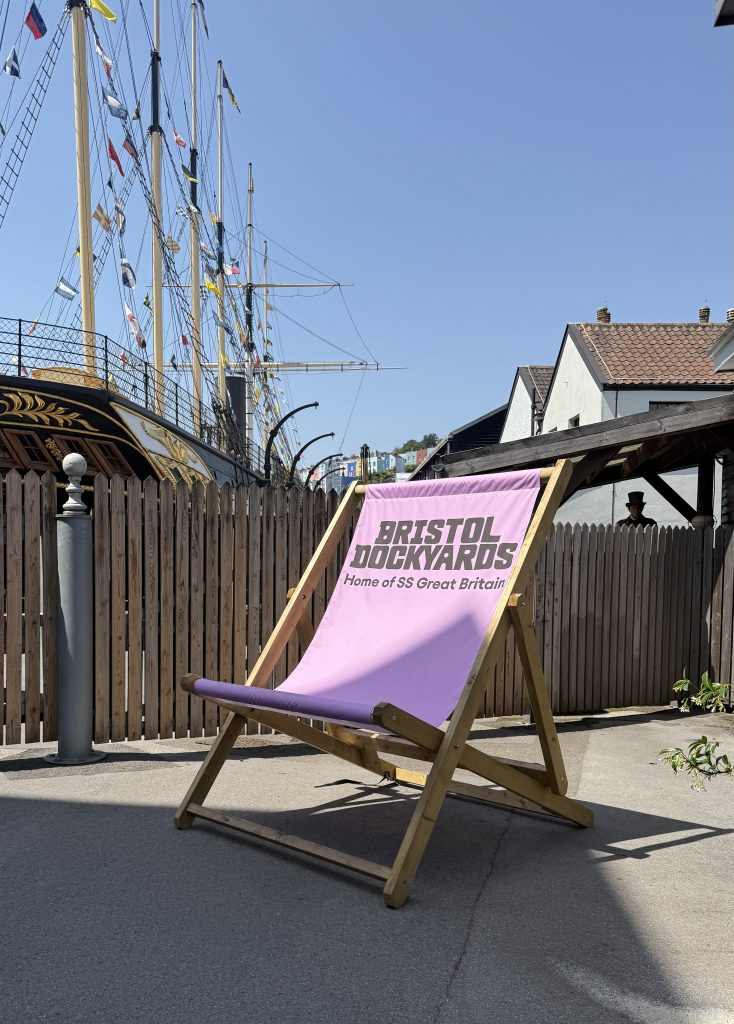
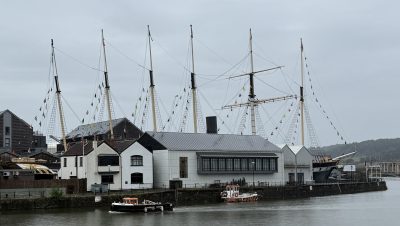
The branding agency behind the bold redesign say the SS Great Britain is now wrapped in “defiant Totterdown pink” despite the colourful houses of Cliftonwood overlooking the ship – photo: Martin Booth
The announcement of the site’s new name prompted a flurry of media coverage from around the world and closer to home.
Acclaimed Bristol artist Inkie called it “possibly the worst case of rebranding I’ve seen recently”, taking particularly umbrage at Shoreditch branding agency How&How being commissioned.
“In such a creative city, why on earth would you not use a local agency for such a big project?” Inkie asked.
According to Edwards, it was “a step change in visibility (and) with that has come a wide spectrum of reaction – supportive, curious, critical and, at times, misinformed”.
“Elements of the story have been drawn into wider cultural debates around identity, diversity, and inclusivity, occasionally framed in ways that simplify or distort what is actually a more nuanced and thoughtful shift.”
Edwards compared what he and his team are currently undertaking as akin to the ship’s world famous designer, Brunel, who according to Edwards had “a mindset rooted in innovation, in ideas and in a willingness to challenge convention in pursuit of something better”.
“If we are serious about honouring that legacy, then it cannot just sit in what we preserve; it has to live in how we think, how we act and how we evolve.”
Main photo: Martin Booth
Read next:
 Our newsletters emailed directly to you