Features / Bristol Bus Boycott
Who was Raghbir Singh?
As I run to catch my train from Temple Meads to Ascot, I pray I haven’t broken the glass awards in my bag.
I’m carrying two awards from Unite, the trade union. One celebrates Raghbir Singh for “fighting racial injustice & paving the Race Relations Acts 1965 & 1968” while the other simply describes him as a “trailblazer”.
Unite has been holding onto these awards for years in the hopes of passing them on to Raghbir’s family.
is needed now More than ever
No-one has been able to meet with them until now.
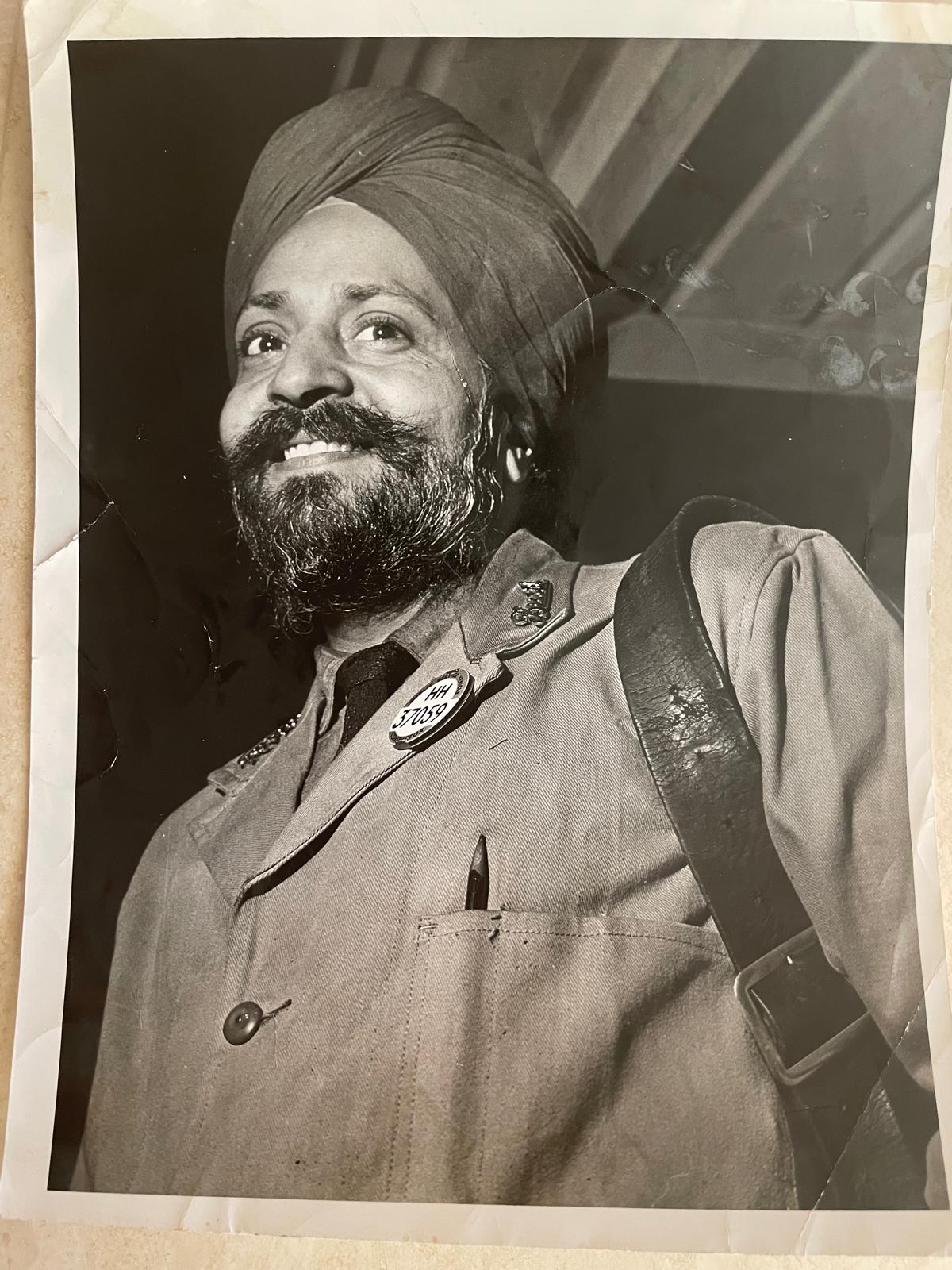
Raghbir Singh was Bristol’s first Asian bus driver – photo: shared with permission from Raghbir Singh’s family
The 1948 British Nationality Act made it so anyone from a British colony, as well as former colonies like India and Pakistan, had the right to live and work in the UK.
As the then attorney general put it: “If someone comes from Nigeria to Newcastle, although his colour may be Black, he will have exactly the same rights as any other citizen.”
However, what the then government did not anticipate was that thousands of people from colonies, and former colonies, in Asia, Africa and the Caribbean, would indeed start coming to Britain.
Between 1955 and 1960, around 211,000 Commonwealth immigrants, the majority of which were from the Caribbean, came to the UK.
Many members of the white British public reacted negatively.
In 1962, the government passed new legislation that placed more restrictions on Commonwealth immigration.
But, for those from the Commonwealth who were already here, life was tough. Some landlords refused to rent to them, some pubs refused entry (“No Blacks, No Irish, No Dogs”) and some employers refused to hire people of colour too.
One of those employers was the Bristol Omnibus Company.
In 1963, the company’s general manager explained to the Evening Post that the company would never “employ a mixed labour force as bus crews because we have found from observing other bus companies that the labour supply gets worse if the labour force is mixed”.
The company’s decision was backed by the Transport & General Workers’ Union, a predecessor of Unite.
So, on April 29 1963 people of colour in Bristol led a boycott against the company.
For months the Bristol Bus Boycott, as it soon became known, attracted national headlines until the bus company finally announced on August 28 – the same day Martin Luther King Jr was making his “I Have a Dream” speech in Washington DC – they would be ending their colour bar.
In 1965, the government introduced a Race Relations Act which prohibited racial discrimination in public places and then later introduced the Race Relations Act 1968, which banned racial discrimination in housing and employment.
The Bristol Bus Boycott is widely credited with helping to inspire both pieces of legislation.
Today, particularly after the global reckoning over anti-Black racism following the murder of George Floyd in 2020, the Bristol Bus Boycott is fairly well-known.
However, some parts of the story are still yet to be fully coloured in.
How many know, for example, the names of women involved in the Boycott, like Ena Hackett or Barabara Dettering? And how many people know who the first person of colour was to join the Omnibus Company after the boycott ended?
Hired on September 17 1963, his name was Raghbir Singh.
***
“He was a very principled man. He was definitely his own man… and he was very much a Sikh,” Raghbir’s son, Paul, tells me over tea at his house in Ascot. “He was a very strong believer. Our home in Amritsar was literally a few minutes’ walk from the Golden Temple.”
As Raghbir’s daughter, Madhu, later tells me from her home in a leafy part of Nottingham, a formative memory for him was cleaning the floor surrounding the Golden Temple as a child.
The temple, the most important spiritual site in the world for Sikhs, is surrounded by a water reservoir known as a sarova, meaning a ‘pool of nectar’.
The sarova is regularly drained, leaving the marble floor underneath exposed, ready to be cleaned by religious observers. “Papaji told us he felt so privileged he actually got to do that,” Madhu says, adding “he felt very blessed” and that the memory “was very dear to his heart”.
Raghbir was born to a wealthy family in 1920s British India.
His entire family were devoted Sikhs but he ended up locking eyes with a Hindu girl called Pramila, from what is today Pakistan, at a wedding and falling in love. Pramila changed her name to Sukhbir, a Sikh name, and the pair got married.
Raghbir and Sukhbir had a baby girl, and decided to call her Kiranpal, which means “protector of light” in Punjabi.
A few years later, Raghbir’s father died and in 1952 he decided to take a risk and move to England.
Although South Asian people are now the largest ethnic minority group in the UK, forming 9.3 per cent of the population, numbers were much smaller in the 50s.
In 1955, there were around 6,000 Indian immigrants in the UK. Numbers only began to surpass 10,000 in the 1960s.
Paul says his father shared with him that soon after the family moved to London in 1952, he saw some children playing in the street.
“They looked up and saw him coming – brown skin, turban and a beard – and they got so frightened they all just stopped what they were doing and ran inside, except one who just froze and urinated on himself.”
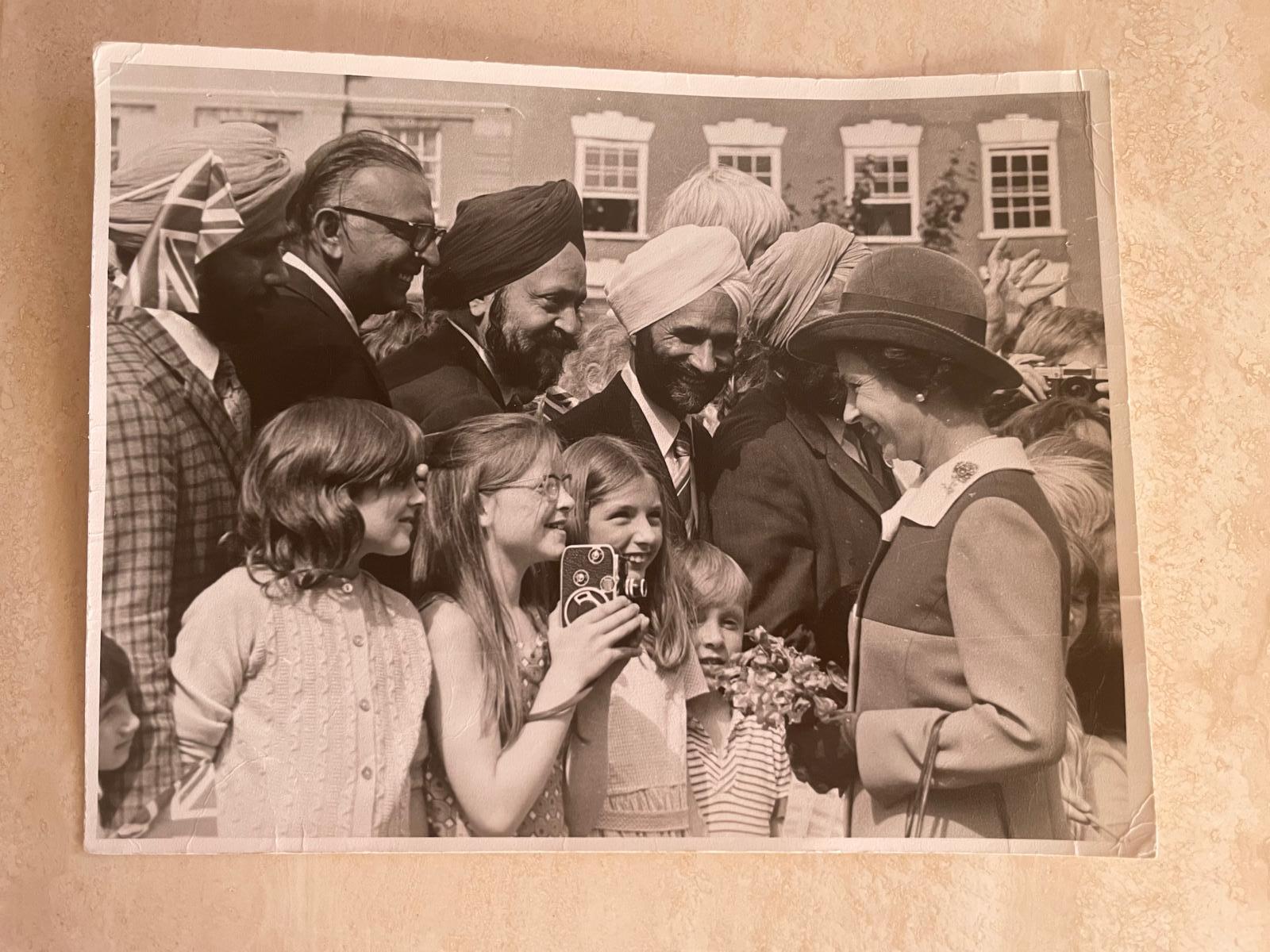
Raghbir Singh was among the crowds on College Green when Queen Elizabeth II visited Bristol in 1977 – photo: shared with permission from Raghbir Singh’s family
The family stayed in London until 1956, before ultimately deciding to return home.
But in India their new baby son Paul, then six months old, became very ill and doctors recommended the family return to England.
And so they did, although Paul thinks they really came back because his father thought the UK was a better place to raise his family than India: “He always had this thing about giving his children an education.”
By 1959, the family were back in London and were starting to grow but, after falling in love with Clifton after visiting a friend in Bristol, Raghbir decided to leave the capital for good. His daughter Madhu, born soon after the family made the move to Bristol, says: “When he saw Clifton and the Clifton Suspension Bridge he just fell in love with the place. He knew this is where he wanted to be.”
Raghbir bought a five-storey house on Meridian Place close to the Triangle – Paul says they arranged an informal mortgage with the vendor who would knock on their front door every month to collect payments – and the family soon settled in.
As their new home was so big, the family sometimes took in lodgers, most of which were students from the University of Bristol.
However, Raghbir and his wife Sukhbir found other ways to supplement their income too.
As Paul recalls, his dad was not “the sort of person to sit in an office and just do desk work”. Raghbir took up work as an engineer, working in Stapleton.
He and his wife later bought a shop at 7 Boyce’s Avenue in Clifton Village, which is now the site of Seventh Avenue Hair & Beauty.
The Singh family shop, Arora Indian Crafts, sold clothes imported from India as well as leather, wood and brass antiques. Sukhbir would run the shop on weekdays while the children – Kiranpal, Paul, Madhu and the youngest, Savi – would help out at weekends.
The family got along well with the original Reg, of Reg the Veg, the greengrocers which has been at 6 Boyce’s Avenue for more than 50 years. Raghbir was a regular customer.
Madhu recalls with a smile: “Papaji would say, I’d like some apples but I’d like those apples there at the top, you know those two red crispy ones… and Reg would say, ‘you really do always pick the best fruit, don’t you Mr Singh?'”
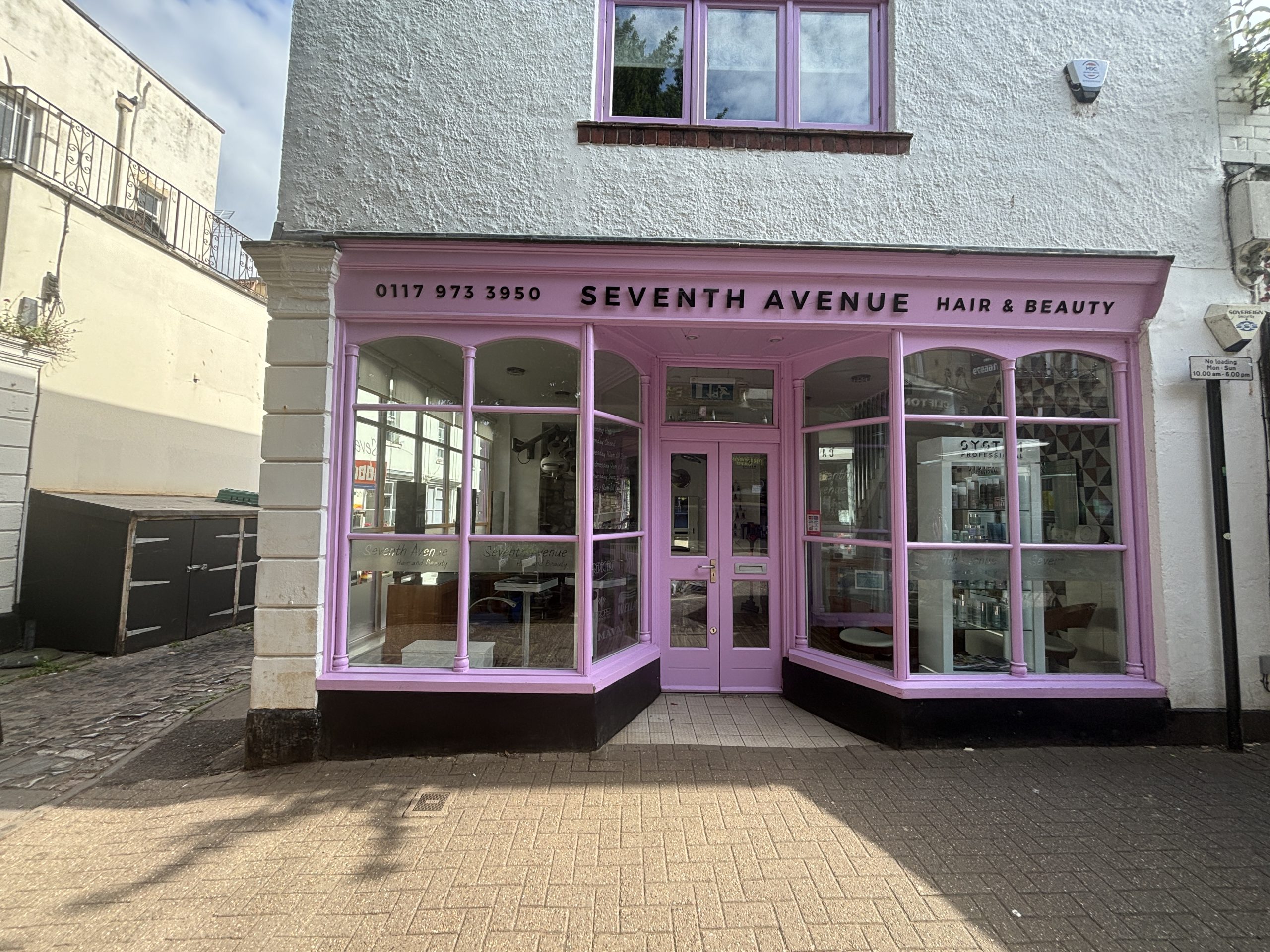
Now a hairdressers, 7 Boyce’s Avenue was once the site of Arora Indian Crafts – photo: Seun Matiluko
Madhu says her father enjoyed “the finer things in life… He loved buying nice clothes, home furniture.
“He loved fine dining. He loved quality food. He loved shopping at Marks & Spencer and he would take us, when he was able, to the Indian restaurant on Park Street, Rajdoot, and we would all dress up and go.
“He just had an eye for beauty.”
In August 1963, Raghbir – who Paul says “always read the Telegraph“– saw the news about the Bristol Omnibus Company dropping its colour bar.
Although he was working as an engineer at the time – a well-paid job – Raghbir was keen to “see if the bus company kept to its word”, as he told the Evening Post at the time.
So, he applied for a job.
Madhu thinks his application may have been inspired by his faith: “He believed in justice. That’s part of Sikhi, standing up for what is right. Sikhi teaches us to protect the oppressed and stand up for any wrongdoing. That was a big big part of him… he was a fighter.”
After reportedly passing his application test with flying colours, he was employed as a bus conductor.
The job came with some awkward working hours. Paul says that in his late teens he would “have to go and pick him up late at night when he would finish and drive him home”.
But Raghbir didn’t complain. His daughter, Madhu, remembers him talking about his job with a smile.
She says: “He was a people’s person. He loved talking to the passengers. He really did.”
The family enjoyed some perks from the job too.
Every summer, the bus company would take employees and their families out on a coach for a day trip to either Weymouth or Bournemouth, alternating locations each year.
Those beach days were always a highlight – Madhu says her mother and father “absolutely loved the sea”.
When asked about his experience working at the Bristol Omnibus Company, Raghbir told the press his colleagues were all “very kind and friendly”.
Other people of colour, employed soon after him, had different experiences.
Norman Samuels, who became Bristol’s first Black bus driver in 1964, spoke openly about how some white drivers avoided sitting with him in the bus company’s canteen.
Historian Madge Dresser quotes a white bus conductor in her book, Black and White on the Buses, who said of his new colleagues of colour: “There was that little resentment… it was entirely foreign to our nature.”
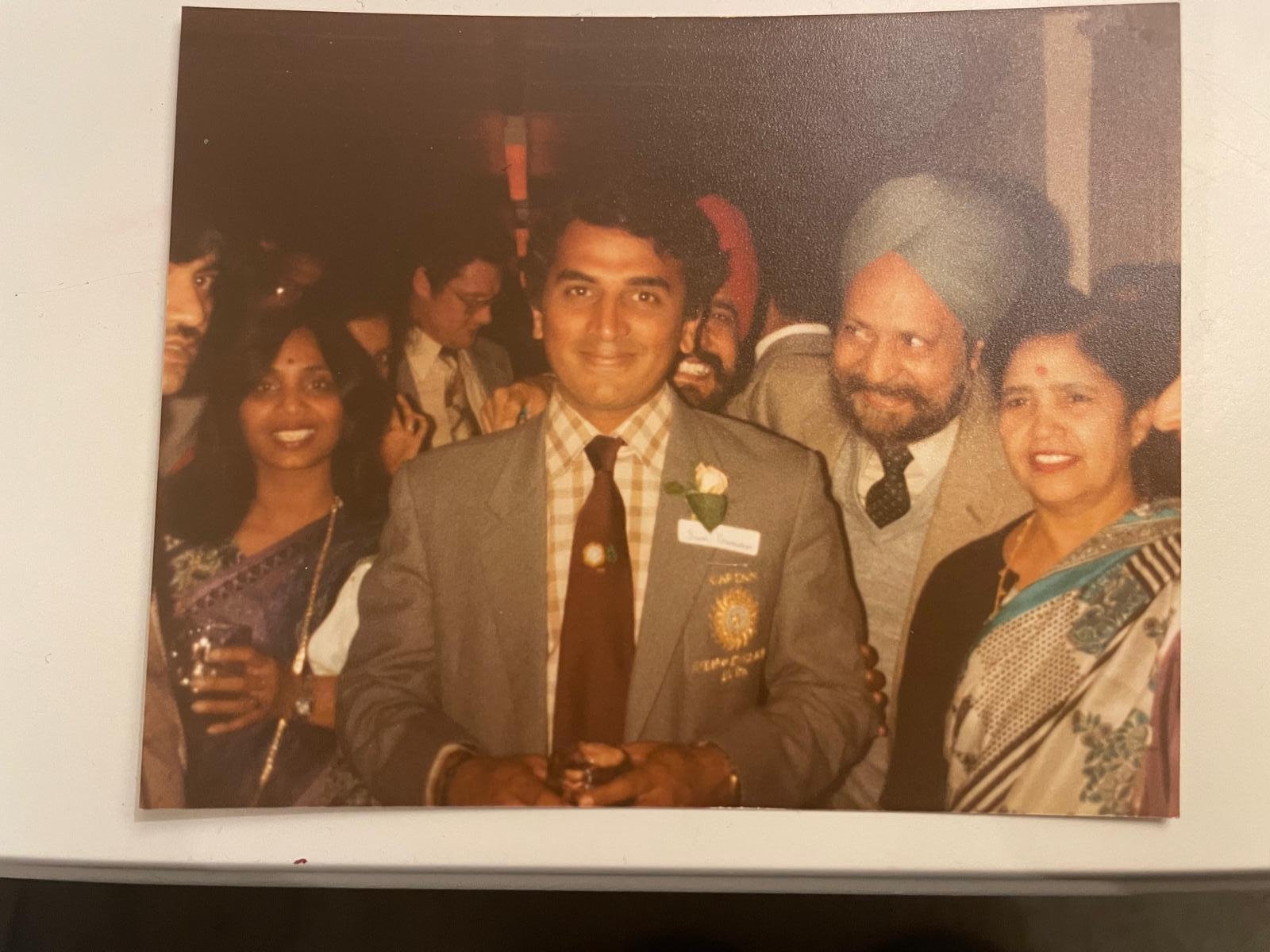
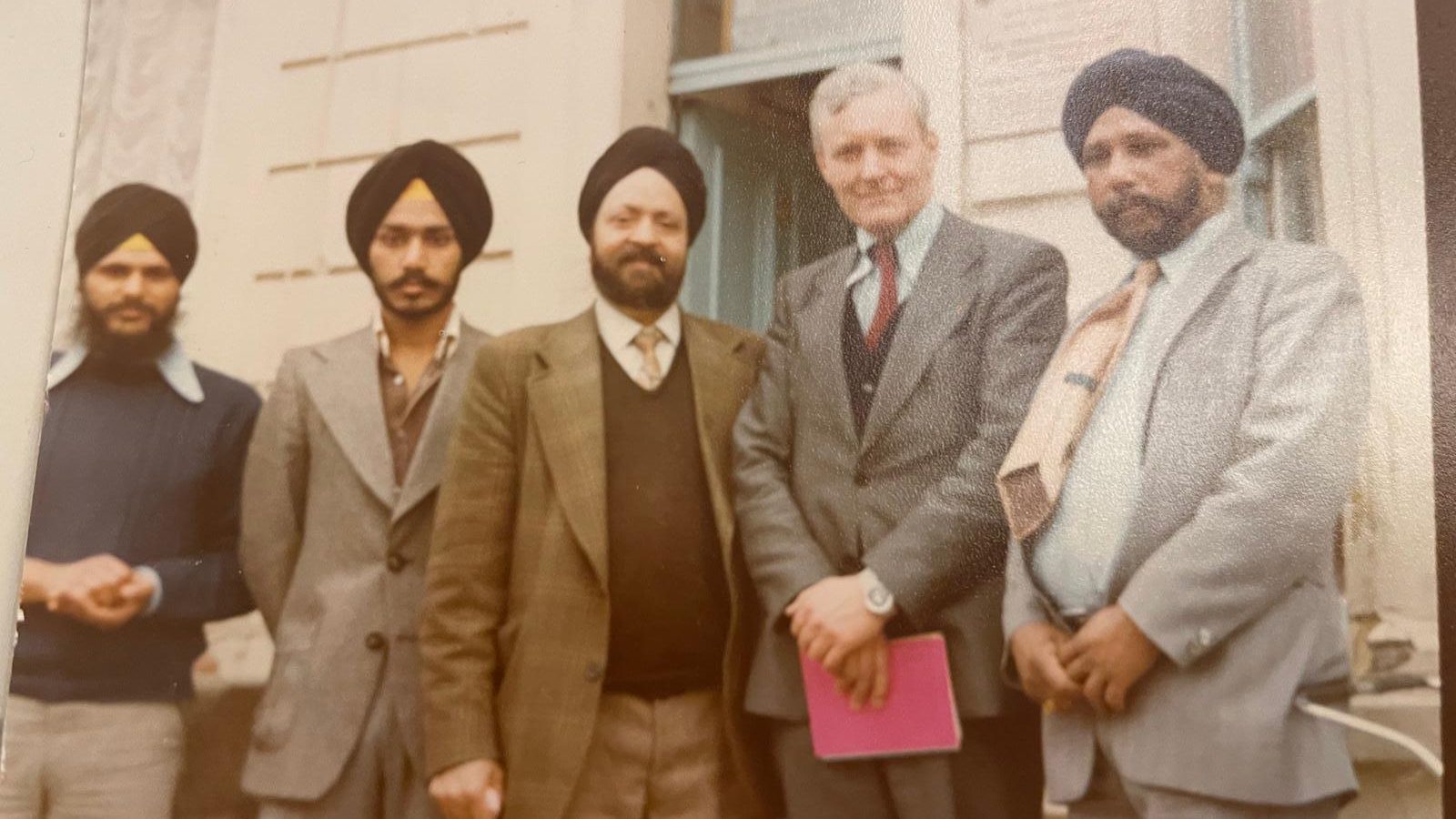
Raghbir and Sukhbir Singh (right) alongside members of the Bristol Indian Association and 1970s Indian cricket captain Sunil Gavaskar – photo: shared with permission from Raghbir Singh’s family
In truth, Raghbir may have had some difficult times on the job he didn’t care to share with the press or his family.
He was first employed as a conductor selling tickets and became a driver in the late 60s when one-man-operated (OMO) buses were introduced to Bristol and across the wider UK, negating the need for a conductor.
He did so well that there was talk of him becoming a bus inspector, ensuring other drivers kept to their routes and schedules.
But Paul remembers Raghbir turning down the job: “He felt there would be some racism because he would be above (white) people and would maybe have to report them and didn’t want to put himself in that position.”
Nevertheless, Raghbir was very happy to assume leadership positions outside of work.
A 1978 edition of the Evening Post describes him as a “leader of Bristol’s 400-strong Sikh community”.
A key principle of Sikhism is sewa, the practice of selfless service, and Raghbir served his community regularly. In the 1970s, he helped establish the Guru Nanak Gurdwara in Fishponds.
He was also an active member, and one of the few Sikh members, of the Bristol Indian Association, hosting the India cricket team for a visit while they were on tour.
And he even co-founded an Indian film club which, throughout the decade, played Bollywood movies on Sundays at the former Scala cinema on Cromwell Road in Montpelier.
To be able to show the films, which Madhu says were primarily selected to teach her generation about Indian culture, Sikhism and morality, Raghbir needed to source film reels from London.
Paul laughs as he remembers there being “so much tension every Sunday because the reel is late, it hasn’t arrived and all these people are coming”.
Although Raghbir led a busy social life, he also found time to relax.
If you were to pop into the Singh house for a visit on a Saturday in the 80s, you might catch the head of the household discovering new words in the Oxford English Dictionary (Madhu says her father “used to love reading the dictionary”), listening to classic Hindi songs on a transmitter radio or watching World of Sport Wrestling on ITV.
While it is now more common to associate professional wrestling with World Wrestling Entertainment in the US, between 1965 and 1985 British audiences were enamoured with the sport.
Around 12 million watched burly men grapple with each other every Saturday afternoon. Madhu laughs as she recalls how her father “always used to get really excited when the wrestling was on”.
Halfway through our discussion, Madhu pauses and sighs: “I wish I could just introduce him to you, just for five minutes. I wish that was possible.”
Raghbir could be a strict father.
When his son Paul won a scholarship to QEH, becoming the first non-white boarder at that school, his father agreed that, to help him better fit in, Paul could cut his hair.
This is despite the fact that kesh, the practice of keeping hair uncut, is a key aspect of Sikhism.
Paul says: “He said to me when I was 11, ‘Look, I will cut your hair, if you promise me when you leave, after seven years, you will regrow it’. The day I came out, my father sat me down and said, ‘You remember that promise?’ I couldn’t say no to him. He was not a man you could say no to. So, I regrew my hair and wore a turban. Later in life I decided to cut it again because I found the change rather challenging.”
Raghbir could also be charismatic. Paul describes his father as “very personable” and Madhu agrees, calling him “very welcoming, very warm and very hospitable”, adding “he had an aura about him”.
While writing this article, I regularly turn to look at a black and white photo of Raghbir, smiling in his bus uniform.
Raghbir has what photographers often call a ‘Duchenne smile’, a smile which connects with the eyes. His photo radiates joy. It reminds me of the aphorism Madhu says her father used to live by: “Hope sustains life”.
***
After about 20 years working on buses, Raghbir eventually retired and started working more in the family shop in Clifton Village.
By then, all four children had moved out and Raghbir and his wife Sukhbir soon decided to downsize, moving out of the five-storey house in Clifton to a smaller place the other side of the Downs in Sneyd Park.
After a few more years, when the shop became too much for them to manage, they ultimately sold it.
Life became about enjoying peace and enjoying their grandchildren when they came to visit.
Madhu says that when her children would visit their grandparents, Raghbir would often say “Look in that drawer! Look in that drawer! And they’d know there was a sweetie in there for them.”
Diabetes and recurrent heart problems meant Raghbir died, at the age of 76, in 2003.
At the time Tony Benn, the famed former Labour MP for Bristol South East, said: “He should be remembered along with many people who have played a part in advancing human liberty and dignity. I hope his life is recorded for that reason.”
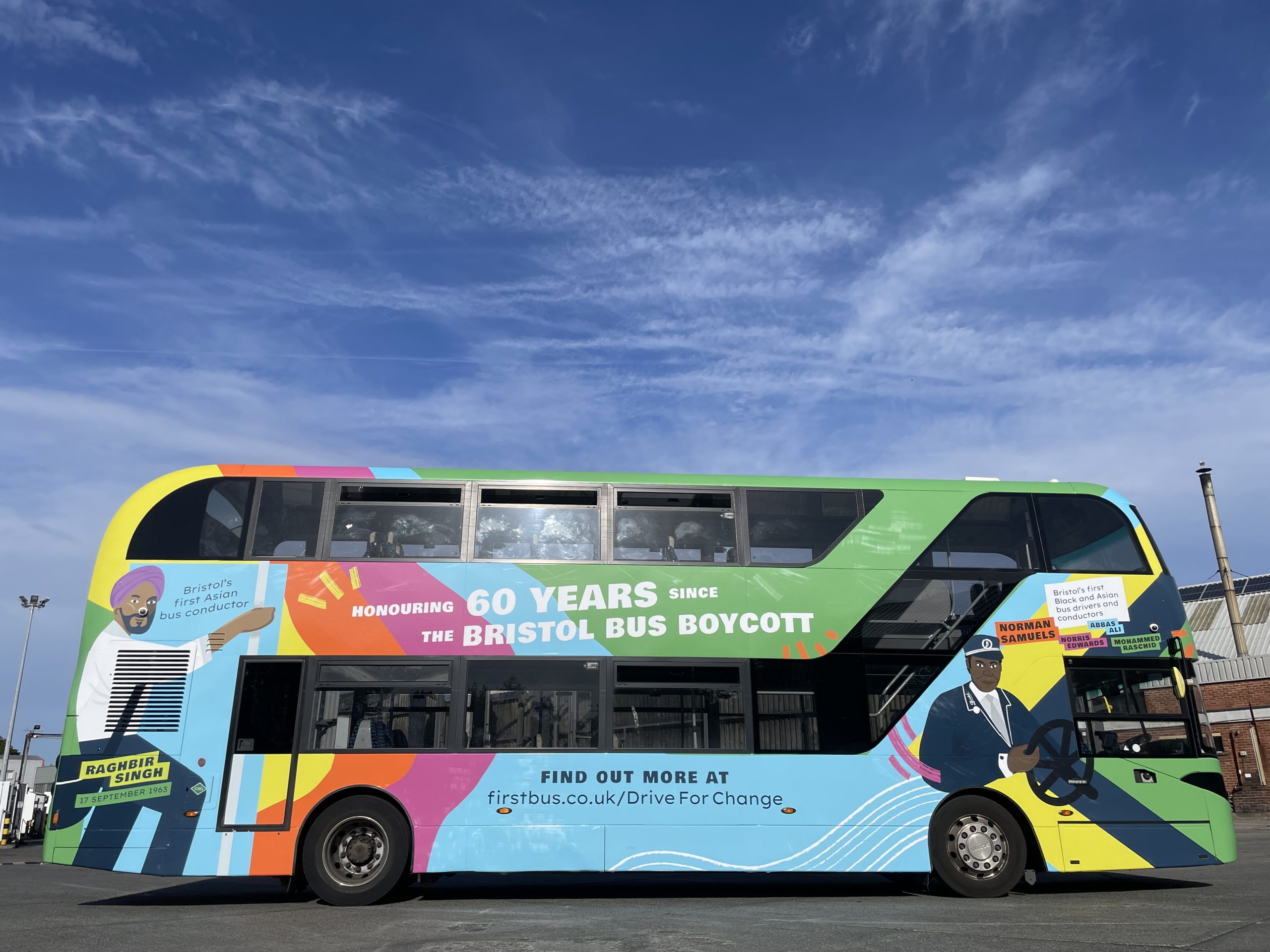
In 2023, Curiosity UnLtd partnered with First Bus in a ‘Drive For Change’ competition to recognise Bristol Bus Boycott pioneers – photo: First West England
Sukhbir died a few years after her husband. Paul says: “Him and my mother were very, very close…they had a very strong bond between them.”
Despite how much Raghbir did for Sikh and Indian communities in Bristol, he is not well remembered among younger generations.
When I started work on this story earlier this year, I travelled to the Guru Nanak Gurdwara in Fishponds to find out more about Raghbir and see if anyone had a contact for his family.
Although he had helped establish the temple, had been the temple’s secretary for several years while he was alive and had had his funeral service at that temple in 2003, very few people there had ever heard of him.
None of Raghbir’s four children, nor his many grandchildren, are based in Bristol so perhaps it is understandable that memories of him have started to fade.
I only ended up finding Paul, and then Madhu, because Julz Davis, from the Bristol racial justice think tank Curiosity UnLtd, found a community elder who was close with Raghbir and had his son’s number.
Over the past few years Curiosity UnLtd has done considerable work to ensure the Bristol Bus Boycott is not forgotten in the city.
This includes their annual Designs 4 Change competition, that invites creatives to submit designs to mark the 60th anniversary of the 1965 Race Relations Act, and their more recently announced Words 4 Change poetry competition, which invites writers to submit original poems about their dreams as inspired by Martin Luther King Jr’s famous speech.
Curiosity UnLtd hope to get one of Martin Luther King Jr’s sons, Martin Luther King III, to visit Bristol in time for the 60th anniversary too.
I must confess I was initially quite nervous about entering the Guru Nanak Gurdwara.
While there have been, and continue to be, moments of great solidarity between Black and South Asian communities in Britain, there have also been moments of great hostility.
I worried about how I, the sole Black face at the temple, would be perceived.
But when I entered, a man greeted me with a smile, asked me to wash my hands and helped me put on a head covering.
A woman came to sit next to me and chatted with me about her children and grandchildren.
We listened to prayers together.
As I reflect on that experience now, I can’t help but remember how Madhu described her father’s approach to Sikhism to me: “The biggest part of being a Sikh is doing sewa and for Papaji… doing things for the community, keeping the faith, bringing people together… that was all part of sewa.”
Main photo: Shared with permission from Raghbir Singh’s family
Entries are open for the Words 4 Change poetry competition until September 12. For more information visit www.diverseartistsnetwork.com/2025/04/26/words-4-change-poetry-competition-2025
This article originally appeared in the July/August 2025 edition of Bristol24/7 magazine
Read next:
- Human library celebrates ‘enduring legacy of the Windrush generation’
- Bristol remembers Paul Stephenson
- Civil rights pioneer Paul Stephenson honoured with new plaque
 Our newsletters emailed directly to you