Features / religion
Is Bristol a Godless city?
Jesus Saves.
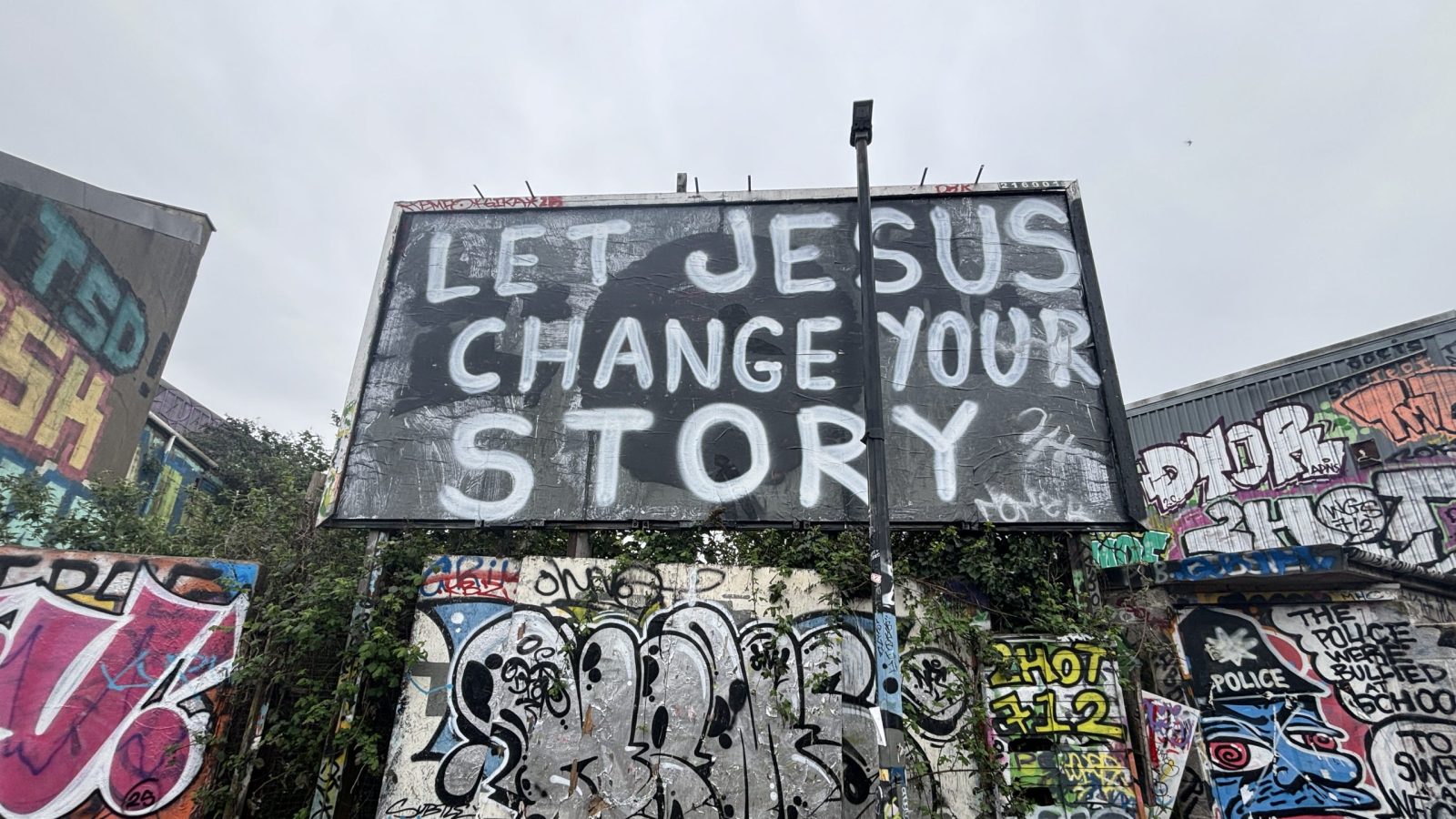
If you spend any time travelling around Bristol, you’ll be hard pressed to miss a sticker or spray paint or roller painted message which says ‘Jesus Saves’. And, if you haven’t seen ‘Jesus Saves’, you will have surely seen a ‘Follow Jesus’ or the giant sign on the M32 paraphrasing 1 John 4:8: ‘Jesus Is Love’.
The messages are on billboards, bins, bollards and streetlights. Sightings are so common that there are four different Reddit threads on the subject including one called ‘What’s with the Jesus stuff?’.
is needed now More than ever
For years, there was speculation about who was leaving these messages.
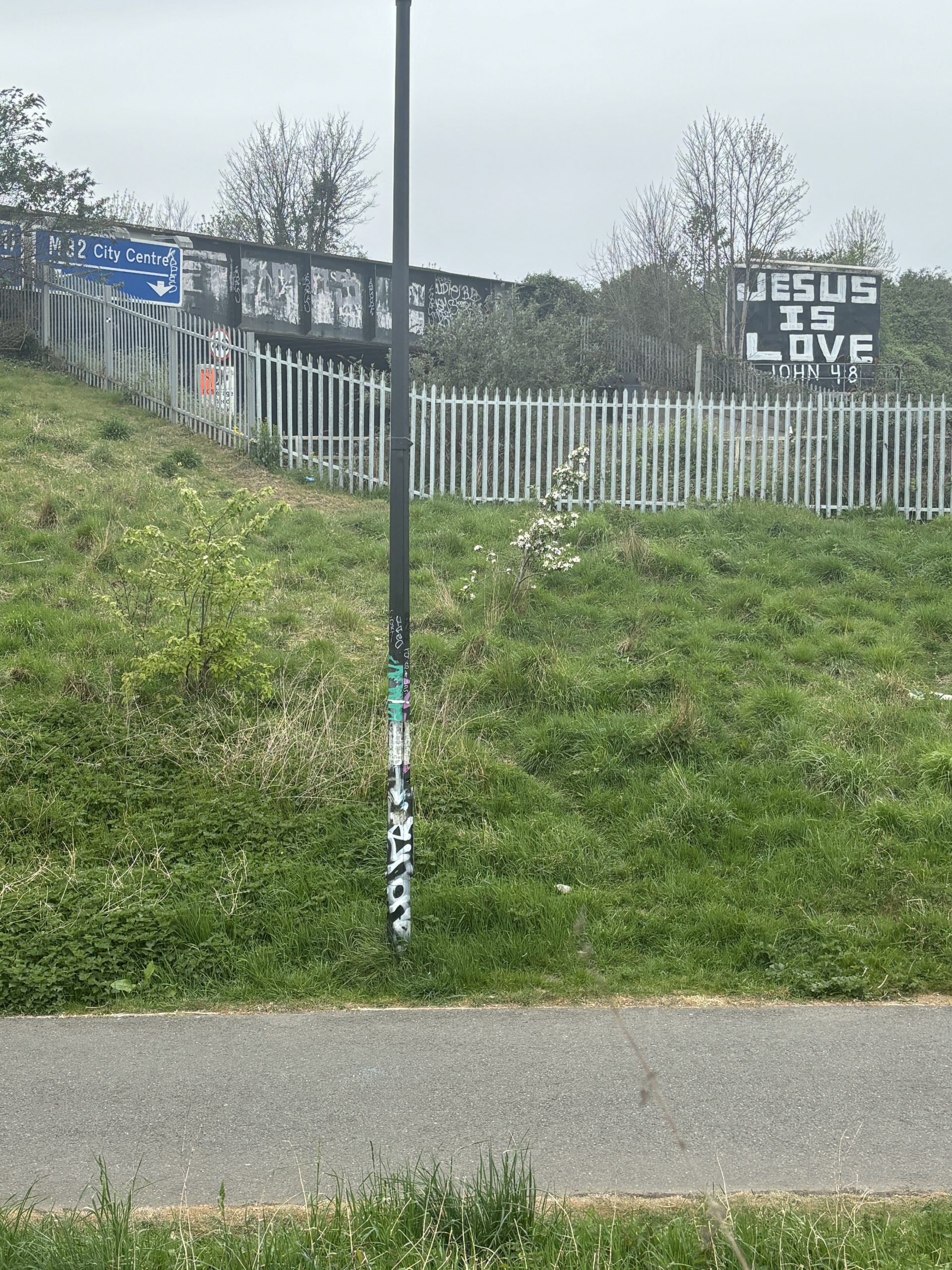
On the M32 into Bristol, it’s hard to miss the large billboard that says ‘Jesus is love’ – photo: Seun Matiluko
Some speculated it was BJ Walsh, a street preacher who went viral in 2022 for conducting a baptism in a flooded underpass near the Hartcliffe Way roundabout. But then an Instagram tag started popping up around the messages: @My_City_For_Jesus.
I reach out to the Instagram account and ask if we can coordinate via email. The accountholder says yes. So far, so good.
Then I send an email asking when would be a good time to meet. The message back reads: “There is only one way we could work this ‘interview’ out, you need to send me list (sic) of questions and will send answers to them.”
After receiving a seemingly hostile message to a straightforward question, I’m nervous about continuing the conversation.
There are some online who have said they’ve had negative interactions with the team behind My City For Jesus and on Reddit there is an account called My City For Jesus that has previously got a bit testy with some of the posters.
Still, I decide to do as he asks because I’m keen to understand what it’s like to evangelise in a city like Bristol.
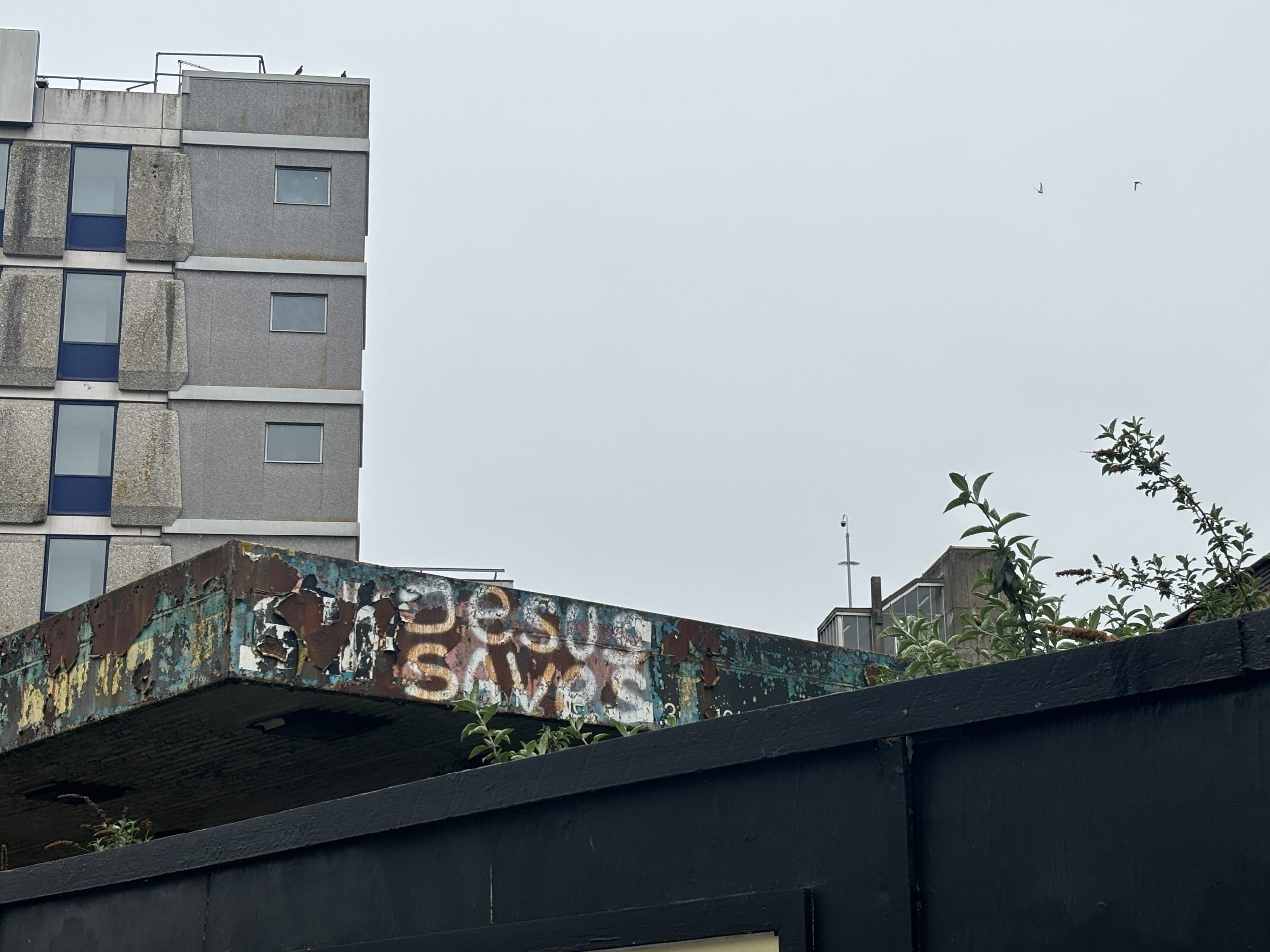
A ‘Jesus Saves’ on the way to Temple Meads train station – photo: Seun Matiluko
Bristol is a city where, in the last census, 51.4 per cent of people said they had no religion. Our city is tied with Hastings as the third least religious city in England.
They’re both behind Norwich where 53.5 per cent of people said they do not have a religion and Brighton where 55.2 per cent said they don’t.
The 51.4 per cent figure for Bristol is a significant increase from previous years.
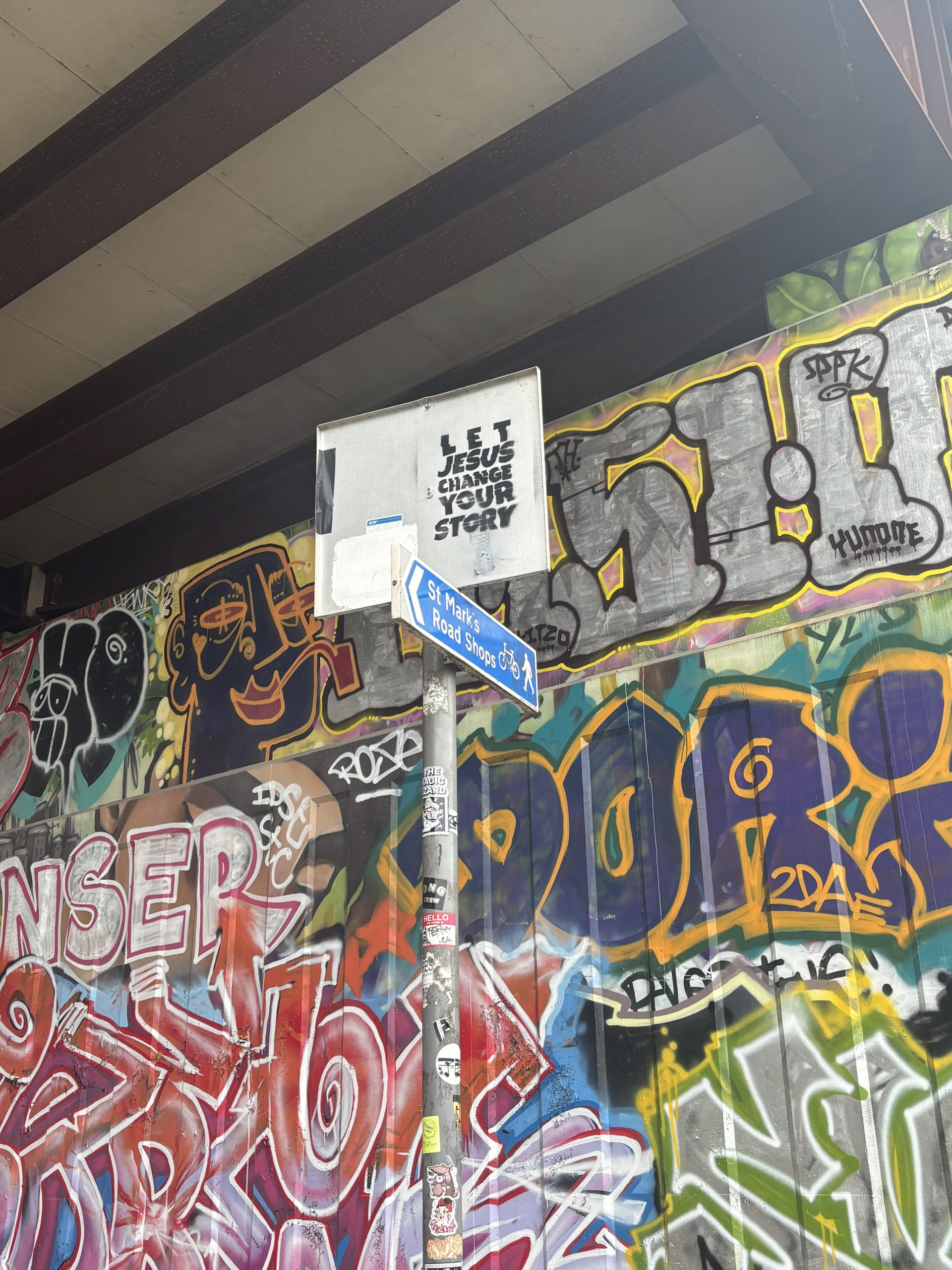
My City For Jesus have used a paint roller to spread messages across the city – photo: Seun Matiluko
In 2011, 37.4 per cent of the city said they had no religion while in 2001 24.5 per cent did.
This tracks a similar trend across the rest of England and Wales: in 2011, 32.1 per cent of the population said they had no religion while in 2021 46.5 per did.
All in all, there are currently around 4.9 per cent more atheists in Bristol than the rest of the country.
Yet, responding to my questions over email, Jurijs Silo, a Latvian national now based in Bristol, says his My City For Jesus group has received both positive and negative feedback.
He says: “You can’t ignore Jesus – you either love Him or reject Him. That’s why, when our stickers get scratched or ripped off, we say The message was delivered to the right person – the one who needed it the most.”
Silo says he became a Christian in March 2021 and ever since has tried to share God’s word. His group primarily uses street art to promote the Gospel.
He says this is because Bristol “is known for its passion for street art” but I’m also aware many groups have popped up over recent years in other European cities that use similar street art to evangelise.
Silo explains: “Jesus is the way, the truth and the life, according to the Bible (John 14:6).
“All people, not just those in Bristol, desire a happy life but many search in the wrong places – thinking that parties, alcohol and drugs can provide lasting satisfaction.
“However, these things only offer temporary relief and the craving always returns… If we want to see healthy and happy people and live in a safe community, then Jesus is the answer.”
Although 32.2 per cent of people in Bristol are Christians, making Christianity the popular religion in the city, it is clear there are many who do not think Jesus is the answer.
Nick Hooper, secretary of the Bristol Humanists, is one of these people.
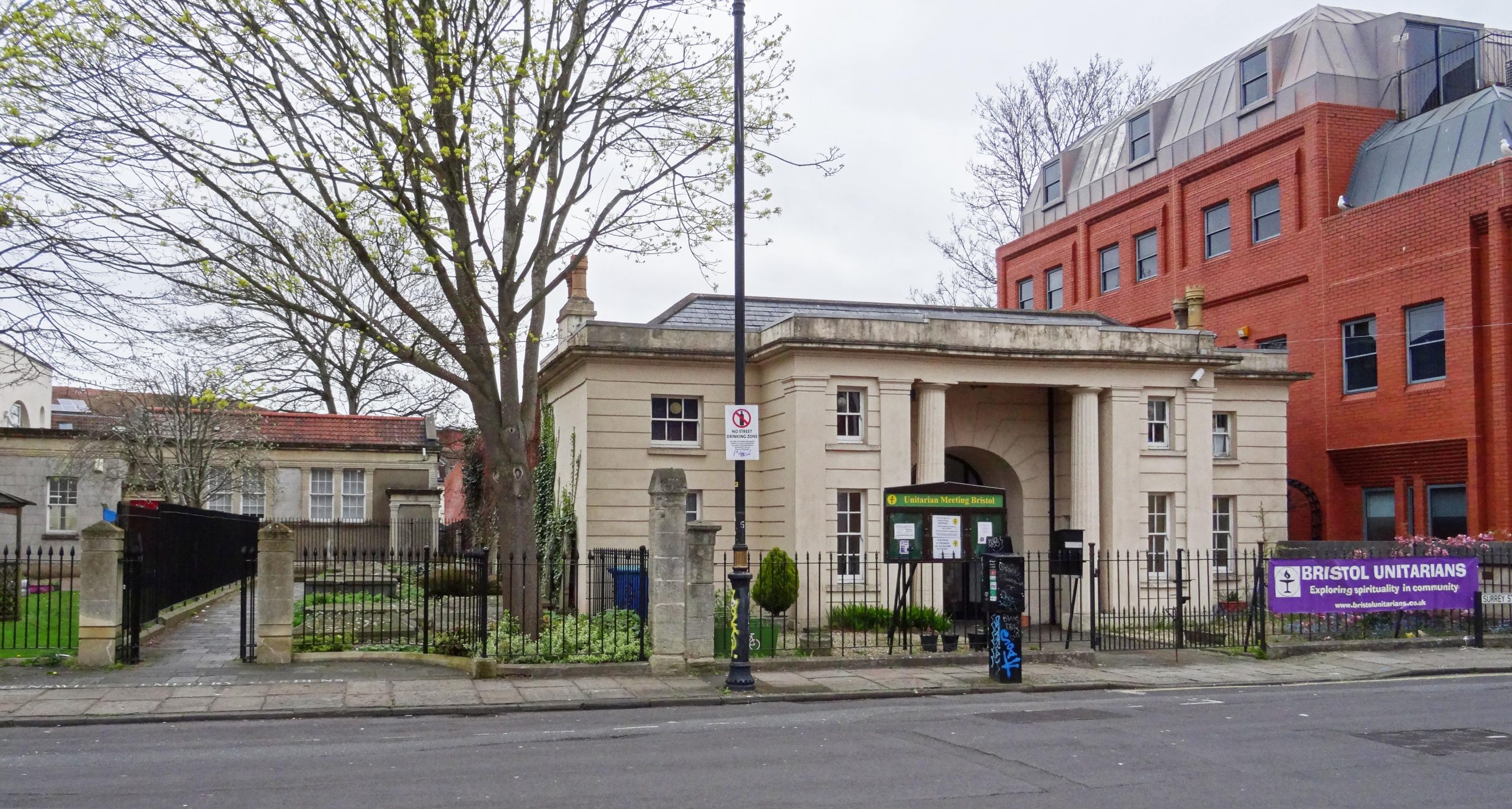
The Bristol Humanists meet at the Unitarian Meeting Hall in St Paul’s – photo: Bristol Unitarians
Humanists do not believe humans are part of a wider plan. They believe this life is the only life we have and we should base our morality on ‘reason, shared human values and respect for others’.
Hooper, now in his 70s, was brought up in a Methodist family but, for most of his life, did not consider himself to Christian in any real sense. In his adult life, he came across humanism and thought “that describes me”.
Hooper thinks the 51.4 per cent figure came about in part because “Bristol has a quite young population. And what we know is that, among young people, the prevalence of no religion is higher than the population average.”
According to the Office for National Statistics, the median age in Bristol is 33.7. The national median is 40.7.
The majority of the people who ticked the ‘no religion’ box in the last census, across England and Wales, were 32.
Westbury-on-Trym has the largest number of people aged 65 or older in Bristol and, in the last census, 39.7 per cent of people there said they had no religion.
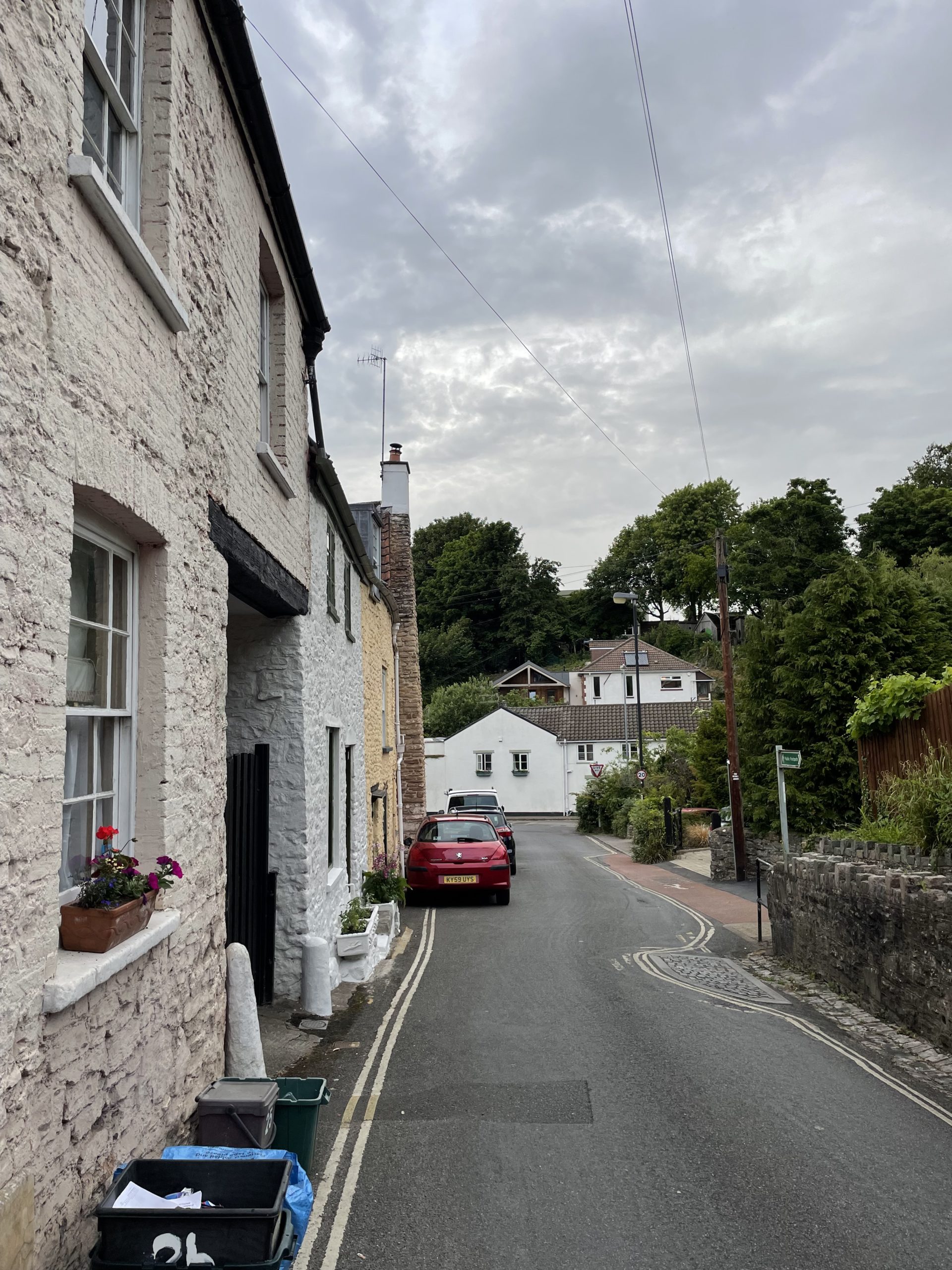
Westbury-on-Trym has the largest number of people aged 65 or older in Bristol – photo: Betty Woolerton
Hooper continues: “The second reason is that no religion tends to be much more prevalent where people are better educated. In Bristol, 42 per cent of adults have a degree, that’s almost ten per cent higher than the national average.
“The last major reason I want to say is that cities with significant minority ethnic populations…those populations tend to have a higher percentage of people who are declaring a religious affiliation.”
Barton Hill has one of the largest ethnic minority populations in Bristol: 34.6 per cent identify as Black African. 25 per cent are White British.
It is also the least atheistic area in Bristol: only 23.6 per cent ticked the ‘no religion’ box in the last census.
The biggest religious groups in Barton Hill are Muslims (46.9 per cent) followed by Christians (20.7 per cent).

Barton Hill has one of the largest ethnic minority populations – photo: Ellie Pipe
Although academic analysis on this is sparse, it does appear that while the religiosity of the white British population is trending downwards, religion continues to thrive among ethnic minority populations.
I am a Black British Christian. My anecdotal experience is that the majority of my white friends and colleagues identify as agnostic at best (aka Christian at Christmas) while the majority of my non-white friends and colleagues either identify as Muslim or Christian.
There is a Nigerian-led church in the UK with a branch in Stokes Croft called the Redeemed Christian Church of God (RCCG).
Some involved with RCCG say the church came to Britain as part of a ‘reverse mission’, to bring God back to the UK.
After all, it was European missionaries, many of whom were British, who first introduced Christianity to Nigeria.
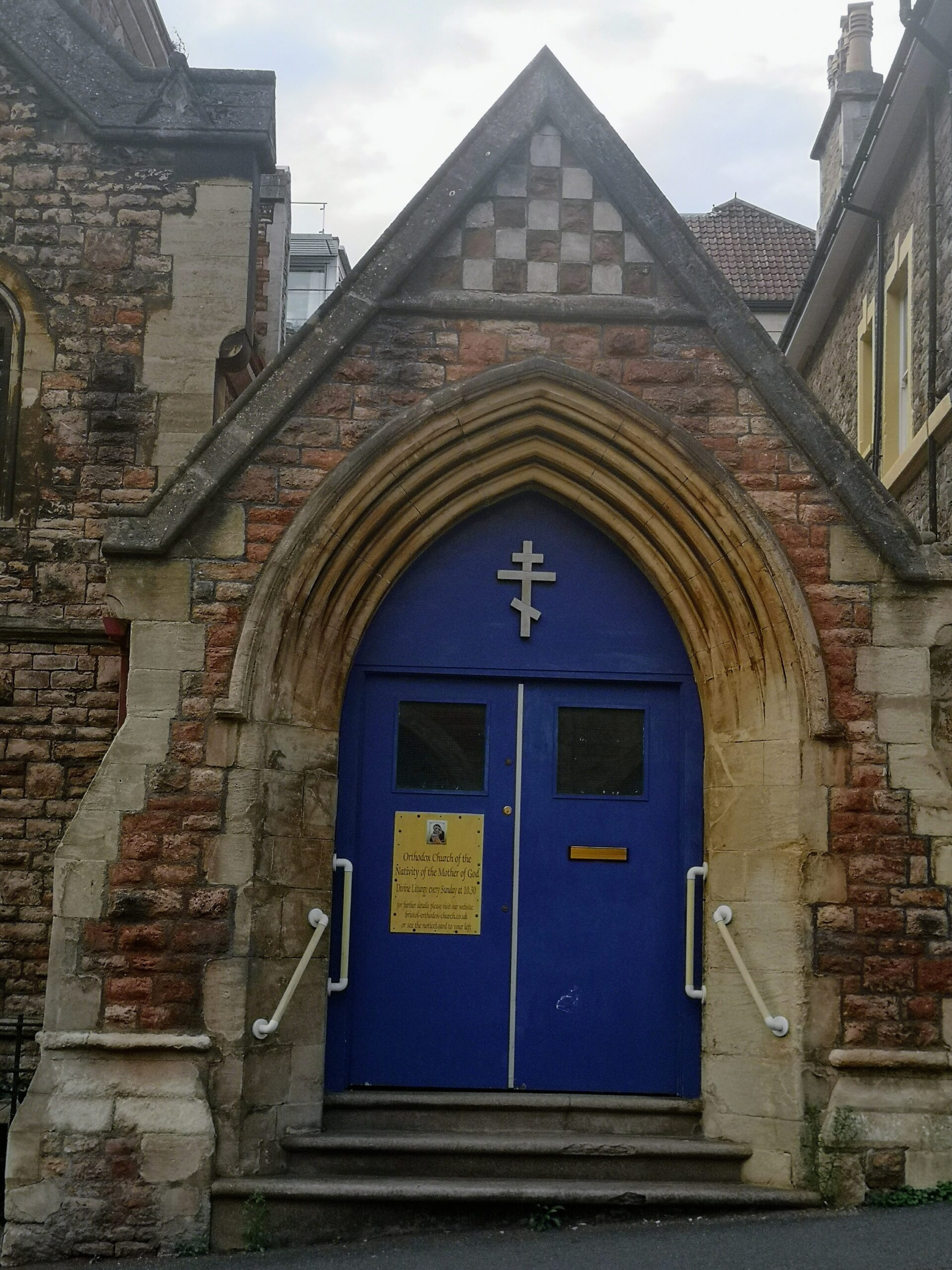
Christians are the biggest religious group in Bristol – photo: Milan Perera
Still, even if many in Bristol do not feel the need for organised religion, it seems the need to be part of a group still weighs strong in the human psyche.
At least that’s what James Williams, of the Bristol Skeptics Society (BSS), thinks: “What a lot of organised religions do super well is provide a community for the people who believe in it.
“I think when people leave religion, or no longer follow organised religion or are apostates, they require some kind of community.”
That’s why James got involved with BSS, a non-profit dedicated to ‘promoting science and critical thinking’. The group puts on monthly events where speakers come from far and wide to, as James puts it, “help us understand our complex world a bit better”.
James adds: “Especially right now, there is a renewed interest in skepticism and humanism. I think Bristol has a big culture of secular groups and communities.
“We have science cafes, obviously, the Humanist group and the Skeptics group. When you have a city that does provide spaces for secular communities, then people will come here.”
Both Bristol Humanists and BSS have grown over the past few years.
The Humanists, for example, initially had around five founding members when Nick and others decided to revive the historic humanist presence in Bristol (a 1950s group is known to have existed although no records remain today).
Now, 12 years on, the group has around 50 members.
Nick says the group would like to grow even bigger, though “not in a proselytising way”, and earlier this year they ran a five-week ‘Understanding Humanism’ course at the Folk House on Park Street.
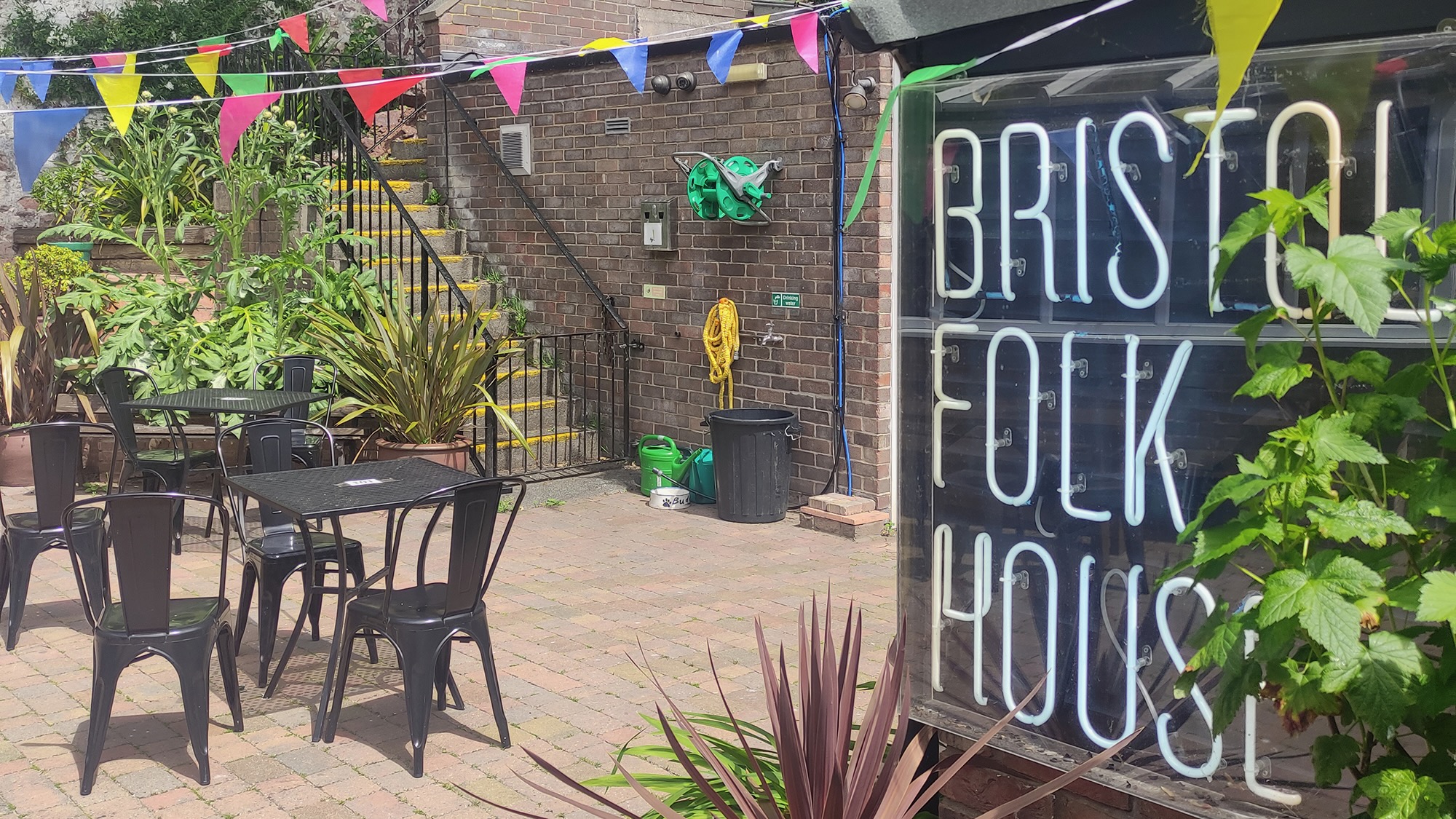
Earlier this year the Bristol Humanists ran a five-week ‘Understanding Humanism’ course at Bristol Folk House – photo: Bristol Folk House
Most of the Bristol Humanists are white and, perhaps surprisingly, are aged 50 or older.
In contrast, the Skeptics have a much younger and more diverse demographic and boast more than 800 followers on Facebook.
The Bristol Humanists tried to help set up a Humanists Society at the University of Bristol but it just didn’t take.
So, what’s the difference between a humanist and a skeptic?
For James, it’s that humanists are “more focused on living. The humanist tagline used to be good without God. This idea that people want to live a good and meaningful life without following an organized religion.
“Skepticism is maybe a bit nerdier. Skepticism is the idea of trying to examine claims about the world and using the principles of the scientific method to work out which claims are true and which aren’t.”
It’s easy to set up a false binary.
Religious people believe in God while skeptics and humanists don’t. But what about those in the middle? People who do not necessarily believe in God but still follow a religion nonetheless.
People like Tony Gordon, a key member of the Park Row Synagogue, one of two Jewish places of worship in Bristol (the other being the Bristol & West Progressive Jewish Congregation on Bannerman Road in Easton).
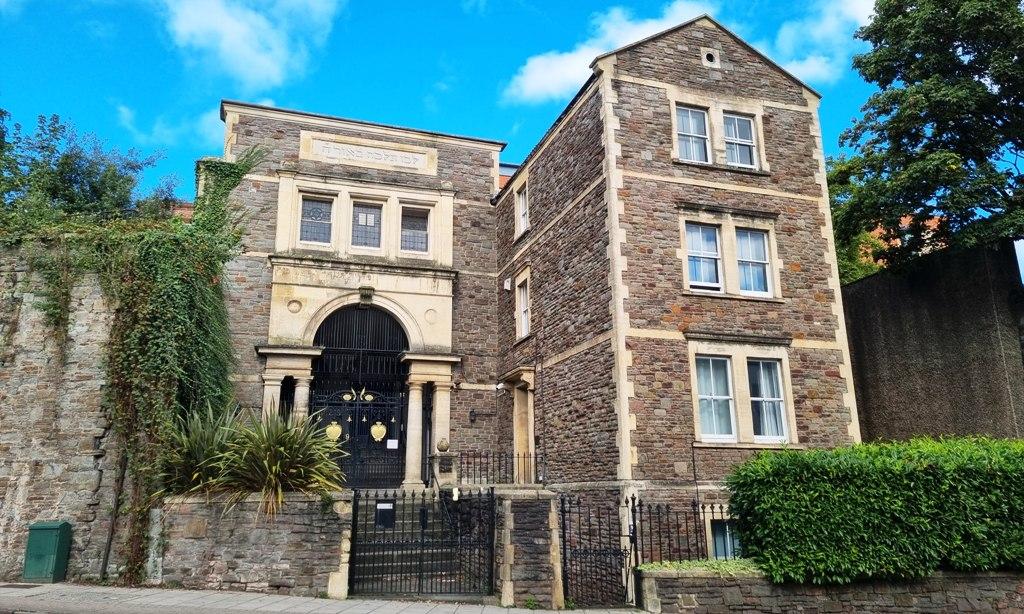
Park Row Synagogue is one of two Jewish places of worship in the city – photo: Bristol Civic Society
I come to the gate at the synagogue and stand in front of the CCTV camera, waiting for Tony to see me and let me in.
Surveillance cameras can be found at most synagogues around the country, a preventative measure to protect against the worst elements of antisemitism.
However, Bristol, as Tony later tells me, is mainly tolerant: “A week or so after October 7, the rabbi was telling me that he was stopped in the street by some big tattooed guy. He said, ‘You a rabbi?’ He replied, ‘Yes I am’. And the guy said, ‘You’re okay in Bristol, we’ve got your back’.”
Tony takes me inside, pointing out a Holy Ark which houses several medieval Torah scrolls.
There has been a Jewish presence in Bristol since at least the 12th century. Jacob’s Well, on the corner of Jacob’s Wells Road and Constitution Hill, is suspected to be a Jewish cleansing house that can be dated back to that era.
Yet, although Tony has been highly involved with the synagogue for almost 50 years since moving to Bristol from Leeds, he’s not “sure how deep” his faith is.
“It’s like insurance, isn’t it?” Tony says. “You don’t know whether it’s true or not, but you’re not uncomfortable with it and therefore accept that it might be.
“We have some members here who are deep believers. And we have some members, like me, who hope it’s all true. If it isn’t, I don’t feel that my time is being wasted.”
In an area with such a small Jewish community like Bristol – where kosher meat has to be imported every six weeks from London – it is important for ambivalent people like Tony to show up to worship.
If they didn’t, sometimes synagogue services would not be able to go ahead.
Hundreds come to Park Row Synagogue during Purim, the Jewish holiday that celebrates Esther, a Jewish queen, who saved Jews in Persia from persecution as recounted in the Hebrew Bible.
However, on most days, there are only a few regular attendees.
“We can’t have a proper service, according to Orthodox Judaism, without ten Jewish men and, on occasions, we might struggle to get the tenth person,” Tony says. “So, if I’m coming regularly, I can be counted on. Usually there are 15 to 20 men and between five and ten women on a Saturday.”
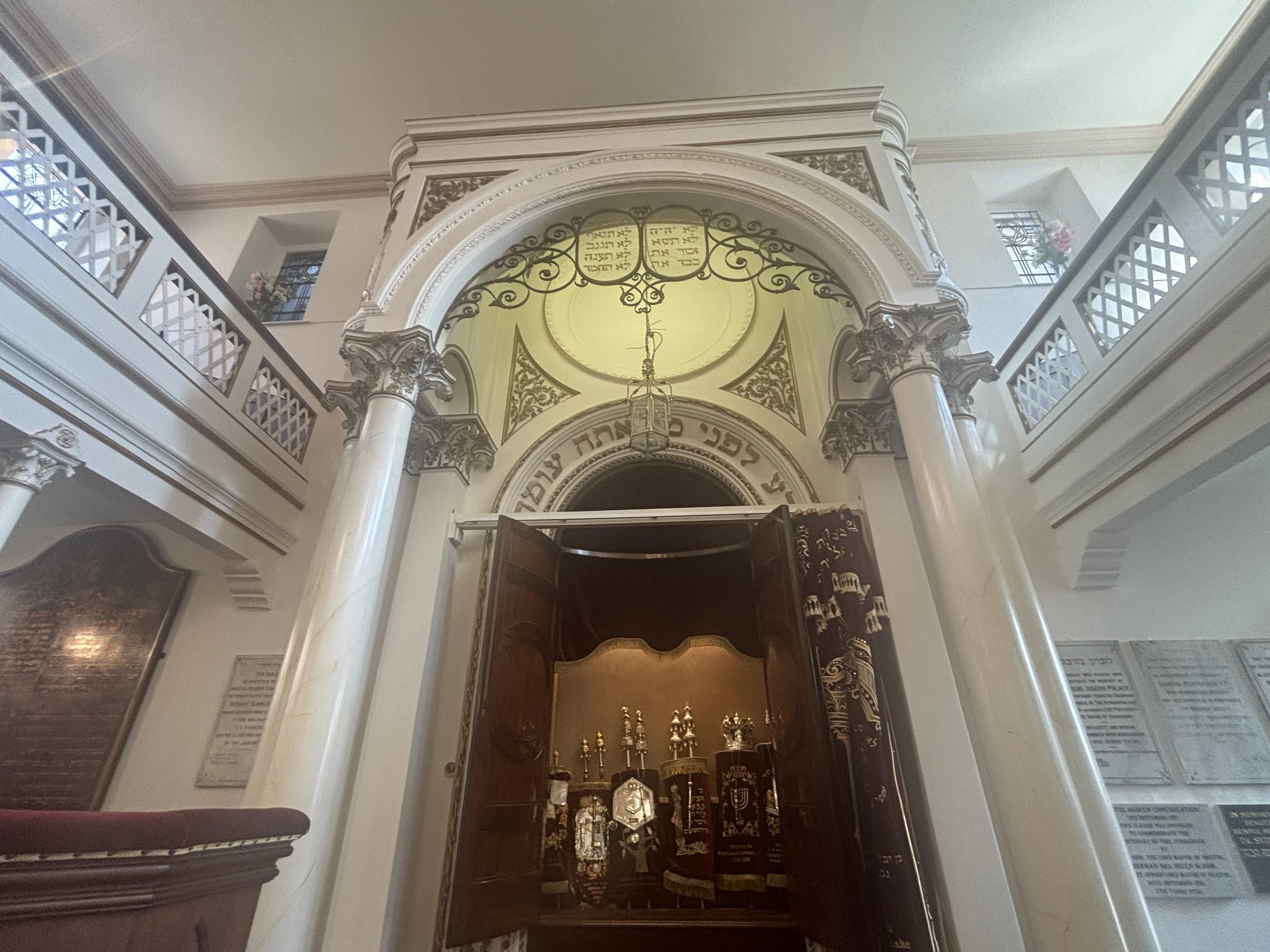
The ten commandments, expertly preserved by Bristol Blue Glass, rest above the Holy Ark at Park Row Synagogue – photo: Seun Matiluko
Tony adds: “The community was hanging on by its fingernails about 15 years ago.
“People started to leave. The kids had gone to university… were working mostly in London, that kind of thing.
“And so older people went. We lost four regular attendees to London and five couples to London and another couple to Leeds… that was a big hit in a period of only a few years.
“It’s slowly rebuilt from that, with families moving from London, because of the prices in London, and coming to work here.”
The census suggests only 0.3 per cent of people in Bristol are Jewish, making Jews the smallest religious group in the city.
But the census can also be misleading because Jewish identity is both religious and ethnic. Accordingly, on the census, some mark Jewish under the religion question while others write it in under the ethnicity question.
Nick Hooper, of the Bristol Humanists, says the suggestion in the last census that Bristol is 51.4 per cent atheist may also be misleading.
“The question of having a religion sits under a question that says, ‘What is your religion?’, Nick explains. “Our view is that if you were to ask the question separately, like ‘Do you have a religion? Yes or no. If yes, then which of the following’, that you’re more likely to get an accurate picture of whether people have a religion or not.”
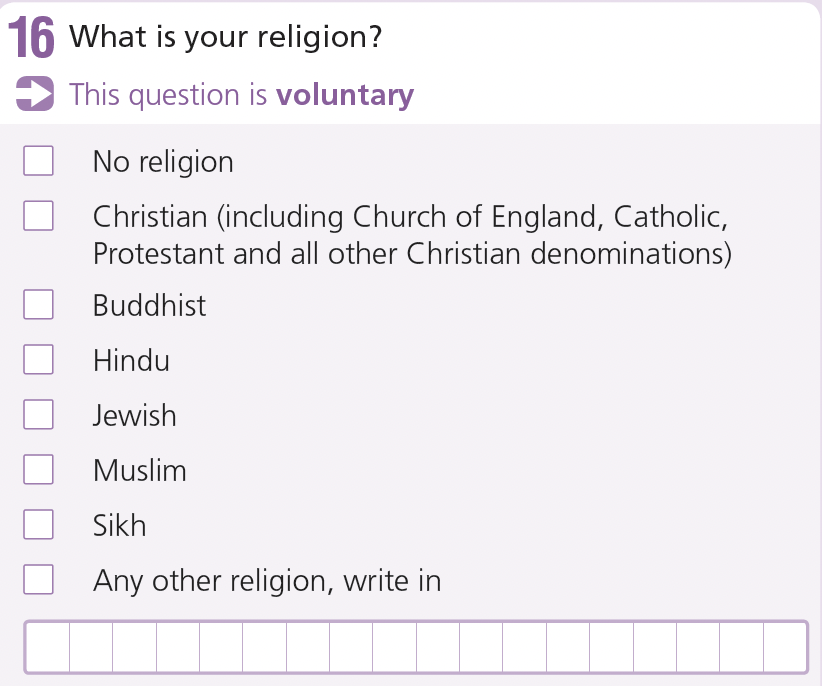
Nick Hooper says the way the census frames the religion question may lead to misleading results – image: Office for National Statistics i
Nick points to the Bristol Social Attitudes (BSA) survey, run by the National Centre for Social Research, as an example of how the question could be better framed.
There, the question is, ‘Do you regard yourself as belonging to any particular religion?’.
In 2018 the BSA found that 52 per cent of people in Britain identified as non-religious.
Still, the census has the most accurate granular information available about religion in Bristol.
And, according to the census, the most irreligious part of the city is Redland and St Andrew’s, where 65.7 per cent of people ticked the no religion box in 2021.
However, despite the low religiosity of its residents, there is an 18th century chapel in Redland, Redland Chapel, as well as a comparatively modern Church of England church only a few hundred yards away.
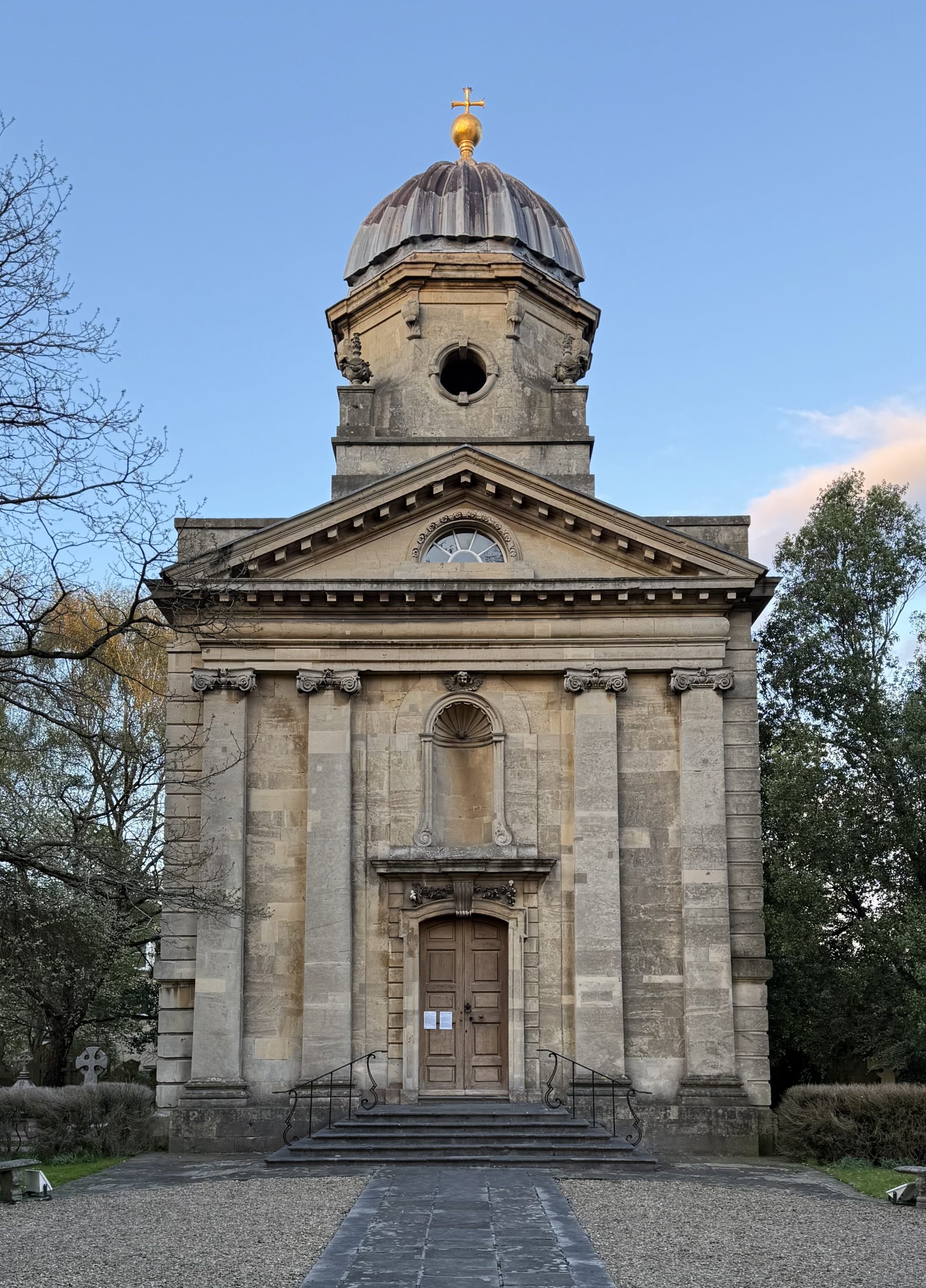
Redland Chapel is a Grade I listed building – photo: Martin Booth
Will Fairbarn, who has been the vicar at Redland Church since 2020, says he thinks Redland is the most atheist part of Bristol because of apathy, affluence and distraction.
I can’t help but be reminded of what Jurijs Silo told me via email: “All people, not just those in Bristol, desire a happy life, but many search in the wrong place.”
On affluence, Will says: “When you’ve got a lot of money, it’s very easy to fill your life with pleasant and nice things.
“You can, to some extent at least, believe you’re able to solve all your own problems… And there isn’t so much time where you sit around and go, what is this?
“And what am I doing here? And is this really working? Because there’s so much other stuff that can drown out our need for God.
“I think people just don’t have the opportunities where they stop to reflect as much.
“I think there’s probably less of those moments in life where they’re forced to because life’s hard and difficult in some of the ways it can be on a daily basis for people in other parts of the city, where there’s deprivation and different social needs.”
There must be more to it than that though, as in nearby Clifton Village 11.3 per cent fewer people (54.4 per cent altogether) ticked the no religion box than they did in Redland in the last census.
And in Hartcliffe, one of the most deprived areas of Bristol, 62.6 per cent of people said they’re not religious.
Exploring why people are moving away from religion in Bristol has brought more questions than answers.
A skeptic might say we don’t have enough evidence to form a definite conclusion.
Even the evidence base we started with, the census, is shaky. Perhaps all we – myself, Jurijs, Nick, James, Tony and Will – have to go off is anecdote.
And, as Will reminds me, anecdotes can be especially powerful: “Over the last year, we’re seeing this at churches all over the country, increasingly, more and more people are just walking off the street because they’re interested in God. It seems to be, since the pandemic, there’s been something of a shift there.
“In some ways, the most powerful thing is when people see and hear someone who is a Christian and does know Jesus, just share something…
“There’s a massive difference between a lived experience and some theories on a paper.
“Not many people get excited about arguments for and against God but I think it does something completely different when you tell something of a story.”
Main photo: Seun Matiluko
Read next:
 Our newsletters emailed directly to you