Features / 10 Questions
10 Questions: Justin Morris – ‘We are Bristol Zoo and always will be’
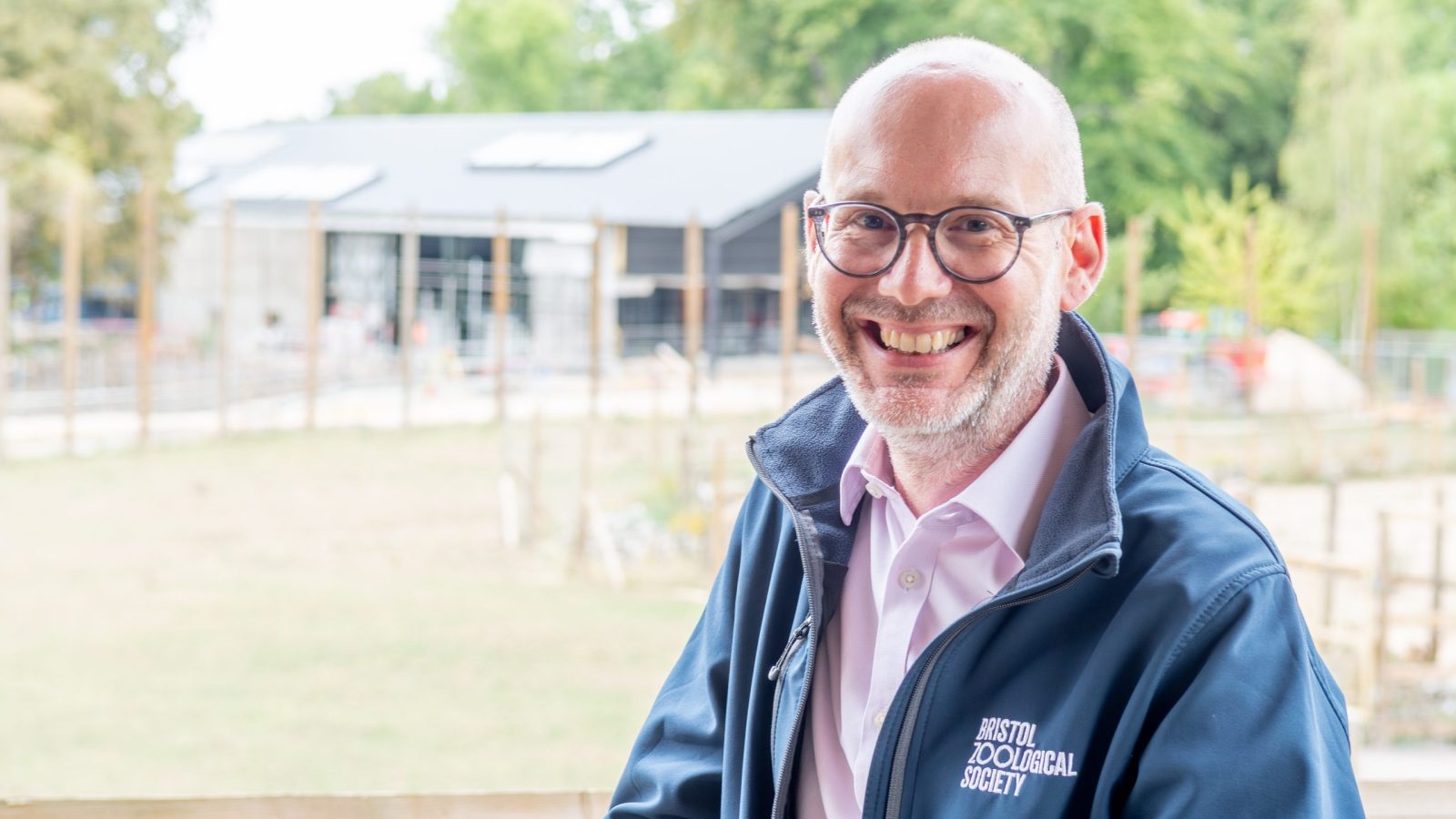
Justin Morris is the chief executive of Bristol Zoological Society.
Appointed in June 2018, he has led the conservation and education charity as it relocated from its historic site in Clifton in 2022 to its new base on the outskirts of Bristol in South Gloucestershire, known as Bristol Zoo Project.
He is the latest in the 10 Questions hot seat.
is needed now More than ever
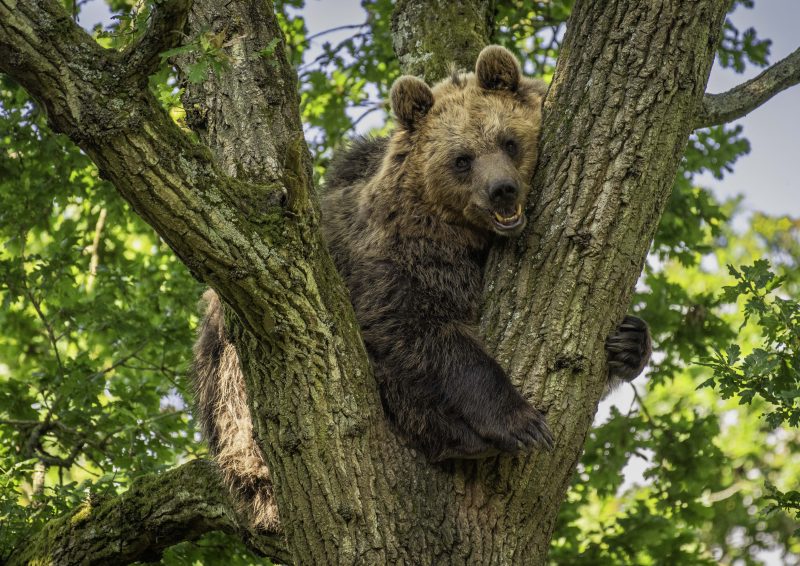
Bear Wood is an ancient woodland with brown bears, wolverines, lynxes and wolves – photo: Doug Lodge
1. What got you into your chosen career?
“It was a chance visit to the Natural History Museum as a child, that really inspired my career path. I remember being stuck in London due to heavy snowfall, on route to somewhere, and because I was a Scout my dad managed to find us a room overnight at Baden Powell House (once a hostel for Scouts and Guides). It happened to be near the museum, so we decided to visit. I just remember this overwhelming sense of awe and wonder as we walked through the entrance into the Central Hall. That memory stuck with me, and I knew then that I wanted to work in a place like that, somewhere that inspired people and created memories that will last a lifetime.
“My first role was at the British Museum, and I then moved to the Natural History Museum itself, and then Bristol Zoological Society, with a couple of brief roles in-between. Although I trained as an archaeologist the reason I’ve worked at all of these amazing places is because I loved visiting them as a child and they held a special meaning to me. It genuinely gives me enormous pleasure to see children at the zoo not just enjoying their day out, engaging with the animals and conservation, but knowing how special that experience is.”
2. What are the most rewarding and challenging parts of your job?
“The most rewarding part is definitely the people. Throughout my career I’ve worked with extraordinary people, who are incredibly dedicated to their profession. I think it’s hard from the outside to appreciate just how many different types of people are needed to run a charitable visitor destination and I really enjoy working in that diversity. Every day is different, and everyone really cares about what they do. It’s really rewarding to have the opportunity to be part of that. The most frustrating part of my role is dealing with the misinformation that’s been spread about the former Bristol Zoo Gardens site in Clifton.
“Not only have campaigners been unnecessarily personal at times but much of what has been said simply isn’t true. This is even more frustrating because as a charity, we deliberately chose to lead the plans for the next chapter of the site, when we could have simply sold it to a developer. We wanted to ensure the feedback we received through the public consultation was taken on board, in particular the desire for people to still be able to access the gardens. So, it’s really frustrating when the fact that the gardens will be freely accessible for the first time in their history, is often lost.”
3. What does Bristol Zoo Project mean to you?
“So much! We’ve got a really exciting opportunity to do something unique at Bristol Zoo Project which hasn’t been done before. Not only are we going to be creating a new conservation zoo for Bristol and the west of England, we also want to redefine what modern zoos are all about. We can improve animal welfare, with larger more natural habitats and create a visitor experience that feels more like a visit to a nature reserve than a traditional zoo. Who better to do that than the oldest zoological society outside a capital city, anywhere in the world? This is a chance for us all to make a real difference for conservation. Plus of course, it’s also a brilliant day out for the whole family.”
4. Tell us about your favourite part of Bristol Zoo Project?
“Well, at the moment it’s definitely Bear Wood. It’s a completely different kind of zoo experience where you feel like you are in the animal’s space, not the other way round. It’s home to our brown bears, wolves, lynxes and wolverines and set within seven acres of ancient woodland, with visitors following a treetop walkway through it. You get to appreciate the animals and the woodland in a way that really draws you in and it’s a thrill looking for and spotting an animal rather than it just sitting there waiting for you. I’ll never forget giving a TV interview when Bear Wood opened in 2019 and a bear climbing a tree right behind me during the interview, about ten feet from where I was standing. Everyone just stopped talking and was completely captivated by this extraordinary animal in its natural environment.”
5. Do you still feel the zoo is as connected to Bristol, seeing as it is now located in South Glos?
“Absolutely. We are Bristol Zoo and always will be. We still have a Bristol postcode, we’re right next to Cribbs Causeway and around 30 per cent of our visitors come from Bristol – as was the case at Bristol Zoo Gardens. We are really proud of our history and will never change our name – we will always be a zoo for Bristol. And honestly, I don’t think many people in Bristol really distinguish between the city of Bristol and South Gloucestershire, certainly not in north Bristol.”
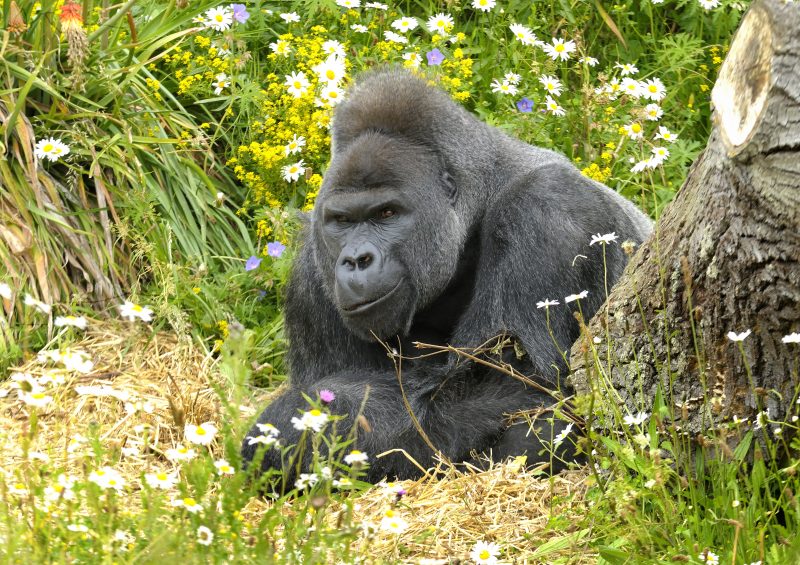
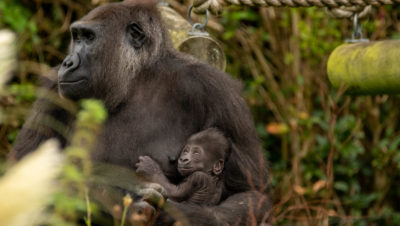
Jock is an elderly, critically endangered Western lowland silverback gorilla at Bristol Zoo Project – photo: Bristol Zoological Society
6. What do you miss most about the old Bristol Zoo?
“The old herbaceous border was a special feature of the old zoo, and when we first moved, I did miss that. The gardens are what give the Clifton site its character. I am a keen gardener and always enjoyed the plants as much as the animals. We’ve now moved the herbaceous border to Bristol Zoo Project, transplanting the plants and installing the famous Mute Swan bronze sculpture in our Sanctuary Garden, so it’s been great to be able to see it recreated.
“To be honest, one thing I don’t miss, is the small space at the Clifton site. It simply didn’t work for our animals – the enclosures were small and tired, mostly repurposed from one animal species to another, and not how a modern zoo should be. But I do think the history of the site is important and special – and lots of people, including myself, miss that. If our plans go through then it will be opened as a public garden, so everyone can still enjoy that aspect of the site. Hopefully it won’t be too long before this will happen.”
7. You’ve recently been slightly more vociferous about the campaigners attempting to prevent housing on the Clifton site. Why the change in tone?
“Over the last few years, we’ve seen more and more misinformation about our plans for the old zoo – when in fact, the previously private space will be open to the public, for free, for the first time in its history. Some of the campaigners want the Clifton site to reopen as a zoo – but I don’t think small inner-city sites are right for zoos in the 21st century. Others don’t want new housing on the site, which I also don’t think is right given the housing crisis across Bristol. Every community needs to play its part to address this.
“Finally, we’re a charity, and instead of spending funds on conservation and education, we’re spending them defending legal challenges from campaigners in Clifton, who in turn are stopping us developing Bristol Zoo Project because we haven’t yet been able to complete the sale of the old site. I know all the staff and volunteers at the zoo have become more frustrated over time with what the campaigners have said, which is why the tone has changed.”
8. If the sale of the site cannot happen, then what?
“We’ve already exchanged sale contracts on the Bristol Zoo Gardens site with independent housebuilder Acorn Property Group. We won’t sell it until we have a planning permission which is free of any legal challenge by campaigners – which may take some time – but we’ll get there. We’re committed to our plans.”
9. What is your most optimistic outlook for the future of Bristol Zoo Project?
“That is a wonderful question! We are already on the way to delivering our new plan for Bristol Zoo Project, with the completion of the first phase next year when our new African Forest habitat will open. We have seen visitor numbers grow considerably since the pandemic, so I am really excited to see even more people visit next year, not least to see our much-loved gorillas.
“But that is just phase one, and we’ve got so much more that we want to deliver after this and I think by the time we’ve finished we’ll have created something really special and unique to Bristol, that everyone can enjoy and be proud of. There isn’t anywhere else delivering the combination of education courses from pre-school to PhD, leading conservation fieldwork in the UK and overseas, and engaging visitors with extraordinary animals and all these activities, in a completely new way. It is an extraordinary place with incredible potential to make a real difference for people and wildlife.”
10. A zoo in Denmark has recently asked for unwanted pets to feed its predators. Is this something Bristol Zoo Project would ever consider?
“And that is a tricky question! The zoo in Denmark actually said that if members of the public needed to euthanise chickens, rabbits, guinea pigs or horses (which sometimes pet owners have to do when a vet tells you it is the best thing for the animal) then the vets at the zoo would perform the procedure and the carcass would be fed to the animals.
“Environmentally, it is sensible. Instead of pet owners burying or incinerating the animal, releasing CO2 , it stays in the food chain, which is what would happen in nature! However, I can’t see us doing something similar at Bristol Zoo Project. In the UK, we feel very differently about our animals and pets. And we wouldn’t want to implement a scheme which upset our visitors and supporters.”
This article originally appeared in Bristol24/7’s November/December 2025 magazine
Main photo: Bristol Zoo Project
Read next:
 Our newsletters emailed directly to you