Music / Reviews
Review: Steven Wilson, Colston Hall
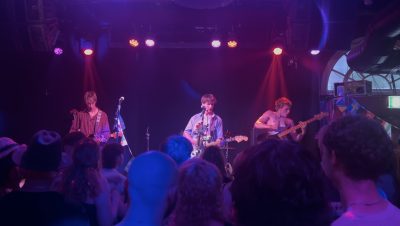
The most talented and creative musician at work in Britain today, Steven Wilson understandably resists any attempt to preserve him in aspic as a retro purveyor of ye olde progressive rock – even though it’s the prog audience that has taken to him with the greatest enthusiasm. But he also has a keen awareness of his music’s roots, as evidenced by his magnificent audiophile remixes of classics from the likes of King Crimson, Jethro Tull, Gentle Giant, Caravan and Yes. And in tonight’s tribute to the late David Bowie, of which more shortly, he observes that the Dame’s death marks the final closing of a chapter in which it was possible for artists to experiment in the mainstream. Today, all the most interesting music is to be found on the periphery, where Wilson himself has carved out a highly successful niche. There’s one other way in which things were indisputably better in the Good Old Days. Everyone has heeded Wilson’s polite request not to use mobile phones or cameras, so instead of an audience comprising a sea of supine punters experiencing his rich multi-media show at one remove through their tiddly screens, the Colston Hall is full of people who are actually paying attention.
There’s certainly plenty for the eyes and noggin to take in during this lengthy two-part performance. The first half comprises Wilson’s brilliant Hand. Cannot. Erase. album played in its entirety. Loosely inspired by Carol Morley’s 2011 drama-doc Dreams of a Life, these haunting vignettes of isolation and dislocation are brought to life with complementary visuals, ranging from a lengthy opening tower block time lapse shot to Jess Cope’s superlative animation and Youssef Nassar’s video work. As you’d expect from Wilson, the sound is absolutely stunning and the band note-perfect, despite guitarist Guthrie Govan and drummer Marco Minnemann being AWOL with The Aristocrats. Their shoes are amply filled by expat Bristolian Dave Kilminster (of Roger Waters’ band) and Craig Blundell.
Hand. Cannot. Erase. is revealed as a work of impressive diversity and suitably progressive envelope pushing, from the atypical spoken word of Perfect Life to the heavily percussive Home Invasion, which returns to the theme of the emotionally deadening effect of technology that has fascinated Wilson ever since Fear of a Blank Planet. But the centrepiece – or “absolute nadir of an hour-long descent into misery,” as he puts it with tongue firmly in cheek – is Routine, in which a woman retreats into denial after a tragedy (undisclosed in the song but made explicit in Cope’s animation). It’s a duet between Wilson and Israeli singer Ninet Tayeb on record, but since he’s flown her in to perform on this tour it seems only fair that she gets to sing the bulk of it on stage, delivering a spine-chilling cathartic bellow at the song’s climax.
After a 20 minute break, part two opens with the macabre Drag Ropes from Wilson’s Storm Corrosion collaboration with Opeth’s Mikael Akerfeldt, accompanied by that splendid shadow puppet animation, and Open Car, which showcased his former band Porcupine Tree at their heaviest. He also unveils some material from his upcoming interim 4 1/2 album, notably the epic My Book of Regrets.
Describing the last six months as “a shitty time for music” following the deaths of Chris Squire, Lemmy and Bowie, he reminds us that he once wrote a song with the same title as the one with which the former Ziggy Stardust orchestrated his demise as a piece of performance art. Spookily, too, it was about a character named David. So the exquisite Lazarus is unexpectedly released from back-catalogue purdah.
Equally surprising is Wilson’s decision to open the encore with a Bowie cover – as he’s hardly noted for covering anything – with Ninet Tayeb returning to take the lead vocals on Space Oddity beneath a giant image of the former Bromley boy in his manicured 80s pomp. Porcupine Tree’s The Sound of Muzak tackles another of Wilson’s recurring concerns, though his annual State of the Music Industry Address is somewhat foreshortened when a show of hands reveals that a much higher proportion of this audience than he anticipated is under the age of 30. The Poe-esque melancholic prog of The Raven That Refused to Sing closes the show brilliantly and gets a well-deserved standing ovation. Even though a technical glitch froze Jess Cope’s animation about two minutes in, Wilson has set the Gig Of the Year bar impossibly high.
 Our newsletters emailed directly to you