Music / Reviews
Review: Nora Brown & Steph Coleman, St George’s – ‘To begin with, the crowd is patient’
Brìghde Chaimbeul settles herself on a stool in front of an array of pedals, a black clad figure in silhouette against beams of light piercing through smoke-machine haze.
She begins to play her small pipes without a word to the audience – no standing on ceremony. As the drone fills the considerable space of St George’s main hall and envelopes it in a mournful dirge, it becomes clear that the music is the ceremony.
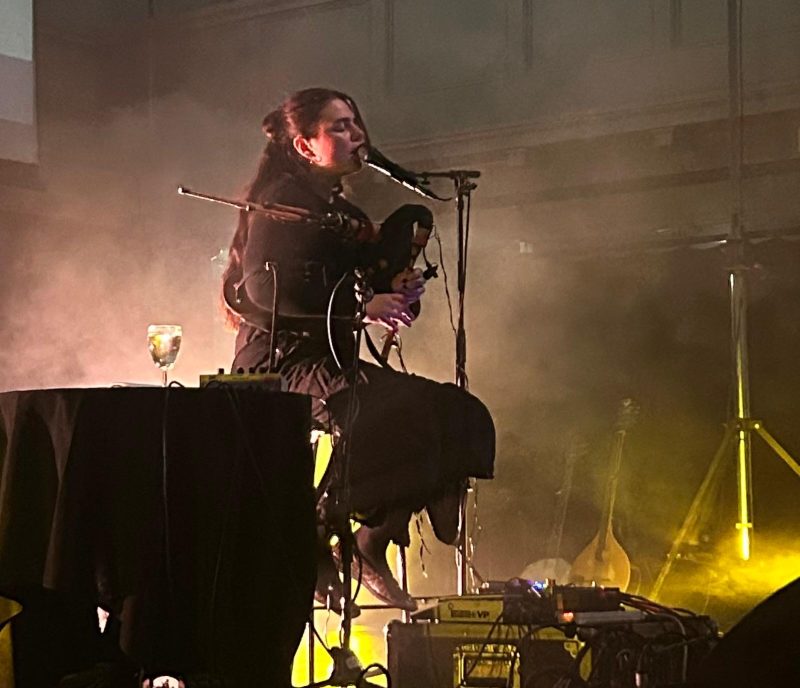
Smallpipes player Chaimbeul is building new and unique sounds from traditional foundations
On the screen behind her there is a close-up black and white image of a veined slab of stone, which appears to be static until a trickle of water moves slowly over it, emphasising the elemental power of Chaimbeul’s music.
is needed now More than ever
The hypnotic tension holds us captive as it builds, and eventually breaks. The second piece starts with trilling arpeggios, before she begins to sing in Scottish Gaelic.
The moment her voice comes in is like sunrise breaching the crest of a hill. She is illuminated in yellow and the low light throws long shadows on stage. In the projections behind her, shadow puppets are now appearing on the stone.
Chaimbeul is at the forefront of the most exciting of folk music. She takes a traditional form and an intensely traditional instrument and brings a new edge to it.
She weaves in different genres, taking the audience through slow motion reels to something as close to pop as the smallpipes will ever get in She Went Astray, with its bouncy vocals and pressing tempo.
Towards the end she says “it’s dance time”, although sadly this show is very much seated, and plays something that feels like euphoria on a dance floor at 4am. Mesmerising spirals of notes gradually shift out of phase, always underpinned by the tension of the drone and never quite resolving.
Her music is throbbing with vitality. As the set comes to its conclusion, we are pulled back to earth with a jolt, blinking away visions as the audience thanks her with thunderous applause.
View this post on Instagram
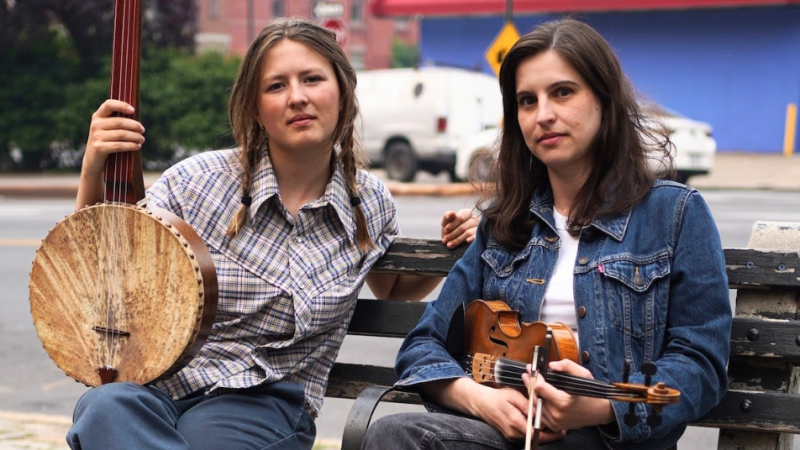
After the interval is Nora Brown and Stephanie Coleman playing their own brand of old-time Americana on banjo and fiddle.
For the first song they are joined on stage by Brìghde Chaimbeul. It is a generous gesture to share the limelight of their first song, but perhaps it is also an attempt to bridge the gap between the very different genres of folk they represent.
Chaimbeul brings a depth to their sound, and it is a wrench when she leaves the stage.
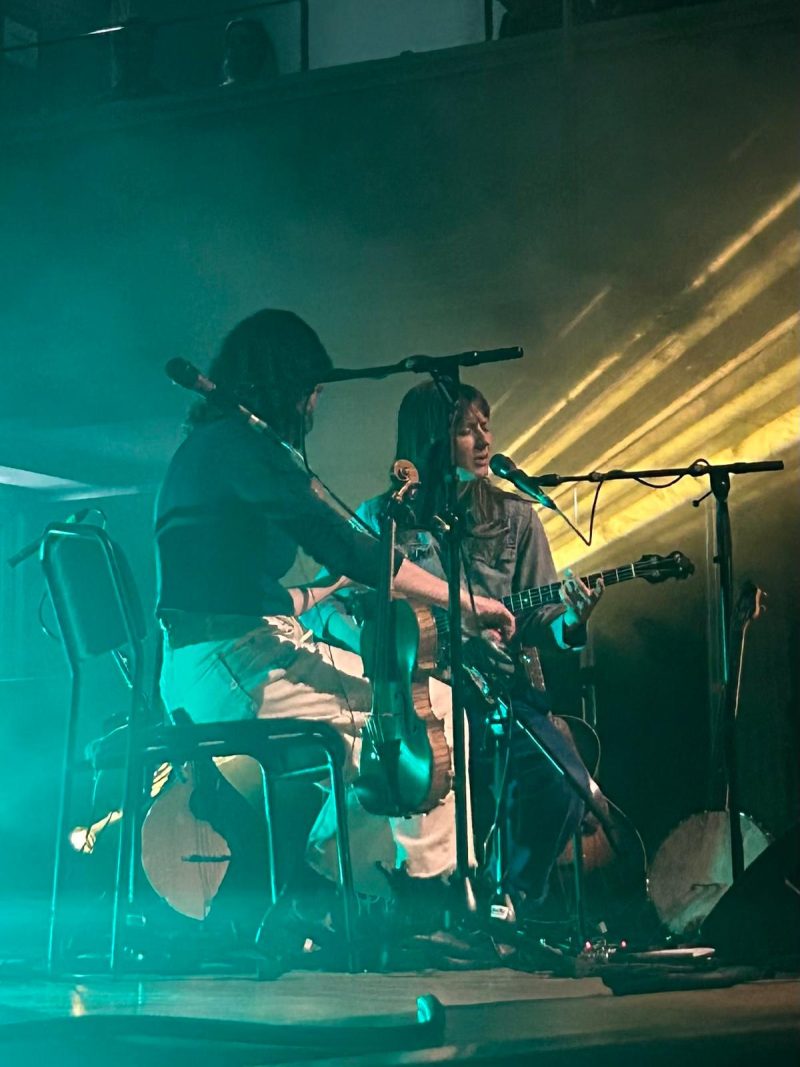
There is an unusual disconnect between the support and headline act
Brown and Coleman have a sweet nostalgic charm, but it has a tendency to tip over into the saccharine.
The best moments are instrumental, when the banjo and violin seem to dance around each other with effortless grace. There are some gorgeous harmonics, crunchy chords and a sweeping melancholy, but when the vocals come in the spell is broken and the synergy between them is sent off kilter.
To begin with, the crowd is patient and keen to urge them on. When the tempo occasionally picks up there are a few encouraging “ye-haws!” and some tentative foot stamping and knee slapping, but these moments are short-lived.
The duo don’t command the avid attention of the audience that Chaimbeul enjoyed – in fact there seems to be a steady stream of people leaving from a few songs in.
Perhaps it was an error in the programming to put something as enticingly dark and experimental as Chaimbeul alongside the relatively straight-laced singer-songwriter old-time duo. The heavy/light juxtaposition could be great, but tonight it just doesn’t land.
There’s no encore and the crowd clears quickly, although I bet more than a few wish they could hear more from Brìghde Chaimbeul.
All images: Lucy Langley-Palmer except main image: Nora Brown + Stephanie Coleman
Read next:
 Our newsletters emailed directly to you