Music / Reviews
Review: Cara Dillon, Downend Folk & Roots – ‘Languid grace, tenderness and enormous fun’
Tonight, Bristol is sweltering under a climate-change sky. It’s sticky and oven-hot. People slump in the Christ Church chairs, enjoying the tiniest bit of respite, hoping for comfort.
It’s fortunate, then, that Cara Dillon seems to have her own, in-built, air-conditioning system. She is a gentle breeze, the soft breath from the North (Northern Ireland in her case).
This feels like a special night for Downend Folk & Roots. It’s absolutely packed, for a start. But it’s a validation too; there have been plenty of big folk musicians here over the years but few of them are bigger, or better, than Dillon.
The number of Folk Awards that she’s been nominated for and won is extraordinary but, as soon as she sings, entirely understandable. Her voice is simply glorious.
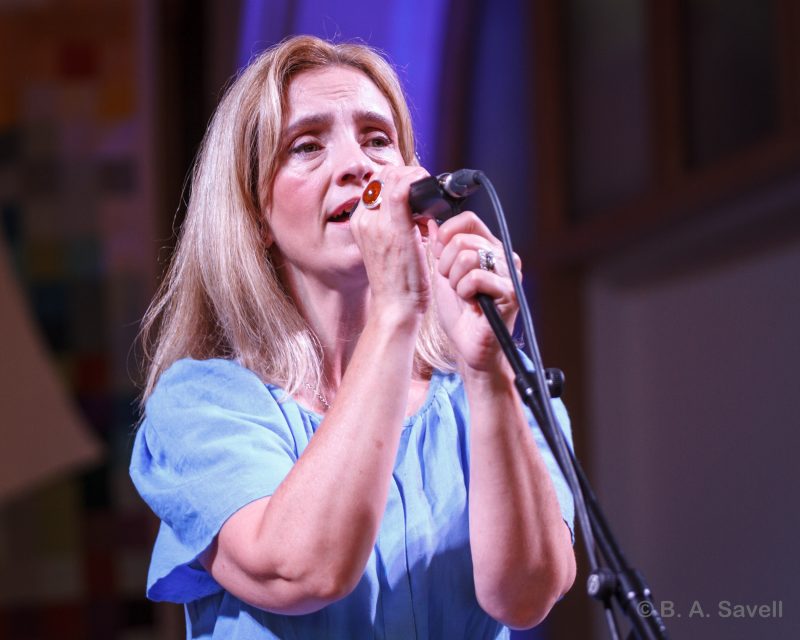
Acclaimed vocalist Cara Dillon began her career when she won the All Ireland singing trophy at the age of 14
As I Roved Out is clean and clear as a diamond ring, it glitters like cut glass, it is cool like a crystal stream. Immediately the heat of the day is washed away.
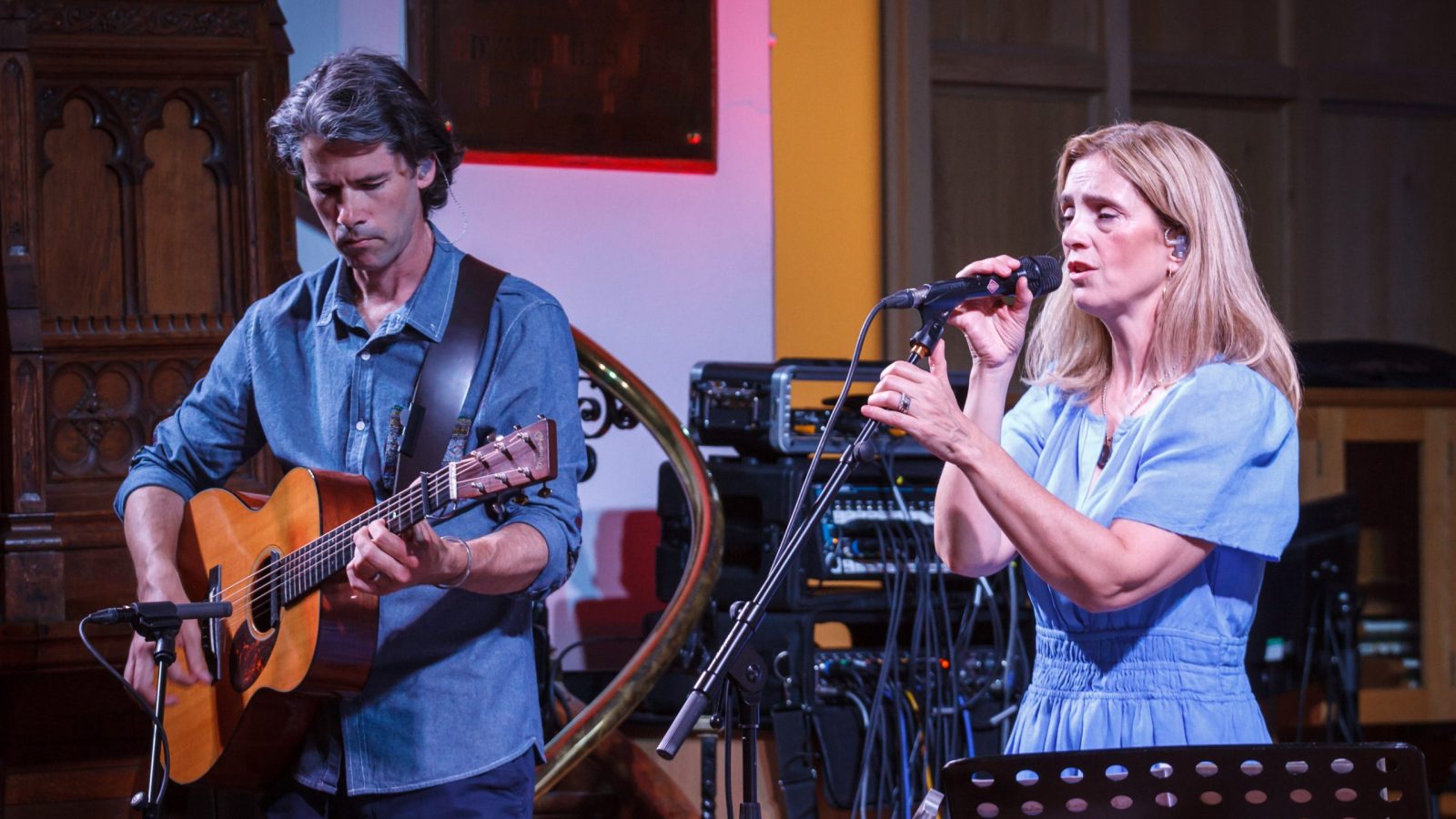
Her Irish lilt is so full of home that it’s incredibly hard not to picture rolling hills, low mountains and dramatic coastlines. Dillon is, as ever, accompanied by Sam Lakeman who adds wonderfully subtle guitar. He never overshadows, constantly stepping back to allow her to shine.
Their set is studded with traditional songs. A brace of swallows – She’s Like the Swallow and The Tern and the Swallow – are effortless. Dillon’s voice glides between clear-blue-sky-high and deeper, edged with gorse, but it flits between the two, as easy as flying.
Bright Morning Star is more upbeat, but just as beautiful, Dillon and Lakeman in perfect harmony.
There’s harmony from the audience too. A reverential murmur rolling from the pews during The Gem of the Roe which becomes a Sunday-evening, heartfelt rapture on Tommy Sands’ There Were Roses.
Cara Dillon’s most recent project is Coming Home, a book of poetry accompanied by an album. It’s full of family, memory and love.
The title track is half spoken, half sung and scatters words to the winds, allowing them to float across the audience, landing like confetti kisses. Lakeman plays gentle piano while Dillon’s words captivate. She does the same on Giving, a poem about her mum, and no heart goes untouched.
There is such a languid grace about much of this evening that it is all the more thrilling when they lift the tempo a fraction. Éirigh Suas a Stóirín is deliciously Irish, carried on Lakeman’s feverish strumming and Dillon’s whistle, while Raggle Taggle Gypsy descends into charming chaos. There is tenderness and enormous fun amongst all of the loveliness.
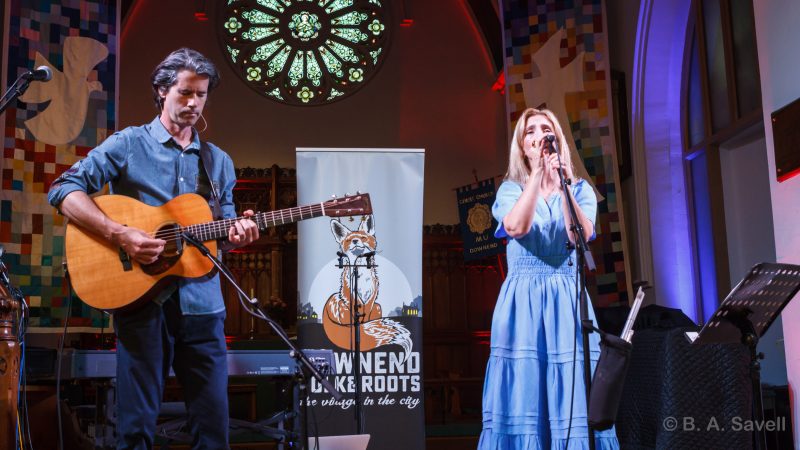
Dillon is accompanied by her husband and musical collaborator, Sam Lakeman
By the time they encore with The Parting Glass the sun has set and the sizzle has left the pavements. Dillon and Lakeman steer us gently into the night, refreshed and ready to welcome the longest day.
The weather might have been doing its level best to knock the stuffing out of Downend but Cara Dillon was effortlessly cool. A blessed relief.
Read more of Gavin’s thoughts on folk music at tallfolk.substack.com
All images: Barry Savell
Read next:
 Our newsletters emailed directly to you