Film
The Matrix triple bill
- Director
- Lilly Wachowski, Lana Wachowski
- Certificate
- 15
- Running Time
- 403 mins
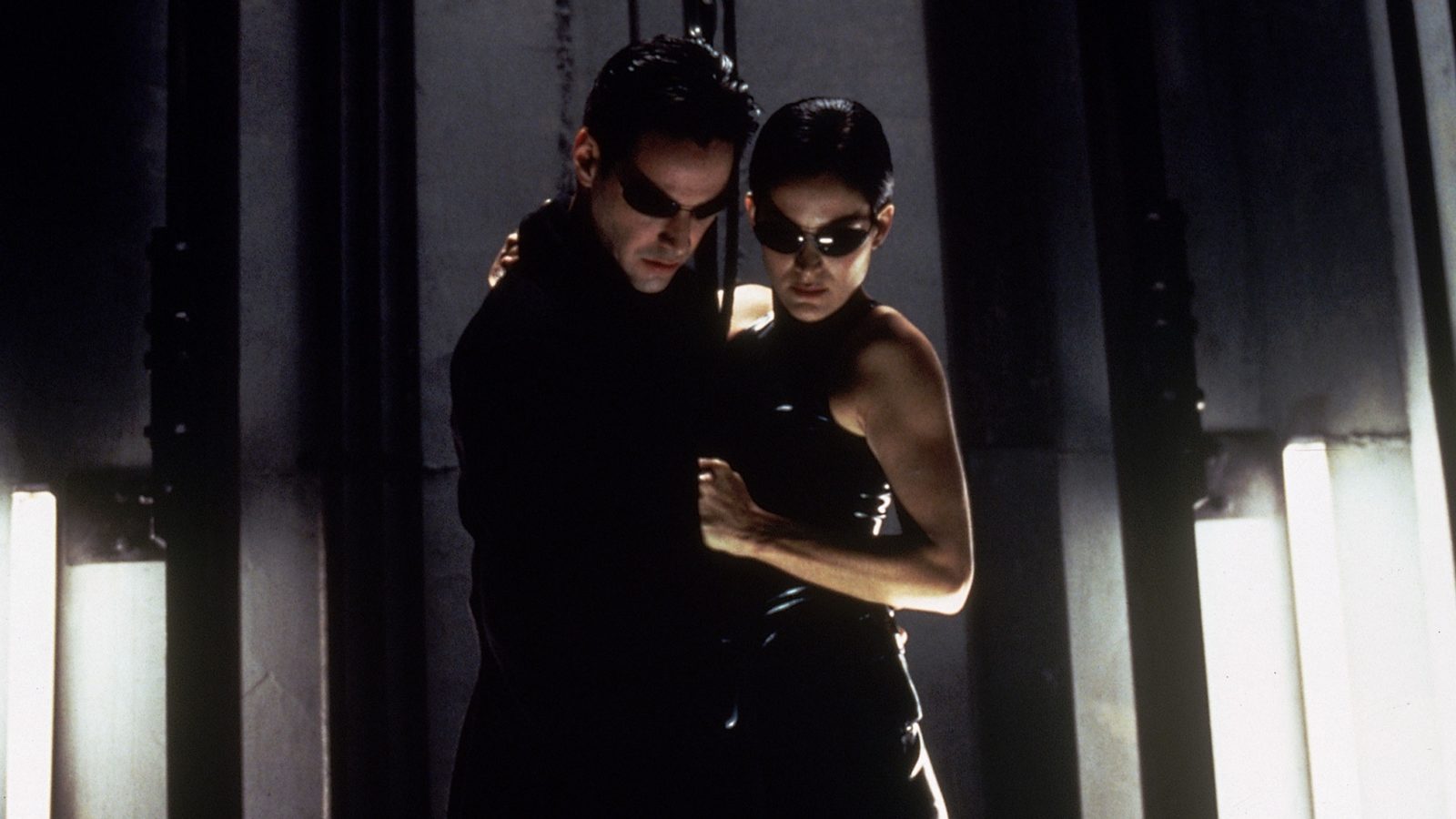
Who’d have predicted back in the late 1990s that this Keanu Reeves vehicle would turn out to be a cutting-edge turn-of-the-millennium cyberpunk flick? Keanu is Neo, salaryman by day and hacker by night, who’s recruited by mysterious rebel Morpheus (Laurence Fishburne) to join in a rebel movement against ‘the Matrix’, an equally mysterious conspiracy involving sinister and indestructible agents lead by the snarling Smith (Hugo Weaving).
In philipkdickian manner, the film pulls out the reality rug every 20 minutes or so, while the Wachowski brothers (now the Wachowski sisters) alternate their mind-stretching science fiction gubbins with pulse-pounding, state-of-the-art action: kung fu, bullet fu, computer fu, helicopter fu, robot squid fu and entire consensus reality of humanity fu. Rarely has a sci-fi flick had such a real-world influence: out there in the tinfoil-helmet recesses of the interweb, there are nutjobs who fervently believe that this is a documentary.
Next up in this 4K remastered triple bill is The Matrix Reloaded. After the first of many impressive stunt/fight scenes turns out to be a (perhaps prophetic) dream, this first instalment of the two-part sequel takes a half hour of whirring and grinding to boot up.
The ‘last human city’ of Zion is under threat from the evil robot masters of the Matrix, and the heroes of the first film – mystical Morpheus (Laurence Fishburne) and now flight-capable messiah Neo (Keanu Reeves) – are at odds with the bosses on how to make a last defence. Fishburne resorts to a lot of Star Trek acting, and Reeves never makes the supposedly vital element of Neo’s love for Trinity (Carrie-Anne Moss) seem like anything more than a plot convenience. Then, the film takes off. Though the GCSE philosophical talk is dead space, the Wachowskis deliver sci-fi kung fu like nobody else. But the lurches between awkward and brilliant prevent it from being a really satisfying film in its own right.
Fortunately, the final instalment, The Matrix Revolutions, is nothing like as boring, humourless and pretentious as The Matrix Reloaded. True, it suffers from the same Repetitive Action Syndrome, but there are far fewer scenes in which the characters sit around tediously explaining the mythology and inner workings of The Matrix to one another.
Neo is now stranded in limbo between the human and machine worlds. More dangerously, renegade computer program Mr Smith has assumed human form, broken free of the machines which once controlled him, and is now pursuing a private, nihilistic agenda of his own. There are just twelve hours to save humanity from complete annihilation. As before, the most arresting scenes take place in the shiny, digital environment of The Matrix, while the grungy underground world of Zion is so unappealing that one wonders why anyone would want to save it. The ambiguous/enigmatic/confusing ending provides ample fodder for post-film arguments about the meaning of Neo’s messianic quest, the ultimate fate of his arch nemesis, and the bizarrely unreliable predictions of The Oracle.
 Our newsletters emailed directly to you