News / Edward Colston
Operation Black Vote founder calls for ‘real change’ five years after Colston’s statue toppled
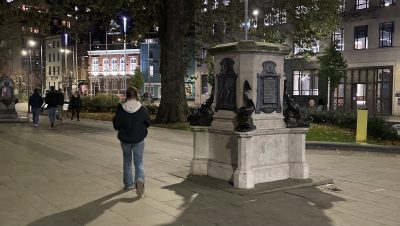
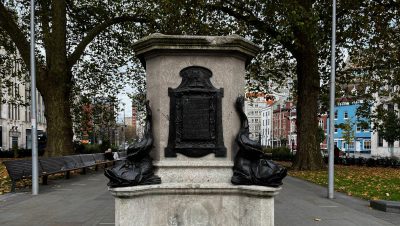
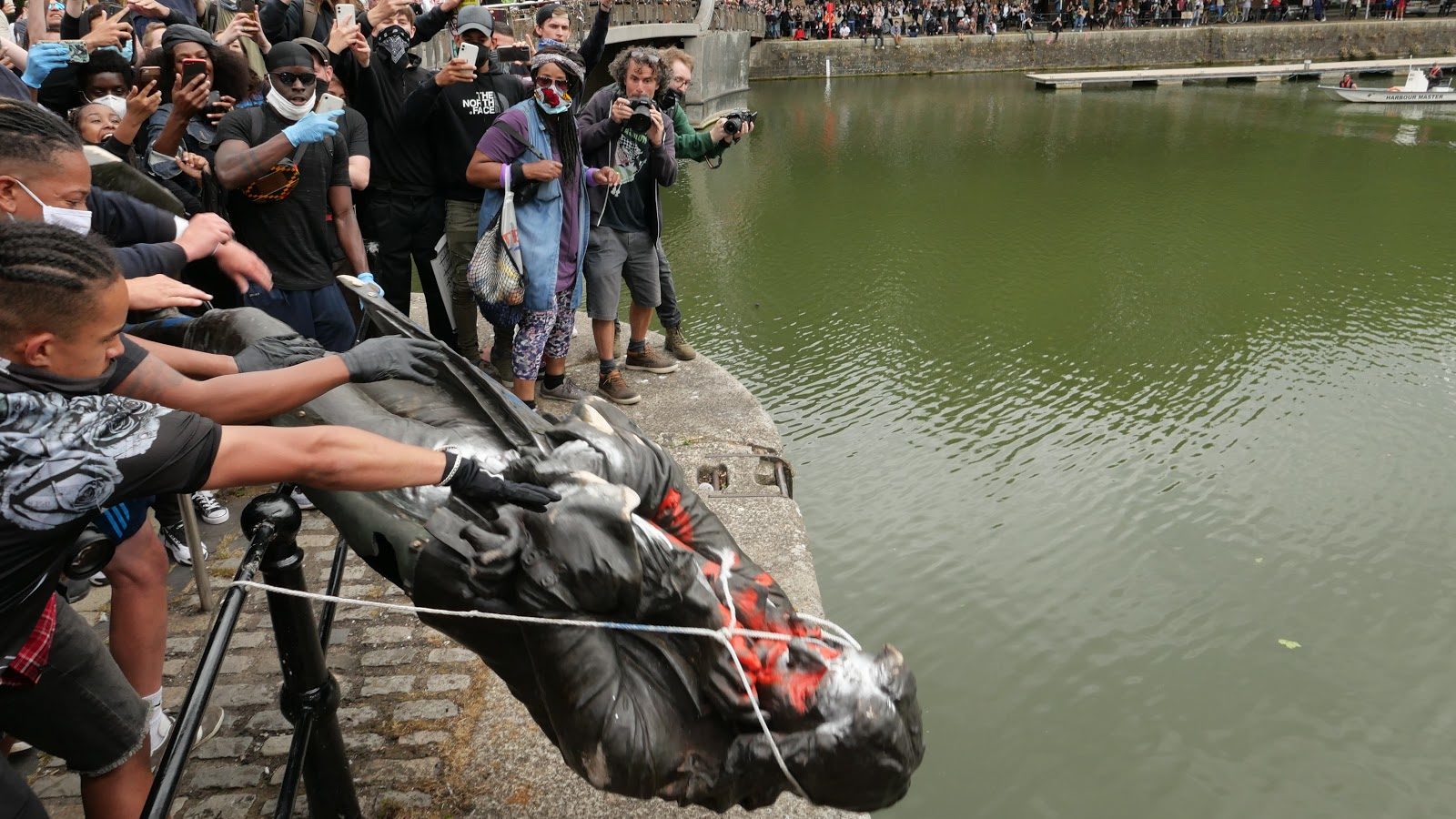
When Edward Colston’s statue in the city centre was pulled down on June 7 2020, many cheered, some danced and others symbolically knelt in silence on the slave trader’s neck.
The historic moment which later saw the statue rolled into the docks set loose a series of conversations and changes across Bristol.
Five years on, the founder and director of Operation Black Vote, Sir Simon Woolley, urges the government to harness the spirit of the protesters back then to bring about “real change”.
is needed now More than ever
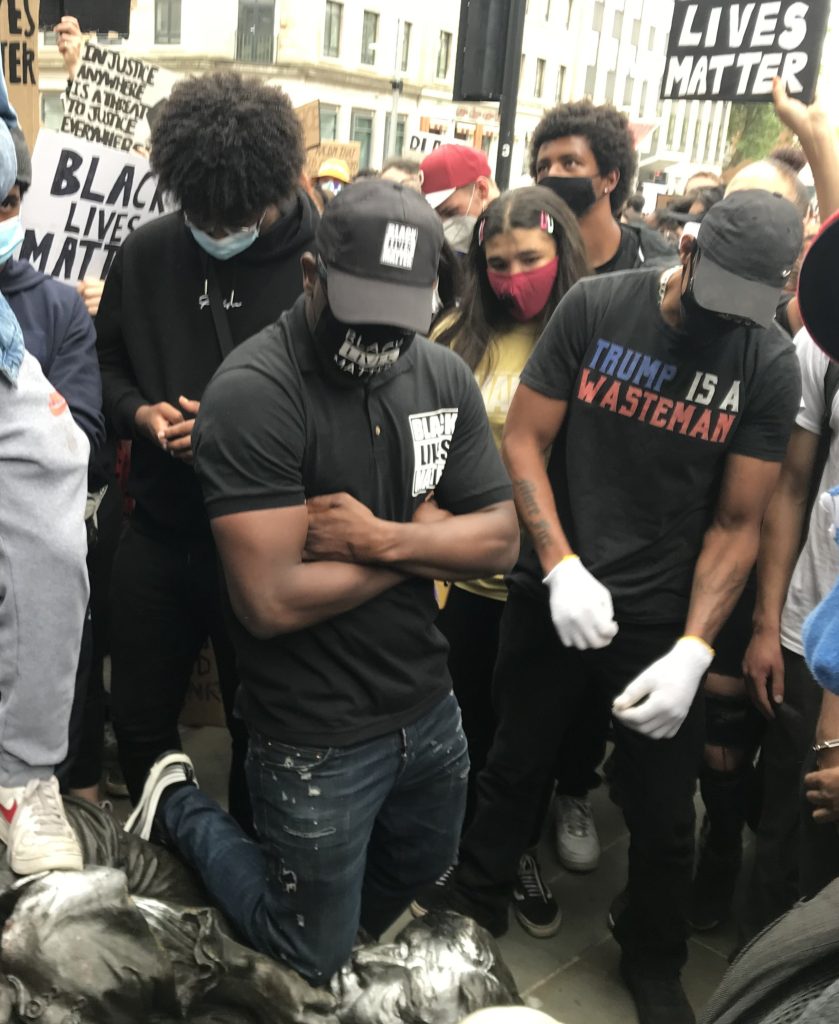
A Black Lives Matter protester kneels on Colston’s neck after the statue was toppled on June 7 2020 – photo: Martin Booth
In an opinion piece written in the Guardian, Woolley said: “Five years on, however, it seems fanciful that out of those protests a global reset on race could occur.
“Back then, structural race inequities were also laid bare by the Covid-19 virus. We watched our TV screens with dread as the kaleidoscope of Black and Asian doctors, nurses, and other health workers were dying disproportionately.
“Those same minoritised communities were also more likely to be in precarious jobs, forced to travel to work as cleaners, care workers and security guards, and were thereby more exposed to the deadly disease. These two seismic occurrences sparked a discussion the likes of which we had never seen in the UK.”
From big corporations, television and film producers to educational institutions, suddenly everyone began to care about their stance on Black Lives Matter.
Woolley highlights the vast change in dialogue and perception across the country after the toppling of Colston’s statue, something that he and others hoped would “create generational change”.
But Woolley remarks that this wave of optimism eventually began to “slow down” before eventually stopping and then beginning to reverse.
In response to Black Lives Matter protests across the country Boris Johnson’s government set up an investigation into racial disparities in the UK, led by Tony Sewell.
Woolley calls this 264-page report “one of the most flawed race reports ever written”.
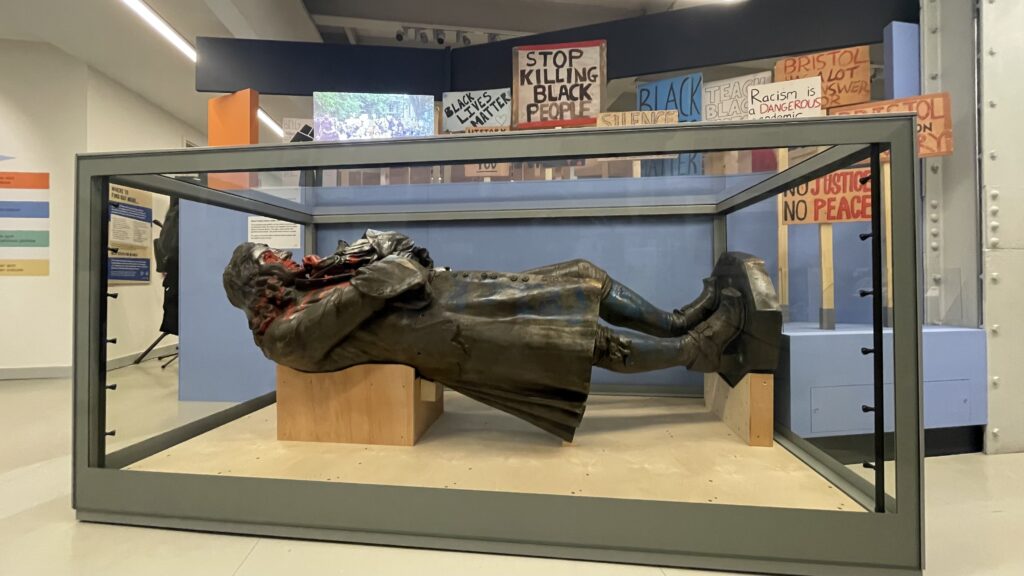
The Colston statue is now on display in a permanent exhibition at M Shed – photo: Martin Booth
Wooley explains: “Despite all the evidence, Sewell questioned the level of systemic racism in the UK and also claimed there was a positive story to tell about the enslavement of Africans, ‘not only being about profit and suffering but how culturally African people transformed themselves’. Sewell was given a peerage by Johnson in 2022.
“Other factors that stalled the momentum included the right-wing attack on England football players taking the knee in support of Black Lives Matter. Then came the attacks on critical race theory, which examines the structural and systemic aspects to racial inequality.
“Fast forward to 2024, and the climate had gone from tackling race inequality to race hatred riots that sought to firebomb Muslims and refugees.”
“The unprecedented scenes, whipped up by lies around the Southport killer but fuelled by years of Islamophobic and anti-migrant newspaper headlines, harked back to the Ku Klux Klan lynch mobs.
“And this year we have a US president who demands that businesses and all public institutions abandon their diversity, equity and inclusion (DEI) programmes.
“Many of those institutions, in the UK and the US, which had been seen as allies for the Black Lives Matter movement, didn’t take much persuasion to fall into line and abandon their commitments.”
Woolley insists that the tens of thousands of people – “black and white, young and old” – who five years ago toppled Colston’s statue are “neither gone away nor lost their ideals”.
He believes that it is the government’s challenge to reconnect and empower these passionate minds to bring about the “historical change” everyone wishes to witness.
Main photo: Colin Moody
Read next:
 Our newsletters emailed directly to you