News / Ray Kabir
Denyer lends support to venue co-founder at risk of removal from UK
A visa allowing esteemed creatives from across the world to stay in the UK is unfit for purpose says Carla Denyer, as she lends her support to a community venue co-founder at risk of removal from the country they now call home.
The Bristol Central MP has written to home secretary Shabana Mahmood to raise the issue of Ridwanul Kabir Shakib, better known as Ray, who has had their Global Talent visa endorsement refused by Arts Council England.
Shakib is the co-founder of Club395 in St Jude’s and the Bristol Creative Co, which Denyer says “together form an important part of Bristol’s accessible, global-majority and queer-friendly creative ecosystem”.
is needed now More than ever
The UWE graduate could be sent back to Bangladesh, their place of birth, however, due to being deemed ineligible for the Global Talent visa, which allows people to work in the UK if they are “a leader or potential leader” in the fields of academia or research, arts and culture, or digital technology.
The Global Talent visa can be applied for without an endorsement if a person is the winner of an eligible prestigious prize such as the Booker Prize, Brit Award or Olivier Award.
Denyer says that her constituent Shakib has found the visa criteria “are outdated and fail to adequately quantify or recognise the contributions of grassroots cultural community leaders”.
Shakib is now appealing the Home Office decision, with Denyer saying she hopes this appeal “will be considered fully, and that (Shakib’s) impact on the culture and community of Bristol will not be underestimated”.
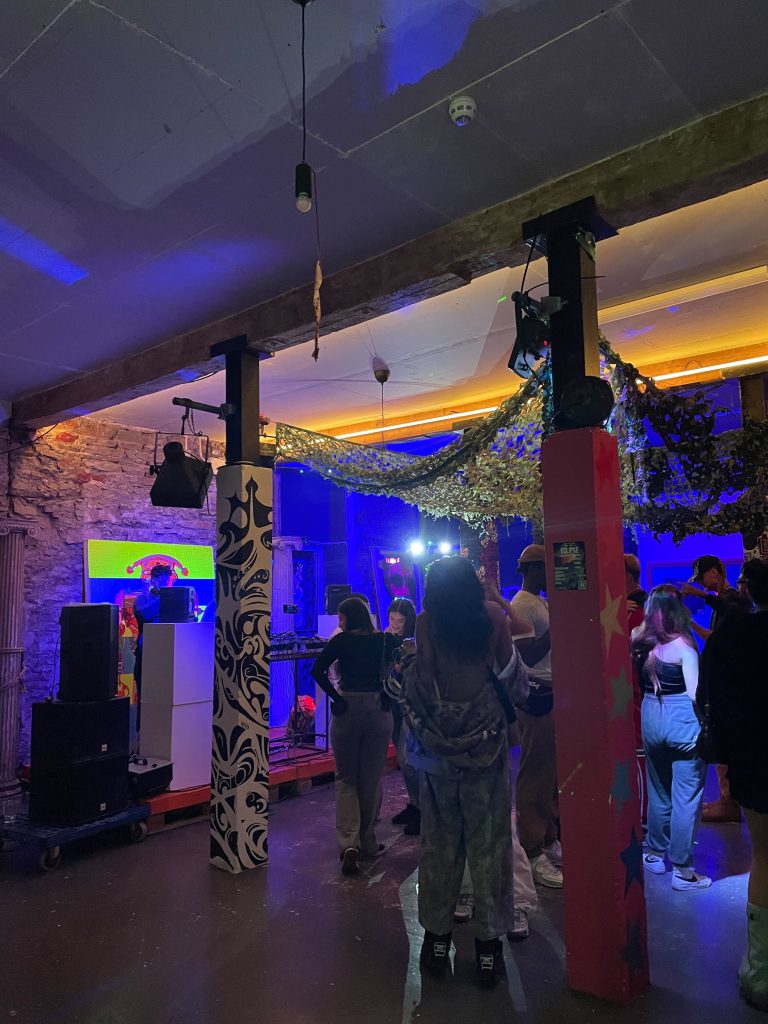
Community venue Club395 on Little Ann Street in St Jude’s is a hub for creativity but is at fear of closure – photo: Emily Brown
In her letter to Mahmood, Denyer said: “The assessment process does not seem equipped to evaluate the impact of music workers and creative leaders operating outside of traditional, high-capital corporate structures.
“This highlights a wider issue of the Global Talent visa route not doing exactly what it was purportedly designed to do – to recognise the essential work of those building and maintaining cultural communities.
“Ray’s Global Talent visa refusal cited insufficient ‘professional bookings’, ‘media recognition’ and
‘proof of appearances’.
“It appears that these criteria are designed for artists that are backed by large institutions.
“This disadvantages grassroots cultural organisers whose work serves marginalised groups in non-institutional settings.
“It does not seem designed to capture the positive impact that venues like this one have, for example as a safe third space for queer, diaspora, neurodivergent and working-class young people.
“Club395 also builds skills and develops talent in the community via weekly free open sessions for musicians, DJs, filmmakers, and designers.
“Club395 provides cross-community cultural exchange, as well as reducing isolation and providing purpose and peer support.
“The club’s contribution to Bristol’s grassroots cultural scene is vital, and it provides integral community support where Government investment is lacking.”

Bristol is the first place that Ray, a queer and neurodivergent Bangladeshi creative, “has felt safe, seen and able to build a future” – photo: Club395
When the government published its new asylum policy in November 2025, Mahmood said that “this country welcomes people who contribute”.
In her letter to the home secretary, Denyer said: “It is clear to see that Ray is exactly the type of person the Global Talent route was designed to retain: someone who contributes hugely to the UK’s cultural fabric and provides employment and support in their local community.
“However, it is not working. As a result, people like Ray do not have a legal pathway to stay in the UK.
“This is not an isolated issue – I have heard testimony from individuals across the UK who are facing this barrier to staying and contributing to the UK’s vibrant cultural scene.
“What’s more, I am deeply troubled by reports that under this government, Home Office caseworkers have been interpreting the Global Talent visa criteria more restrictively than was the case under the last government, and that caseworkers making decisions on these applications do not have experience of grassroots culture.”
The Home Office has been asked for a comment.
Main photo: Club395
Read next:
 Our newsletters emailed directly to you