Features / World War I
Bristol’s War: Three brothers, three choices
Three of the sons of James Whiteford, shoemaker and shoe repairer of Bell Hill Road, St George, made three different decisions as to what to do during the war.
One of the Whiteford brothers chose to fight, one was a conscientious objector but volunteered for non-combat duty, while a third was a conscientious objector who refused to have anything to do with the conflict.
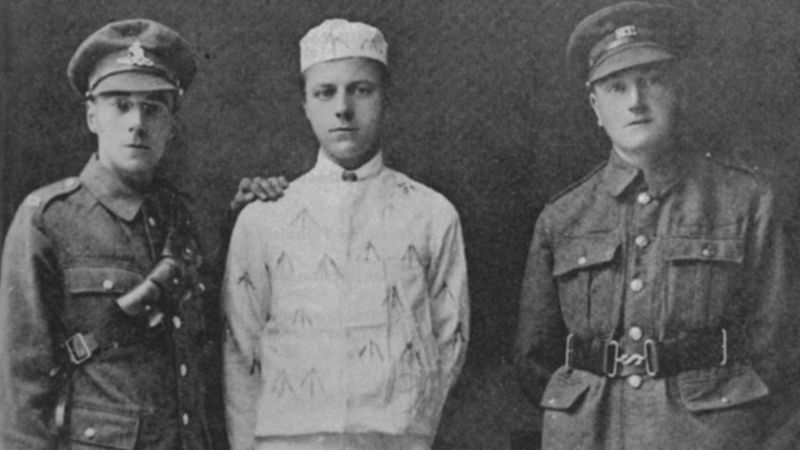
Their father was so proud of them that he had a group photo taken of all three together, with Graham Whiteford (left) and Wilfred Whiteford (right) in their uniforms, while Hubert Whiteford stood in the middle in an improvised prison uniform.
When the story was published in the Bristol Post in early 2014, Mr Ray Whiteford, grandson of Hubert, the conscientious objector, confirmed the story, reckoning that James Whiteford, a keen amateur photographer, may well have taken the picture himself.
The Whitefords, whose home was near the World’s End pub, were staunch trade unionists, great sportsmen and keen on making their own entertainment and music.
“The mock prison dress my grandfather is wearing is just the sort of thing my great-grandfather would have done,” said Mr Whiteford. “They made their own entertainment in those days and they all liked the theatricals and dressing up.”
Hubert was imprisoned for his beliefs at Pentonville in London, kept in solitary confinement for a lot of the time. All three survived the war.
When he was young Mr Whiteford asked his grandfather whether or not he would have been a conscientious objector in World War II.
No, he would not have been, he said. He would have fought Hitler.
This is one of over 100 tales of Bristol in the First World War written by Eugene Byrne for Bristol 2014 and available on a free smartphone app, Great War Stories. Details and downloads at http://www.bristol2014.com/great-war-stories-map-and-app.html
Tomorrow: Looking after soldiers in the Dug Out
 Our newsletters emailed directly to you