News / Restaurants
Tapas restaurant hits back at planners
The founder of a tapas restaurant whose battle to retain its al-fresco pavement dining has become one of Bristol’s most popular planning applications has hit back at council planners who are recommending refusal.
Kieran Waite, who runs Bravas in Cotham Hill, says that despite more than 1000 public statements of support, including from ward councillors representing the Green-led administration, the local authority appeared “anti-business, anti-progress, weighed down by red tape and process, and lacking accountability”.
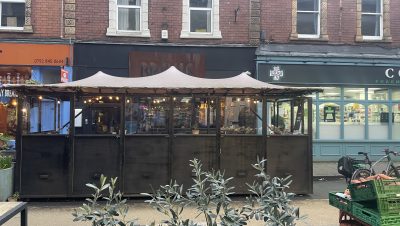
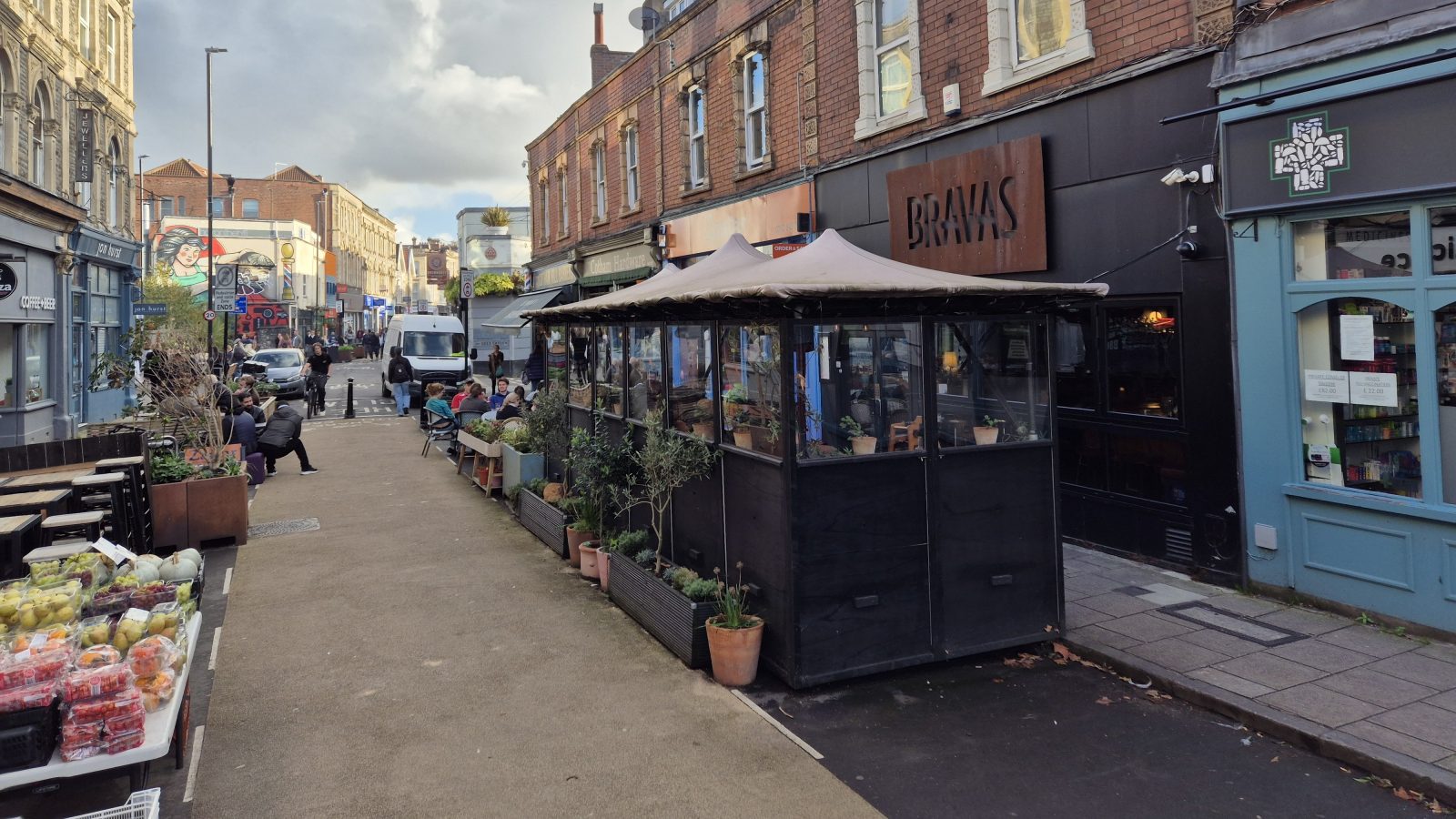
City Hall planning officers are advising councillors on the planning committee to reject proposals to keep the semi-enclosed structure outside the eatery in Redland amid concerns that it might hinder fire engines attending an emergency on the pedestrianised street.
is needed now More than ever
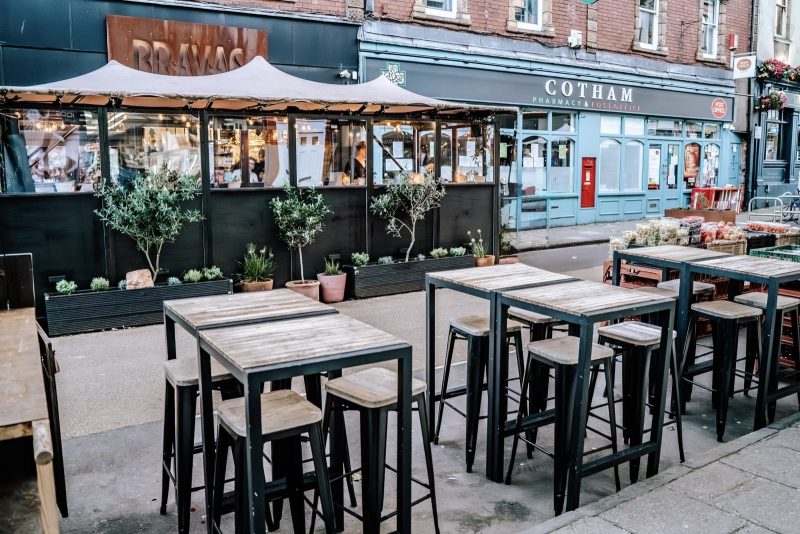
Bravas currently has outdoor seating on both sides of Cotham Hill – photo: Yuliia Lipakova
Officers say they do not object to the principle of outdoor seating if it is classed as temporary and could be dismantled quickly but that the covered area was considered “permanent”.
But Mr Waite said: “We were surprised and disappointed to learn that Bristol City Council planning officers’ recommendation was to refuse our application.
“We respect the need for public safety, and of course if there was a genuine risk, we wouldn’t be fighting this – it would be business suicide and morally indefensible.
“What troubles us is the timing and nature of these objections.”
He said Bravas submitted the application on August 27, but that objections from Avon Fire & Rescue Service and Bristol Water were not lodged until the very end of the consultation period on October 9 and 10 respectively.
Mr Waite said: “That meant no meaningful opportunity for dialogue during the consultation.
“Meanwhile, our transport and highways specialists produced tracking plans showing adequate access for emergency vehicles.”
He said no such objections were received from either organisation to the restaurant’s previous application in 2024, which was refused by planning officers under delegated powers.
Mr Waite said: “Local business owners, residents and our ward councillors have been overwhelmingly supportive – more than 1,000 statements of support and public councillor quotes to the effect that our street has been operating like this for years without issue.
“To many, this has now become about whether council culture is genuinely supporting local business, community vibrancy and small‑scale neighbourhood hospitality, or whether it’s becoming an obstacle.
“From our perspective, the council appears at times anti‑business, anti‑progress, weighed down by red tape and process, and lacking accountability.
“We want to be the grown‑up in the room – we want to work with the council, we’ve always been open to constructive adjustments to make the scheme safe and compliant.
“But when it comes to process, late‑raised objections, no site visits that we are aware of, and a report that misrepresents shared‑space as a ‘cycle lane’, we believe that diminishes public trust in the planning process and business confidence to plan, employ, and invest in the city.
“The case officer claims a cycle lane runs through the centre of the highway when in fact this is not a cycle lane.
“The street is clearly signed as a shared use carriageway – marked with Bristol City Council’s ‘Share with Care’ symbols indicating it is shared by cyclists, pedestrians, wheelchair users, and the general public.
“To mislabel this space as a cycle lane is factually incorrect and misleading.
“If this was formally a cycle lane, does the council suggest wheelchair users should operate within a cycle lane?
“We’re strongly of the view that this application is in the public interest.
“The surrounding neighbourhood wants it, local councillors want to support it.
“We want to contribute to the vibrancy of the area, not fight against the system.”
A report to the planning committee, which will make the decision on Wednesday, said the structure would ‘detract significantly from the street scene’ and would set a precedent for others.
It said: “This would create a sense of overbearing and overcrowding, and a sense of street clutter on Cotham Hill.
“Even if planning permission is granted for this application, the Highway Authority would be unable to grant a licence for it on the grounds of health and safety.”
Planning and highways are two entirely different regimes, albeit related.
Permission would be needed by both council departments for Bravas to keep its outdoor tables.
Highways officers issued an enforcement notice last month ordering the outdoor structure to be removed but the family-run restaurant was given a stay of execution because the council team was unaware that a fresh planning application had been submitted and was yet to be decided.
Bristol City Council declined to comment ahead of the decision by the planning committee.
Adam Postans is a local democracy reporter for Bristol
Main photo: Alex Seabrook
Read next:
 Our newsletters emailed directly to you