Theatre / Reviews
Review: A Good House, Bristol Old Vic – ‘Bristol theatre has a new captain’
Nancy Medina’s CV as artistic director of Bristol Old Vic grew one line longer last night as A Good House opened on the famous old theatre’s main stage.
The show is a co-production with the Royal Court and in association with The Market Theatre in Johannesburg.
Following the supreme brilliance of Choir Boy, I and others were especially keen to see what the Brooklyn native would select as her second offering.
is needed now More than ever
When, then, I heard that A Good House – a play whose subject is South African race relations, written by a South African writer, and set in South Africa – was to open in February, I had my reservations.
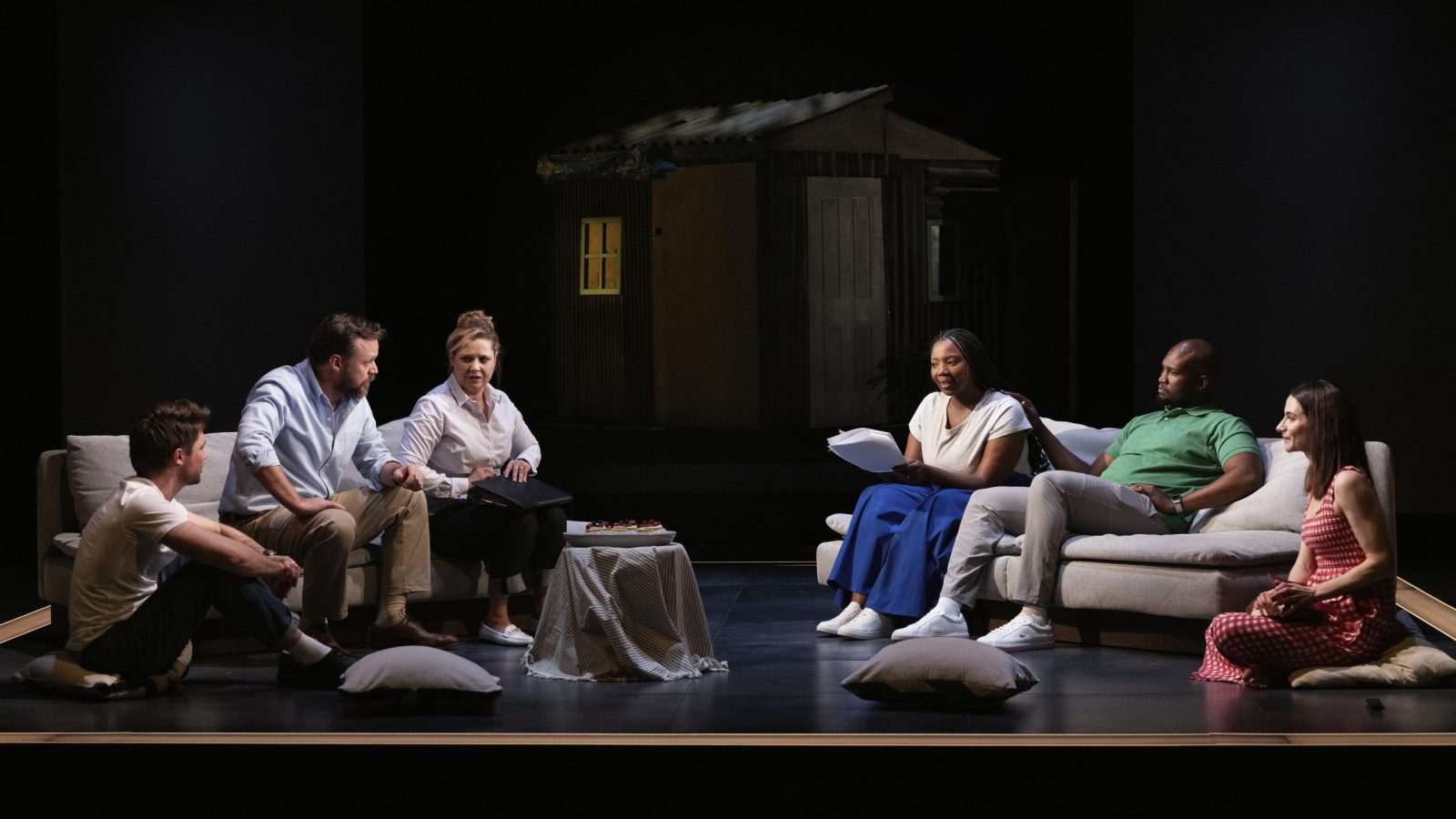
A Good House is a co-production with the Royal Court and in association with The Market Theatre in Johannesburg
How, I thought, could this be pulled off? Two great chasms of failure seemed to sit either side of the highwire on which this production would need to balance.
The play could risk being too particular or too general, too local or too distal, too detailed or too vague. Either this production would be so concerned with accomplishing the already-difficult task of capturing the complexities, history and context of South African demography and culture that the Bristol audience would uniformly scratch its head; or the anxiety of that first pitfall would loom so large on the minds of the production team that all quirks and details and edges would be sanded from the show. But I hadn’t read the script.
Amy Jeptha has written an impossible play. The script retains its South African heritage and specificity, whilst commenting incredibly astutely on power, space and belonging in a manner that is universalising.
That the play turned out to be – for my money – more about class than race makes it especially accessible for an island famously and uniquely obsessed with the subject to comprehend and become engaged with.
A Good House begins with Sihle and Bonolo (Sifiso Mazibuko and Mimî M Khayisa) moving into suburban Stillwater and being met with instant incredulity from their white neighbours.
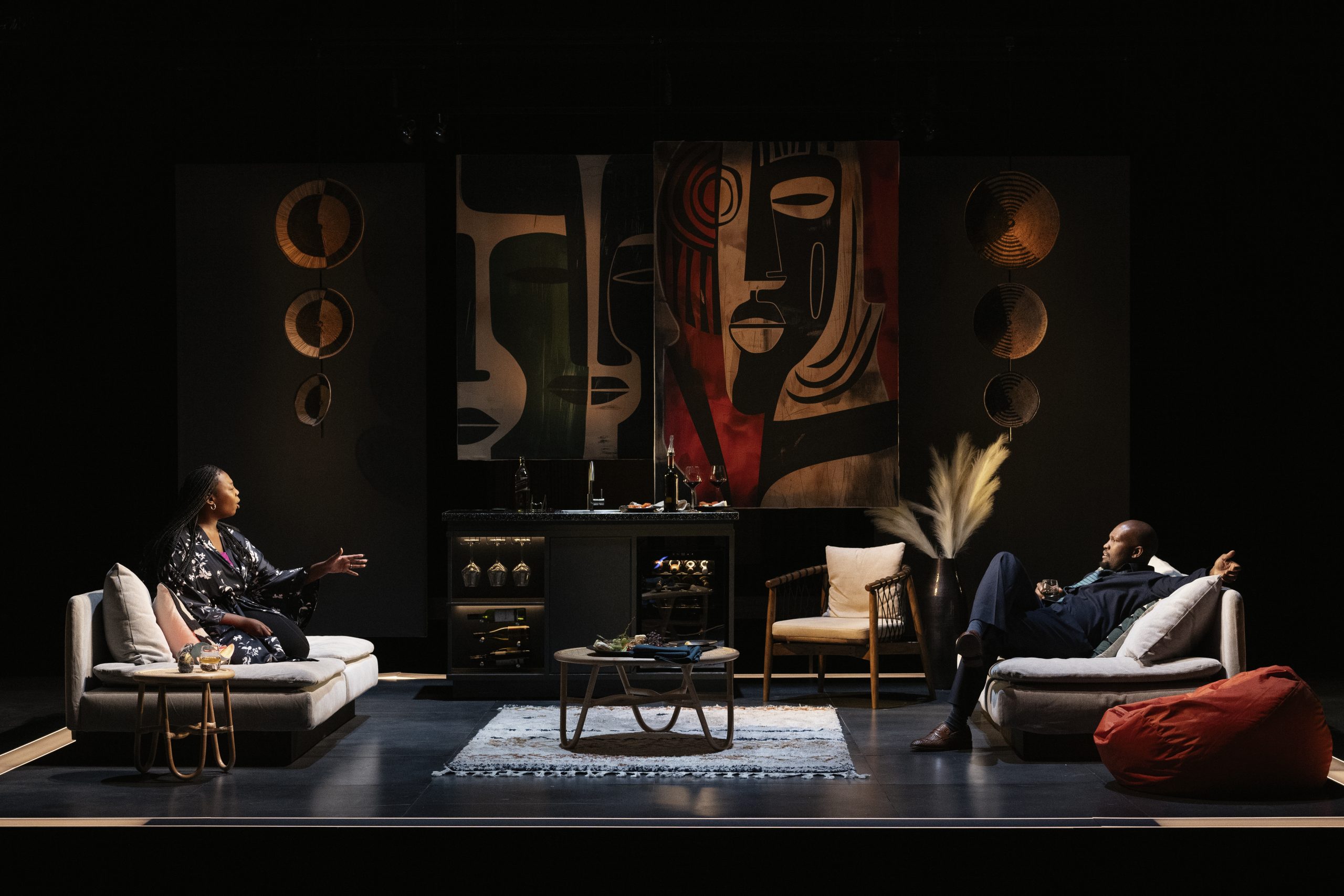
When Sihle and Bonolo (Sifiso Mazibuko and Mimî M Khayisa) move into suburban Stillwater they are met with incredulity from their white neighbours
Over dinner two years later, Christopher and Lynette (Scott Sparrow and Olivia Darnley) are hosted for the first time by Sihle and Bonolo.
The sheen of suburban niceties is expertly portrayed, every laugh is a little too loud and each smile outstays its welcome. In this scene, Olivia Darnley is especially effective at colouring the veneer of small talk with just a hint of darkness. Christopher and Lynette are stalwarts of Stillwater, exerting a paranoid control over the neighbourhood. Sparrow’s performance conveys power and security, with a touch of fear. Both Darnley and Sparrow are brilliantly unsettling.
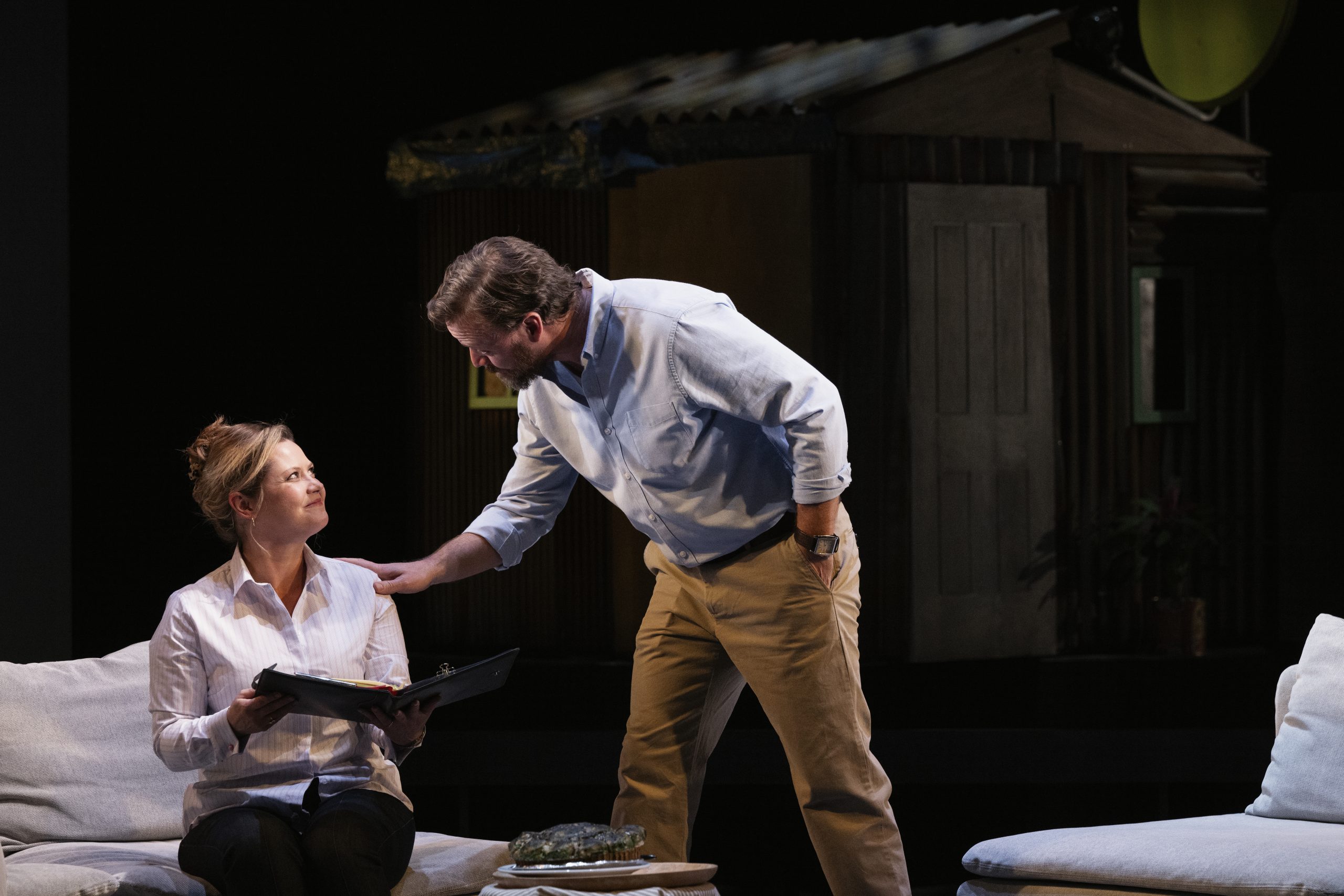
Christopher and Lynette (Scott Sparrow and Olivia Darnley) exert a paranoid control over the neighbourhood
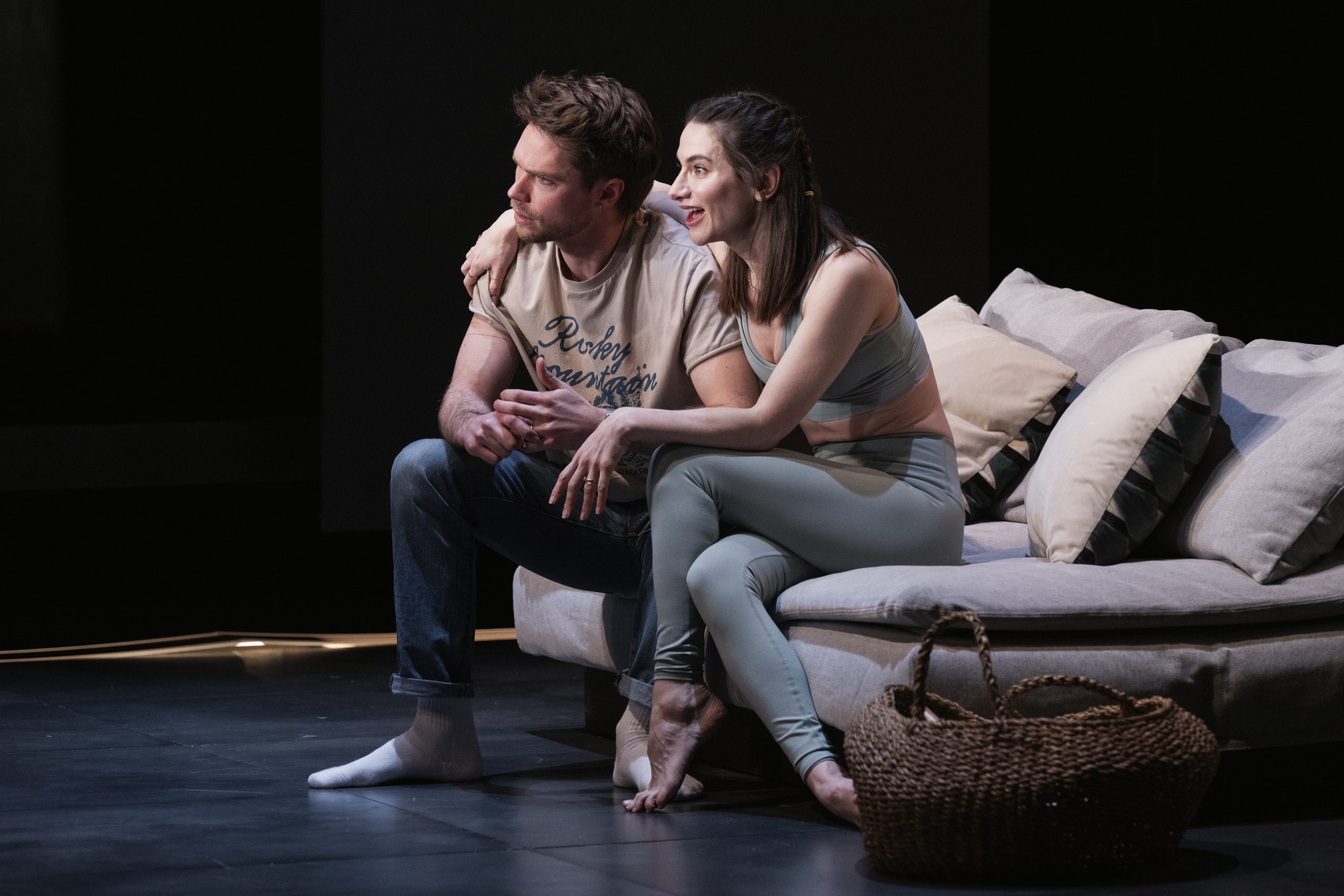
Later, we are introduced to young couple Jess and Andrew (Robyn Rainsford and Kai Luke Brummer).
The levity the play needs is provided largely by Brummer, whose Andrew is a frenetic and terrified man-child. The inciting incident, which takes place before the play begins, is the emergence of a Shack in an empty plot of land, first spotted by Andrew and Jess.
The shack serves as the artefact by which the play’s themes of class and race are brought to the fore of community life in Stillwater. Rainsford’s Jess is a comically brittle yoga teacher, whose mindfulness and implied comfortable upbringing haven’t quite prepared her for actual strife. That doesn’t mean we don’t feel for Jess and Andrew, whose motivations are written and performed clearly and sympathetically.
The great genius of this play is its willingness to give a full and rounded credence to both sides of every argument.
Without deigning to presume on whose side Amy Jeptha might ‘sit’, I know she has written her enemies intelligently.
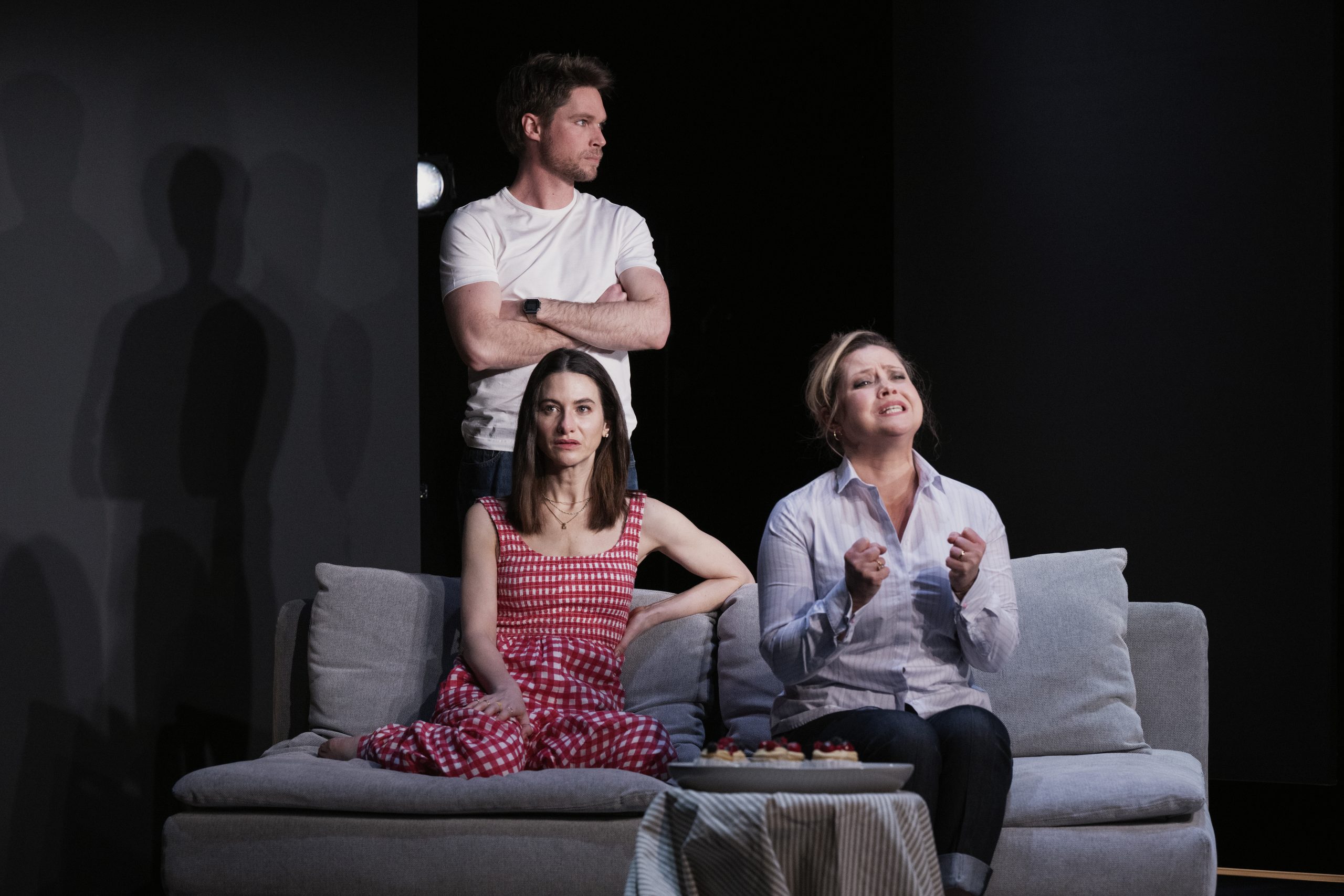
The great genius of this play is its willingness to show both sides of every argument
Each character is a real person – a shameful rarity in today’s theatre, especially in plays that tackle sensitive issues.
Like a Dostoevsky novel, each character is equipped with integrity, courage, intelligence and decency.
In other words, Jeptha grants to each character a full and unwavering personhood.
So often, in plays where each character represents a worldview, the roles are bland, 2D strawmen written to stand still on the stage and be shouted at by the intelligent and ‘right’ protagonist. This script is a feat of immense moral courage and intellect.
Satire should be courageous. Increasingly, within theatre and on television, a sort of riskless so-called satire has dominated. On the screen and stage you will find well-educated artists poking fun at easy targets: the monarchy, the church and a certain kind of working class man.
The litmus test – if you’ll forgive the cliché – is a simple one: if you can loudly mock these institutions and people within, say, a theatre foyer or an independent coffee shop, without reproach, you are probably not being quite as brave as you think.
This is the kind of permitted satire those in power would prefer us to busy ourselves with, so as to avoid any re-emergence of true, biting, brave satire.
After all, if the cultural orthodoxy differs from the withering traditions of the State, with whom does power – the power to determine what is and is not permissible in speech, which is to say, real, felt, everyday power – lie? “You are not a revolutionary, you are a capitalist”, says Sihle to his upper class wife Bonolo.

Mimî M Khayisa’s performance is unbelievably good
As a working class artist, who is now largely surrounded by middle class people and places, I was moved almost to tears by the anguish with which Mazibuko plays Sihle as he finally reckons with his upbringing.
“You can’t bear it, can you, to be confused for what you actually are?”, asks Bonolo, in as cutting a line of dialogue as I can remember hearing for a long time.
Khayisa’s performance is unbelievably good; Bonolo is brimming with conviction and integrity. Mazibuko’s Sihle is captivating and charismatic.
So much of this play is about the parts of ourselves we hide away in order to feel safe in spaces from which we do not hail, and Mazibuko’s accommodating smile is enough to break your heart.
As this is a new play, I have utilised the rare opportunity to dedicate much of this review to the script itself.
Let me, however, state the obvious.
I’d not be singing the script’s praises had Nancy Medina not selected it for production. Medina deserves enormous credit for this triumph.
The directorial decisions throughout are inspired: the shack looms behind the action, sometimes seeming to hang over Sihle (who grew up in a similar house). The acting from all six cast members is a further testament to Medina’s direction.
Shout it from the rooftops: Bristol theatre has a new captain. Her name is Nancy Medina, and we’re heading someplace beautiful.
A Good House is at Bristol Old Vic from February 14-March 8 at 7.30pm with additional 2.30pm matinee shows on Thursday and Saturday (no shows Sunday). Tickets are available at www.bristololdvic.org.uk.
All photos: Camilla Greenwell
Read next:
- Bristol Old Vic artistic director Nancy Medina commits to new writing
- Bristol Old Vic prepares for ‘A Good House’: the biting satire from South African writer Amy Jephta
- Review: International House of Vape, The Wardrobe Theatre – ‘Superbly written, brilliantly acted, hilarious and beautiful’
 Our newsletters emailed directly to you