Music / Reviews
Review: Steel Pulse, Bristol Beacon – ‘As resonant and powerful as ever’
If you have even a passing interest in reggae then you’ll be familiar with Steel Pulse.
Formed in 1975, they are arguably the UK’s most successful reggae act ever: the only UK act to win a Grammy for best reggae album, with crossover US success touring with the likes of Bob Dylan and Carlos Santana, and counting the one and only Bob Marley as a fan.
Birmingham’s roots reggae icons (honestly ed, I think ‘icon’ is justified in this case…) made a triumphant return to Bristol after three years for a 50th anniversary tour show in the main hall at Bristol Beacon.
is needed now More than ever
These anniversary shows often require a fun game of “spot an original member” and the whole thing can feel more like an official tribute but not tonight: Steel Pulse has two founding members – vocalist David Hinds and keyboardist Selwyn Brown – still touring and leading the band five decades in.
Both in their late 60’s they are still forces of nature and brought heart and energy to the show.
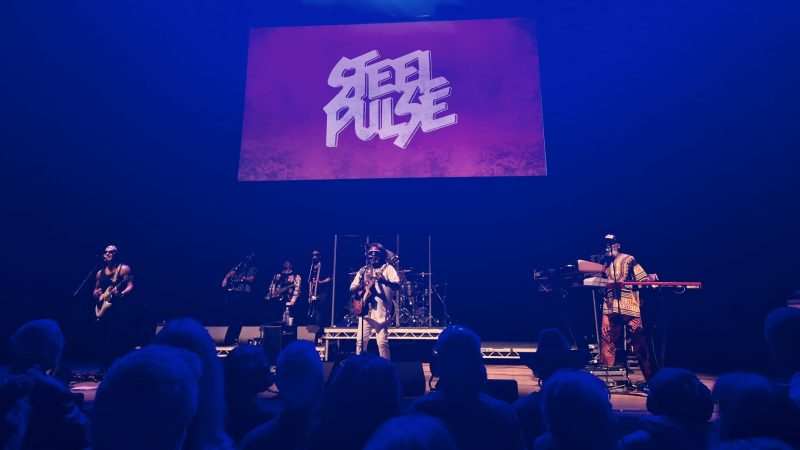
This is not a tribute… 50 years on, Steel Pulse are still led by the original vocalist and keys player
Support came from another classic UK band, the Selecter, led by the inimitable Pauline Black.
Sharing no equipment with Steel Pulse, they’re forced to occupy a small portion of the massive Beacon stage which lends an intimate atmosphere to a truly crowd-pleasing set of two-tone classics from their back catalogue.
Highlights include Celebrate the Bullet, Too Much Pressure and a lively version of On My Radio.
Cue grins and skanking from a diverse crowd of older fans who probably watched Pauline perform the single on Top of the Pops in 1979, and a younger crowd of reggae fans not born for two more decades also getting stuck in.
View this post on Instagram
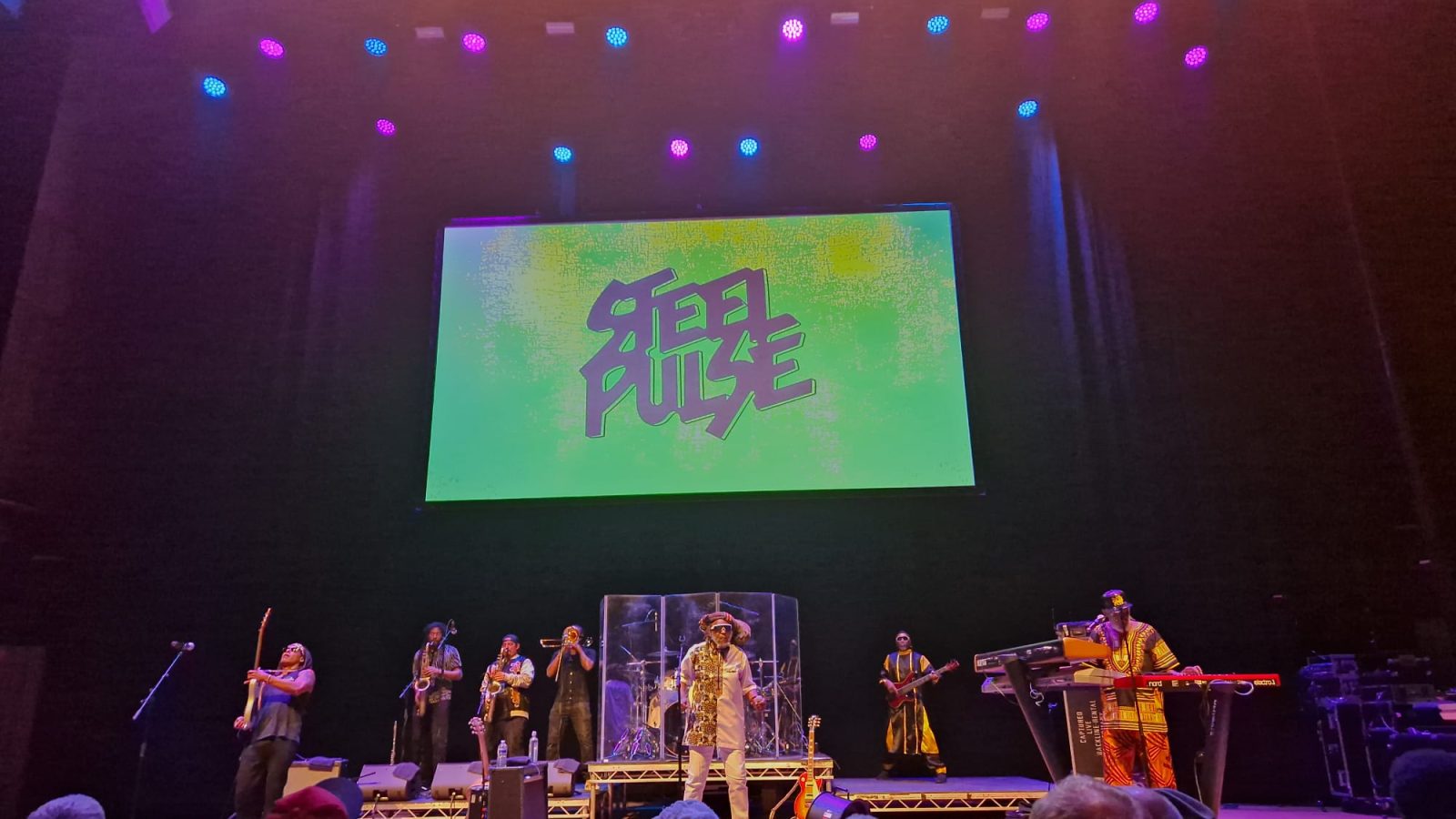
After a long change over soundtracked by Bob Marley classics from the DJ, the lights dim and the eight members of Steel Pulse stride onstage.
Taking to the stage with twice the energy of a band half their age, the night’s first tight horn fill from the grooving three piece section drops into first song Ravers.
The huge bassline hits the crowd with a thud. Vocal harmonies sound sweet, bass thunderous, perfectly in the pocket bubble-and-skank from Brown on keys and the young horn section look like they’ve won the session gig lottery, swaying in sync from the first bar with huge grins on their faces.
Drawing the eye immediately, bassist Amlak Tafari is dressed in a majestic shiny black-and-yellow floor-length robe, his look completed with wrap-around ski-style shades.
Strutting on (and off!) stage like a sci-fi hero, Tafari is an absolute livewire, using every crowd participation trick in the book – getting a rando on stage to pluck his strings for him, jumping into the crowd to dance in the stalls, bringing on a chair at one point to mime ‘being abit tired’, and during the encore a performance art piece hiding behind the stage curtains as Hinds plays some beautiful Spanish style acoustic guitar.
Amlak does all this while remaining absolutely and totally committed to perfect reggae bass-playing. There’s no pedals here, just great technique, impeccable feel and a fat sound system.
View this post on Instagram
At over 90 minutes this was a huge set covering the full breadth of Steel Pulse’s catalogue.
Hinds doesn’t miss a note and his voice is as resonant and powerful as ever. He’s having a great time, dancing about the stage, addressing the rapt audience with the confidence of a man at the top of his game for half a century.
Over an hour in, just as crowd energy is dipping a little, Mass Manipulation – the title of their 2019 album – flashes up onscreen and the band launch into Stop You Coming and Come. This song gets the first and only pull up of the night and a huge response from the suddenly electrified crowd.
“Any Ethiopians in the house tonight?” asks David Hind unexpectedly.
After a brief awkward silence he tells us: “Guess what, you’re all Ethiopians, you just don’t know it.”
It’s not until the encore that they play Handsworth Revolution, the title song from the album which made them into a household name on both sides of the Atlantic. It still somehow feels fresh and powerful 50 years on, with the band dropping straight into a masterful stripped back dub version.
As the bassline for the dub drops after a note-perfect rendition the multi-generational crowd are rapt, in a masterclass reggae moment.
All images: Simon Alexander
Read next:
 Our newsletters emailed directly to you