Music / Reviews
Review: Popon, Kit Form – ‘Raw, joyful and luminous’
Streams of light pour from projectors stationed at the edges of the room, and 35mm film spools on to the floor.
It’s impossible to walk across the space without being momentarily dazzled as you step through the beams. There’s a cave-like intimacy conferred by the surrounding darkness but also a tingle of transgression, as if we are uninvited guests lurking in the shadows of someone’s subconscious.
Fragments of memory, dreams, nightmares and half-formed thoughts flicker and unfurl before our eyes.
is needed now More than ever
This is the Bristol Experimental and Expanded Film (BEEF) celebration at Kit Form creative and community space, on the eve of International Women’s Day – an eclectic evening of poetry, art, music and live film collages from women and non-binary artists.
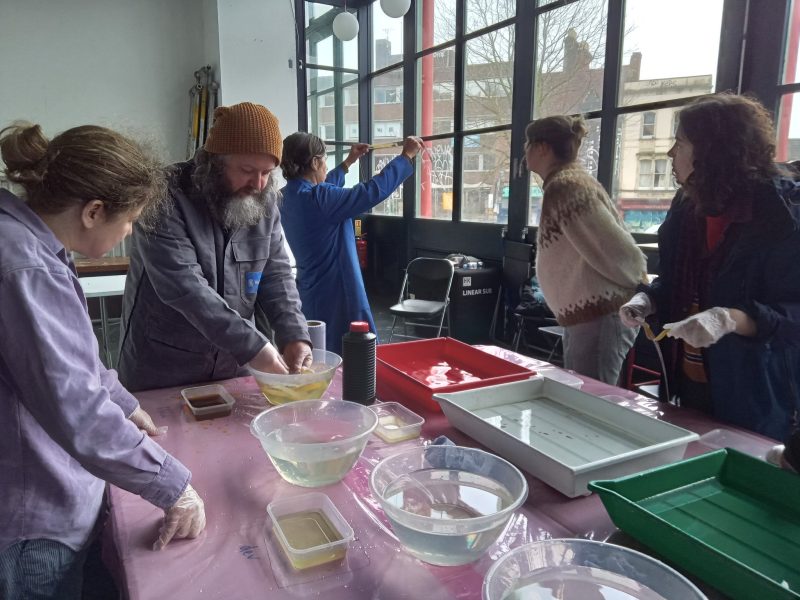
Some of the visuals projected through the night were created in a workshop earlier that day led by BEEF’s Matt Davies and Melanie Clifford – photo: BEEF
The first performer is poet and artist Lucia Sellars. She stands in silhouette and the audience gathers round, some standing, some sitting on the cold concrete floor.
Her poems have a mythic quality, a fairytale darkness entwined with the comforting lilt of childhood incantations. She enchants as she weaves tales of girlhood awakenings, and lays bare the scars of womanhood.
Her imagery captures the moon, and showers us with petals. Red apples, whirling dervishes and maternal constellations flash before us in the gloaming.
View this post on Instagram
Annie Gardiner is next. It’s just her voice, her guitar and double bass played by Jo Kelly.
Deep shadows play across her face as she stares, unblinking, unflinching into the crowd. She commands full attention and fills the space with her bell-clear voice.
She performs songs from her new album Sleeping Dogs, some from her previous album Bloodletting, and even brings in some brand-new material – “I wrote this song yesterday. I never do this, but something possessed me.”
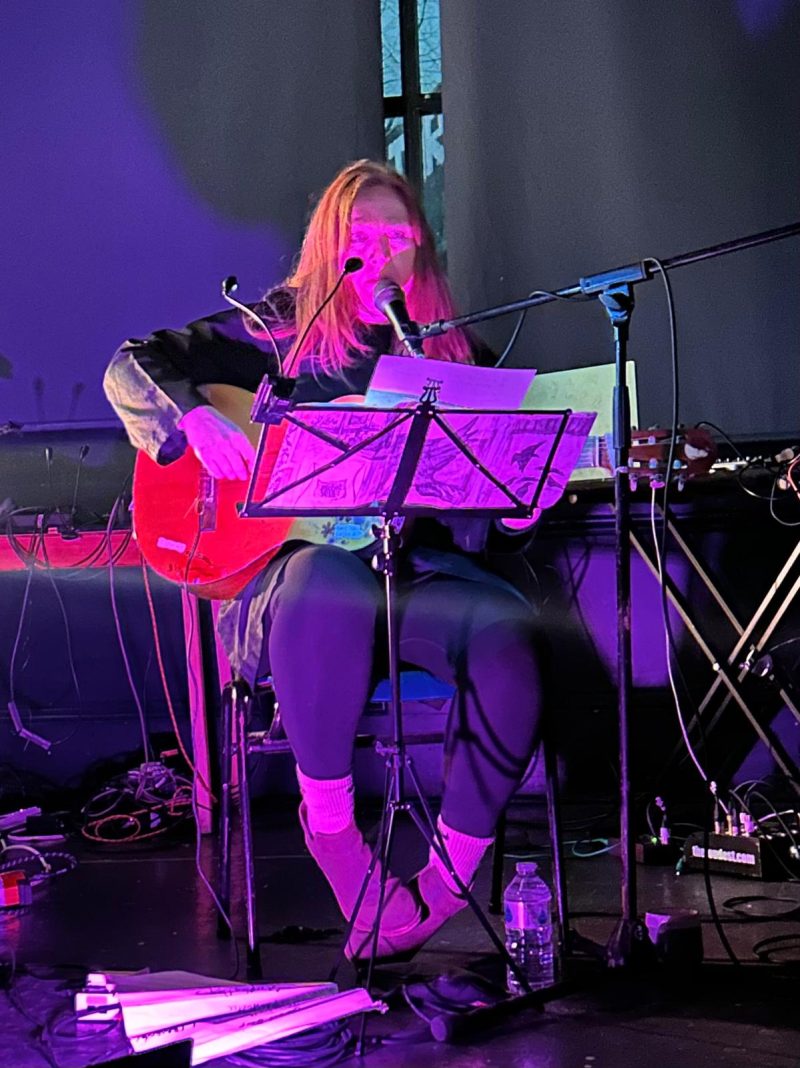
Gardiner’s music is emotionally potent but her presence is warm and good-humoured – photo: Lucy Langley-Palmer
Her voice dances lightly over the depths of searing emotion, never more so than in Anaesthetic, a song of heart-stopping tenderness. Kelly opens the song playing the double bass col legno, rhythmically bouncing the wood of the bow on the strings, producing a solemn and funereal effect.
“It all… happened so fast she hardly had time to hold her baby,” Gardiner half sings, half whispers. This is raw and powerful, and it’s almost too much to bear. The pain emanates and builds, emotion spilling out as Gardiner wails “Anaesthetic” again and again.
And then it just stops, suddenly flatlining. The tension breaks and we all gasp for air, realising we had been collectively holding our breath.
Gardiner’s lyrics will pierce your soul, if you let them. “Not my job to ease your pain”, she sings. If anything, she makes us feel it. But it’s cathartic, like something festering has been cut free.
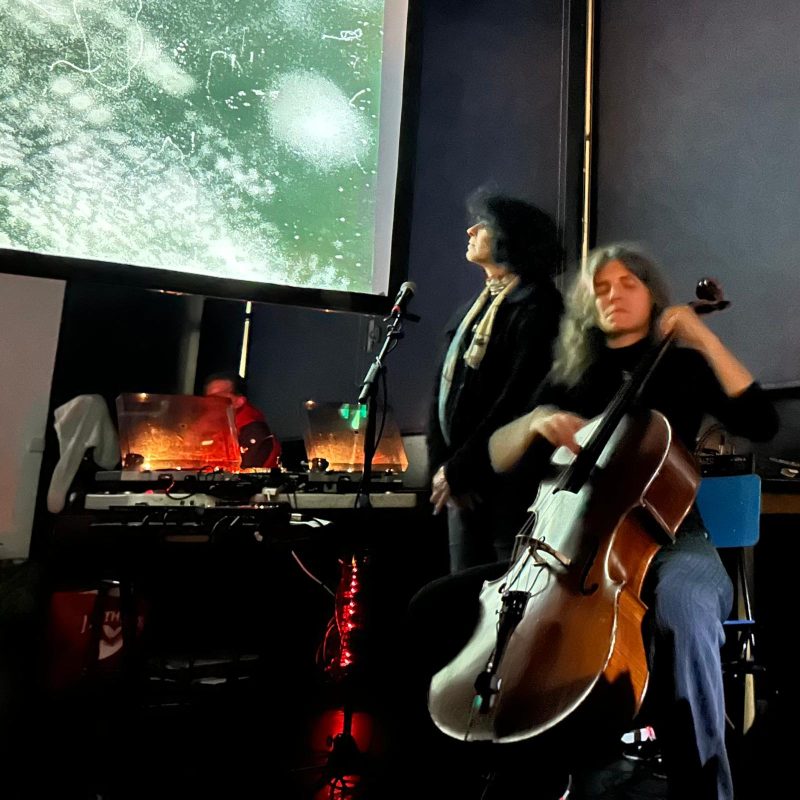
An audio-visual work created by Dali de Saint Paul, Lia Mazzari and Kathy Hinde to celebrate Daphne Oram’s 100th year, PanOrama was commissioned by the ORAM Awards following the three creators’ recognition by the institution – photo: Lucy Langley-Palmer
PanOrama is a piece of audio-visual art rather than music, a live installation created in 2025 to honour the centenary of electronic music pioneer Daphne Oram.
Layers of improvised electronics and synths, cello and vocals are paired with scratchy flickering film shot at Tower Folly where Daphne Oram had her studio.
There’s pulsing, phasing and occasional nods to rhythm along with beeps, bleeps, twitches and growling vocals, all combining into a cosmic surge. At times it feels as though the performers have created an entity that has quickly grown beyond them and that they are trying to maintain the illusion of control.
Despite the heaviness and the hard edge of the electronics, there is something organic about it, perhaps a shadow of the warmth of the cello. It feels like a deep sonic dive into an insect colony, an anguished cacophony. It obliterates thought. The visuals flicker menacingly, conjuring dead wood and a bloodless trachea.
The challenge is to sit within it all and let the vibrations ride through the body. I find my mind searching for a melody to emerge, trying to hone in on one element, to hear it clearly, rather than be confronted with all of it, all at once. It is a visceral and disorienting experience.
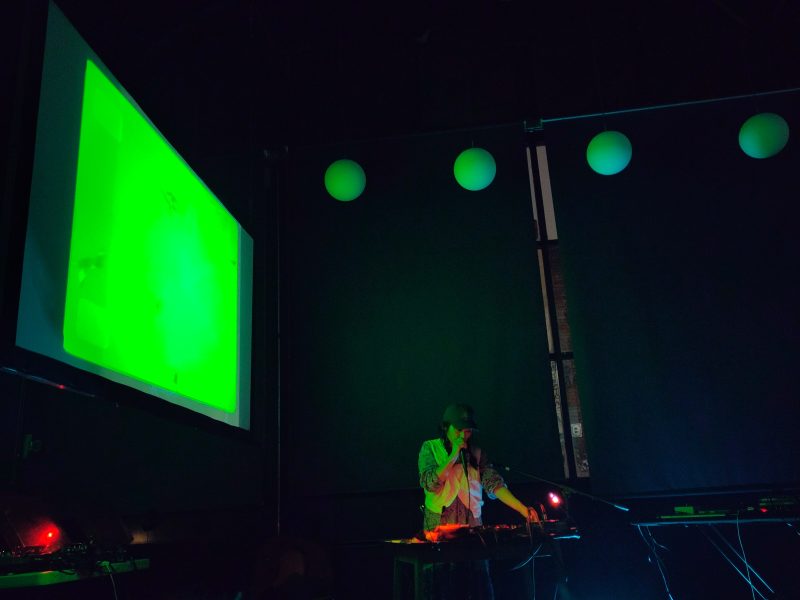
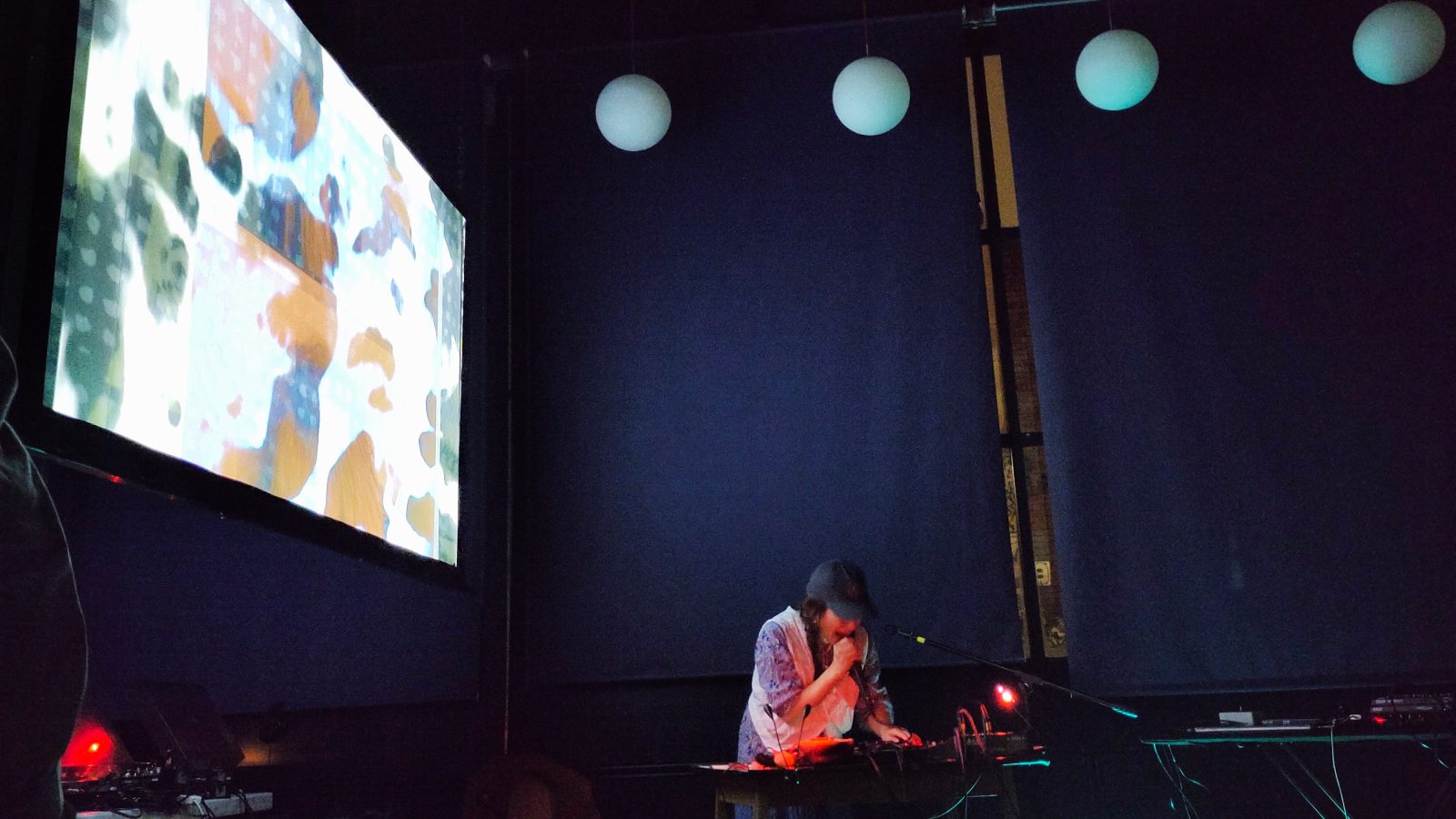
Japanese-born sound artist Popon’s set began with experimental elements that moved into chest-vibrating bass and danceable beats – photo: Ursula Billington
The final act of the evening is Popon, a Japanese artist now living in Berlin. There’s a quiet anticipation as she takes her place behind a vast desk of electronics. She signals the start of the set with tolling bells, and gradually layers in vocals, heavy metallic thrumming, and looped found sounds.
It is industrial and deeply rhythmic. In contrast to PanOrama’s sprawling expanse it feels tightly structured and curated, but it is equally mesmerising. She is deft and precise, creating kaleidoscopic layers that subtly shift and settle into new forms, altering the view with seemingly tiny adjustments.
Live projections from BEEF’s Laura Philips augment the experience, if that is possible, and it becomes fully immersive. It’s impossible not to move your body to this, as the metallic rhythms take up residence in the chest.
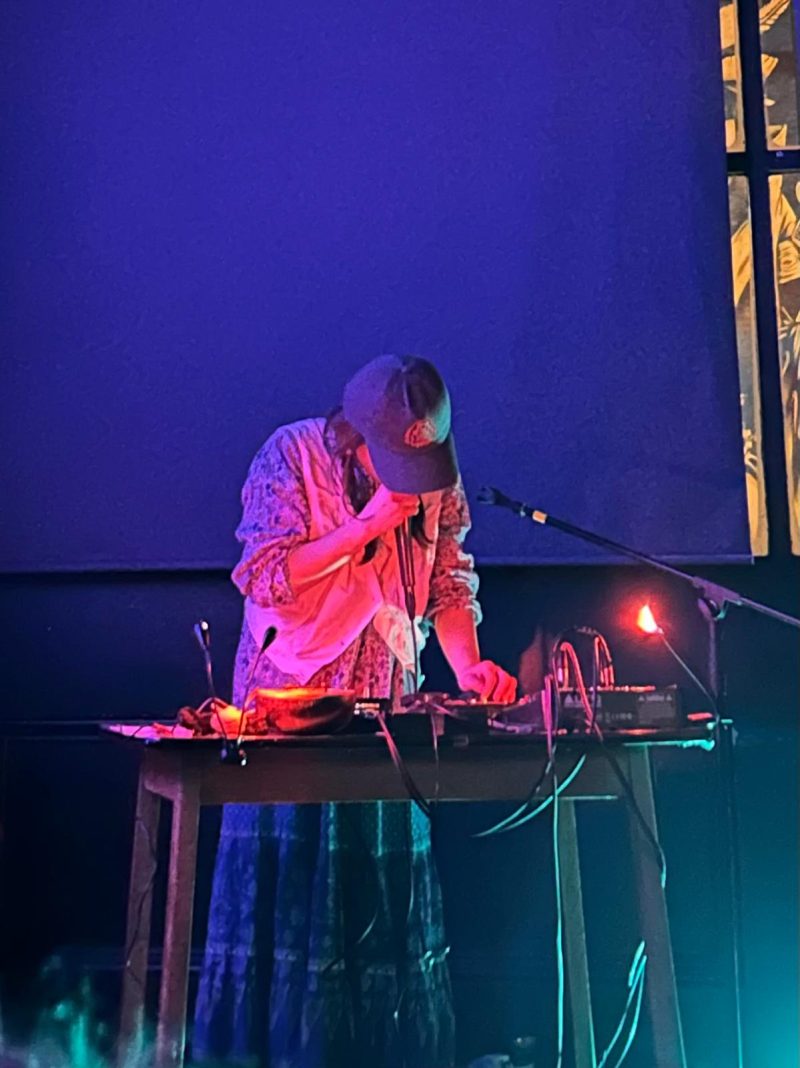
The artist combines vocals, small acoustic instruments, found objects and electronics to sculpt focused and atmospheric worlds of sound – photo: Lucy Langley-Palmer
A trance-like euphoria settles on the crowd and bodies start to sway, following the twists and turns, sinking deep into the looping, shifting, circular rhythms. It’s a callback to the whirling dervishes of Sellar’s opening poems and brings the evening to a close with a beautiful symmetry.
This has been a raw and joyful evening of luminous female and non-binary talent. What better way to celebrate International Women’s Day?
Main image: Ursula Billington
Read next:
 Our newsletters emailed directly to you