Music / Reviews
Review: Hedera, the Mount Without – ‘A certain bewitching power’
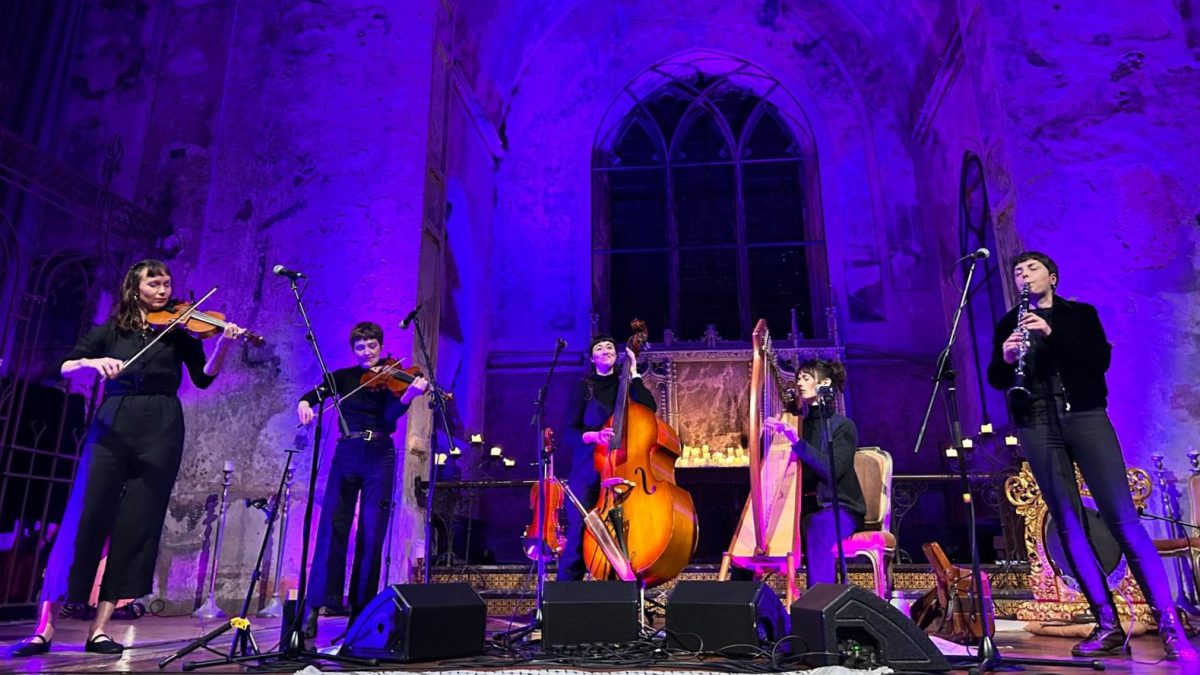
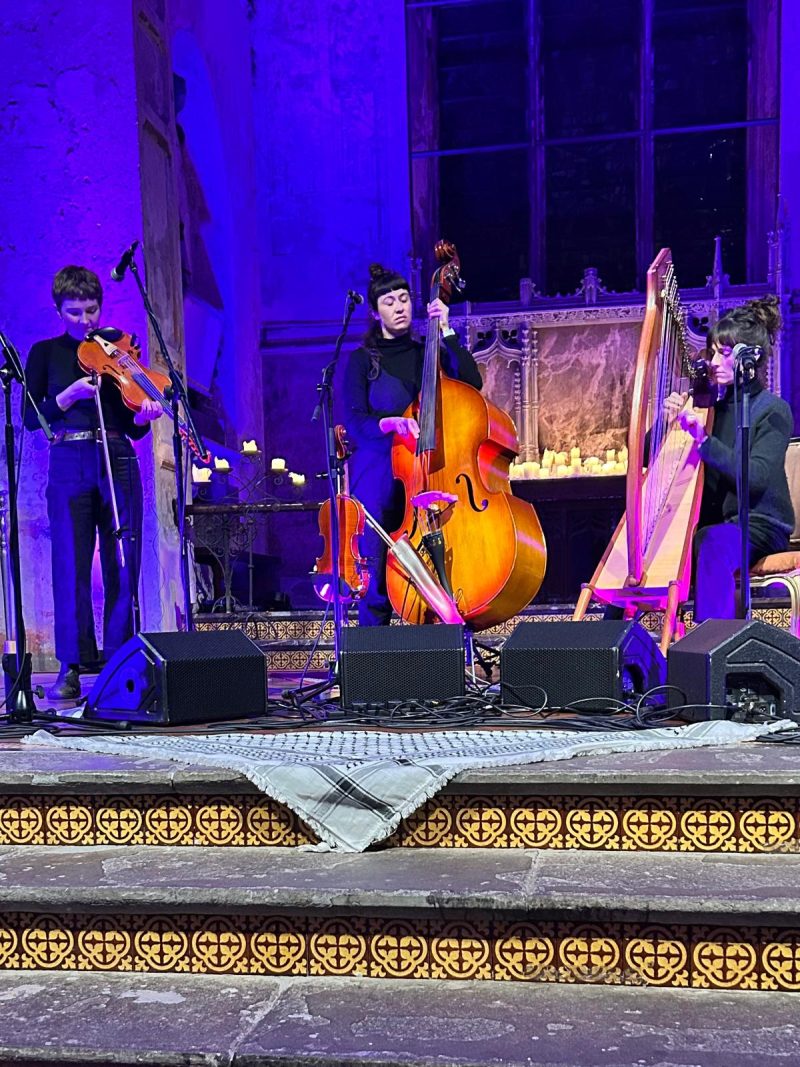
Hedera are arranged in a shallow arc at the front of the stage, a hundred candles ablaze behind them, throwing deep shadows up towards the vaulted ceiling of this erstwhile church, the Mount Without.
A Bristol-based quintet and somewhat of a supergroup of highfliers from the local folk scene, they call themselves a ‘chamber folk’ ensemble.
It’s a seated show and the audience fills the vast space with murmurs of anticipation.
is needed now More than ever
“We have lots of friends and family here tonight,” double bassist Beth Roberts remarks, and there is indeed a warmth in the room, despite the stone walls and the damp night without, a feeling of intimacy akin to a communal gathering around a fire.
This is how the band began, we’re told, meeting during Covid times, under the rule of six, gathering in gardens to share tunes and keep each other’s spirits up.
Their music is infused with a sense of companionship and good will, and perhaps it will serve the same purpose today, to raise our hopes in dark times.
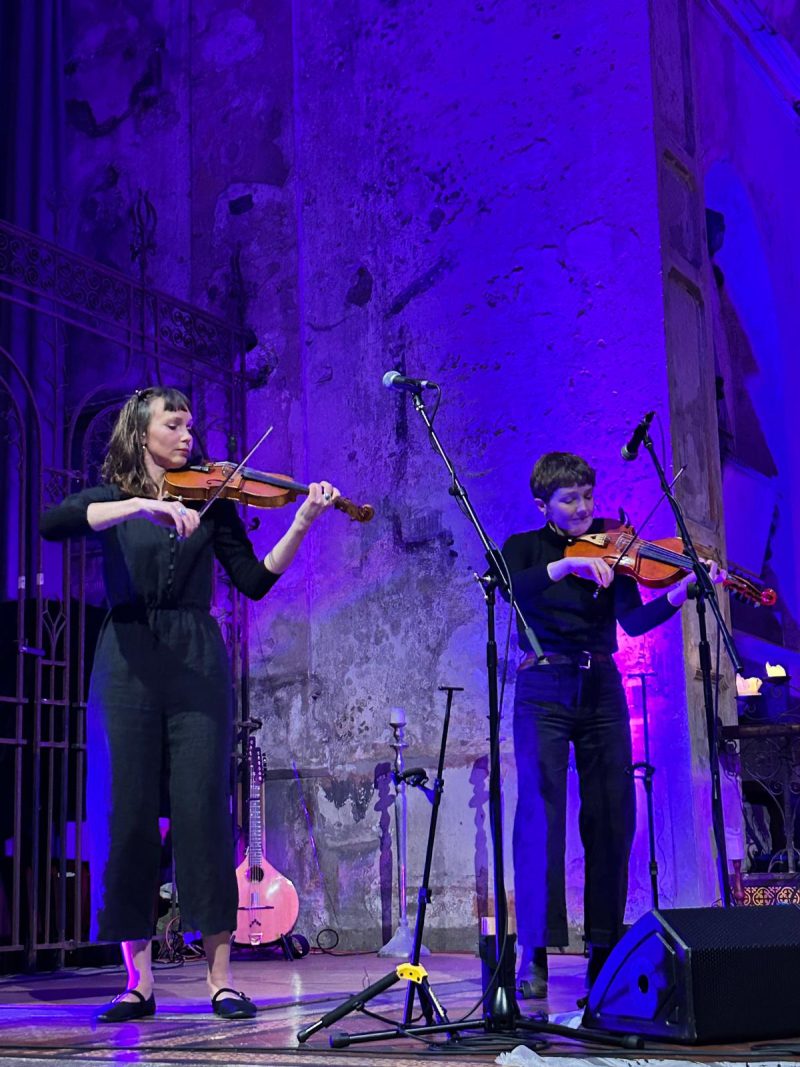
The set starts with the double bass, sonorous and lilting, sketching out the melody before handing it over to the clarinet and then passing it around among the rest of the band, like a flask of something warming and vital.
The set is a well-balanced mix of traditional tunes from the British Isles, across Europe and as far afield as Indonesia, interspersed with original pieces written by members of the ensemble.
There’s a deep mutual respect evident in the way the writer of a tune is always attributed – fellow band members making sure the audience knows the provenance.
It’s clear the ensemble is a meeting of equals, and identities are not subsumed by the group entity. It allows them to dance lightly through different styles, traditions and even genres, with elements of classical and jazz drifting alongside the folk.
Their original tunes are sonic paintings, bringing to mind rich and verdant images and Waterwheel, written by harpist and accordionist Tamsin Elliot, is no exception.
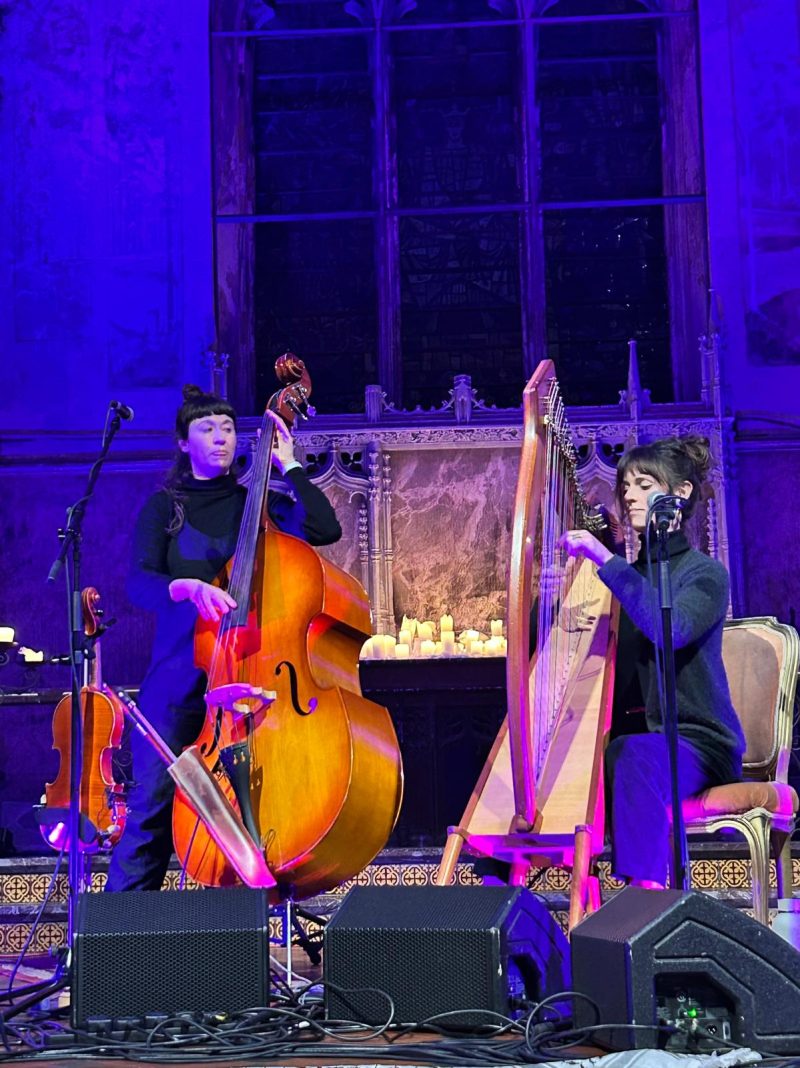
The shimmering violin along with pizzicato conjures an image of saturated, dripping moss. It builds to a tense drone before the dam seems to burst and they break off into a lively Breton folk dance.
Elliott tells us it is inspired by a waterwheel she saw in Cornwall where the moss had taken over and the wheel no longer turned: “Everything returns to moss – just like life.”
The last song before the interval is the only one so far to have vocals. It is a Bulgarian tune, hinting at klezmer with mournful chromatic textures, but it’s restrained and never quite kicks into the hedonistic chaos it alludes to.
It ends with a pristine five-part vocal harmony, and while they encourage the audience to join in, no one wants to lift their voice too high above the sound of Hedera.
After the interval, there’s a sombre moment as they describe the Georgian song they are about to play.
It is around 1000 years old, and it somehow escaped the prohibition of religious songs when Georgia was under Russian occupation.
Roberts says, “We’re not free from those cycles of oppression, so we offer this song as a moment of reflection for all those living under occupation at the moment.” Eyes are drawn towards the keffiyeh spread out at the front of the stage.
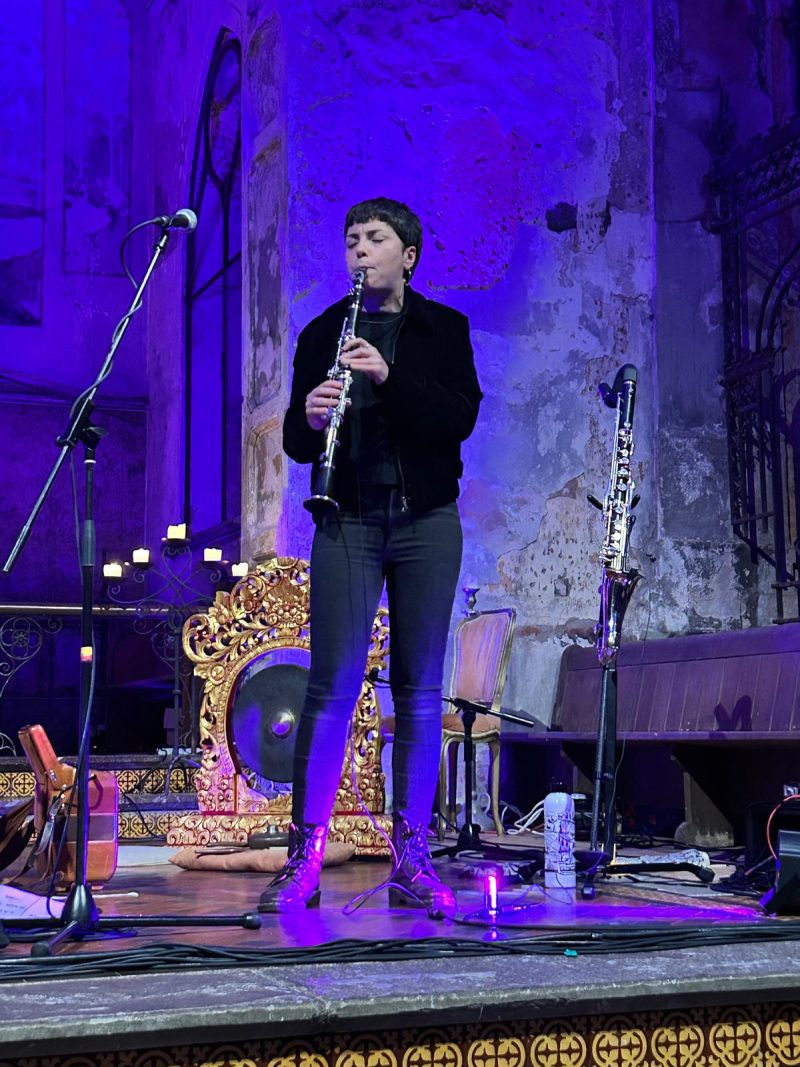
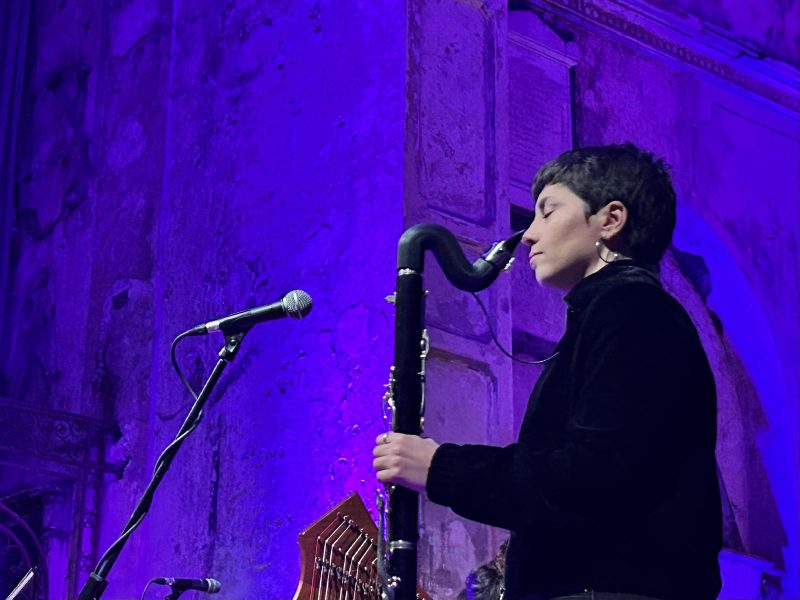
Generally, though, the mood seems lighter after the break as they play through some tunes they wrote during a storm. Storm Bram, written by fiddle and hardanger d’amore player Maisie Brett, is windswept and contemplative and sees a welcome return of Isis Wolf-Light’s beautiful bass clarinet.
Long Awaited Rain conveys a joyful abundance, beginning with the promising pitter of pizzicato before a thorough drenching from the accordion.
The smell of fresh rain is almost palpable, that sharp fecund note emitted from parched soil as it receives rivulets, soaking into the ground.
Hedera have a certain bewitching power about them – they seem almost to be able to harness the elements.
They have gathered us in tonight to warm ourselves by the embers of their fire as the rain lashes down outside. The audience has received it all with an almost religious reverence. It’s clear that appreciation runs deep.
All images: Lucy Langley-Palmer
Read next:
 Our newsletters emailed directly to you