Music / Reviews
Review: Avon Concordia, Victoria Methodist Church – ‘An energetic sonic journey through three centuries’’
On Sunday evening, the recently established Avon Concordia orchestra brought their second programme of classical music to Victoria Methodist Church, near the Victoria Rooms on Whiteladies Road.
Though still in its early stages and comprised of student musicians, the ensemble already exhibits the cohesion and tonal richness of a professional outfit. Their sound is lush and bright, with a confidence that defies their youth.
The programme dubbed A Triptych of Eras is a journey through three centuries bringing classical gems ranging from Mendelssohn, Kurt Weill and a contemporary composer, Liam O’Connell, who has made Bristol his home.
is needed now More than ever
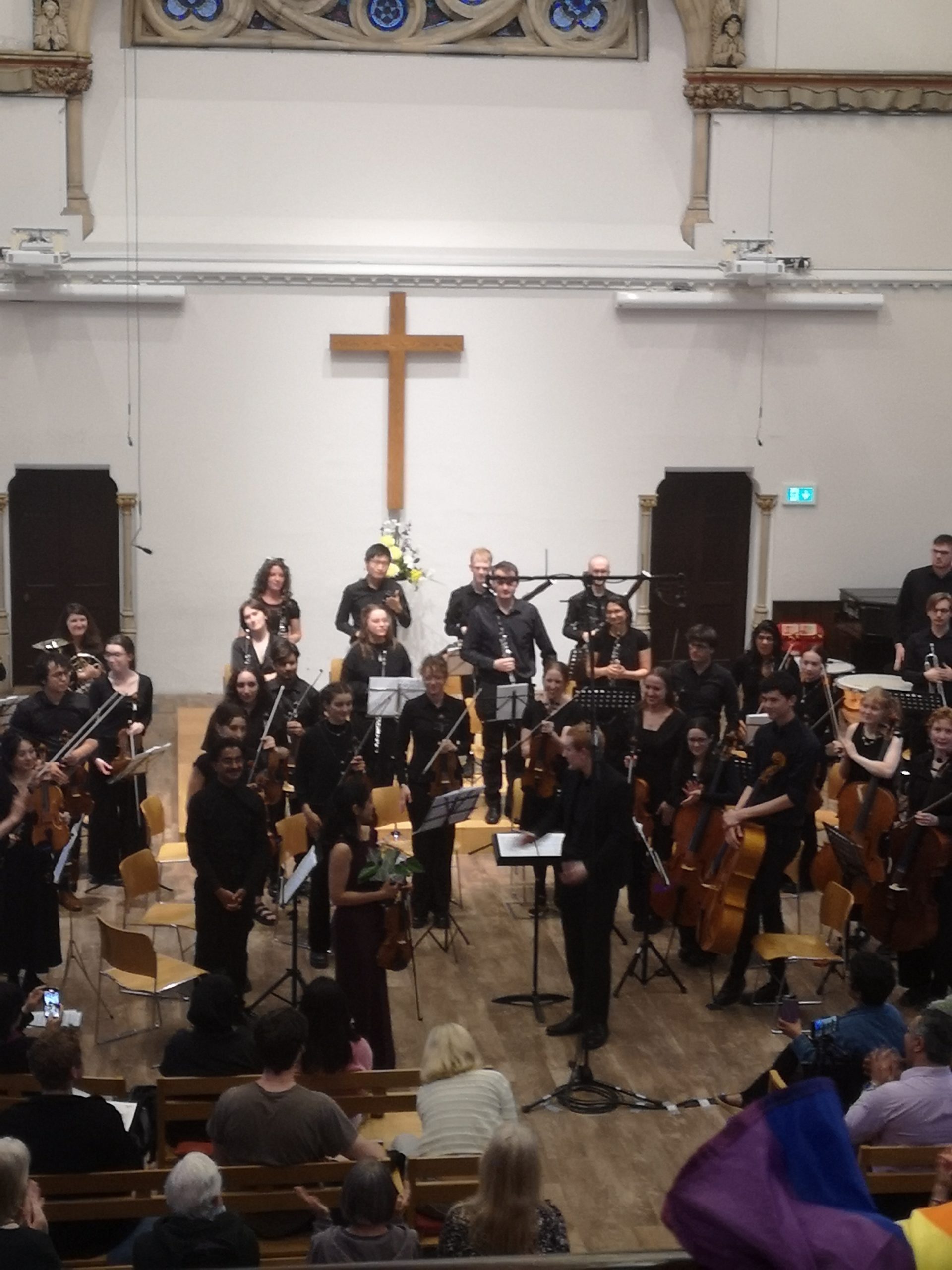
Avon Concordia presented their second programme since its inception
The programme kicked off with the evergreen composition Adagio for Strings by Samuel Barber as if to check the acoustics, although it was not included in the programme.
The crowd-pleaser was followed by the premiere of The Following Leads to Collapse, a strikingly original work by the double bassist and composer Liam O’Connell—known in musical circles as Leeem.
Described as a lament and elegy for the destruction of pastoral beauty under the weight of capitalist expansion, particularly the American project, the work was deeply affecting.
Its luscious, sweeping melodies were continuously disrupted by irregular rhythms that evoked the spirit of Stravinsky’s Rite of Spring. The pulsing irregularity of the metre constantly wrong-footed the listener, mirroring the piece’s themes of disruption and collapse.
The resulting tension created a sense of unease, of something beautiful being slowly dismantled.
The brooding sense of decay was palpable, rendered not through cliché but through a sophisticated musical language. Leeem’s work painted a vivid, almost cinematic portrait of environmental and cultural loss and the orchestra handled its complex textures and shifting moods with dexterity and maturity.
View this post on Instagram
The evening’s standout moment came with Mendelssohn’s Violin Concerto in E minor, performed by Rhia Thomas, a second-year Economics and Finance student at the University of Bristol.
From the outset, Thomas demonstrated a level of musical maturity and poise that would not be out of place on a major concert stage.
Her tone was radiant yet refined, and her phrasing carried a natural fluidity, reminiscent of Nicola Benedetti at her most introspective who made the Mendelssohn concerto her showstopper.
What truly set her apart was the way she shaped each phrase with emotional intelligence and technical precision.
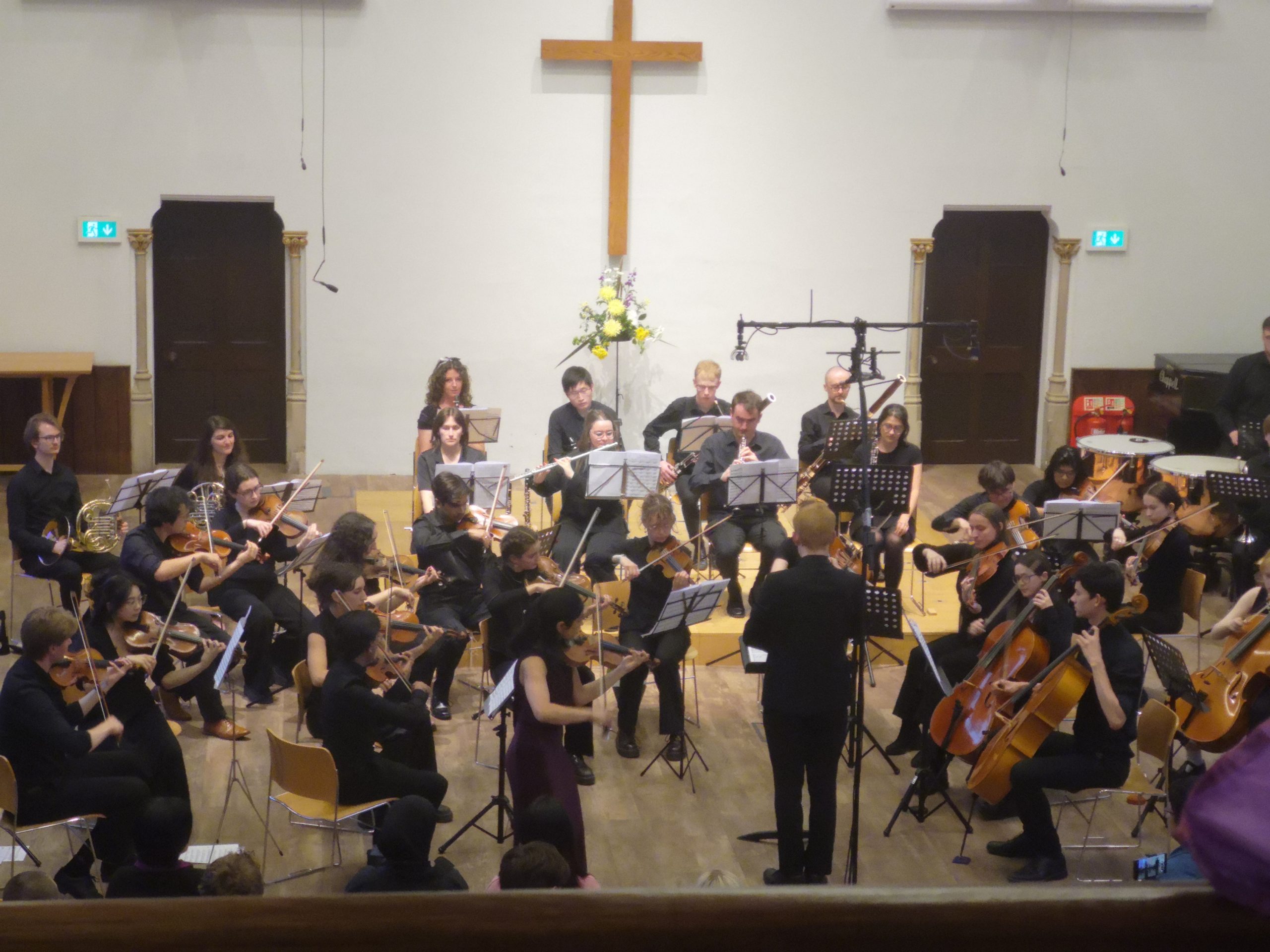
Rhia Thomas produced a rich rendition of the classical gem of Mendelssohn’s Violin Concerto in E minor
In the slow second movement, she achieved a delicate balance—expressive but never indulgent. Her vibrato was used tastefully, adding warmth without overshadowing Mendelssohn’s lyrical lines.
The phrasing here was particularly assured, imbued with a sense of stillness and depth that hinted at a performer well beyond her years.
The opening movement unfolded with a quiet intensity, like sunlight cutting through a shaded grove—clear and purposeful.
In the final movement, Thomas played with spirited energy and rhythmic verve, negotiating the virtuosic passages and quicksilver cadences with what seemed like effortless ease.
After the interval, the programme also featured a rarely performed gem: Kurt Weill’s Second Symphony.
Though Weill is more commonly associated with his theatrical works, this symphony is deeply rooted in the late Romantic idiom, evoking Gustav Mahler far more than the atonality of Arnold Schoenberg.
The opening movement is particularly dense and emotionally charged, heavy with themes of exile, loss and dislocation, reflecting Weill’s own experience after being driven from Germany by the Nazis.
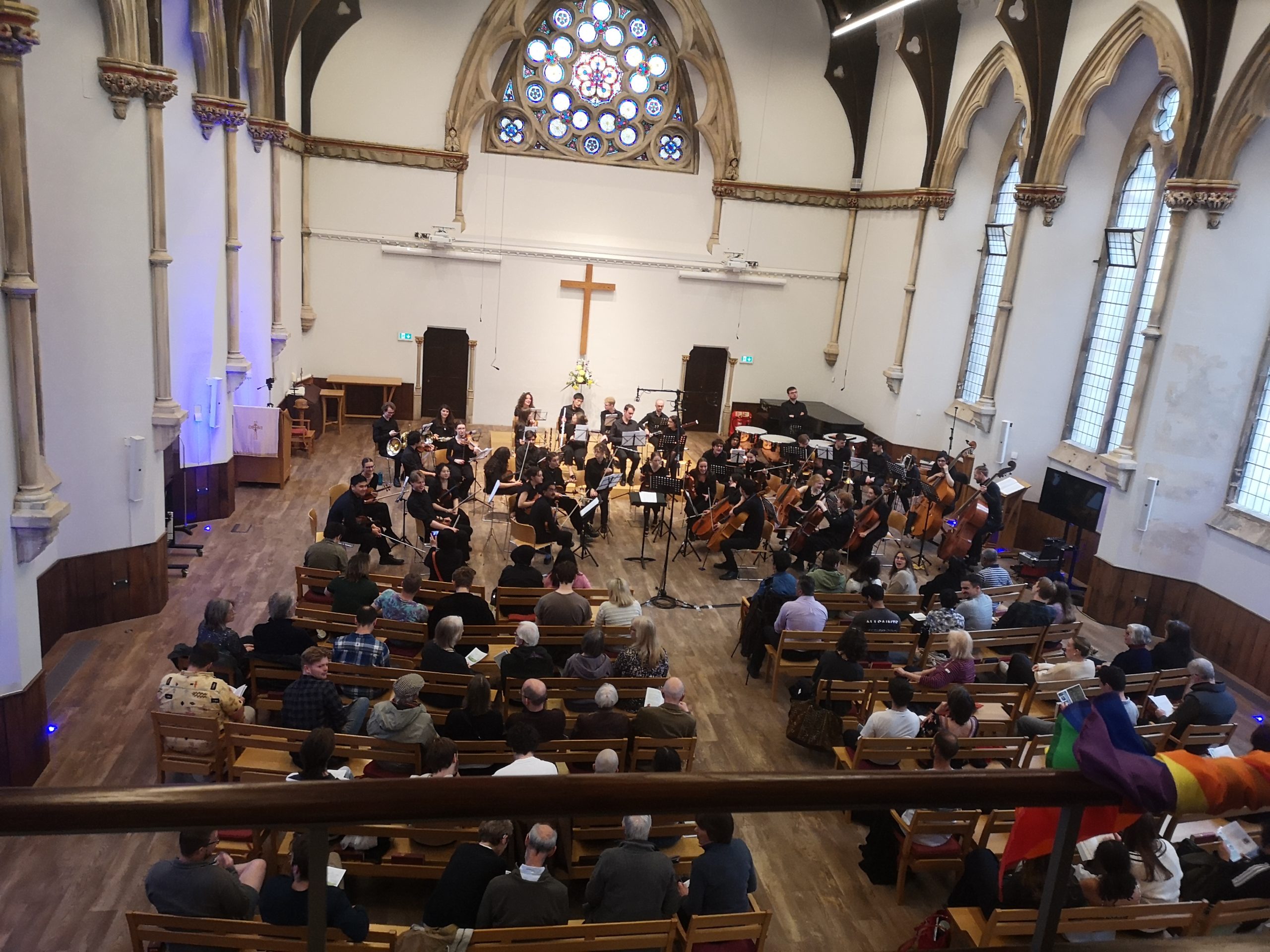
The programme featured works spanning three centuries including a premiere of the Bristol-based composer Liam O’Connell – Leeem
Avon Concordia approached this difficult movement with commendable restraint. Where it would have been easy to overindulge in the mournful, lyrical passages, the orchestra instead maintained an emotional detachment that allowed the music to speak for itself.
Their interpretation honoured the sombre gravity of the work without lapsing into sugar-laced sentimentality and they navigated its shifting moods and layered textures with both sensitivity and control.
The first movement was an elegy to a world which lost its innocence which was neatly captured by the orchestra, led with assurance by Navjeet Khakh who is no stranger to ensemble leadership, having previously served in a similar capacity for the University of Bristol Symphonia during his time at the institution.
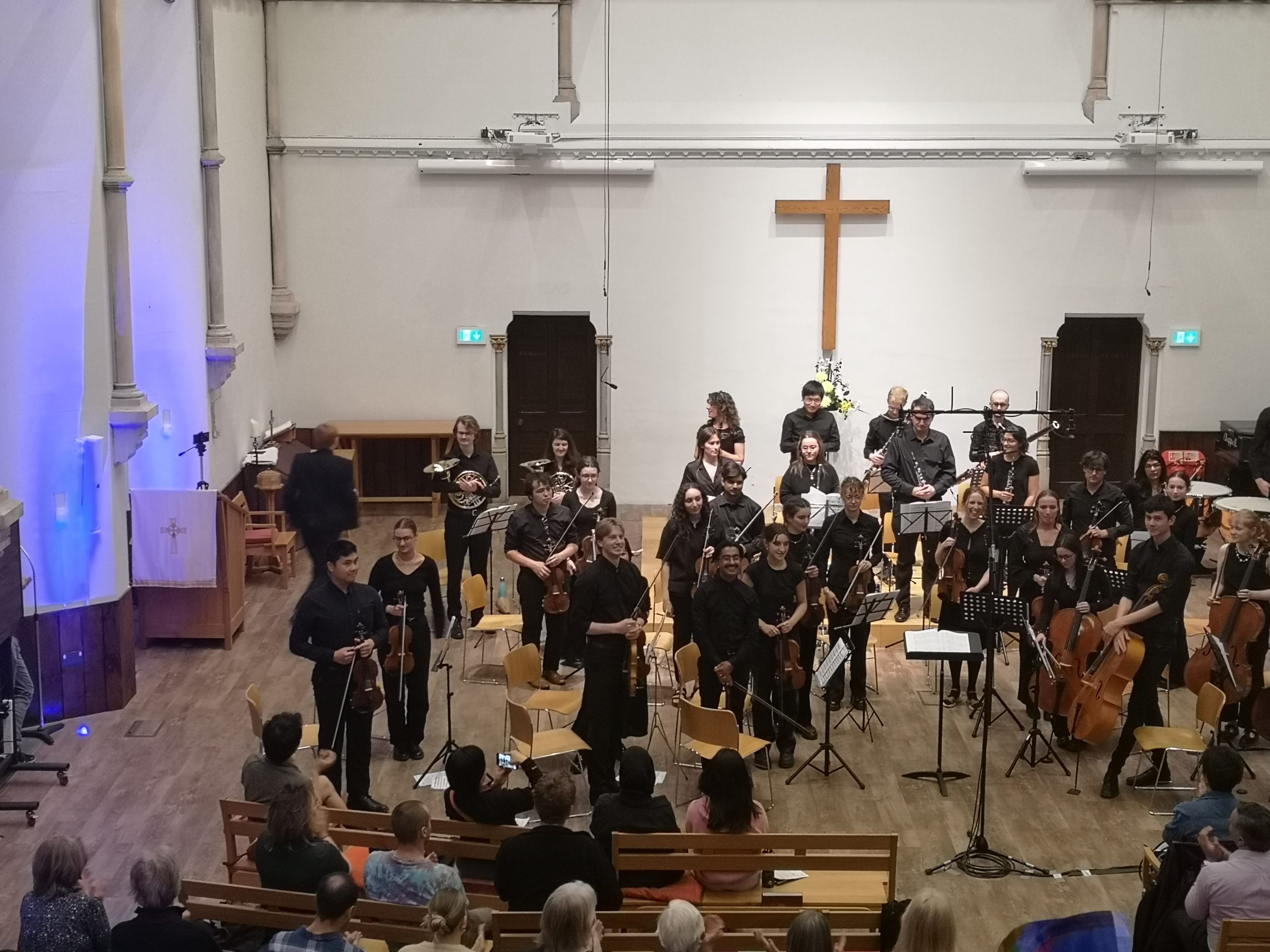
Avon Concordia may still be a rung away from full symphonic stature, but with its rich talent pool, it is hard not to see them ascending rapidly
At the helm was Caleb Kernaghan, the founder and conductor of Avon Concordia.
Since the pandemic, Kernaghan has conducted several ensembles across the region, and in 2024 he brought together Avon Concordia, whose members now rehearse fortnightly. His direction was confident and well-paced, allowing the ensemble’s textures and dynamic contrasts to shine.
Avon Concordia may still be a rung away from full symphonic stature, but with its rich talent pool it is hard not to see them ascending rapidly.
All photos: Milan Perera
Read next:
 Our newsletters emailed directly to you